Past battle · 2026-03-19 UTC
Coding assistant Showdown — March 19, 2026
From the Coding assistant category. 35 marks placed across 9 fighters. Gemini Code Assist took the crown.
Final standings







The line-up
The fighters
Profiles of every tool that competed in this battle, ranked by their final score.

Gemini Code Assist
Google's AI coding assistant powered by Gemini models for faster, smarter development
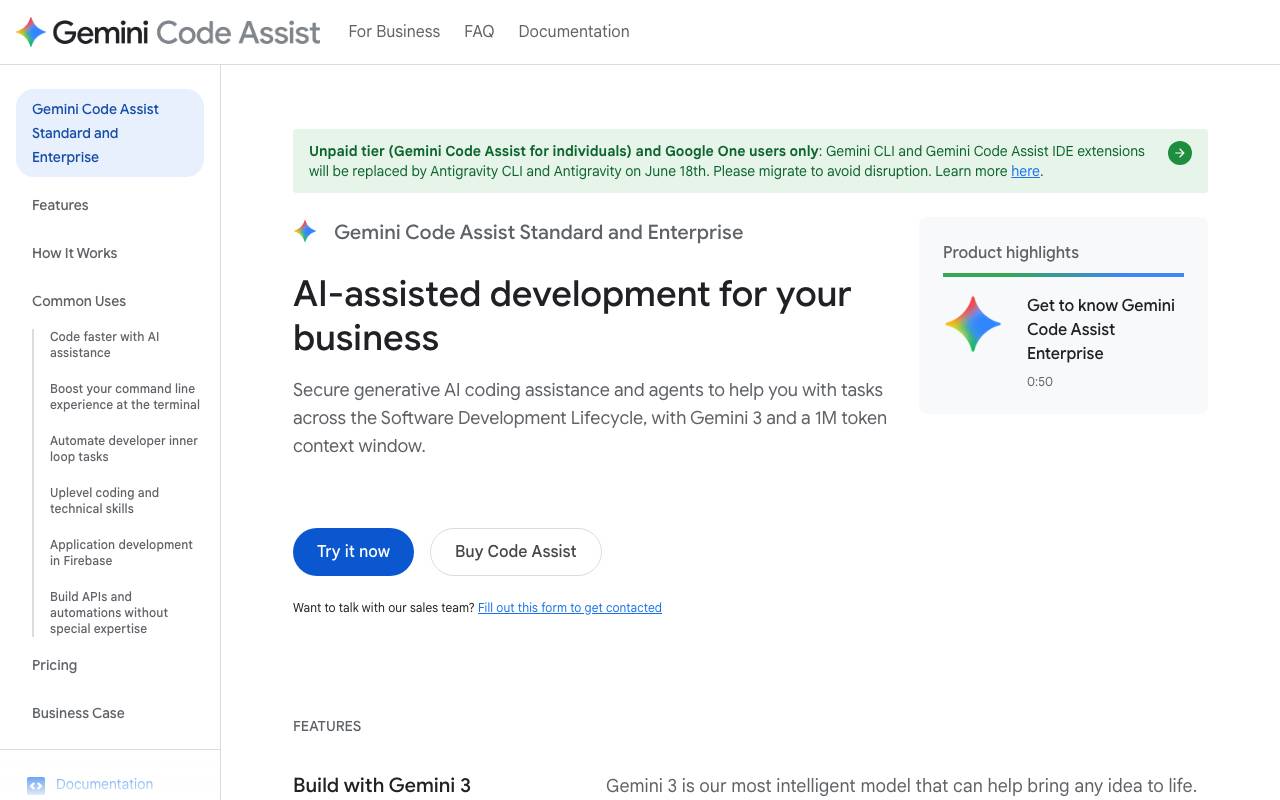
Gemini Code Assist is Google's AI-powered coding companion designed to help developers write, understand, and maintain software more efficiently. Built on Google's Gemini family of large language models, it integrates with popular IDEs like VS Code and JetBrains, as well as Google Cloud environments, to provide contextual code suggestions, completions, and explanations. The tool supports a wide range of programming languages and can assist with tasks such as generating new code, refactoring existing functions, writing unit tests, and explaining unfamiliar codebases. It also offers chat-based interactions, allowing developers to ask questions about their project or get guidance on best practices without leaving their editor. For teams, Gemini Code Assist provides enterprise features including codebase-aware customization, source citation, and IP indemnification, making it suitable for organizations with security and compliance requirements.
Criteria breakdown
- AI code completion and generation
- In-IDE chat for code questions
- Code explanation and refactoring help
- Unit test generation
- Codebase-aware customization for teams
- Integration with Google Cloud and popular IDEs

GeniA
Open-source AI assistant that automates engineering workflows across team tools and APIs.
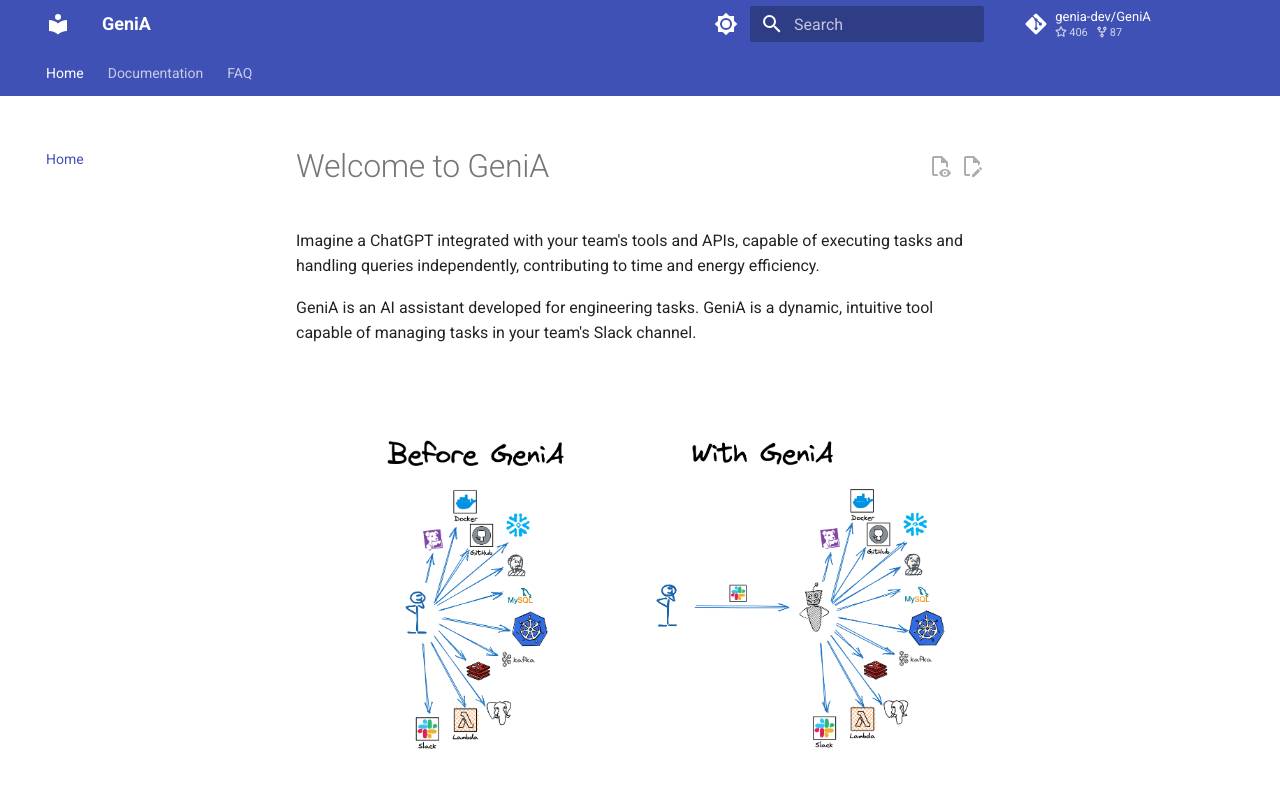
GeniA is a production-grade, open-source AI assistant that automates engineering workflows across team tools and APIs. It is built upon the function-calling capabilities offered by OpenAI and requires an OpenAI API Key to operate. GeniA is designed to be a fast learner, quickly acquiring the ability to utilize customized tools. It can help teams with tasks such as research and development, deployment, troubleshooting, and log summarization, and can be integrated into a team's Slack channel. GeniA is a collaborative tool that aims to boost the speed of its users by minimizing boilerplate and cross-team dependencies. It is 100% open source and can be expanded or modified to suit a team's specific needs. Some of the key features of GeniA include its ability to work alongside engineers in production environments, execute tasks on behalf of users, and conduct tasks such as vulnerability checks, best practices, and playbooks. GeniA is also designed to reduce Mean Time To Resolve (MTTR) and improve service usage monitoring and optimization.
Criteria breakdown
- Conversational interface for engineering tasks
- Pluggable integrations with APIs and SaaS tools
- Custom skill and workflow definitions
- Automation of repetitive ops tasks
- Team-oriented deployment model
- Community-driven development

OpenHands
Open-source platform for AI agents that build, debug, and ship code like developers.
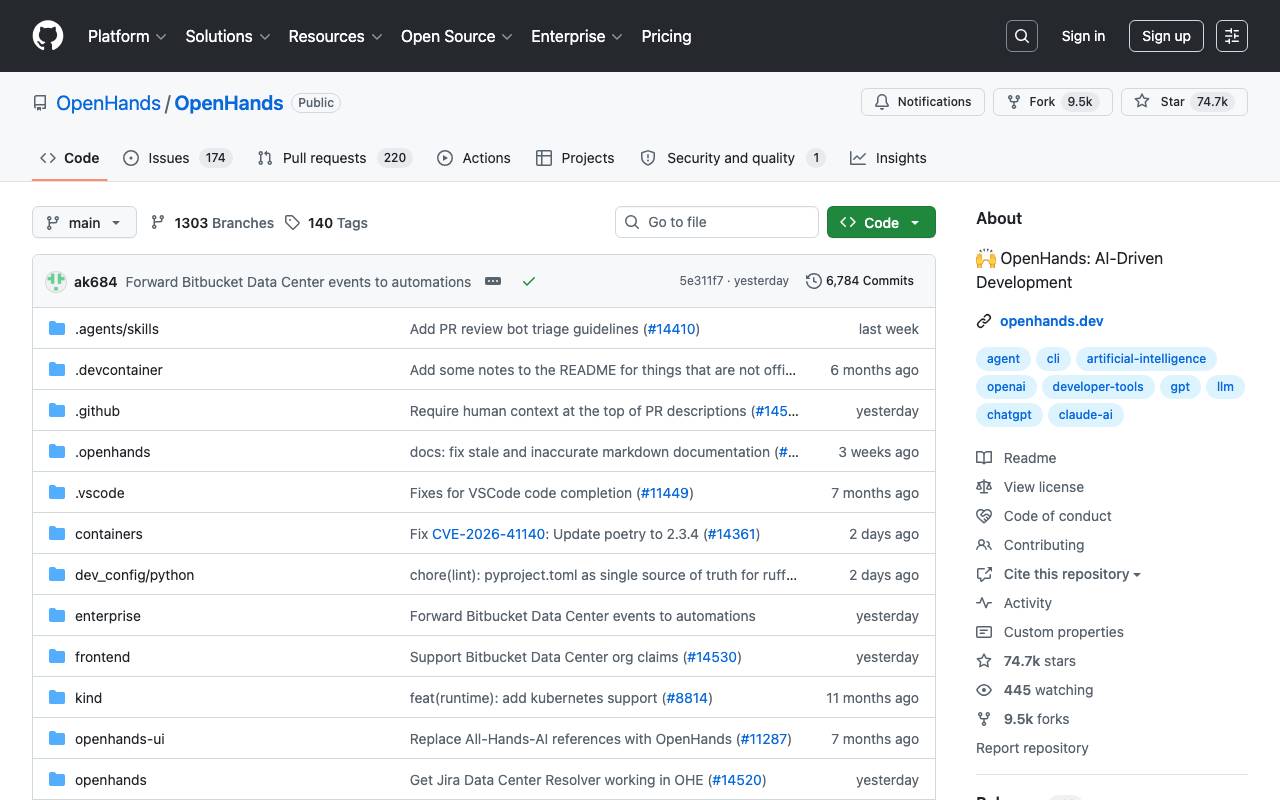
OpenHands is an open-source framework for creating AI agents that can perform end-to-end software development tasks. The agents can read and modify code, run shell commands, browse the web, and interact with APIs—operating much like a human developer working in a sandboxed environment. Designed for both researchers and practitioners, OpenHands supports multiple LLM backends and offers a flexible architecture for customizing agent behavior, tools, and workflows. It can be self-hosted via Docker, used through a web UI, or integrated into existing development pipelines for automating coding, testing, and DevOps tasks.
Criteria breakdown
- Autonomous coding and debugging agents
- Sandboxed shell and file system access
- Web browsing and API interaction tools
- Docker-based local deployment
- Pluggable LLM backend support
- Web-based interactive UI
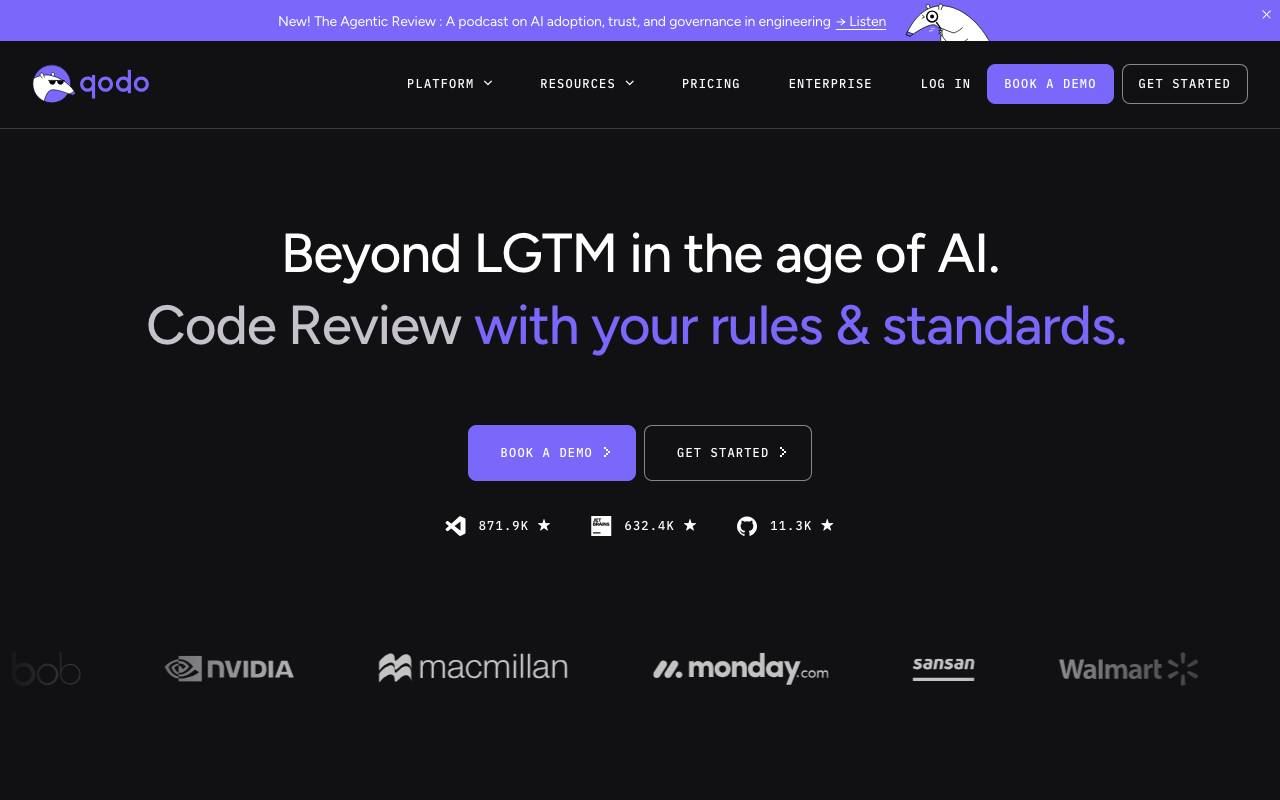
QodoAI is an AI assistant built to help software engineering teams ship higher-quality code with less friction. It analyzes pull requests, surfaces potential bugs, and provides contextual suggestions so reviewers can focus on architectural decisions rather than catching routine issues. Beyond automated reviews, Qodo supports test generation, code understanding, and consistency across large codebases. It integrates with common Git platforms and IDEs, fitting into existing developer workflows rather than replacing them. The tool is aimed at teams that want to scale code review practices, reduce review bottlenecks, and maintain quality standards as their codebase and headcount grow.
Criteria breakdown
- Automated PR analysis and suggestions
- AI-generated unit tests
- Contextual code explanations
- IDE and Git platform integrations
- Detection of potential bugs and edge cases
- Support for multiple programming languages

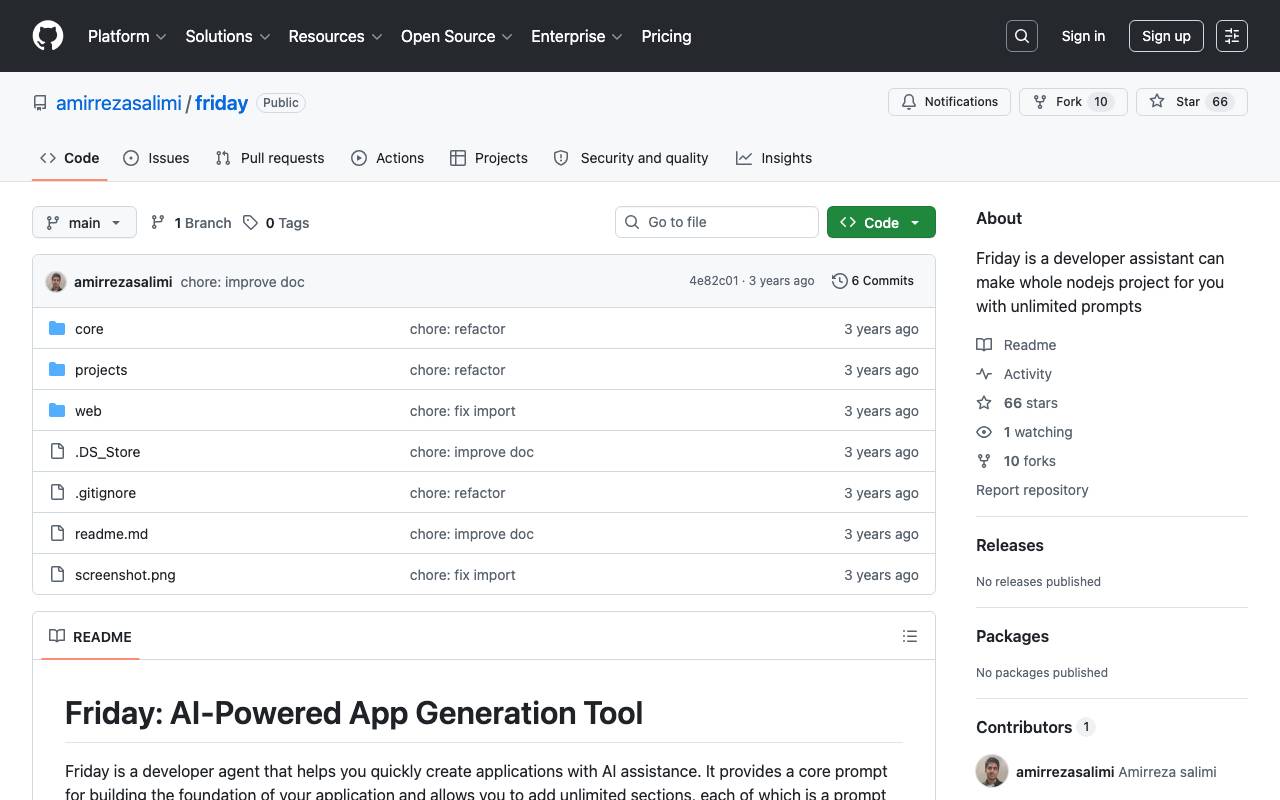
Friday is an AI-powered developer assistant designed to rapidly scaffold Node.js projects. It utilizes GPT-4 for AI assistance, optimized with GPT-4-32k for better performance. The tool provides a core foundation for applications and allows users to add unlimited sections, each representing a specific part of the app through prompts. Friday employs esbuild behind the scenes for every app created. To use it, a GPT-like chat completion API, such as GPT-4 or GPT-4-32k, is required. The project structure includes a core module, web frontend, and backend module. Setup involves configuring the AI API key and endpoint, building the core module, and running the backend and frontend servers. The tool is licensed under the MIT License. Known limitations include occasional issues with package inclusion in the packages.json file and a simple user interface. Future goals include enhancing scalability for multi-file apps, improving the user interface, implementing documentation features, and introducing a code debugger. Friday is suitable for developers looking to quickly create Node.js applications with AI assistance. While it streamlines the scaffolding process, users should be aware of its current limitations and potential areas for improvement.
Criteria breakdown
- AI-assisted project scaffolding
- Natural language code generation
- Automatic dependency configuration
- Boilerplate for routes and modules
- Rapid prototyping support

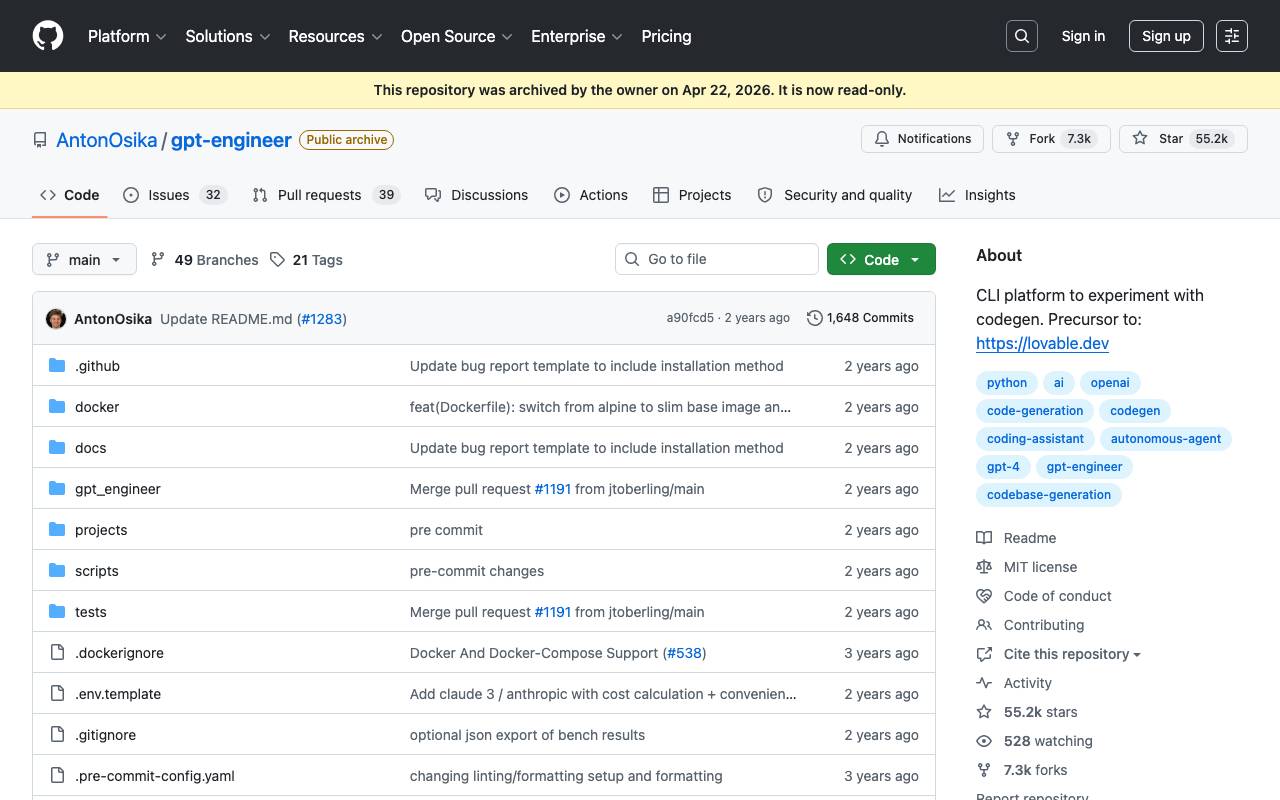
GPT Engineer is a platform that converts natural language prompts into working code and applications quickly. It allows users to specify software requirements in natural language and watch as an AI writes and executes the code. The platform also supports implementing improvements to existing code. The tool is suitable for developers and users who want to rapidly prototype and build software applications. GPT Engineer works by taking a prompt file as input, which contains instructions for the AI to generate or improve code. Key features of GPT Engineer include its ability to generate code based on natural language prompts, support for improving existing code, and benchmarking custom agents against popular public datasets. The platform supports Python 3.10-3.12 and uses the OpenAI API. Users can install GPT Engineer using pip, set up an API key, and run the tool using Docker or in their browser. The platform also provides documentation and a roadmap for future development. GPT Engineer is an open-source tool, but a commercial version called gptengineer.app exists, offering a managed service for automatic web app generation. Another related project is aider, a well-maintained, hackable CLI for code generation.
Criteria breakdown
- Natural language to code generation
- Full app scaffolding from prompts
- Iterative editing via chat
- Project export and code ownership
- Support for common web frameworks
- Rapid prototyping workflow

Smol AI Developer
Open-source AI agent that scaffolds entire codebases from a single prompt.
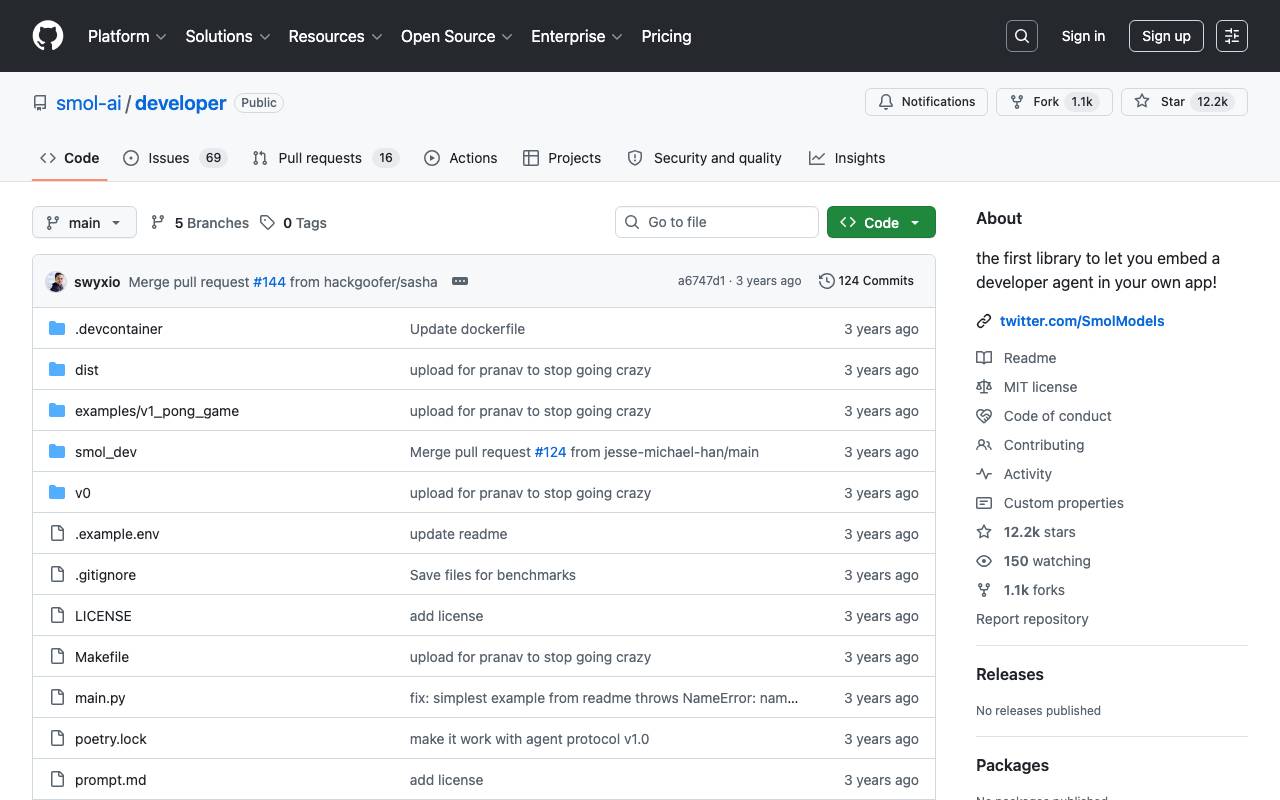
Smol AI Developer is an open-source command-line tool that acts like a virtual junior developer, turning a single product specification into a working codebase. You describe what you want to build in plain language, and the agent plans, writes, and organizes the files needed to bring the idea to life. It is designed to be small, hackable, and easy to iterate on. Developers can tweak the underlying prompts, swap models, and rerun generations to refine output, making it useful for rapid prototyping, learning, and experimenting with AI-driven software development workflows.
Criteria breakdown
- Whole-codebase generation from a single spec
- Command-line interface for quick iteration
- Customizable prompt templates
- Works with major LLM providers
- Debug logs of intermediate reasoning
- Lightweight, self-contained Python project
CodeGPT
Customizable AI coding assistant for generation, completion, and explanation inside your IDE.
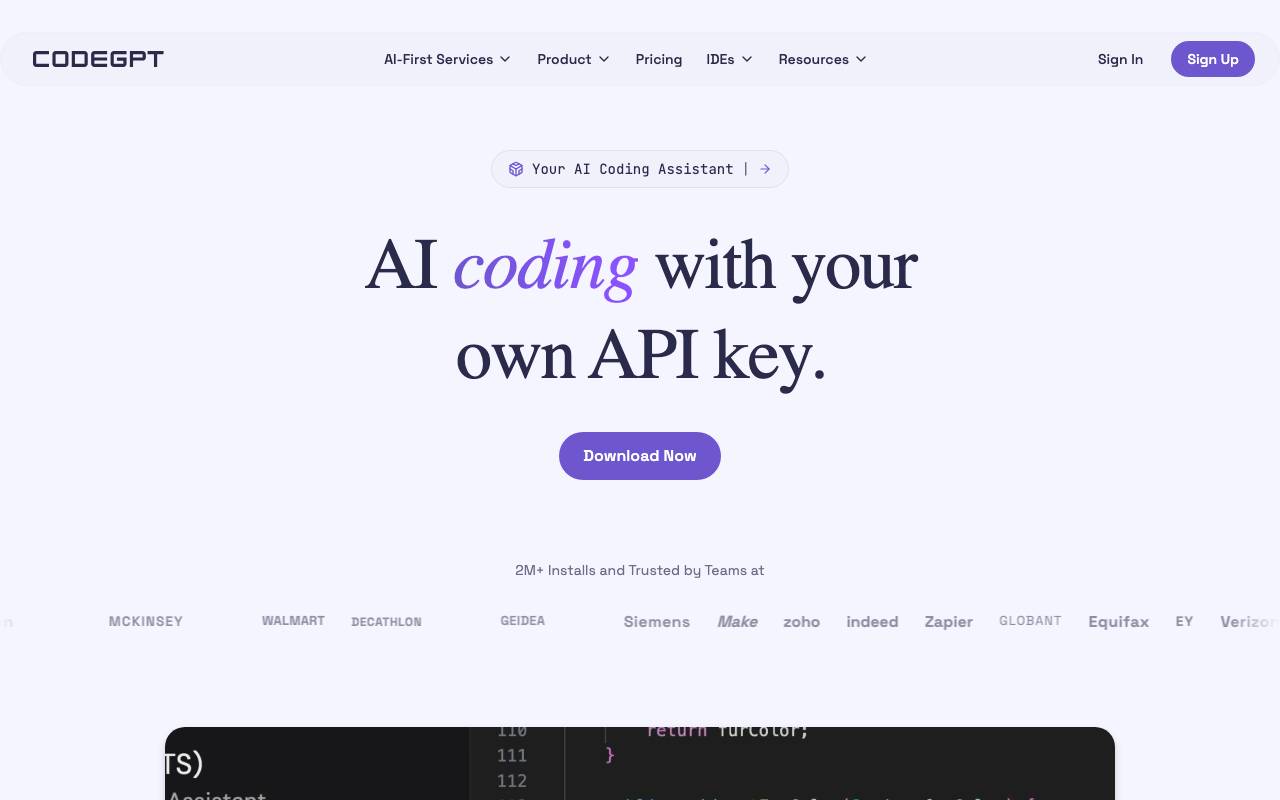
CodeGPT is an AI-powered coding assistant that integrates directly into popular development environments like VS Code and JetBrains IDEs. It helps developers write, complete, refactor, and document code through natural language prompts and contextual suggestions. Beyond standard autocomplete, CodeGPT lets teams configure custom AI agents tied to their own codebases, documentation, or preferred language models. This makes it useful for tasks ranging from generating boilerplate and unit tests to explaining unfamiliar code or onboarding new engineers to a project. It supports multiple AI providers and offers both individual and team plans, with options for self-hosted deployments aimed at organizations with stricter privacy or compliance needs.
Criteria breakdown
- In-IDE code completion and chat
- Custom AI agents trained on your context
- Code explanation and documentation generation
- Unit test and refactoring suggestions
- Multi-model support across providers
- Team and enterprise deployment options

devlo
AI teammate that helps engineering teams ship code faster by automating routine dev tasks.
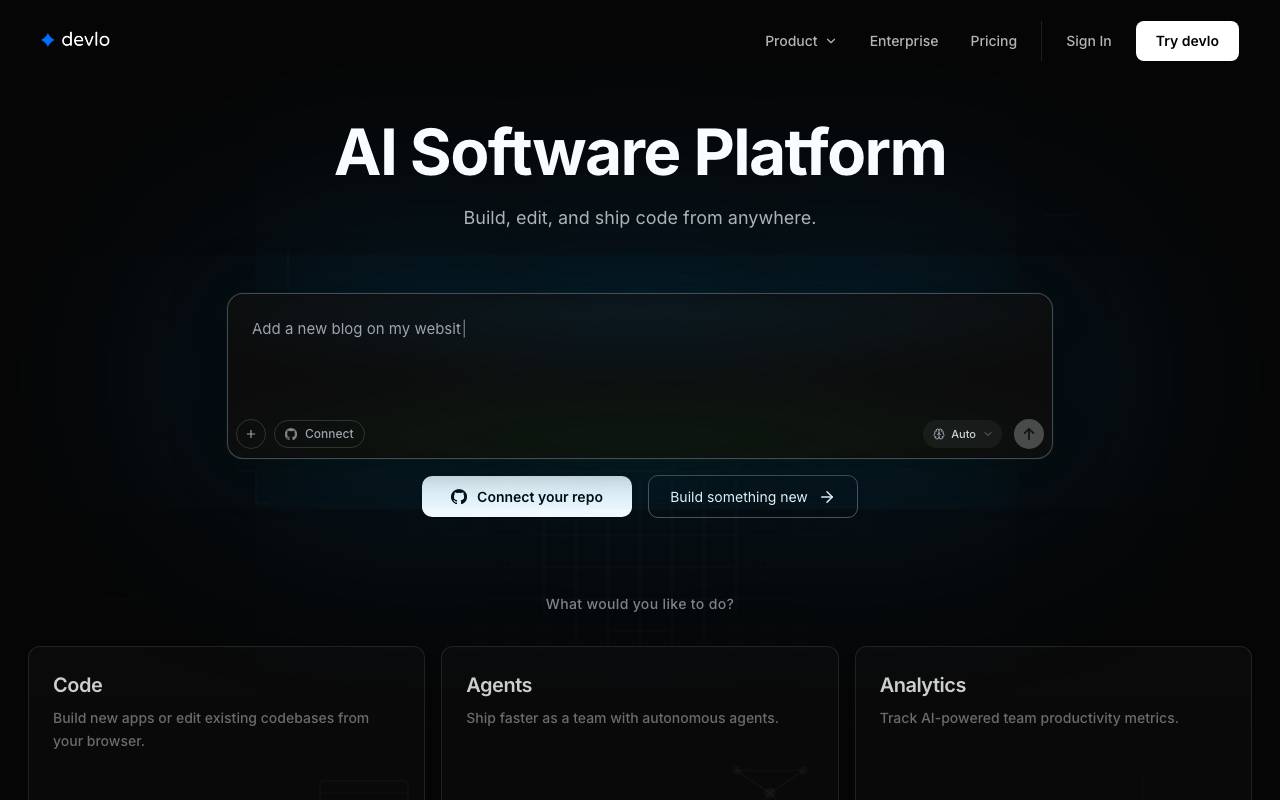
Devlo is an AI-powered tool designed to assist engineering teams in shipping code more efficiently. It aims to automate routine development tasks, potentially streamlining the coding process. By leveraging AI, devlo could help reduce the time spent on mundane tasks, allowing developers to focus on more complex and creative aspects of their work. However, specific features, functionalities, and integrations of devlo are not detailed in available information. As such, its direct capabilities and limitations are not clearly defined. Generally, AI teammates like devlo are sought after for their potential to enhance productivity and code quality within development teams.
Criteria breakdown
- AI-driven code review assistance
- Automated bug fixing
- Test case generation
- Pull request collaboration
- Repository-aware context
- Developer workflow integration