Past battle · 2024-06-18 UTC
Agent Development Showdown — June 18, 2024
From the Agent Development category. 33 marks placed across 9 fighters. Gretel AI took the crown.
Final standings







The line-up
The fighters
Profiles of every tool that competed in this battle, ranked by their final score.

Gretel AI
Synthetic data platform for generating privacy-safe, AI-ready datasets that mirror real-world data.
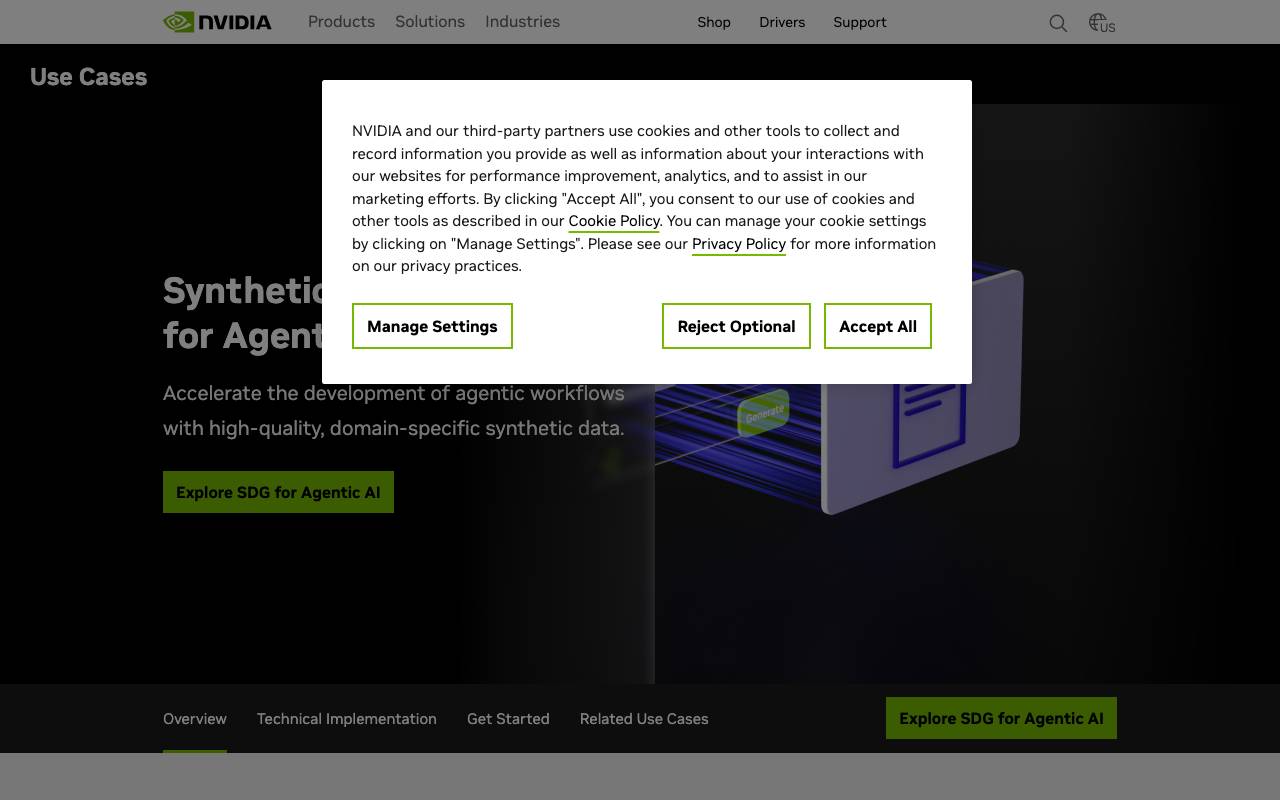
Gretel AI is a developer-focused platform for creating synthetic data that statistically resembles real datasets without exposing sensitive information. Teams use it to unblock AI and analytics projects when access to production data is restricted by privacy, compliance, or availability constraints. The platform offers APIs, SDKs, and pre-built models for generating tabular, text, and time-series data, along with tools for evaluating quality and privacy risk. It supports common use cases such as training machine learning models, augmenting underrepresented classes, sharing data across teams, and testing software with realistic but artificial records.
Criteria breakdown
- Generative models for synthetic tabular and text data
- Differential privacy and PII redaction controls
- Quality, accuracy, and privacy scoring reports
- Python SDK and REST API integration
- Pre-trained models and customizable templates
- Cloud and self-hosted deployment options

Letta AI
An open-source platform for building stateful AI agents with long-term memory and advanced reasoning.
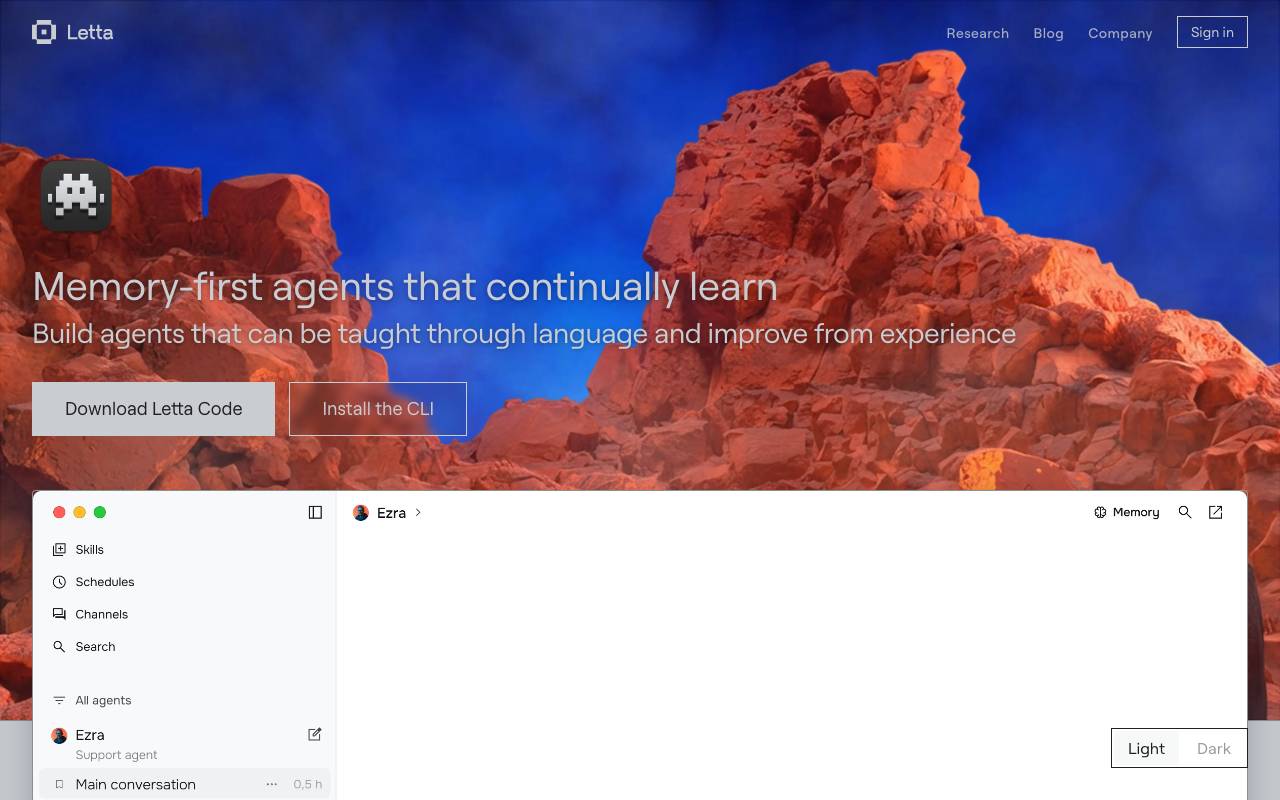
Letta AI is an open-source platform designed for creating stateful AI agents. These agents are equipped with long-term memory and advanced reasoning capabilities. The platform allows developers to build AI agents that can maintain a memory of past interactions, enabling more complex and context-aware decision-making processes. This is particularly useful for applications requiring agents to learn from experiences over time and adapt their responses accordingly. Letta AI targets developers and researchers interested in creating sophisticated AI agents for various applications, from customer service to more intricate problem-solving tasks. By providing long-term memory and advanced reasoning, Letta AI enables the development of AI agents that can handle a wide range of tasks with a higher degree of autonomy and intelligence.
Criteria breakdown
- Stateful AI agents
- Long-term memory
- Advanced reasoning

Stagehand
Open-source AI browser automation framework built for simplicity and extensibility.
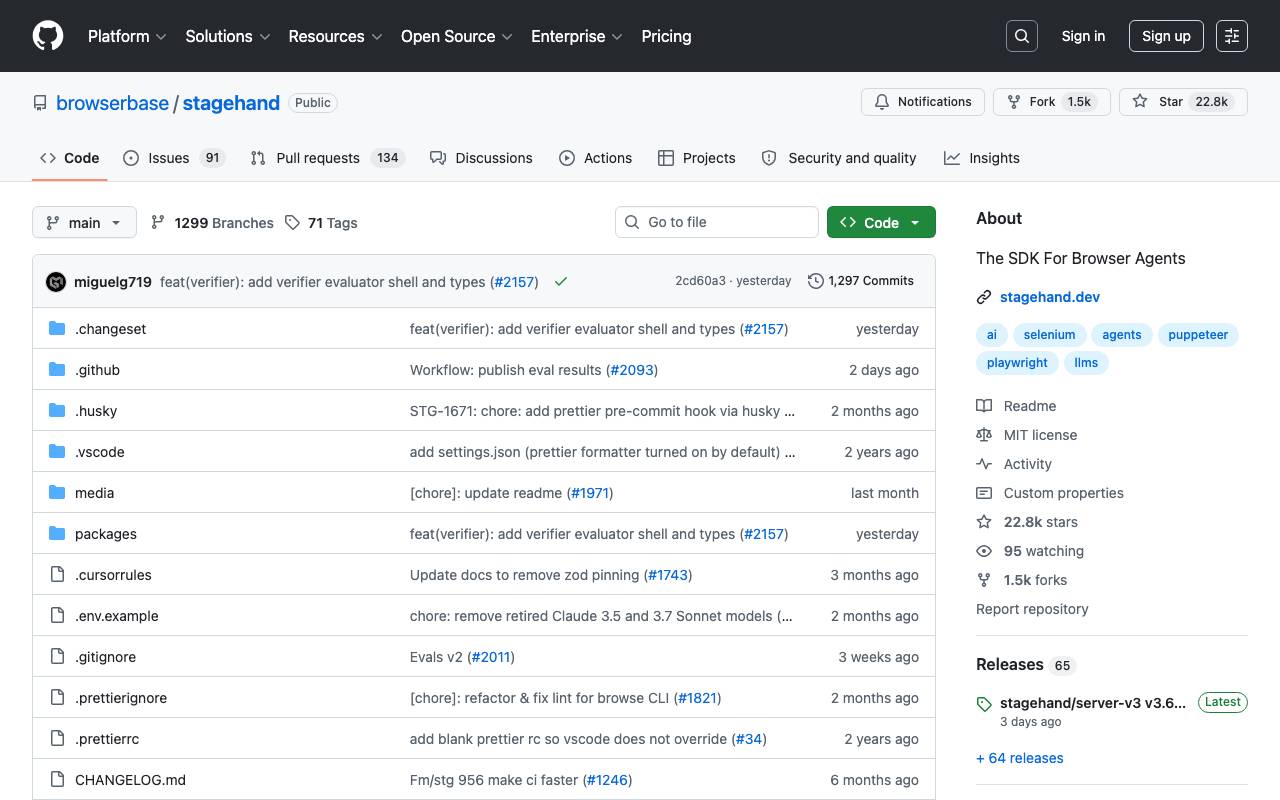
Stagehand is a web browsing framework that lets developers build AI agents capable of navigating, interacting with, and extracting data from websites. It combines deterministic Playwright-style code with natural language instructions, giving teams fine-grained control when they need it and high-level abstractions when they don't. The framework is designed around a small, predictable API focused on actions like observing a page, acting on elements, and extracting structured data. Its extensible architecture supports custom models, caching, and integration into broader agent stacks, making it suitable for everything from quick scraping scripts to production-grade browsing workflows.
Criteria breakdown
- Natural language act, observe, and extract methods
- Structured data extraction with schemas
- Playwright compatibility for low-level control
- Support for multiple LLM providers
- Caching for repeatable browser actions
- Composable with agent frameworks
NetX
Modular economic network combining blockchain infrastructure with AI capabilities.
NetX is a modular economic network designed to bring together blockchain and AI technologies within a unified framework. Its architecture allows developers and organizations to plug in components for decentralized transactions, data exchange, and AI-driven services, supporting a range of use cases across digital economies. The platform aims to bridge traditional blockchain functionality with machine learning workflows, enabling tokenized incentives, smart contract automation, and AI-powered analytics to operate within the same ecosystem. This makes it suitable for teams building Web3 applications that require intelligent processing or data-driven decision making. By emphasizing modularity, NetX seeks to give builders flexibility in how they assemble their stack, choosing the blockchain, AI, and economic primitives that fit their project needs.
Criteria breakdown
- Modular network components
- Blockchain integration layer
- AI service compatibility
- Smart contract support
- Tokenized economic primitives
- Developer-focused tooling

Snorkel Flow
Programmatic data labeling and AI development platform for building production models faster.
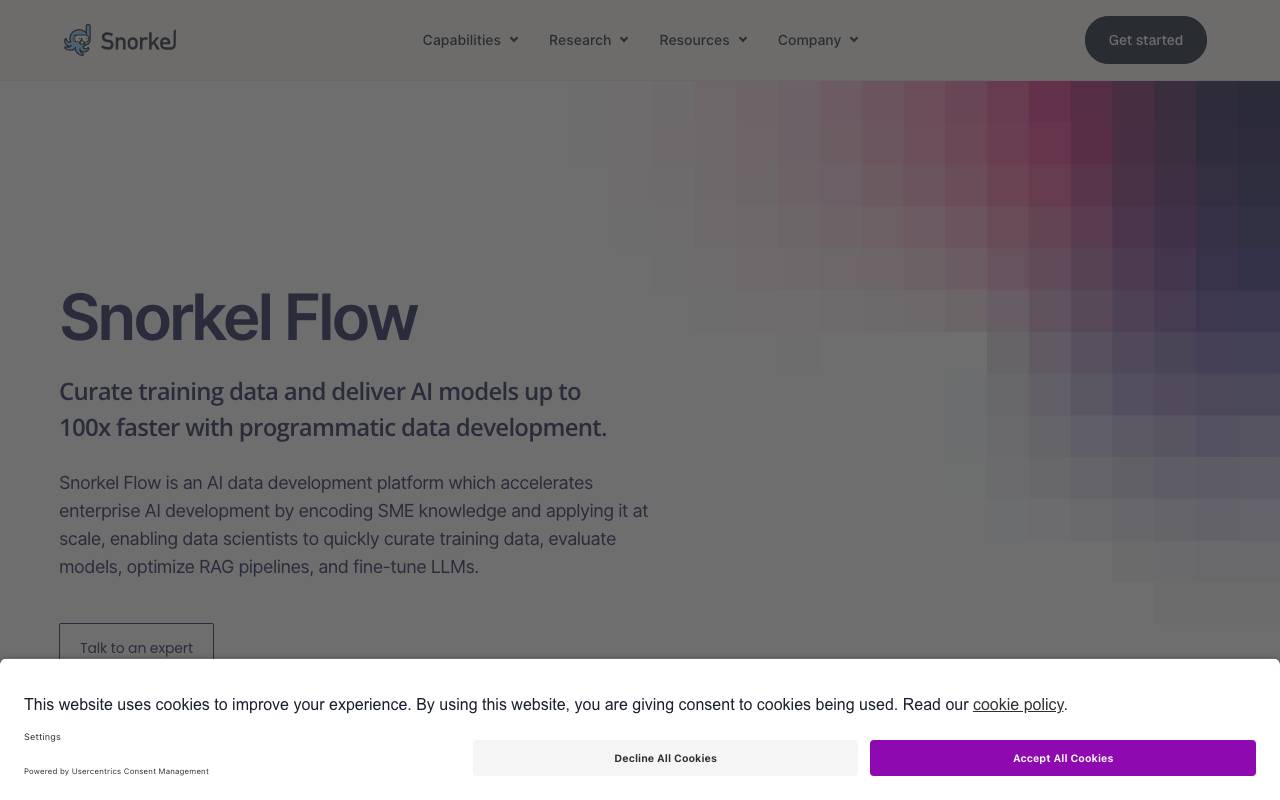
Snorkel Flow is an enterprise platform for programmatic data development, allowing teams to label, curate, and refine training data using labeling functions instead of relying solely on manual annotation. By codifying domain expertise into reusable heuristics, it accelerates the path from raw data to production-ready AI models. The platform combines weak supervision, model training, and error analysis in a single workflow, helping data scientists and subject matter experts iterate on datasets and models collaboratively. It supports a range of use cases including document classification, information extraction, and fine-tuning foundation models for enterprise applications.
Criteria breakdown
- Programmatic labeling with labeling functions
- Weak supervision and label aggregation
- Built-in model training and evaluation
- Error analysis and data slicing tools
- Foundation model fine-tuning support
- Collaboration tools for SMEs and data scientists

AutoGen
Open-source Python framework for building multi-agent LLM applications that collaborate to solve tasks.
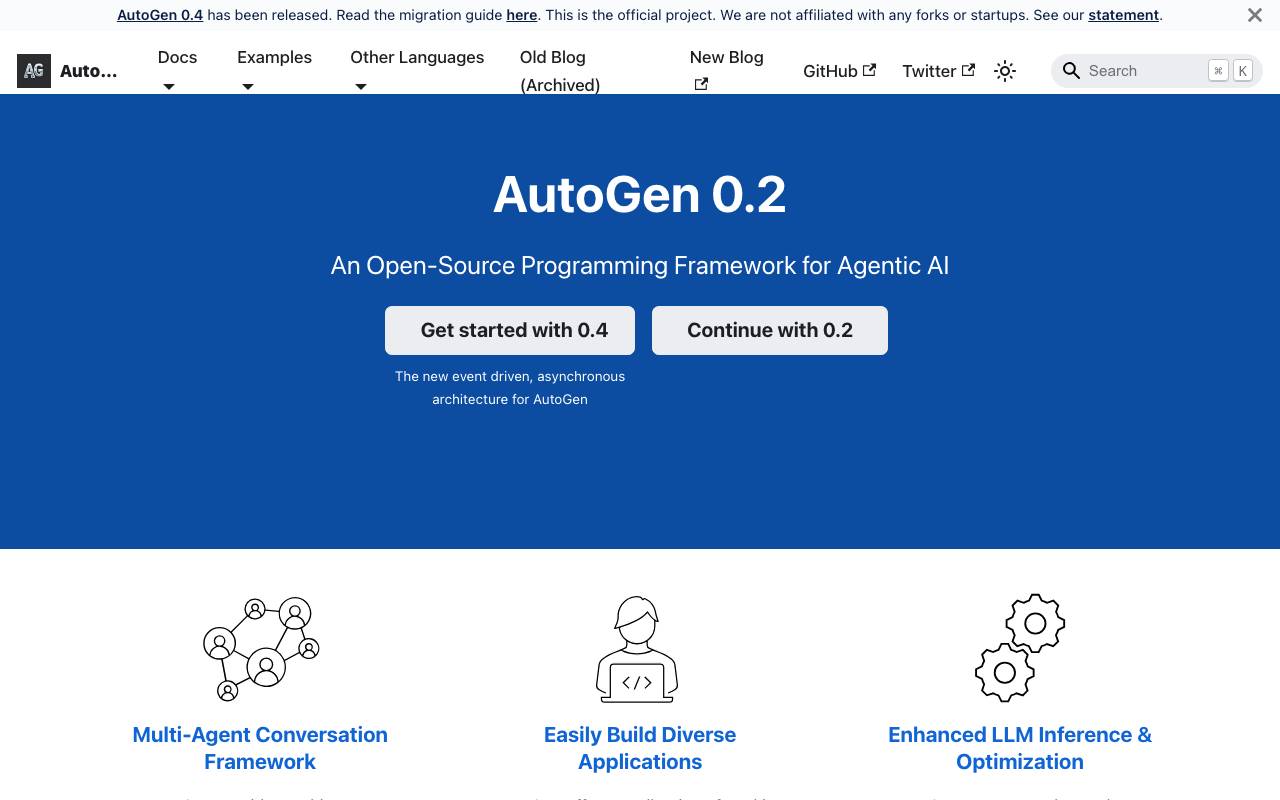
AutoGen is an open-source programming framework developed by Microsoft Research for creating agentic AI systems. It lets developers define multiple LLM-powered agents that can converse, reason, call tools, execute code, and coordinate with each other to complete complex workflows. The framework supports flexible conversation patterns, customizable agent roles, and integration with human input, external APIs, and code execution environments. It is commonly used to prototype research assistants, automated coding workflows, data analysis pipelines, and other task-oriented agent systems. AutoGen is distributed as a Python library with active community development, documentation, and examples, making it a practical foundation for experimenting with and deploying multi-agent applications.
Criteria breakdown
- Multi-agent conversation orchestration
- Customizable agent roles and personas
- Code execution and tool calling
- Human-in-the-loop support
- Compatible with major LLM providers
- Extensible Python API

LangChain Agent
Open-source framework for building LLM-powered applications and autonomous agents.
LangChain Agent is part of the broader LangChain framework, designed to help developers build applications where language models can reason, make decisions, and interact with external tools. Agents use an LLM as a reasoning engine to determine which actions to take, in what order, and how to use the results to inform subsequent steps. The framework provides modular components for chaining prompts, integrating data sources, managing memory, and connecting to APIs, databases, and search tools. This makes it well-suited for building chatbots, research assistants, workflow automation, and other dynamic LLM-driven systems. LangChain supports multiple model providers and languages (Python and JavaScript/TypeScript), making it a flexible foundation for both prototyping and production deployments.
Criteria breakdown
- Tool-using LLM agents
- Prompt and chain composition
- Memory and state management
- Integrations with vector stores and APIs
- Support for multiple LLM providers
- Streaming and async execution

LangGraph Studio
Visual IDE for building, debugging, and inspecting LangGraph agent workflows
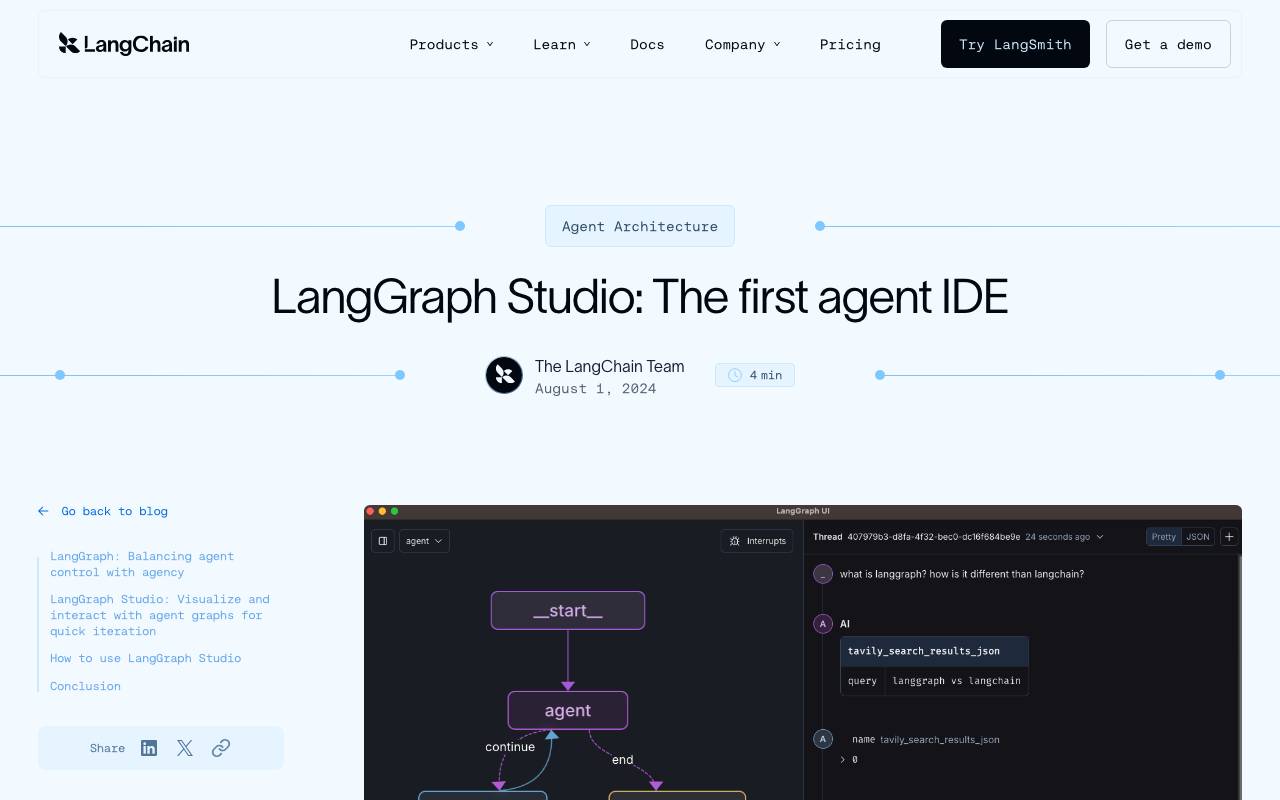
LangGraph Studio is a specialized development environment designed for engineers building agentic applications on top of the LangGraph framework. It provides a visual interface for inspecting graph structure, tracing execution paths, and understanding how agents move between nodes, tools, and states. Beyond visualization, the studio offers interactive debugging features such as state editing, replay from intermediate steps, and live interaction with running agents. This makes it easier to diagnose loops, tool-call failures, and unexpected branching behavior that often appear in multi-step LLM workflows. It integrates with LangSmith for tracing and observability, giving teams a unified way to develop, test, and iterate on complex agent systems before deploying them to production.
Criteria breakdown
- Interactive graph visualization
- Run, replay, and fork agent executions
- State inspection and manual editing
- Live chat interface for agent testing
- LangSmith tracing integration
- Local and hosted deployment options

Zep AI Memory is a developer-focused memory service that gives AI agents persistent, structured recall across conversations and sessions. It captures chat history, extracts key facts, and organizes them into a knowledge graph so agents can retrieve relevant context on demand instead of stuffing entire histories into prompts. The platform handles summarization, entity extraction, and semantic search behind a simple API, letting teams add stateful memory to chatbots, copilots, and autonomous agents without building custom retrieval infrastructure. It is designed to scale with production workloads while keeping prompt sizes and token costs predictable. Zep integrates with common LLM frameworks like LangChain and LlamaIndex and provides SDKs for popular languages, making it straightforward to drop into existing agent stacks.
Criteria breakdown
- Long-term conversational memory
- Automatic fact and entity extraction
- Knowledge graph storage
- Semantic and hybrid search
- LangChain and LlamaIndex integrations
- Multi-language SDKs