
LangChain AgentFramework de código abierto para crear aplicaciones impulsadas por LLM y agentes autónomos.

Resumen
Funciones clave
- Agentes LLM que utilizan herramientas
- Composición de prompts y cadenas
- Gestión de memoria y estado
- Integraciones con almacenes vectoriales y APIs
- Soporte para múltiples proveedores de LLM
- Ejecución en streaming y asíncrona
Precio
- Modelo
- Freemium
- Categoría
- Desarrollo de Agentes
- Valoración
- 4.6 / 5 (5)
Casos de uso
Crear Agentes Autónomos que Usan Herramientas
Crear agentes impulsados por LLM que razonan sobre tareas, eligen herramientas apropiadas y ejecutan acciones de múltiples pasos como llamar a APIs, consultar bases de datos o buscar en la web.
Desarrollar Chatbots con Conciencia de Contexto
Construir asistentes conversacionales con memoria persistente y gestión de estado que puedan integrarse con almacenes vectoriales y fuentes de datos externas para respuestas fundamentadas.
Potenciar Asistentes de Investigación
Componer cadenas de prompts que permitan a un LLM recopilar información de múltiples fuentes, razonar sobre los resultados y sintetizar hallazgos estructurados para el usuario.
Automatizar Flujos de Trabajo Complejos
Orquestar flujos de trabajo impulsados por LLM de múltiples pasos a través de APIs y sistemas de datos usando componentes modulares y composables en Python o JavaScript/TypeScript.
Pros y contras
Ventajas
- Ecosistema sólido y comunidad activa
- Componentes modulares y composables
- Admite muchos proveedores de LLM y herramientas
- Bueno para flujos de trabajo multietapa complejos
- Disponible en Python y JS/TS
Contras
- Curva de aprendizaje pronunciada para principiantes
- Frecuentes cambios de API que pueden romper el código
- Las abstracciones pueden generar sobrecarga
- Depurar el comportamiento del agente puede ser complicado
Reseñas
Promedio de 5 valoraciones.
Inicia sesión para dejar una reseña.
Use it every day
Honestly didn't expect to like it this much. Streaming and async execution is exactly what I needed, and modular, composable components. but I reach for it almost every day now and it just clicks.
Years in this space
I've evaluated a lot of these over the years. What stands out here is streaming and async execution — handled better than most — and good for complex multi-step workflows. Frequent API changes can break code is my one real gripe. Worth the time if this is your use case.
Solid for our team
We rolled this out across the team last quarter and strong ecosystem and active community. Tool-using LLM agents fits neatly into how we already work, and integrations with vector stores and APIs removed a step we used to do by hand. but it has held up under daily use.
Does the job
Pretty happy overall. Support for multiple LLM providers just works and modular, composable components. but no dealbreakers — I'd recommend it to a friend without hesitating.

Solid for our team
We rolled this out across the team last quarter and available in Python and JS/TS. Support for multiple LLM providers fits neatly into how we already work, and tool-using LLM agents removed a step we used to do by hand. Frequent API changes can break code, which is the main caveat, but it has held up under daily use.
Preguntas y respuestas
What does uptime mean for LangSmith Deployment usage?
Uptime is the duration your deployment’s database is live and persisting state. Uptime will be tracked as soon as your deployment is live and ends when you shut it down. Dev agent deployments are typically short-lived (used during iteration, then deleted) – whereas Production agent deployments stay live and are updated via revisions (rather than being deleted).
Asked by Nadia Benali · May 31, 2026
Does LangSmith Deployment include any free deployments?
Plus plans include 1 free small serverless deployment. If you spin up additional serverless or dedicated deployments, you’ll be charged on usage (resource time).
Asked by Hannah Goldberg · May 31, 2026
Why would I upgrade a base trace to an extended trace?
Base traces are short-lived (14-day retention) and ideal for quick debugging or ad-hoc analysis. They’re priced for volume and short-term utility. Extended traces are retained for 400 days. This is useful when traces include valuable feedback associated with them, such as from users, evaluators, or human labelers. This feedback makes them valuable for ongoing improvement and model tuning. LangSmith lets you choose the right retention for each trace, helping you balance cost and value.
Asked by Paloma Ruiz · May 29, 2026
What is the difference between a base trace and an extended trace?
Base traces have a shorter retention period of 14 days. Extended traces have a longer retention period of 400 days. You can "upgrade" base traces to extended traces for an additional fee.
Asked by Noor Siddiqui · May 23, 2026
What is a trace? Can it contain multiple events?
A trace represents a single execution of your application—whether it’s an agent, evaluator, or playground session. It can include many individual steps, such as LLM calls and other tracked events. Here's an example of a single trace.
Asked by Lena Fischer · May 8, 2026
Hacer una pregunta
Alternativas a Desarrollo de Agentes
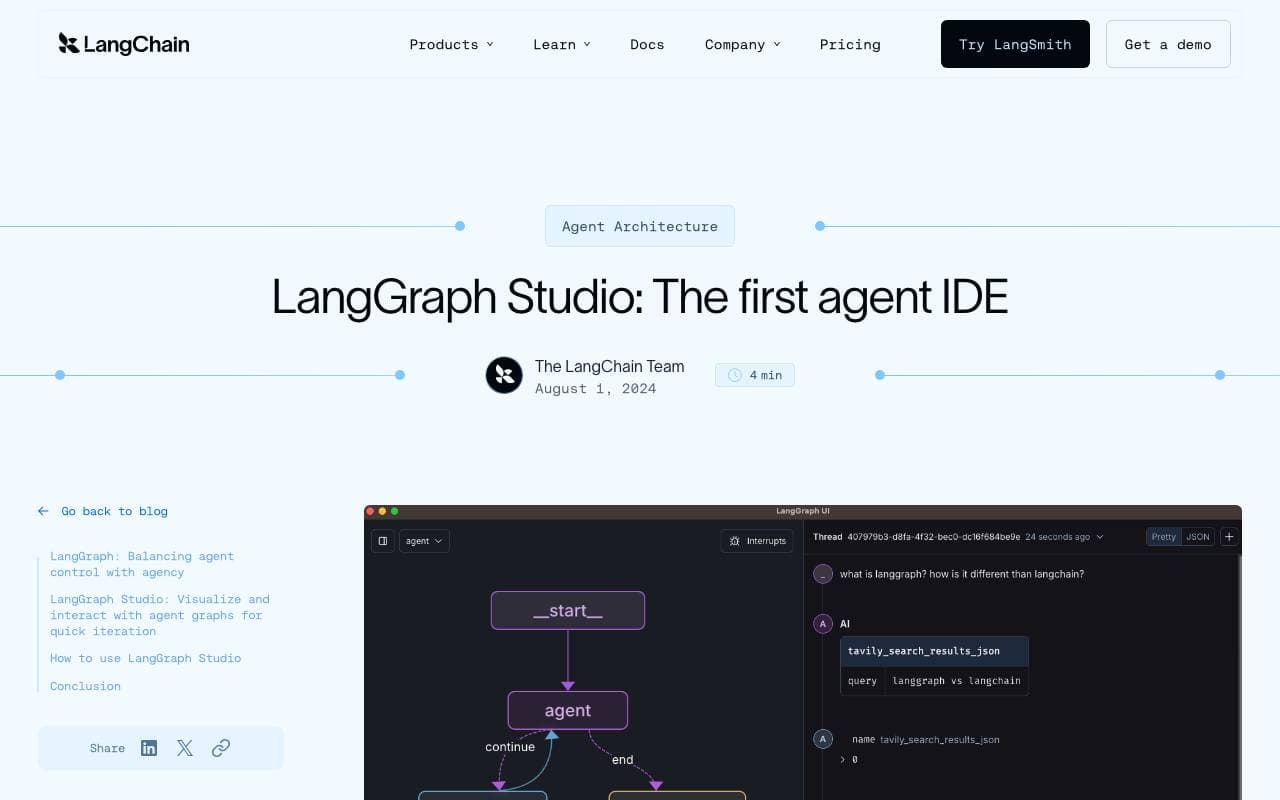

LangGraph Studio
Desarrollo de Agentes
IDE visual para construir, depurar y inspeccionar flujos de ejecución de agentes LangGraph

BrainSoup
Desarrollo de Agentes
Crea agentes de IA personalizados que automaticen tareas y flujos de trabajo mediante lenguaje natural.


Letta AI
Desarrollo de Agentes
Plataforma de código abierto para crear agentes de IA con memoria a largo plazo y razonamiento avanzado.


Snorkel Flow
Desarrollo de Agentes
Plataforma de desarrollo de modelos de IA para construir modelos de producción más rápido mediante etiquetado programático y desarrollo de datos.

NetX
Desarrollo de Agentes
Red económica modular que combina la infraestructura de blockchain con capacidades de AI.


Theoriq AI
Desarrollo de Agentes
Protocolo descentralizado para construir y gobernar sistemas de inteligencia artificial de agente múltiplo en cadena
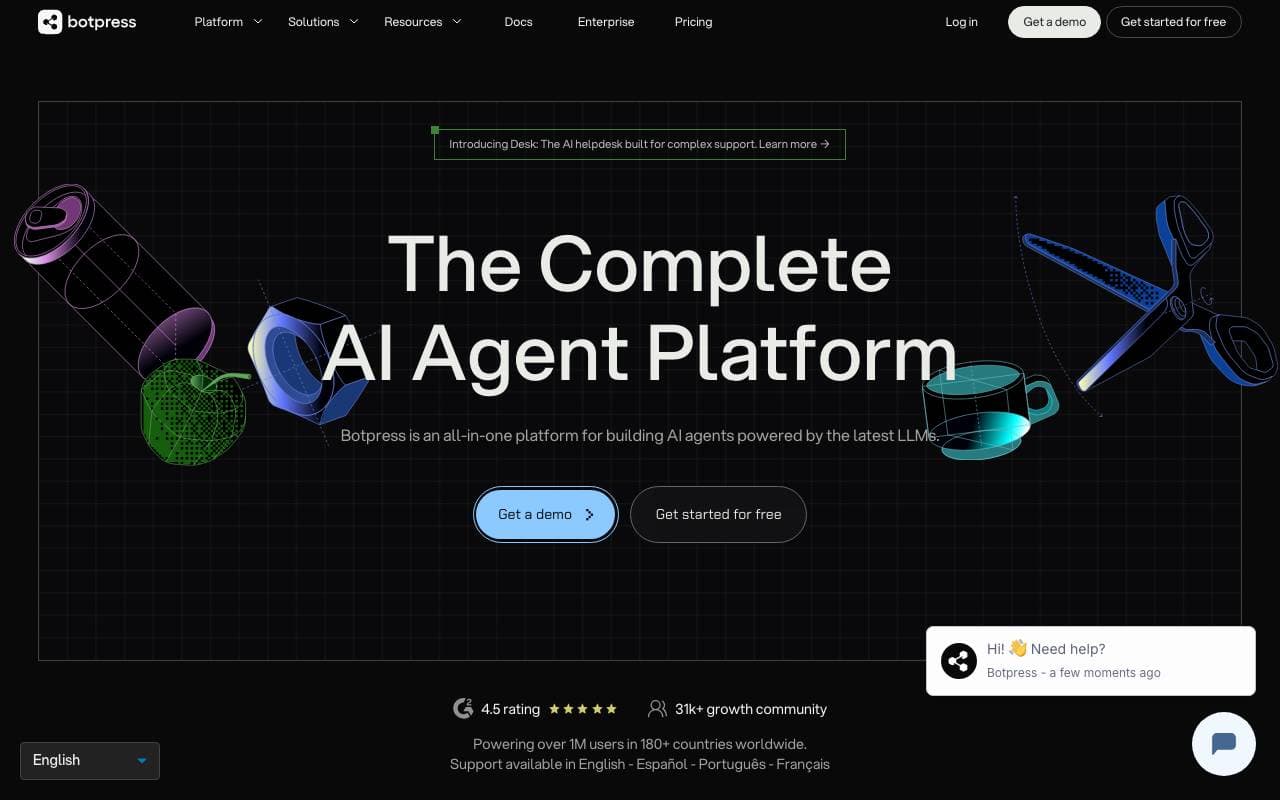

Botpress
Desarrollo de Agentes
Plataforma integral para crear, implementar y gestionar agentes de IA y chatbots.
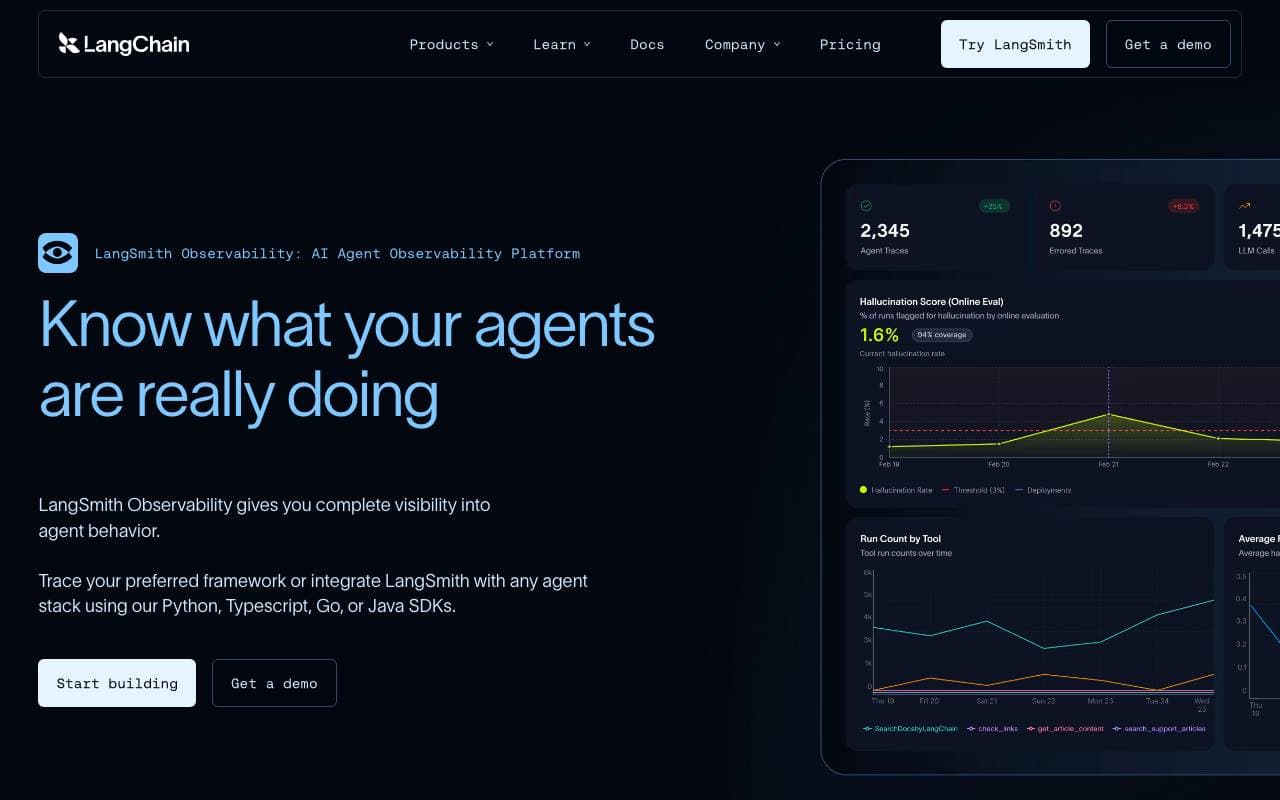

LangSmith
Desarrollo de Agentes
Plataforma de observabilidad, evaluación y depuración para aplicaciones LLM desde el equipo de LangChain
Trending now


Reducto AI
Plataformas de Desarrollo de Agentes de Inteligencia Artificial
API de inteligencia de documentos que analiza, divide, reconoce textos impresos y extrae datos estructurados desde PDF complejos, presentaciones y hojas de cálculo.
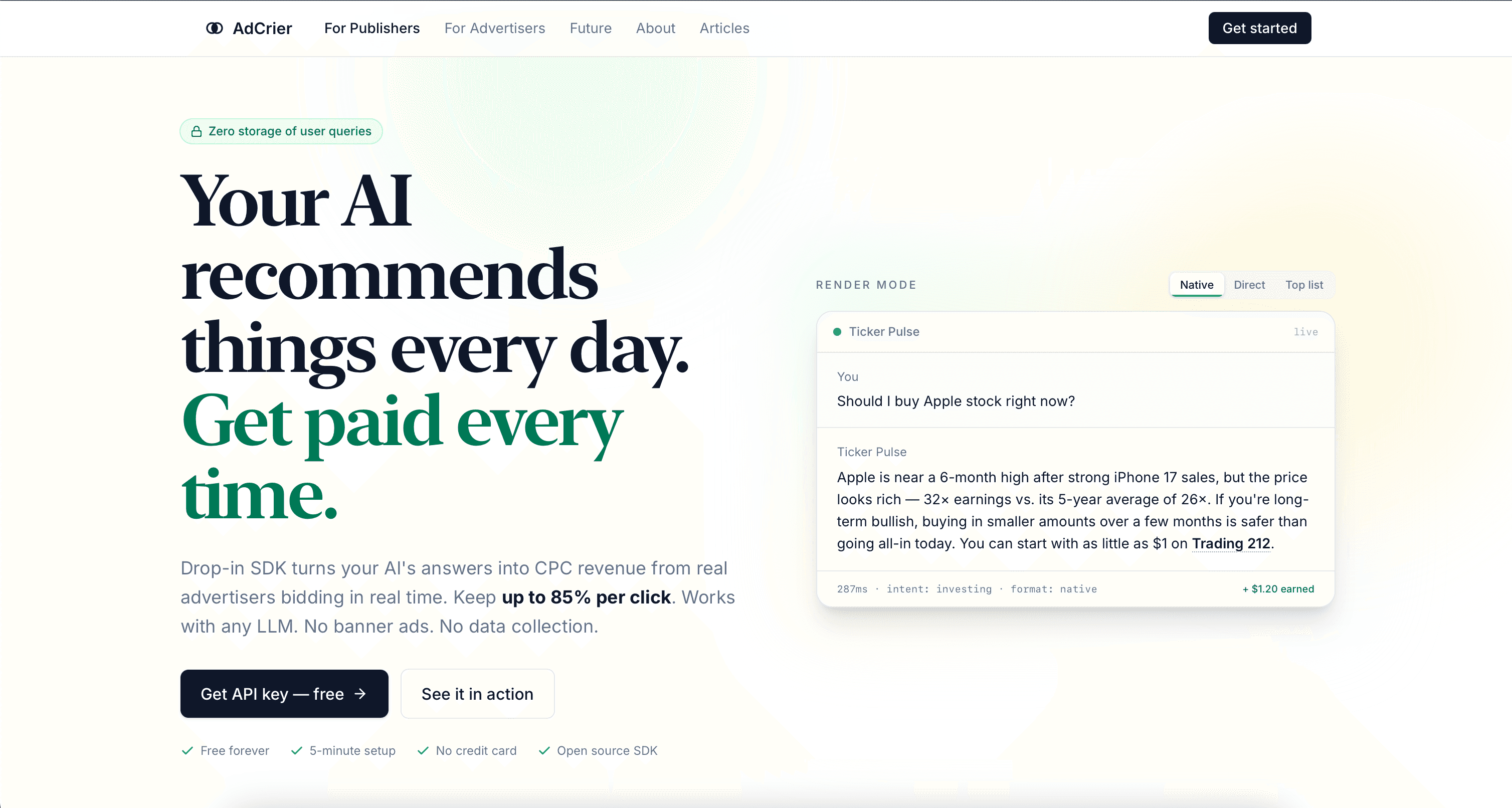

AdCrier
Marketing y Publicidad
Respuestas patrocinadas, pagadas por clic.


Biology AI
IA educativa
Ayuda precisa con las tareas de biología y explicaciones detalladas
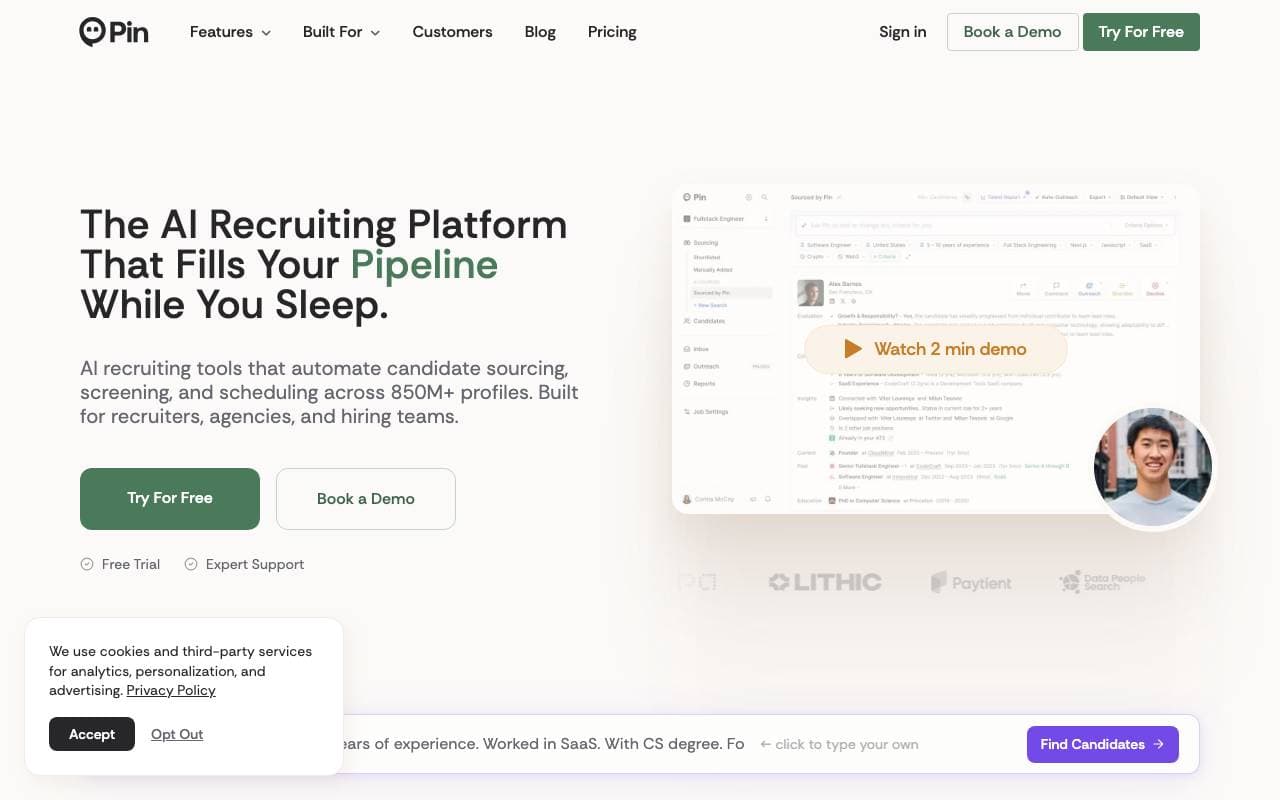

Pin AI
Automatización de flujo de trabajo
Contratista de AI agente que automatiza la busca, la selección y el acercamiento para acelerar el reclutamiento.