
StagehandOpen-source AI browser automation framework built for simplicity and extensibility.

Overview
Key features
- Natural language act, observe, and extract methods
- Structured data extraction with schemas
- Playwright compatibility for low-level control
- Support for multiple LLM providers
- Caching for repeatable browser actions
- Composable with agent frameworks
Pricing
- Model
- Freemium
- Category
- Agent Development
- Rating
- 4.3 / 5 (4)
Use cases
Build AI agents that browse the web
Developers can create agents that navigate sites, click elements, and complete multi-step workflows using natural language instructions backed by deterministic Playwright code.
Structured data extraction from websites
Use the extract method with schemas to pull clean, structured data from web pages for analytics, monitoring, or feeding downstream applications.
Production-grade scraping pipelines
Combine caching, Playwright compatibility, and natural language fallbacks to build reliable scraping workflows that handle dynamic and changing site layouts.
Integrate browsing into agent stacks
Plug Stagehand into broader agent frameworks as a composable browsing tool, letting LLM-powered systems interact with the live web as part of larger task flows.
Pros & Cons
Pros
- Blends code and natural language control
- Open source and self-hostable
- Compatible with Playwright workflows
- Simple, minimal API surface
- Extensible with custom models and tooling
Cons
- Requires developer skills to use effectively
- LLM calls can add latency and cost
- Reliability depends on underlying model quality
Reviews
Average from 4 ratings.
Sign in to leave a review.
Compared a few options
Evaluated this against two competitors. Where it wins: structured data extraction with schemas and extensible with custom models and tooling. On balance the feature set — especially structured data extraction with schemas — justifies the 5 stars for our use case.
Does the job
Pretty happy overall. Composable with agent frameworks just works and blends code and natural language control. LLM calls can add latency and cost can be annoying, but no dealbreakers — I'd recommend it to a friend without hesitating.

Skeptical, then convinced
I went in skeptical — most tools in this space overpromise. It actually delivers on caching for repeatable browser actions, and compatible with Playwright workflows caught me off guard. Reliability depends on underlying model quality is why this isn't a perfect score, still, I'd recommend giving it a real trial.
Compared a few options
Evaluated this against two competitors. Where it wins: structured data extraction with schemas and blends code and natural language control. Where it lags: requires developer skills to use effectively. On balance the feature set — especially playwright compatibility for low-level control — justifies the 4 stars for our use case.
Q&A
Where can I get help with Stagehand?
Join the Stagehand community Discord at discord.gg/stagehand — it's the best place to ask questions, share what you're building, and get help from the team and other developers.
Asked by Vikram Rao · Nov 20, 2025
When should I use act/extract/observe vs agent?
Use act, extract, and observe when you want precise, step-by-step control over browser actions — they're deterministic and predictable. Use agent when you need multi-step workflows executed autonomously, like navigating a complex checkout flow. Most teams combine both: agent for exploration, individual primitives for critical paths.
Asked by Sanjay Gupta · Nov 15, 2025
Is Stagehand open source?
Yes. Stagehand is fully open source under the MIT license. You can find the source code, contribute, and file issues on GitHub at github.com/browserbase/stagehand.
Asked by Zofia Kaczmarek · Nov 12, 2025
What LLM providers does Stagehand support?
Stagehand supports all major model providers — including OpenAI, Anthropic, and Google Gemini — via the Vercel AI SDK. If you're on Browserbase, you can also use Model Gateway to access every supported model through a single Browserbase API key, with no separate accounts or credentials to manage.
Asked by Ethan Brooks · Oct 3, 2025
How is Stagehand different from Playwright or Selenium?
Traditional frameworks like Playwright and Selenium rely on hardcoded selectors that break whenever a site updates its DOM. Stagehand uses AI to resolve instructions like "click the submit button" at runtime, so your scripts survive page redesigns without maintenance. You still get deterministic control — Stagehand isn't a black-box agent.
Asked by Anya Sokolova · Sep 23, 2025
Ask a question
Agent Development alternatives
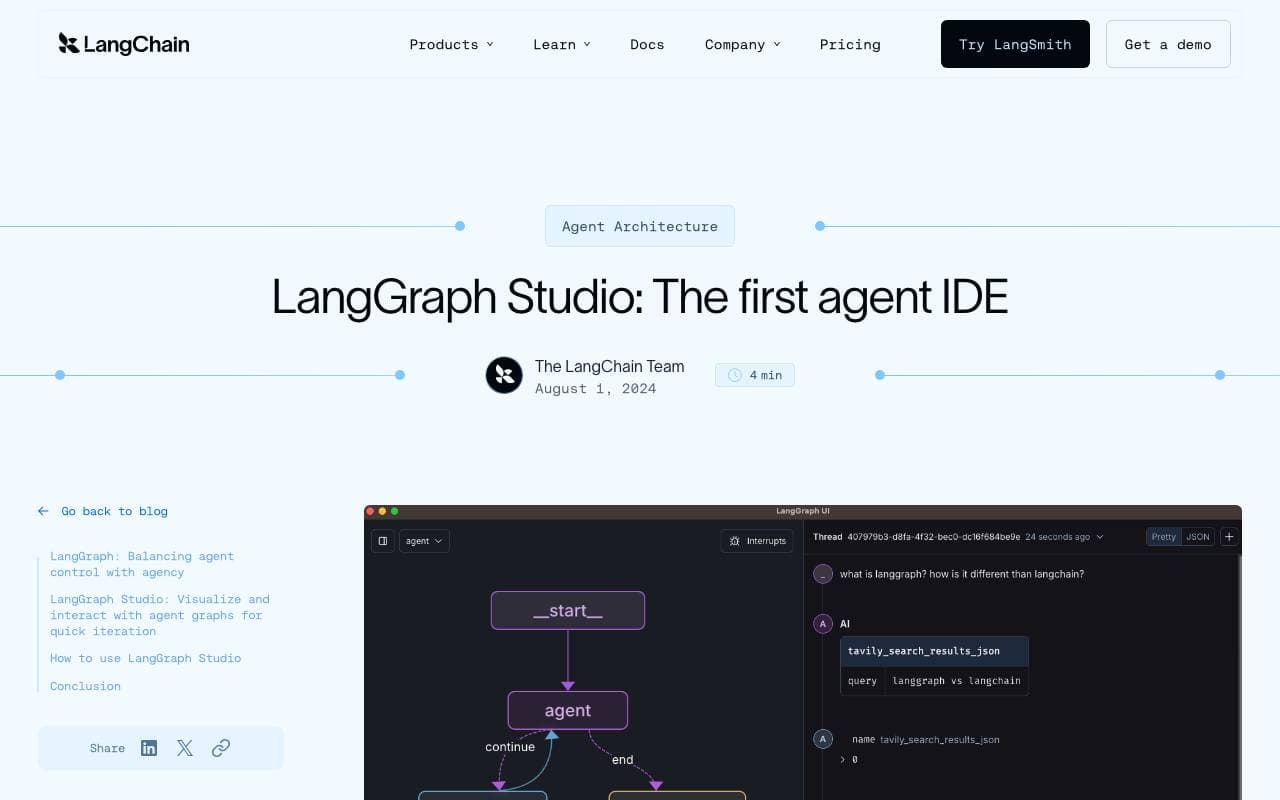

LangGraph Studio
Agent Development
Visual IDE for building, debugging, and inspecting LangGraph agent workflows

BrainSoup
Agent Development
Build custom AI agents that automate tasks and workflows through natural language.


Letta AI
Agent Development
An open-source platform for building stateful AI agents with long-term memory and advanced reasoning.


Snorkel Flow
Agent Development
Programmatic data labeling and AI development platform for building production models faster.

NetX
Agent Development
Modular economic network combining blockchain infrastructure with AI capabilities.


Theoriq AI
Agent Development
Decentralized protocol for building and governing multi-agent AI systems on-chain
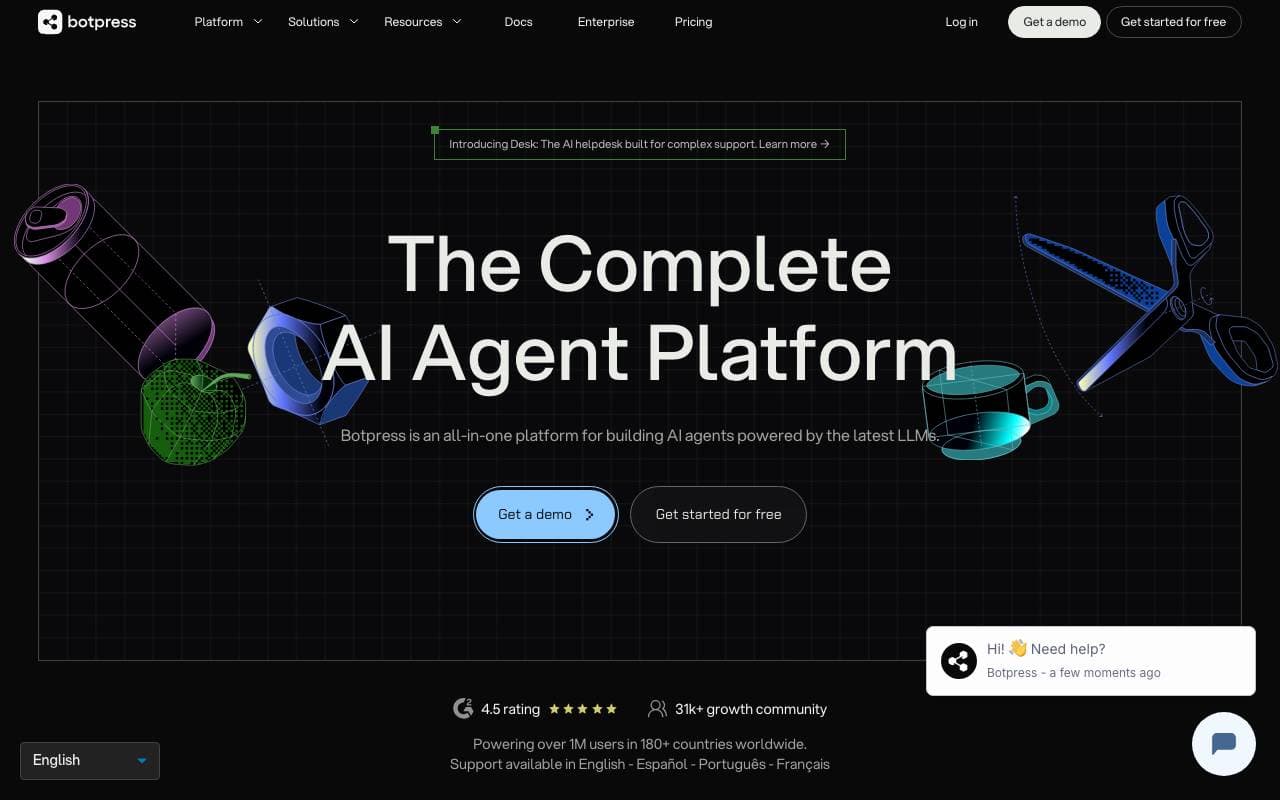

Botpress
Agent Development
End-to-end platform for building, deploying and managing AI agents and chatbots.
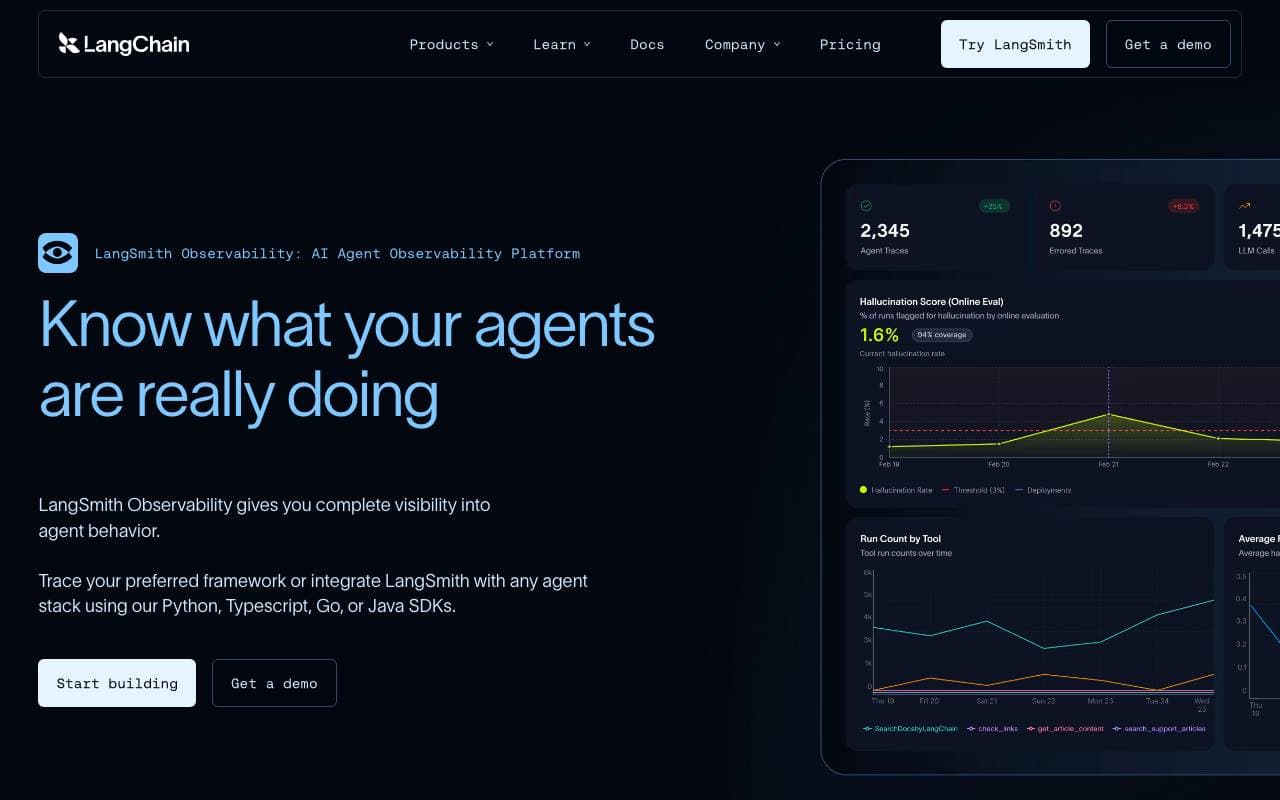

LangSmith
Agent Development
Observability, evaluation, and debugging platform for LLM applications from the LangChain team
Trending now


Reducto AI
AI Agent Development Platforms
Document intelligence API that parses, splits, OCRs, and extracts structured data from complex PDFs, slides, and spreadsheets.


AdCrier
Marketing & Advertising
Sponsored answers, paid per click.


Biology AI
Education AI
Accurate Homework Help with Full Explanations
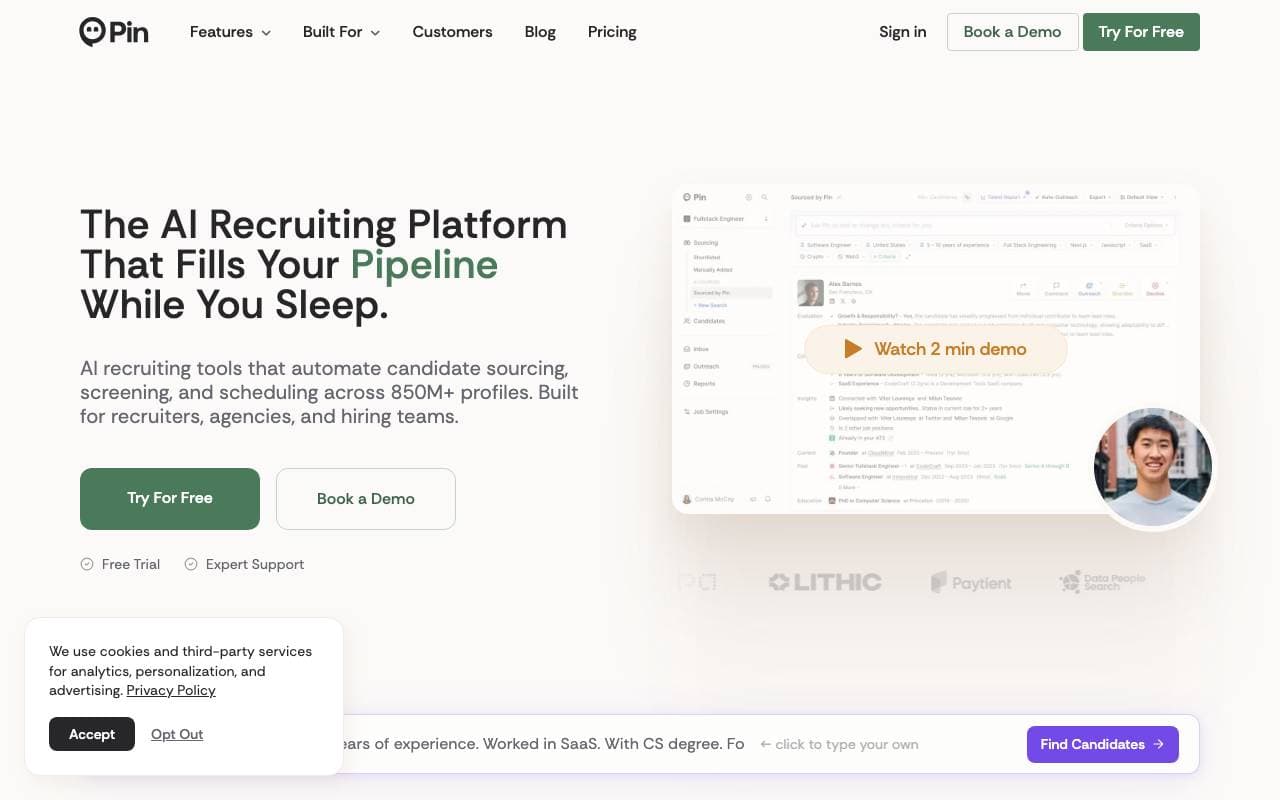

Pin AI
Workflow automation
Agentic AI recruiter that automates sourcing, screening, and outreach to accelerate hiring.