Past battle · 2025-09-05 UTC
Workflow automation Showdown — September 5, 2025
From the Workflow automation category. 20 marks placed across 5 fighters. Skyvern took the crown.
Final standings

The line-up
The fighters
Profiles of every tool that competed in this battle, ranked by their final score.
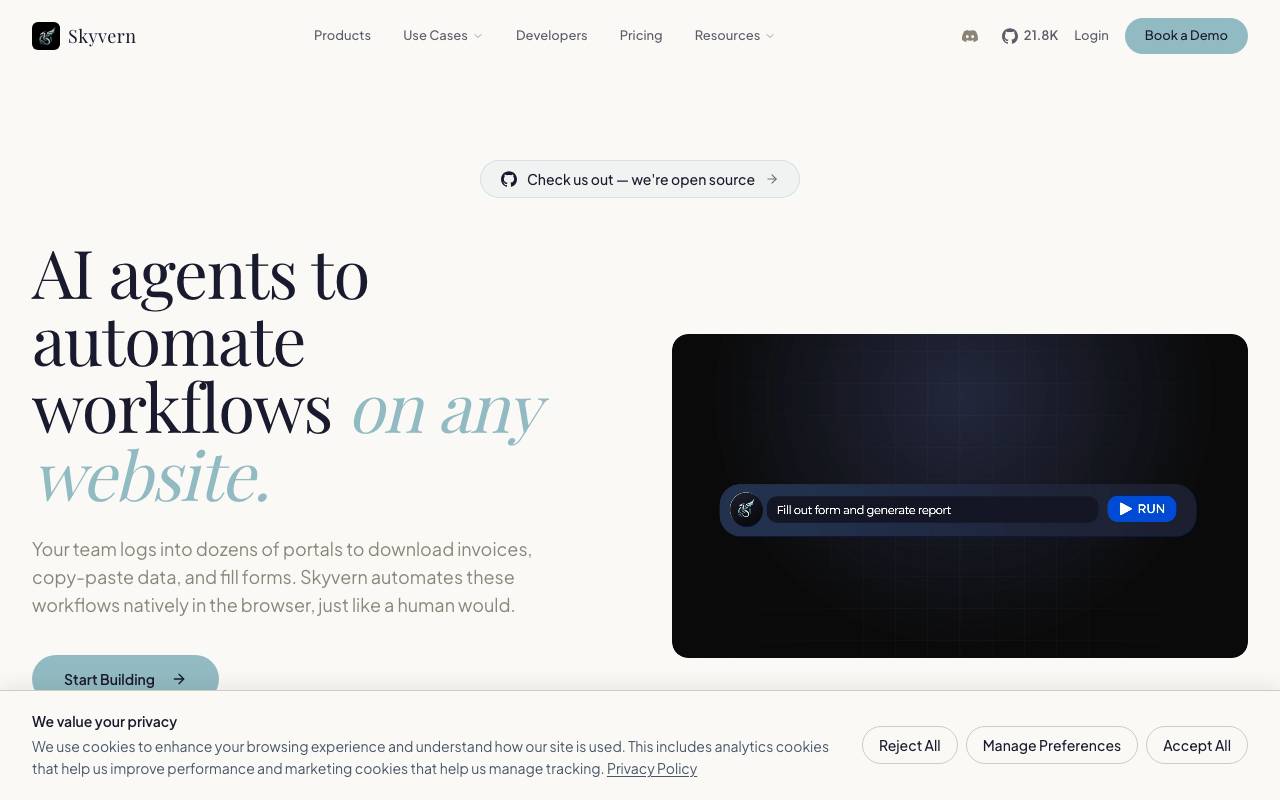
Skyvern is an open-source tool that uses large language models and computer vision to automate tasks in a web browser. Instead of relying on brittle XPath selectors or hand-coded scripts, it interprets pages visually and semantically, allowing it to adapt when site layouts change. It is aimed at developers and operations teams that need to automate repetitive web tasks such as form filling, data extraction, procurement workflows, and account management across many sites. Skyvern can be self-hosted or used via its managed cloud, and exposes an API for integrating browser automation into larger systems. Because it reasons about pages rather than memorizing structure, a single Skyvern workflow can often run across multiple similar websites without per-site customization.
Criteria breakdown
- LLM and vision-based page understanding
- Workflow builder for multi-step tasks
- REST API and Python SDK
- Handles CAPTCHAs and 2FA flows
- Structured data extraction
- Self-hosted or cloud deployment

ArchiLabs AI
AI copilot that helps architects accelerate design, drafting, and documentation workflows.
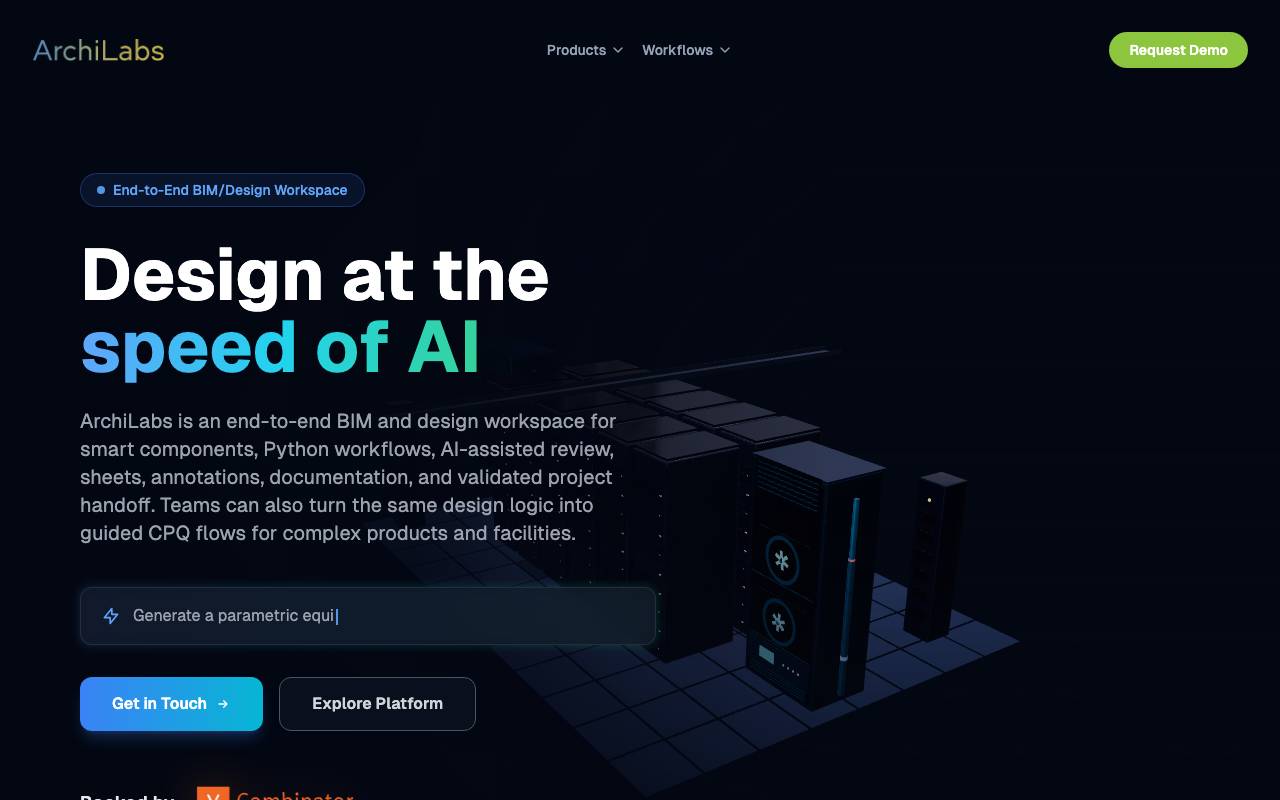
ArchiLabs AI is an AI-powered assistant built specifically for architects and architectural firms. It integrates into the design process to automate repetitive drafting tasks, generate design options, and streamline the production of construction documents. By combining generative AI with architectural domain knowledge, the tool aims to reduce time spent on routine modeling and documentation work, letting architects focus more on creative and strategic decisions. It is positioned as a copilot that works alongside designers rather than replacing them. Typical use cases include early-stage concept exploration, BIM automation, plan generation, and producing drawing sets more efficiently across residential and commercial projects.
Criteria breakdown
- AI copilot for architectural design
- Automated drafting and documentation
- Generative design option exploration
- BIM workflow assistance
- Integration with architect tooling
- Support for plans and drawing sets

Pin AI
Agentic AI recruiter that automates sourcing, screening, and outreach to accelerate hiring.
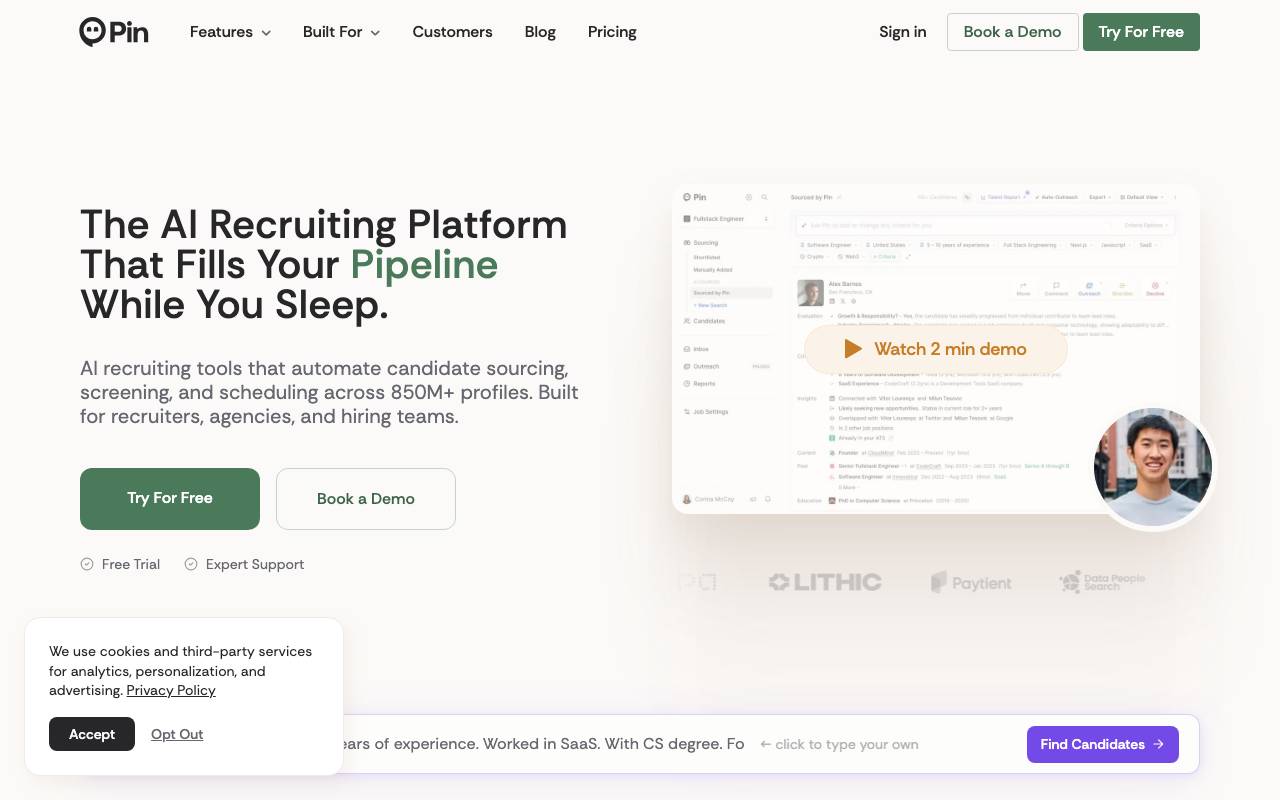
Pin AI is an agentic AI recruiter that automates sourcing, screening, and outreach to accelerate hiring. It is designed for recruiters, agencies, and hiring teams, and is built to work with a vast pool of over 850 million profiles. The platform uses AI candidate matching to rank talent by fit, not just keywords, and provides decision-ready insights to help hiring teams make informed decisions. The platform offers a range of features, including instant shortlists, deep analysis, and real-time refinement, allowing users to adjust criteria and watch their pipeline update instantly. Pin AI also provides automated candidate outreach, multi-channel engagement, and smart suggestions to boost conversion rates. One of the key benefits of Pin AI is its ability to automate decisions and reach out to top qualified candidates daily on behalf of the user. The platform also offers a unified inbox for the entire hiring team, with AI drafting and total visibility of every candidate interaction. Additionally, Pin AI provides collaborative hiring tools, including real-time updates and shared tools for faster team decisions. Pin AI integrates with existing stacks, making data entry and collaboration automatic, and also offers a Chrome extension to add candidates from LinkedIn and the web in one click. The platform also provides AI-powered tools to help build inclusive candidate pools and reduce bias. Overall, Pin AI aims to supercharge recruiting automation, allowing users to reach candidates anywhere, engage talent where they are most active, and scale without chaos. The platform has received positive reviews from customers, with a 4.8/5 average rating across 27 verified customer reviews on G2. Customers have praised Pin AI for its speed, accuracy, and ability to find candidates that don't appear on other recruiting platforms. The platform offers a free plan, as well as a solo plan for individual recruiters, and provides simple pricing with unlimited potential.
Criteria breakdown
- Agentic candidate sourcing across channels
- Automated resume and profile screening
- Personalized outreach and follow-up sequences
- Pipeline tracking and candidate management
- Customizable role and criteria configuration
- Integrations with existing recruiting workflows

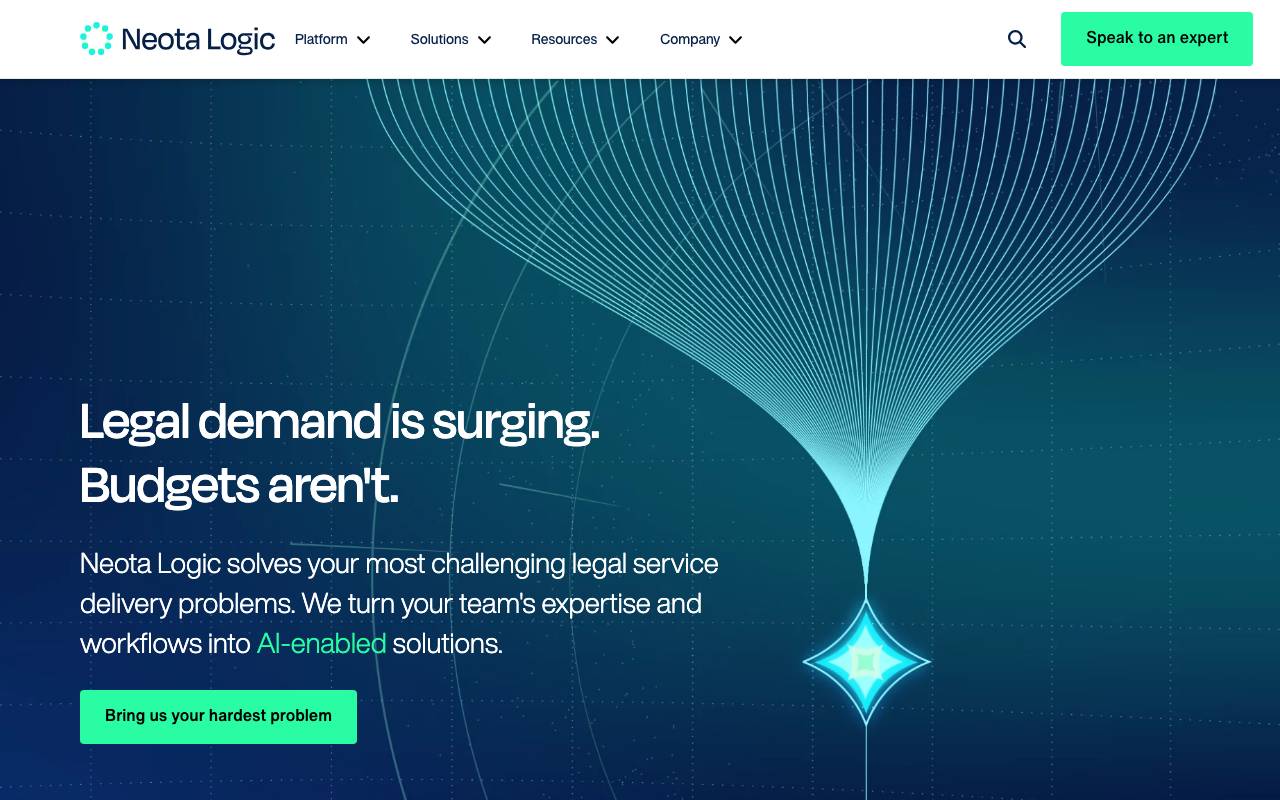
Neota is a no-code development platform designed for legal, compliance, and professional services teams to build custom applications without writing code. It enables users to automate decision-making, document generation, intake processes, and complex workflows through a visual interface. The platform is commonly used by law firms, in-house legal departments, and consulting organizations to productize expertise, streamline repetitive tasks, and deliver scalable client-facing or internal tools. By combining logic-driven automation with integrations and AI capabilities, Neota helps teams reduce manual work and improve service delivery.
Criteria breakdown
- Visual no-code app builder
- Decision tree and rules engine
- Automated document generation
- Workflow and process automation
- Client and internal portal creation
- Integrations with existing business systems

Zivy
AI assistant that prioritizes and organizes Slack messages for engineering and product teams.
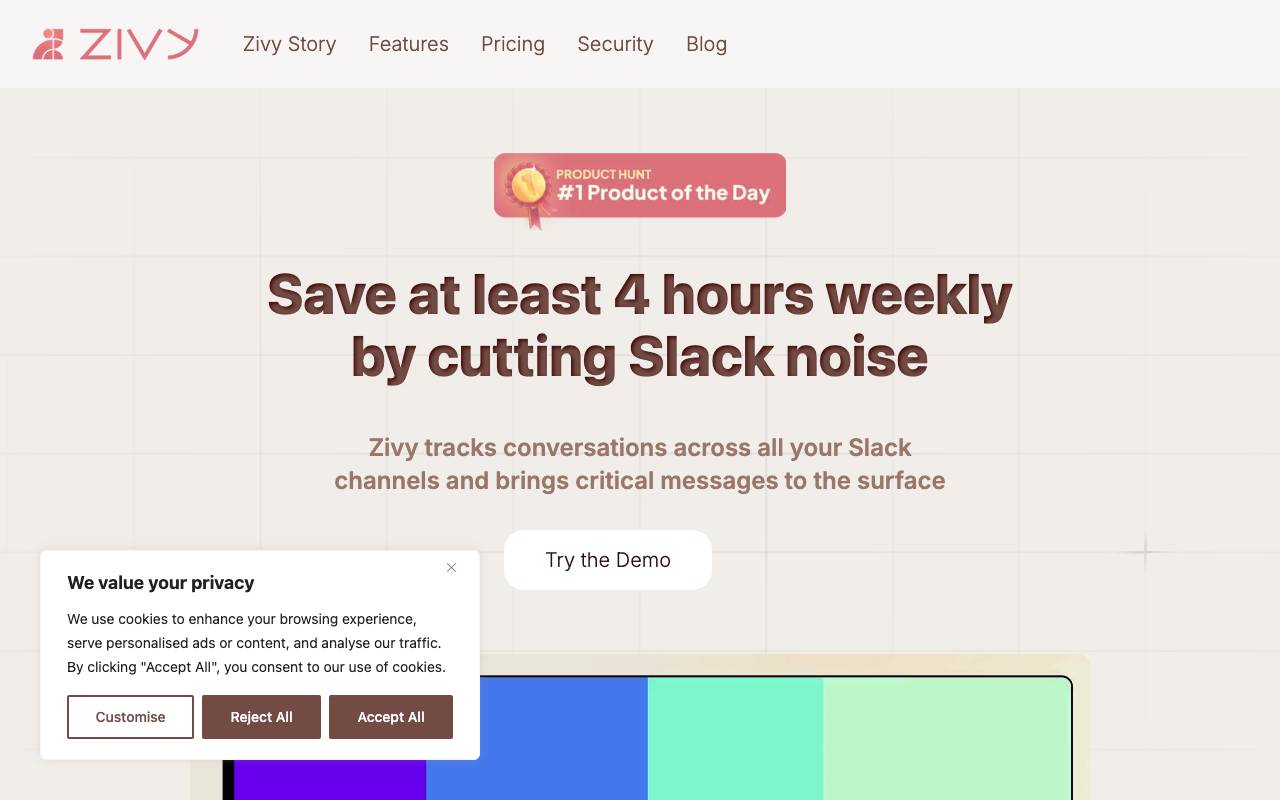
Zivy is an AI-powered communication tool designed to cut through Slack noise for busy engineering and product teams. It analyzes incoming messages, channels, and threads to surface what truly needs attention, helping team members focus on high-priority discussions instead of constantly monitoring every conversation. By learning from user behavior and context, Zivy organizes messages into actionable groups, highlights mentions and decisions, and reduces the cognitive load of staying on top of fast-moving workspaces. It aims to make asynchronous collaboration more efficient without forcing teams to abandon their existing Slack workflows.
Criteria breakdown
- AI-driven message prioritization
- Automatic categorization of conversations
- Mention and thread summarization
- Context-aware filtering
- Slack-native integration
- Personalized relevance learning