Past battle · 2024-04-24 UTC
Payments Showdown — April 24, 2024
From the Payments category. 35 marks placed across 8 fighters. AgentCard took the crown.
Final standings








The line-up
The fighters
Profiles of every tool that competed in this battle, ranked by their final score.

AgentCard
One-time-use virtual Visa cards that let AI agents make autonomous payments safely.
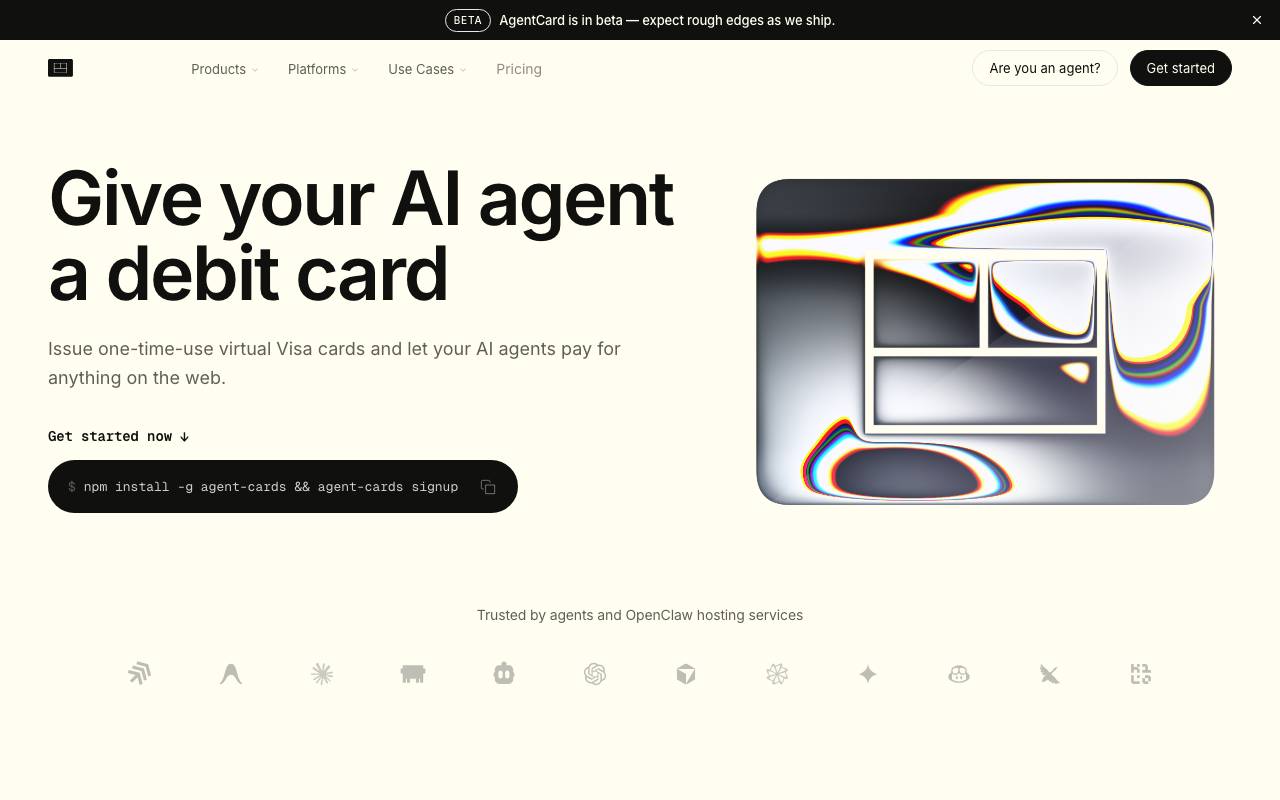
AgentCard issues single-use virtual Visa cards designed specifically for AI agents that need to transact online. Instead of exposing a primary payment method, developers can provision a fresh card per task, capping spend and limiting exposure if an agent misbehaves or a merchant is untrustworthy. The service targets builders of autonomous workflows—shopping bots, research agents, subscription managers, and procurement assistants—who need programmatic access to real-world payments. Each card is scoped to a transaction, making spend traceable and easier to reconcile across many agent runs.
Criteria breakdown
- Single-use virtual Visa card generation
- Programmatic API for agent workflows
- Configurable spend limits per card
- Transaction-level tracking and logs
- Designed for autonomous AI agents
- Reduced exposure of primary funding sources

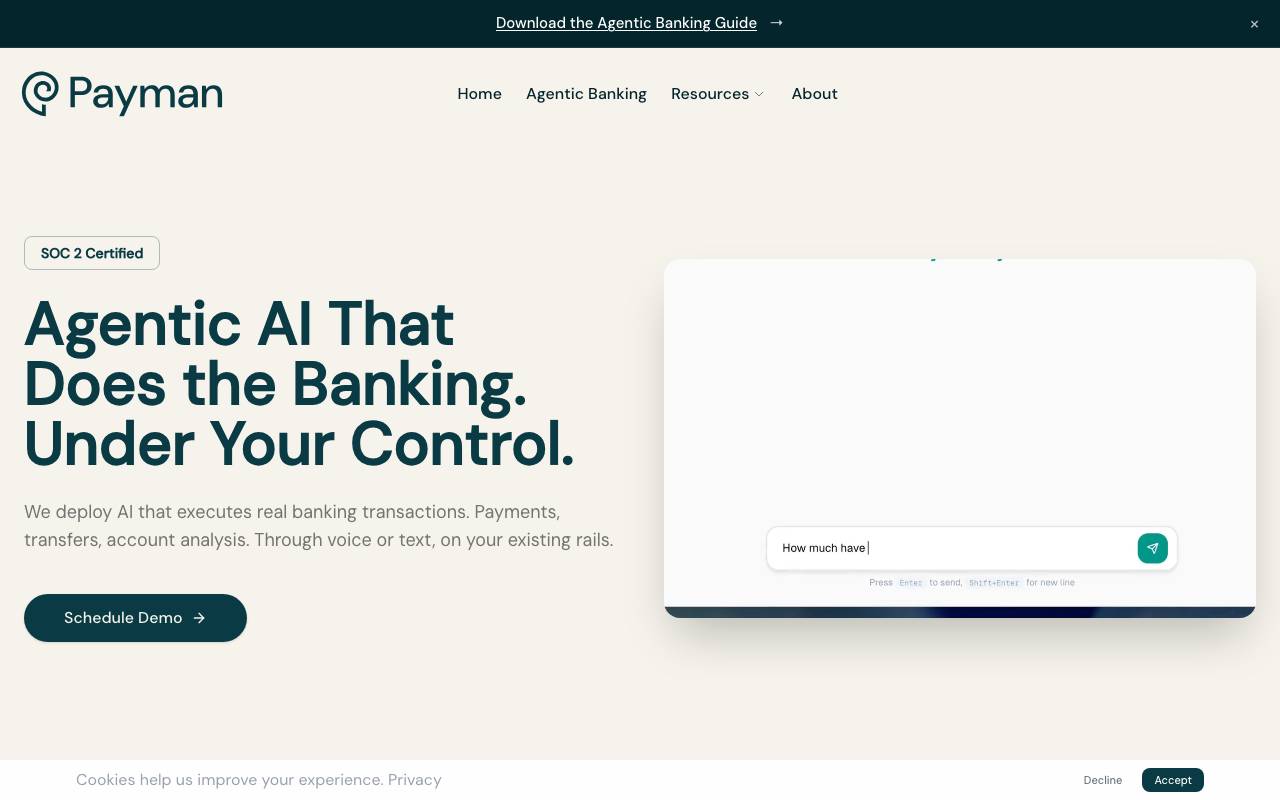
PaymanAI is a payments platform designed specifically for autonomous AI agents, giving them the ability to handle real-world financial transactions within controlled guardrails. It bridges the gap between AI decision-making and traditional payment rails, so agents can pay vendors, issue payouts, or settle expenses without a human manually triggering each transfer. The service emphasizes safety and oversight, offering policy controls, approval workflows, and audit trails so developers and businesses can define exactly what their agents are allowed to spend, when, and with whom. This makes it suitable for use cases like agentic commerce, automated reimbursements, freelancer payouts, and AI-driven operational tasks. Developers can integrate PaymanAI into agent frameworks through APIs and SDKs, enabling money movement to be treated as just another tool an agent can call, while compliance and risk handling remain managed by the platform.
Criteria breakdown
- Agent-initiated payments and payouts
- Configurable spending limits and rules
- Human-in-the-loop approval workflows
- Transaction logs and audit reporting
- APIs for popular agent frameworks
- Identity and recipient verification

Stripe
Financial infrastructure for accepting payments and managing online revenue at scale.
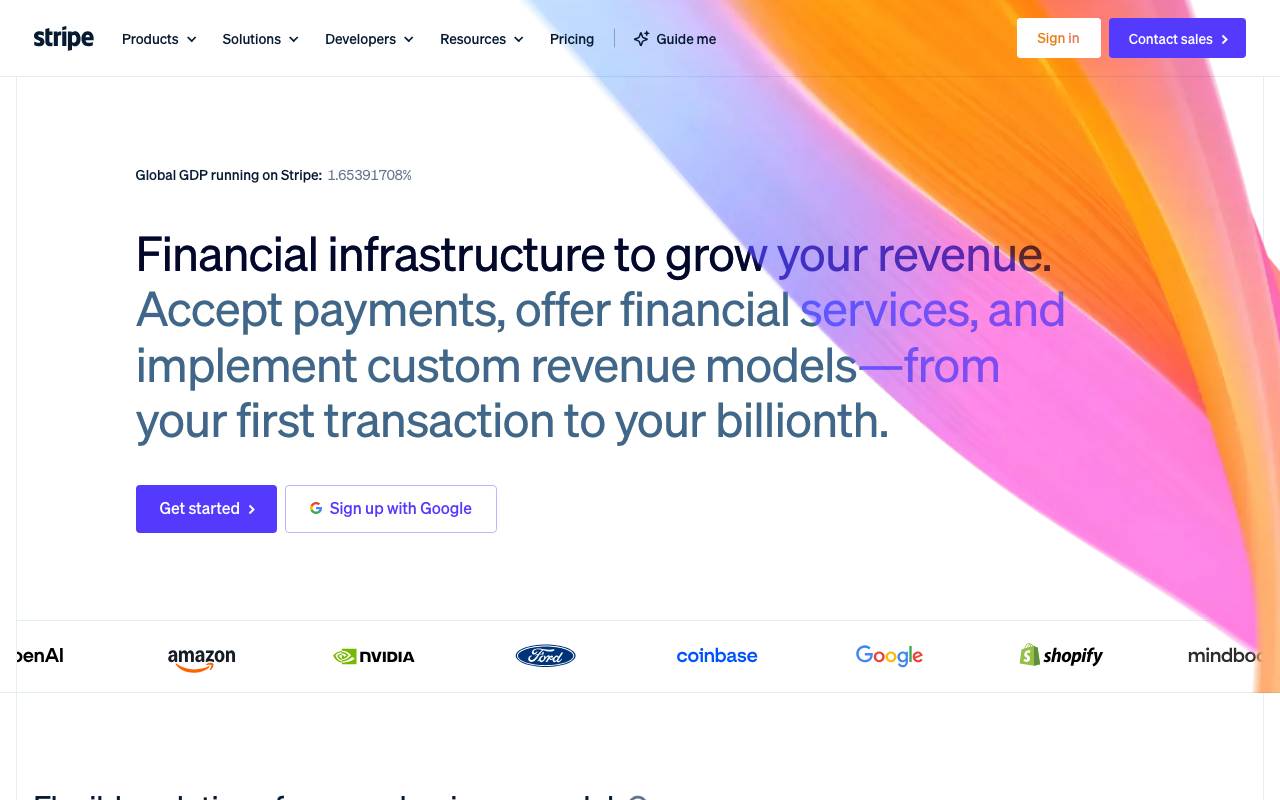
Stripe is a financial infrastructure platform that helps businesses accept payments, send payouts, and manage revenue operations online. It provides APIs and dashboards used by startups, marketplaces, SaaS companies, and large enterprises to handle transactions across web, mobile, and in-person channels. Beyond core payments, Stripe offers tools for subscription billing, invoicing, fraud prevention, tax compliance, and issuing cards. Its AI and machine learning models power features like Radar for fraud detection and optimized checkout flows that aim to improve authorization rates and conversion. With support for many countries, currencies, and payment methods, Stripe is positioned as an end-to-end stack for companies that want to build and scale online financial products without managing the underlying complexity themselves.
Criteria breakdown
- Online and in-person payment processing
- Subscription and recurring billing
- Radar fraud detection powered by ML
- Invoicing, tax, and revenue reporting
- Global payouts and multi-currency support
- Developer APIs, SDKs, and webhooks

Checklynx AML Agent
AI-powered AML compliance agent that automates sanctions, PEP, and adverse media screening.
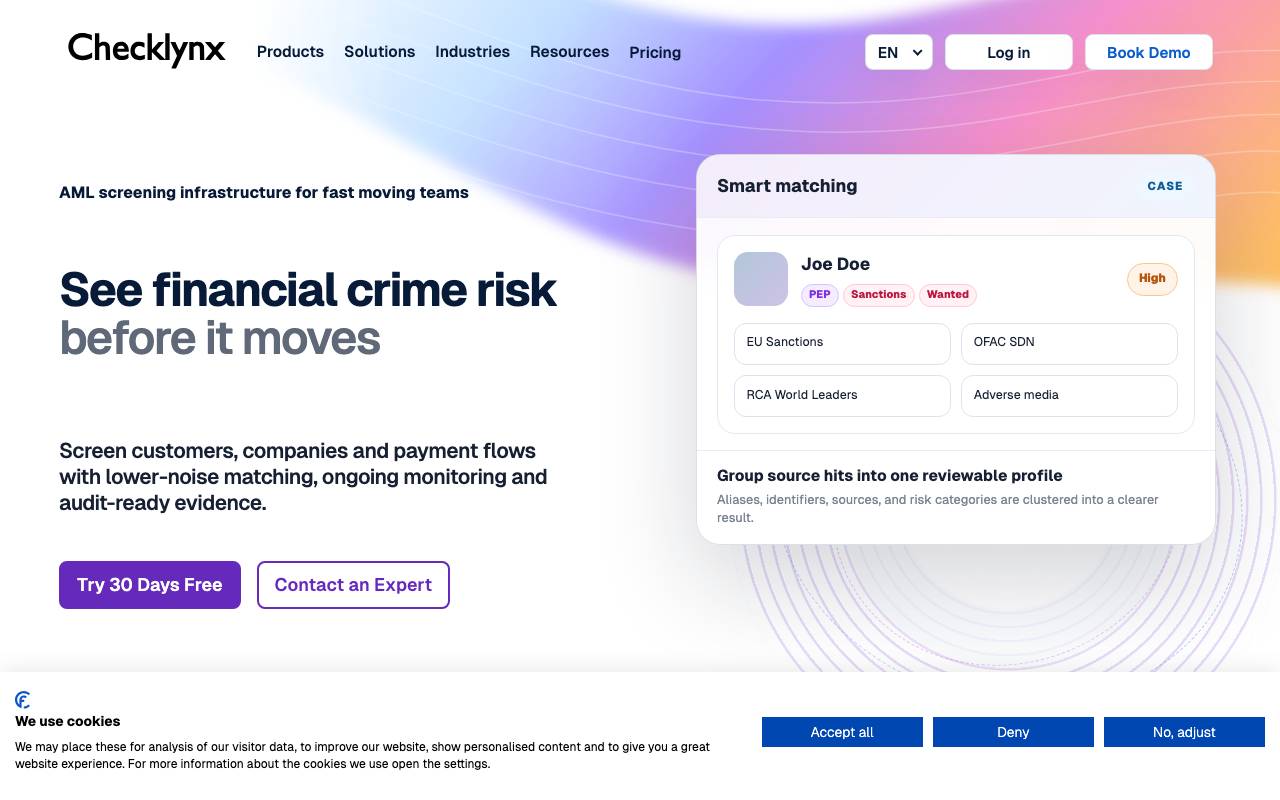
Checklynx AML Agent is an AI-driven compliance tool designed to streamline anti-money laundering checks for financial institutions, fintechs, and regulated businesses. It automates screening of individuals and entities against sanctions lists, politically exposed persons (PEP) databases, and adverse media sources, helping teams reduce manual review time. The agent uses AI to interpret context, filter false positives, and surface risk-relevant information, allowing compliance officers to focus on genuine alerts. It is positioned as a way to scale onboarding and ongoing monitoring workflows without proportionally increasing headcount.
Criteria breakdown
- Sanctions list screening
- PEP database checks
- Adverse media monitoring
- AI-based false positive reduction
- Automated risk assessment
- Ongoing customer monitoring

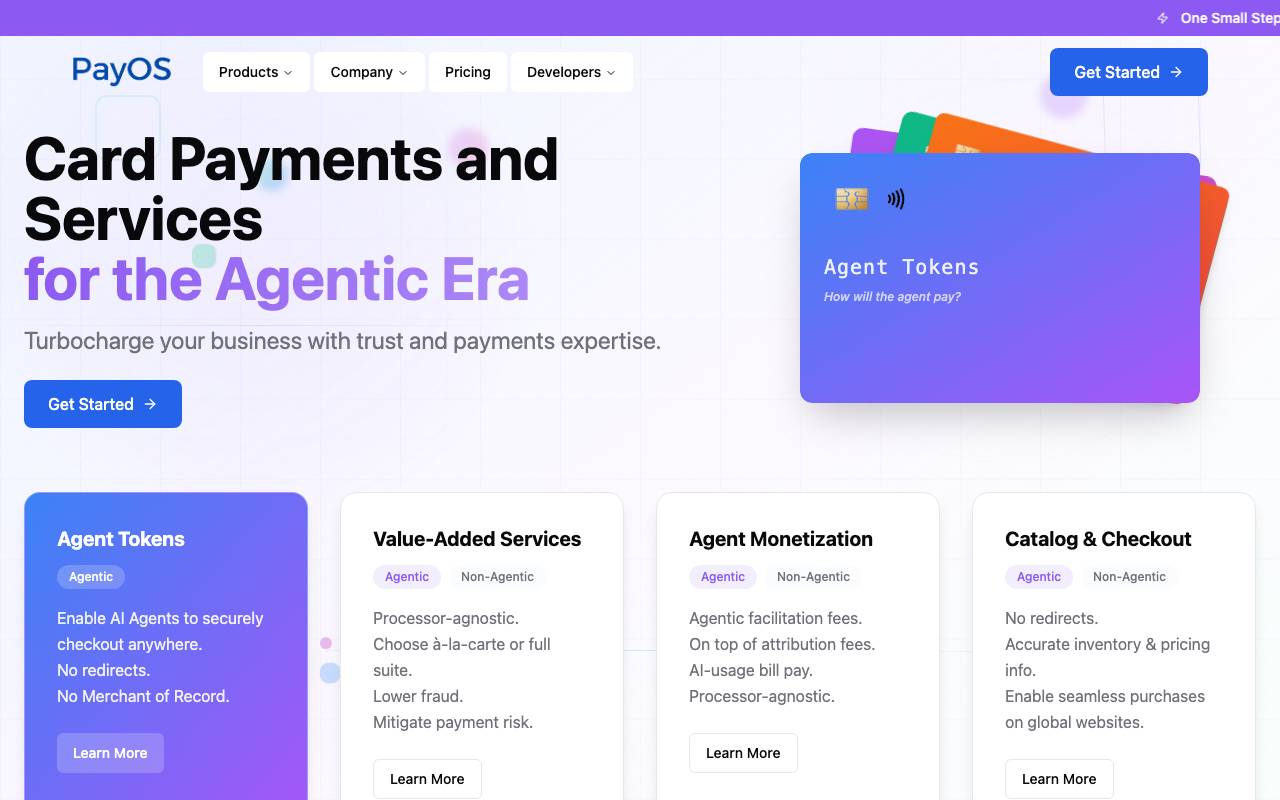
PayOS is a payment layer designed specifically for AI agents, enabling them to autonomously complete transactions at online checkouts. Instead of relying on stored credit cards or manual user intervention, agents can use PayOS to handle payment flows across virtually any e-commerce site. The platform acts as a bridge between autonomous software and existing checkout systems, addressing one of the key bottlenecks in agentic commerce. Developers building shopping assistants, procurement bots, or task-running agents can integrate PayOS so their agents can move from research to purchase without breaking the workflow. By standardizing how agents authenticate and pay, PayOS aims to make machine-driven purchasing as routine as human checkout, while giving operators controls over spending and authorization.
Criteria breakdown
- Agent-compatible payment API
- Universal checkout support
- Autonomous transaction handling
- Developer-focused integration
- Spending authorization controls

Joshua is an AI tool positioned as a gateway for businesses looking to expand and capture revenue across international markets. It leverages automation and intelligent analysis to help teams identify opportunities, streamline outreach, and scale operations beyond local boundaries. The platform is aimed at sales, growth, and business development professionals who want to reduce the friction of going global. By combining data-driven insights with AI-assisted workflows, Joshua helps users move from market research to revenue generation more efficiently. It fits into the broader category of AI-driven revenue and growth tools, with an emphasis on global reach rather than purely local optimization.
Criteria breakdown
- AI-driven revenue opportunity discovery
- Global market insights
- Automated outreach workflows
- Sales pipeline support
- Data-backed decision making

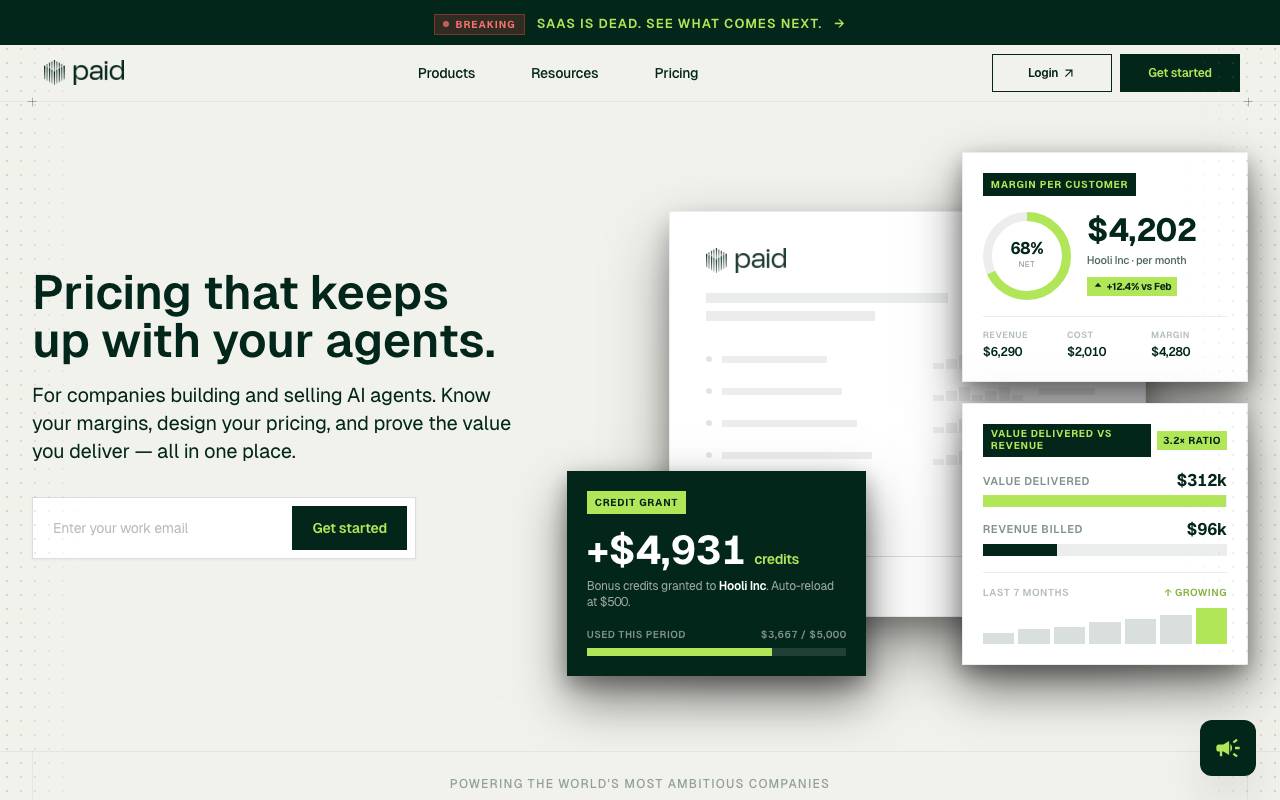
PaidAI is a business engine designed specifically for companies building and deploying AI agents. It handles the commercial layer—pricing models, usage metering, invoicing, and subscription renewals—so teams can monetize agent-based products without building billing systems from scratch. The platform is geared toward the unique economics of AI, where costs scale with tokens, compute, or outcomes rather than seats. It aims to give AI product teams flexibility to experiment with usage-based, outcome-based, or hybrid pricing while keeping revenue operations consistent.
Criteria breakdown
- Flexible pricing model configuration
- Usage metering for AI agents
- Automated invoicing and billing
- Subscription and renewal management
- Revenue analytics for agent products
- Integration with AI agent workflows

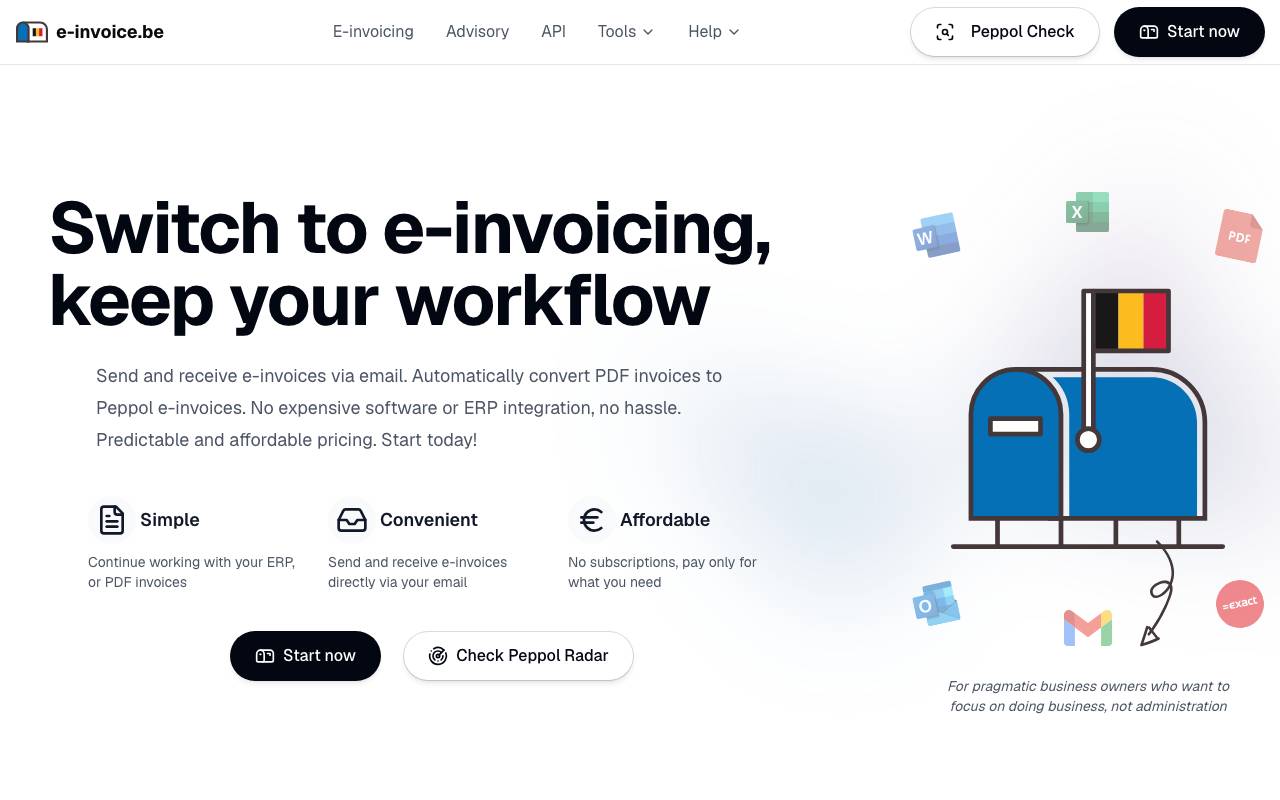
e-invoice is a developer-focused service that helps businesses connect to the Peppol network for sending and receiving electronic invoices. Instead of building complex integrations from scratch, teams can use its APIs and tooling to get compliant e-invoicing up and running in a short timeframe. The platform handles the technical heavy lifting of Peppol participation, including document formatting, validation, and routing between trading partners. This makes it practical for SaaS providers, ERP vendors, and finance teams that need to meet growing e-invoicing mandates across Europe and beyond.
Criteria breakdown
- Peppol network access
- E-invoice sending and receiving
- Document validation
- API-based integration
- Support for standard invoice formats
- Compliance with regional mandates