Past battle · 2026-04-21 UTC
Coding assistant Showdown — April 21, 2026
From the Coding assistant category. 13 marks placed across 6 fighters. Sourcegraph Cody AI took the crown.
Final standings




The line-up
The fighters
Profiles of every tool that competed in this battle, ranked by their final score.

Sourcegraph Cody AI
AI coding assistant that understands your entire codebase for context-aware help
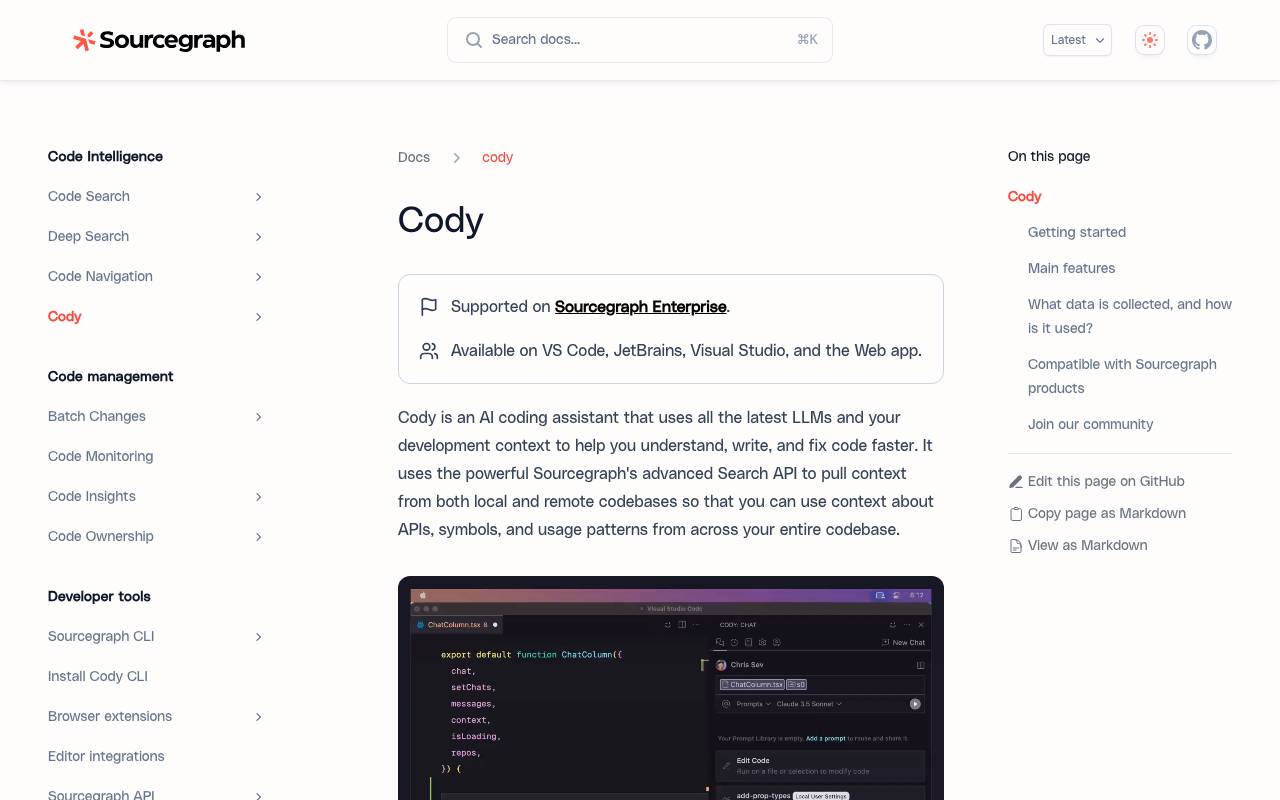
Sourcegraph Cody AI is a coding assistant designed to work with your real codebase, not just the file you're editing. By leveraging Sourcegraph's code search and indexing capabilities, it pulls in relevant context from across your repositories to answer questions, generate code, and explain unfamiliar logic with greater accuracy. Cody integrates into popular editors like VS Code and JetBrains IDEs, offering chat, autocomplete, and inline edits. It supports multiple underlying LLMs and is aimed at teams working in large, complex codebases where surface-level AI suggestions often fall short. With both free and enterprise tiers, Cody targets individual developers as well as organizations that need controls around code privacy, model selection, and integration with internal repositories.
Criteria breakdown
- Context-aware chat and code generation
- Inline autocomplete suggestions
- Codebase-wide search integration
- Multi-LLM support
- IDE plugins for VS Code and JetBrains
- Custom commands and prompts

Maige
An open-source AI-powered tool that automates natural language workflows within your codebase, integrating seamlessly with GitHub.
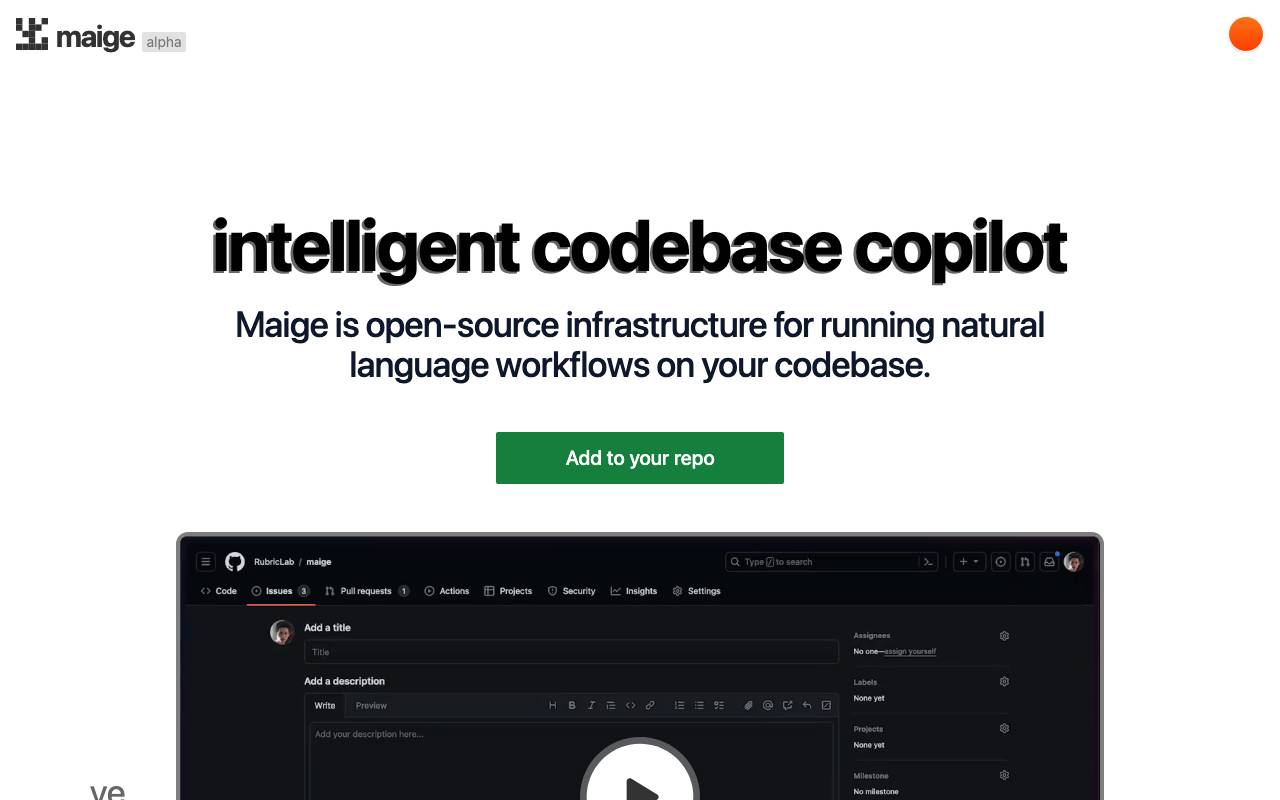
Maige is open-source infrastructure for running natural language workflows on your codebase. When connected to your GitHub repository, it creates a webhook, embeddings of your entire codebase, and a sandbox environment. You can then describe the actions you want Maige to take when issues and pull requests are opened, such as labeling, assigning, commenting, reviewing code, and running simple code snippets. Maige works flexibly with the GitHub API and allows you to monitor and provide feedback in its dashboard. It is an AI with access to GitHub and can automate various tasks, including labeling issues automatically, customizing instructions, and code review. Maige is a flexible and customizable tool that enables you to automate natural language workflows within your codebase. It is primarily used by open-source developers to streamline their workflow and improve collaboration. The tool has been used by over 4,300 repositories and allows users to monitor runs and provide feedback in its dashboard.
Criteria breakdown
- Webhook integration
- Codebase embeddings
- Sandbox environment
- Automated issue labeling
- Custom instructions
- Code review

PR-Agent
AI assistant that automates pull request reviews with analysis, feedback, and code suggestions.
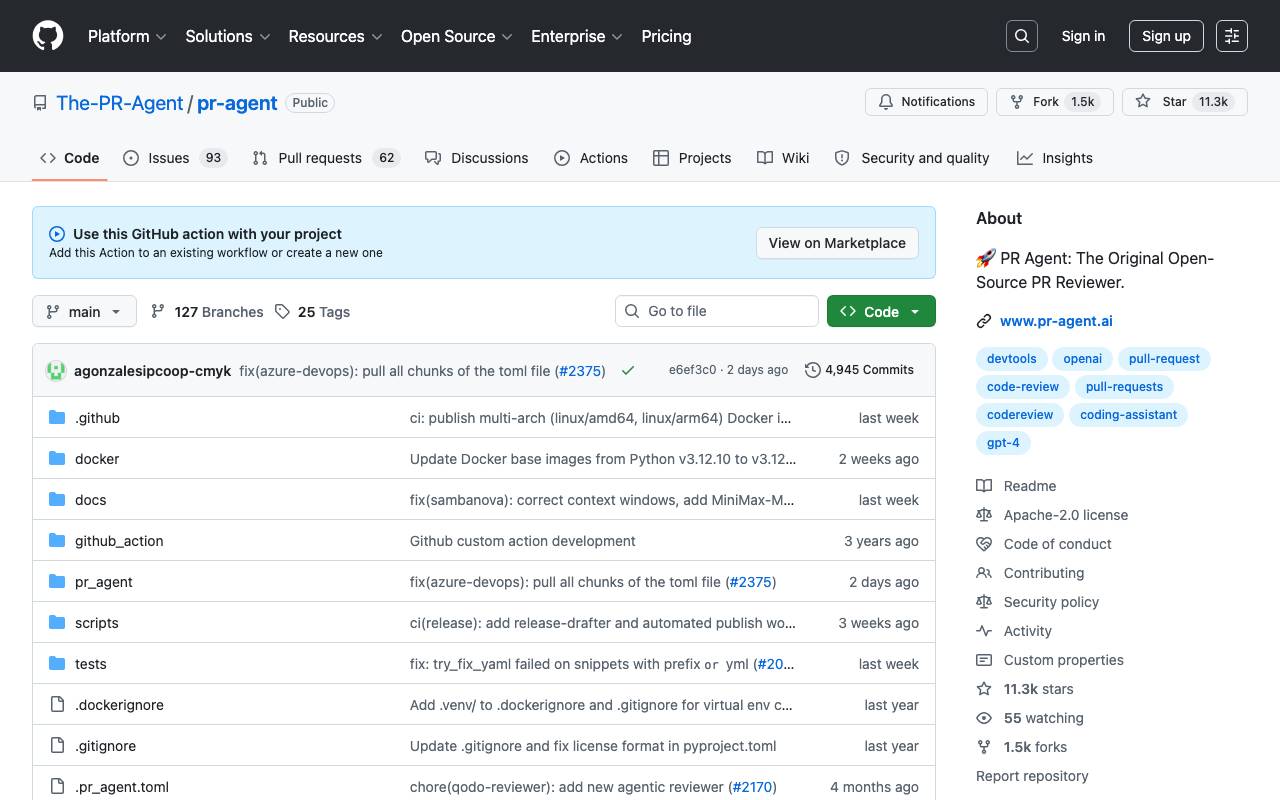
PR-Agent is an AI-powered tool designed to streamline the code review process by automatically analyzing pull requests and surfacing actionable insights. It integrates with common Git platforms and helps teams reduce review bottlenecks by handling repetitive checks before a human reviewer steps in. The tool can generate PR descriptions, summarize changes, suggest code improvements, and answer questions about the diff. By offloading routine review tasks to an AI agent, developers can focus on architectural decisions and higher-level feedback. PR-Agent is suitable for individual developers and engineering teams that want to maintain code quality while accelerating their delivery pipeline.
Criteria breakdown
- Automated pull request analysis
- AI-generated PR descriptions and summaries
- Inline code improvement suggestions
- Interactive Q&A on code changes
- Customizable review prompts
- Support for multiple Git platforms
Promptables is a platform designed to help teams build, test, and refine AI prompts as part of their product development workflow. It aims to shorten the cycle between prompt ideation and production-ready deployment, making prompt engineering more systematic and repeatable. The tool focuses on streamlining how developers and product teams create AI-driven features, offering structured tooling around prompt creation, iteration, and integration. This can be useful for startups and product teams looking to ship AI capabilities quickly without building prompt infrastructure from scratch.
Criteria breakdown
- Prompt development tooling
- Iteration and testing workflows
- Deployment-oriented prompt management
- Support for AI product workflows
- Structured prompt organization
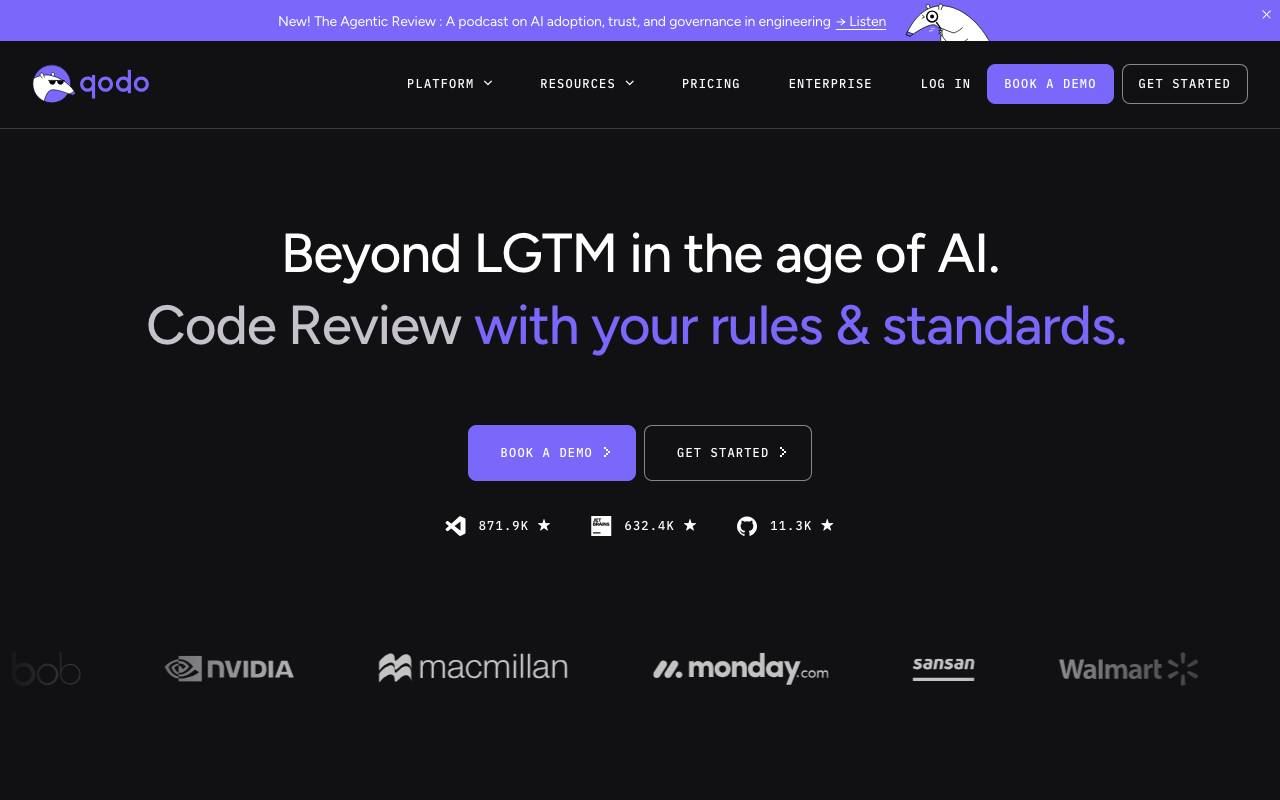
QodoAI is an AI assistant built to help software engineering teams ship higher-quality code with less friction. It analyzes pull requests, surfaces potential bugs, and provides contextual suggestions so reviewers can focus on architectural decisions rather than catching routine issues. Beyond automated reviews, Qodo supports test generation, code understanding, and consistency across large codebases. It integrates with common Git platforms and IDEs, fitting into existing developer workflows rather than replacing them. The tool is aimed at teams that want to scale code review practices, reduce review bottlenecks, and maintain quality standards as their codebase and headcount grow.
Criteria breakdown
- Automated PR analysis and suggestions
- AI-generated unit tests
- Contextual code explanations
- IDE and Git platform integrations
- Detection of potential bugs and edge cases
- Support for multiple programming languages

OpenHands
Open-source platform for AI agents that build, debug, and ship code like developers.
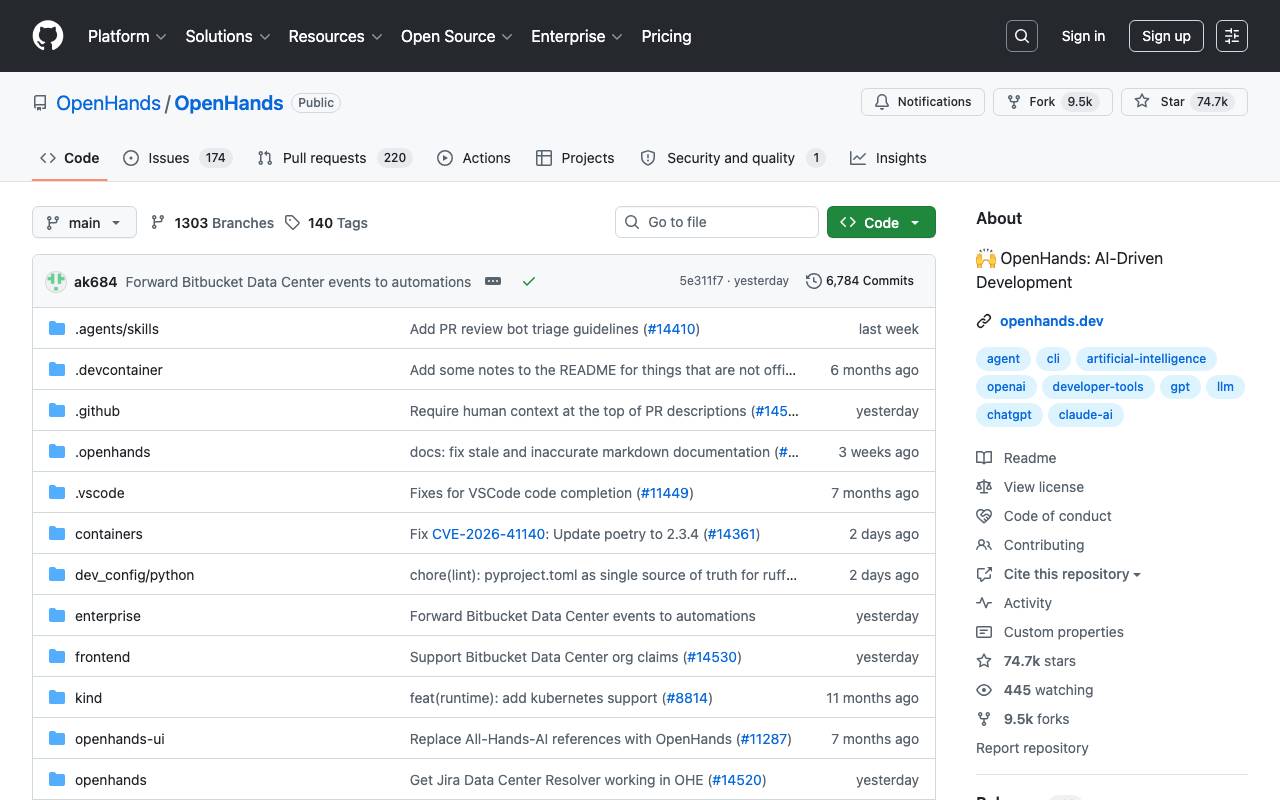
OpenHands is an open-source framework for creating AI agents that can perform end-to-end software development tasks. The agents can read and modify code, run shell commands, browse the web, and interact with APIs—operating much like a human developer working in a sandboxed environment. Designed for both researchers and practitioners, OpenHands supports multiple LLM backends and offers a flexible architecture for customizing agent behavior, tools, and workflows. It can be self-hosted via Docker, used through a web UI, or integrated into existing development pipelines for automating coding, testing, and DevOps tasks.
Criteria breakdown
- Autonomous coding and debugging agents
- Sandboxed shell and file system access
- Web browsing and API interaction tools
- Docker-based local deployment
- Pluggable LLM backend support
- Web-based interactive UI