
Zed AIHigh-performance, collaborative code editor with built-in AI assistance.

Overview
Key features
- GPU-accelerated native code editor
- Built-in AI assistant and inline edits
- Real-time collaborative editing with shared workspaces
- Language server protocol and Tree-sitter support
- Integrated terminal and Git tooling
- Voice chat and project channels for teams
Pricing
- Model
- Freemium
- Category
- Code Assistants
- Rating
- 4.7 / 5 (6)
Use cases
AI-assisted coding in a fast native editor
Write, refactor, and explain code with an integrated AI chat and inline edits, all within a GPU-accelerated editor that keeps typing and navigation low-latency.
Remote pair programming sessions
Collaborate on the same project in real time using shared workspaces, live cursors, and voice channels, making remote pairing feel close to in-person.
Team code reviews and walkthroughs
Open a project channel, jump into a shared buffer, and walk teammates through changes with synchronized editing, voice chat, and integrated Git tooling.
Polyglot development with LSP and Tree-sitter
Work across multiple languages using language server protocol and Tree-sitter support, with AI suggestions that draw context from the open project.
Pros & Cons
Pros
- Extremely fast, GPU-accelerated UI
- Real-time multiplayer editing and collaboration
- Integrated AI chat and inline code edits
- Native Rust performance with low memory use
Cons
- Smaller extension ecosystem than VS Code
- Limited platform availability at launch
- AI features may require external API keys
- Still maturing compared to established editors
Battle record
Across 2 battles in the Pantheon.
Last 2 battles
Reviews
Average from 6 ratings.
Sign in to leave a review.
Solid for our team
We rolled this out across the team last quarter and integrated AI chat and inline code edits. Built-in AI assistant and inline edits fits neatly into how we already work, and language server protocol and Tree-sitter support removed a step we used to do by hand. but it has held up under daily use.
Compared a few options
Evaluated this against two competitors. Where it wins: integrated terminal and Git tooling and integrated AI chat and inline code edits. On balance the feature set — especially integrated terminal and Git tooling — justifies the 5 stars for our use case.
Compared a few options
Evaluated this against two competitors. Where it wins: voice chat and project channels for teams and integrated AI chat and inline code edits. Where it lags: aI features may require external API keys. On balance the feature set — especially voice chat and project channels for teams — justifies the 4 stars for our use case.
Years in this space
I've evaluated a lot of these over the years. What stands out here is gPU-accelerated native code editor — handled better than most — and extremely fast, GPU-accelerated UI. Smaller extension ecosystem than VS Code is my one real gripe. Worth the time if this is your use case.
Use it every day
Honestly didn't expect to like it this much. Real-time collaborative editing with shared workspaces is exactly what I needed, and extremely fast, GPU-accelerated UI. I do wish limited platform availability at launch, but I reach for it almost every day now and it just clicks.

Use it every day
Honestly didn't expect to like it this much. Real-time collaborative editing with shared workspaces is exactly what I needed, and native Rust performance with low memory use. but I reach for it almost every day now and it just clicks.
Q&A
What platforms does Zed support?
Zed supports macOS, Linux, and Windows. You can download the latest builds here.
Asked by Sarai Cohen · Mar 28, 2026
What is "Zednesday"?
We publish new minor patches for Stable and Preview every Wednesday (aside from some holidays), so we internally celebrate it by calling it "Zednesday!" Don't worry, we don't know how to pronounce it either.
Asked by Elena Rossi · Mar 18, 2026
What is Quality Week?
Zed is a large, complex codebase. While we work to ship a steady stream of bug fixes in our releases each week, periodically, we conduct what we refer to as "Quality Week." During this time, we halt work on feature additions and pivot to working solely on user pain points within Zed. Prior to Quality Week, the community team spends time curating a project board of issues. We focus on finding issues that try to balance a small amount of work with a potentially large impact. We prioritize reducing cases where Zed can panic. The overall goal of Quality Week is to ship a more stable, refined Zed.
Asked by Bilal Choudhury · Mar 16, 2026
What can I expect of the beta?
While we are committed to building a stable, professional-grade editor, you'll likely run into bugs and pain points throughout the beta phase. Additionally, Zed may not support all languages you use and may not be available for your preferred operating system. What we can confidently say is that we are working hard to bring you the features, support, and stability you need to make Zed your homebase editor for building great software. As diligent as we try to be with every line of code we write, human error is inevitable, especially during periods of rapid development. Make sure to properly backup any code you are working on in Zed to protect yourself from potential catastrophic events. While we believe Zed to be safe to use, it is always advisable to err on the side of caution in these early stages.
Asked by Jana Krejčí · Mar 11, 2026
What are the release channels?
Nightly: Built daily from the main branch with the latest features. It has not gone through any testing and may have stability issues. Nightly isn't public. Preview: Our weekly release with recent features that have undergone initial internal testing. More stable than Nightly, but potentially less stable than Stable. Preview may contain experimental functionality and might experience reverts of recently-added features. You should anticipate experiencing a higher frequency of updates if you are on Preview. If the frequency of these updates is distracting for you, you can disable automatic update checks via "auto_update": false and run manual update checks via command palette > auto update: check. Stable: Our most production-ready version that has been tested in Preview for a week. This release is recommended for those relying on Zed for mission-critical work. On a typical release Wednesday, we follow these steps: Promote last week's preview to stable The preview branch from the previous week (e.g., v0.180.x) is promoted to stable by taking the most recent preview tag and creating a new tag on the latest commit without the -pre suffix (e.g., v0.180.1-pre → v0.180.1) Create a new preview branch A new branch is forked off of the main branch A tag with a -pre suffix is added to the latest commit (e.g., v0.181.0-pre) to mark the branch as preview Prepare main for the next cycle The version number on main is bumped to the next minor version During the week between minor releases, we
Asked by Lucas Petit · Feb 24, 2026
Ask a question
Code Assistants alternatives

 Enia CodeCode Assistants
Proactive AI coding partner that surfaces issues and suggests fixes before you ask.

 Hex MagicCode Assistants
AI analytics copilot that writes queries, builds charts, and debugs notebooks inside Hex.
 MicroGPTCode Assistants
An AI-powered coding assistant enhancing developer productivity with real-time code suggestions.
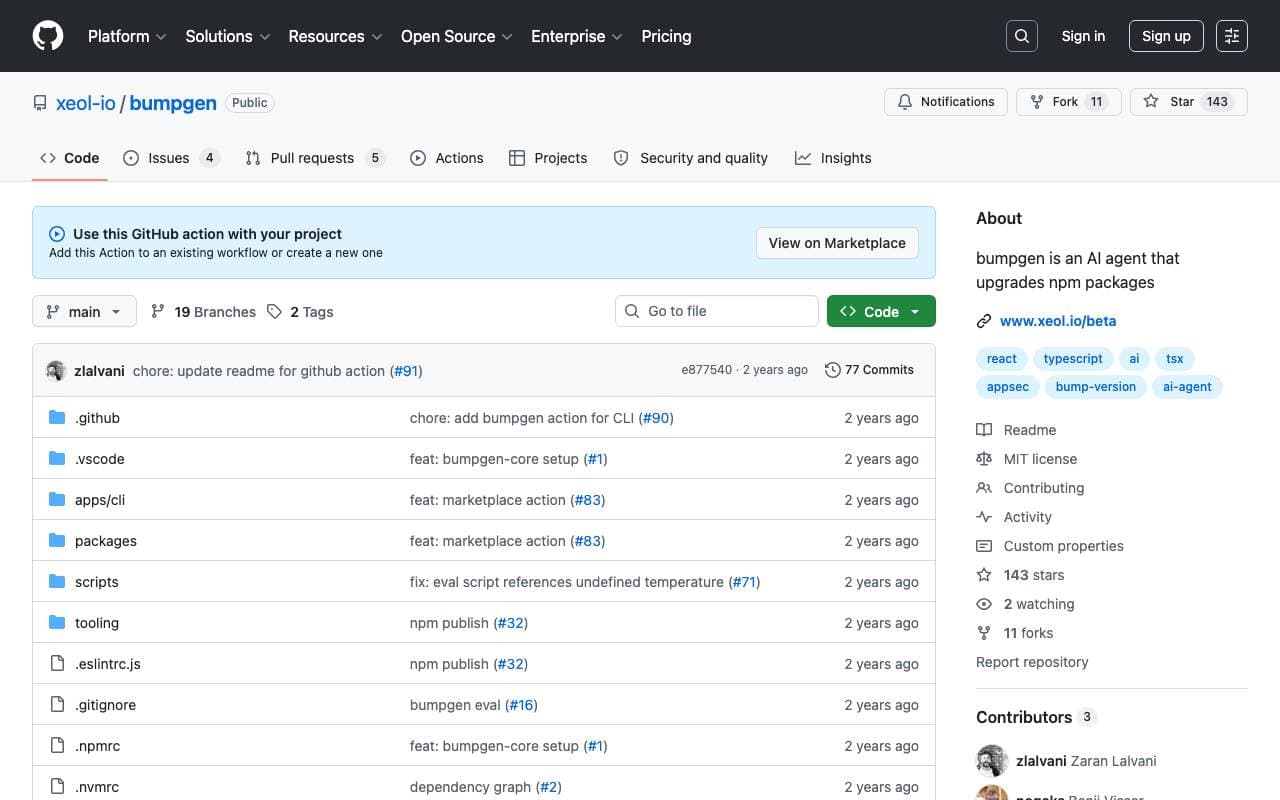
 bumpgenCode Assistants
An AI agent that automates the upgrading of npm packages and resolves associated breaking changes in TypeScript projects.
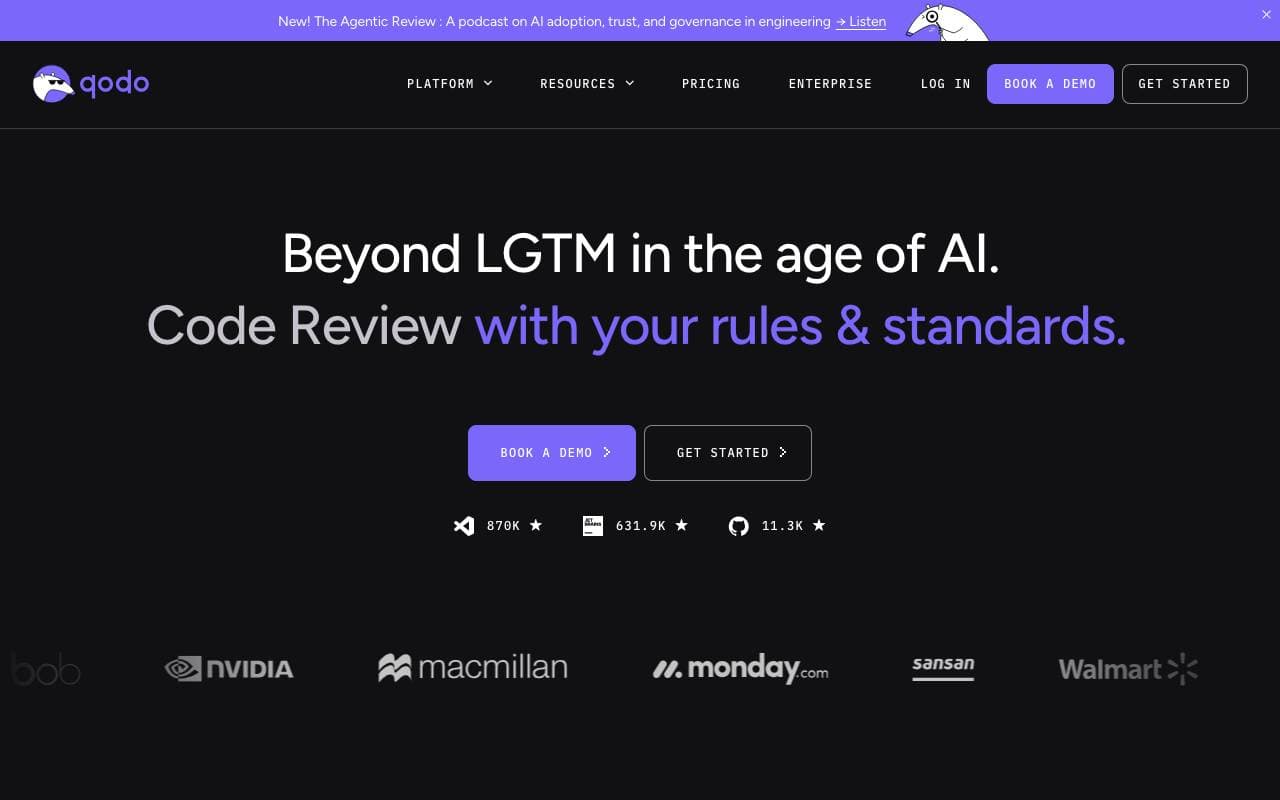
 QodoCode Assistants
AI-powered code integrity platform for generation, testing, and review

 Low Code PlatformsCode Assistants
Compare and filter leading low-code builders by AI, CRM, automation, and workflow capabilities.

 MentatCode Assistants
An open-source AI coding assistant that integrates with your command line to assist with various coding tasks across multiple files.

 Form DataCode Assistants
Turn plain-text prompts into working, spam-protected forms in seconds.
Trending now

 Biology AIEducation AI
Accurate Homework Help with Full Explanations

 Reducto AIAI Agent Development Platforms
Document intelligence API that parses, splits, OCRs, and extracts structured data from complex PDFs, slides, and spreadsheets.

 Pixtral 12B 24.09LLM
Open multimodal 12B model handling interleaved images and text with a 128K context window.
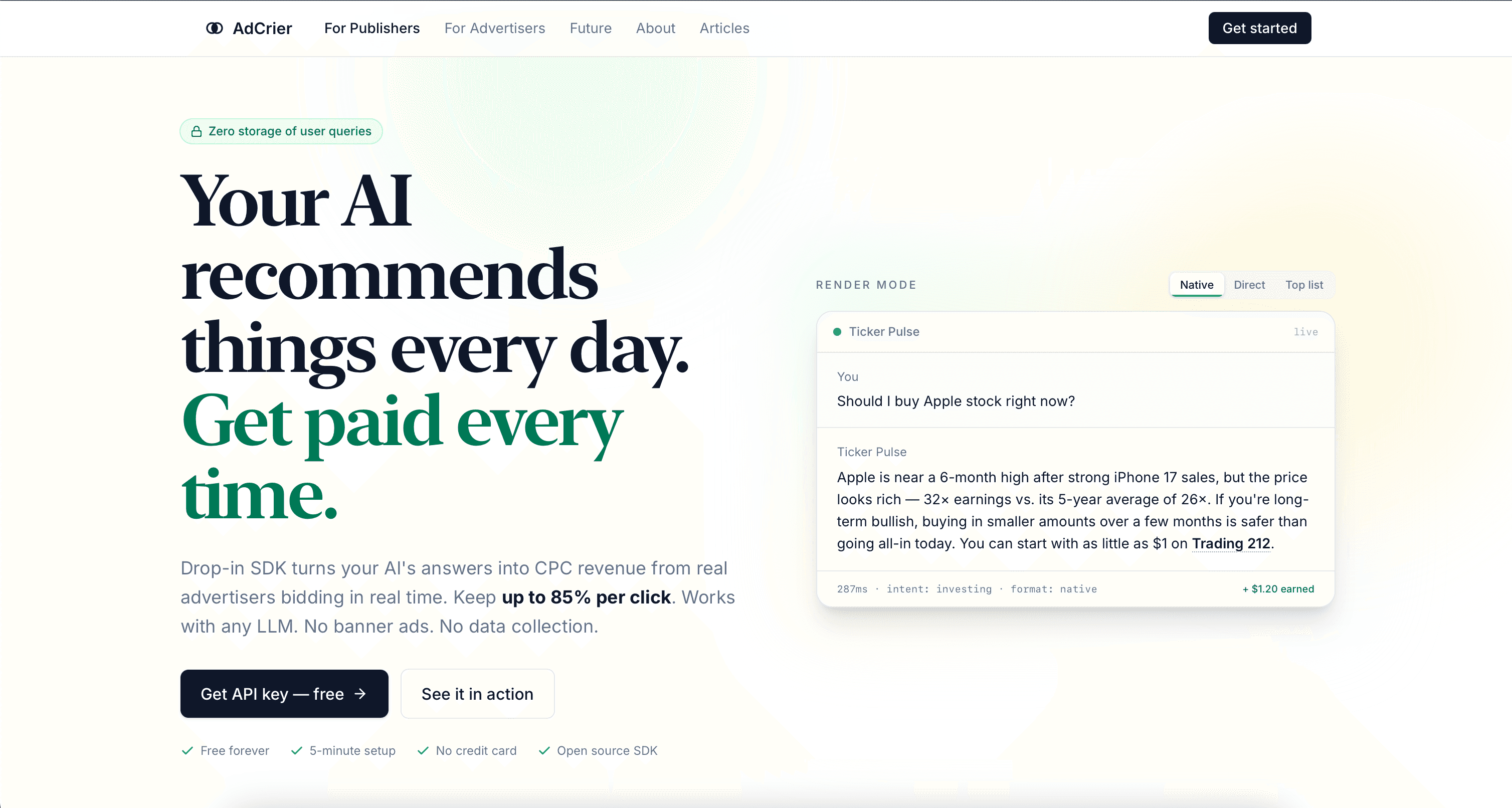
 AdCrierMarketing & Advertising
Sponsored answers, paid per click.