
Burr FrameworkFramework Python de código aberto para construir aplicações de tomada de decisão com estado, como agentes e chatbots.

Visão geral
Funcionalidades principais
- Abstração de máquina de estado com ações e transições
- UI de telemetria local para inspecionar execuções
- Persistência de estado e capacidade de retomada
- Suporte a ações de streaming e assíncronas
- Integrações com ferramentas comuns de LLM e ML
- Ganchos para registro, monitoramento e teste
Preços
- Modelo
- Free
- Avaliação
- 4.3 / 5 (4)
Casos de uso
Construir chatbots com estado e lógica rastreável
Modelar fluxos de conversas como máquinas de estado explícitas com ações e transições, tornando mais fácil raciocinar sobre o comportamento do chatbot e depurar execuções por meio da UI de telemetria local.
Desenvolver agentes de IA que tomam decisões
Criar agentes de IA que gerenciam estado compartilhado entre etapas, com suporte a ações de streaming, assíncronas e integração com qualquer biblioteca LLM no ecossistema Python.
Executar motores de fluxo de trabalho com retomada
Usar persistência de estado para pausar, retomar e depurar passo a passo fluxos de trabalho ou simulações em execução longa, permitindo recuperação confiável e inspeção de fluxo de controle complexo.
Instrumentar aplicativos de IA para monitoramento e teste
Aproveitar ganchos integrados para registro, monitoramento e rastreamento para observar aplicações de IA de produção e validar comportamento por meio de execuções reproduzíveis e inspecionáveis.
Prós e contras
Prós
- Modelo de máquina de estado explícito torna a lógica fácil de seguir
- UI de rastreamento integrada para depurar execuções
- Agnóstico de framework - funciona com qualquer LLM ou biblioteca
- Suporta persistência, streaming e assíncrono
- Código aberto e leve
Contras
- Requer Python e algum aprendizado de suas abstrações
- Menos plug-and-play do que frameworks de agente de nível superior
- Comunidade menor do que concorrentes maiores
Avaliações
Média de 4 avaliações.
Entra para deixar uma avaliação.
Does the job
Pretty happy overall. Local telemetry UI for inspecting executions just works and built-in tracing UI for debugging runs. Less plug-and-play than higher-level agent frameworks can be annoying, but no dealbreakers — I'd recommend it to a friend without hesitating.
Compared a few options
Evaluated this against two competitors. Where it wins: local telemetry UI for inspecting executions and explicit state-machine model makes logic easy to follow. Where it lags: requires Python and some learning of its abstractions. On balance the feature set — especially local telemetry UI for inspecting executions — justifies the 5 stars for our use case.
Use it every day
Honestly didn't expect to like it this much. State persistence and resumability is exactly what I needed, and open source and lightweight. I do wish smaller community than larger competitors, but I reach for it almost every day now and it just clicks.
Solid for our team
We rolled this out across the team last quarter and built-in tracing UI for debugging runs. State persistence and resumability fits neatly into how we already work, and integrations with common LLM and ML tools removed a step we used to do by hand. Smaller community than larger competitors, which is the main caveat, but it has held up under daily use.
Perguntas e respostas
Why the name Burr?
Apache Burr is named after Aaron Burr, founding father, third Vice President of the United States, and historical opponent of Alexander Hamilton. The name reflects the project's origins as a harness to handle state between executions of Apache Hamilton DAGs (because DAGs don’t have cycles). Over time, Burr proved useful for a wide array of applications, leading to its broader release.
Asked by Naomi Suzuki · Nov 13, 2025
What can you do with Apache Burr?
Apache Burr can be used to power a variety of applications, including: 1. A simple GPT‑like chatbot. 2. A stateful RAG‑based chatbot. 3. An LLM‑based adventure game. 4. An interactive assistant for writing emails. It also supports non‑LLM use‑cases such as time‑series forecasting simulations and hyperparameter tuning. Using hooks and integrations you can integrate with any of your favorite vendors (LLM observability, storage, etc.) and build custom actions that delegate to your favorite libraries (like Apache Hamilton). Burr does not build models, query APIs, or manage data for you; it helps you tie these components together in a scalable, logical way. It includes out‑of‑the‑box integrations and tooling to build a UI in Streamlit and watch your state machine execute.
Asked by Valentina Marino · Nov 1, 2025
How does Apache Burr work?
With Apache Burr you express your application as a state machine (i.e. a graph/flowchart). You can (and should!) use it for anything in which you have to manage state, track complex decisions, add human feedback, or dictate an idempotent, self-persisting workflow. The core API is simple – the Burr hello-world looks like this (plug in your own LLM, or copy from the docs for gpt‑X). Apache Burr includes: 1. A dependency‑free low‑abstraction Python library that enables you to build and manage state machines with simple Python functions. 2. A UI you can use to view execution telemetry for introspection and debugging. 3. A set of integrations to make it easier to persist state, connect to telemetry, and integrate with other systems.
Asked by Carlos Mendoza · Oct 27, 2025
Faz uma pergunta
Alternativas a Ferramentas de Framework de Agentes de Inteligência Artificial
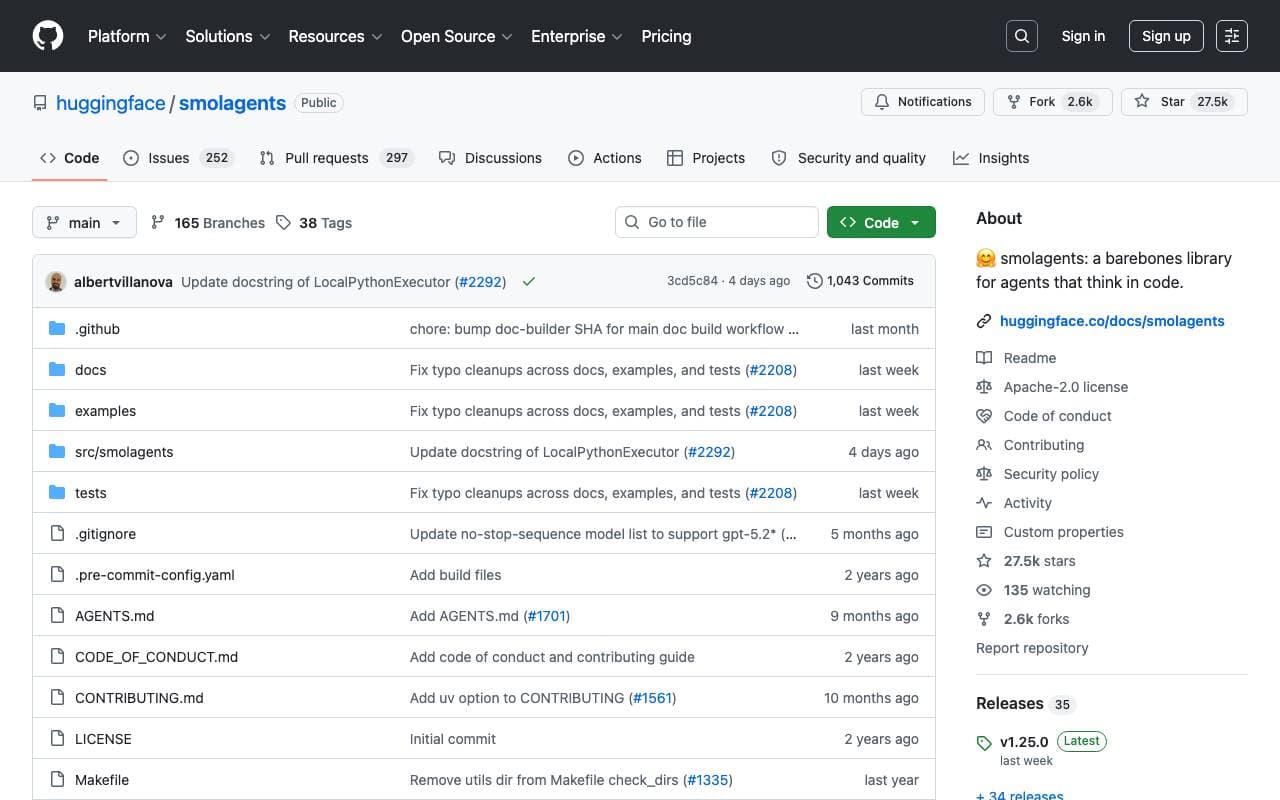

smolagents
Ferramentas de Framework de Agentes de Inteligência Artificial
Biblioteca Python minimalista da Hugging Face para construir agentes de IA baseados em código em poucas linhas


Mini LLM Flow
Ferramentas de Framework de Agentes de Inteligência Artificial
Estrutura minimalista de LLM de 100 linhas para construir fluxos de trabalho de agentes auto-programáveis

upsonicAI
Ferramentas de Framework de Agentes de Inteligência Artificial
Framework de agente de código aberto para construir trabalhadores digitais focados em tarefas e agentes de IA verticais.


AI-Powered RAG Workflow for n8n
Ferramentas de Framework de Agentes de Inteligência Artificial
Faça perguntas e obtenha respostas fundamentadas em seus arquivos do Google Drive usando n8n.


ControlFlow
Ferramentas de Framework de Agentes de Inteligência Artificial
Framework Python para construir fluxos de trabalho de IA agênticos com design centrado em tarefas.


roboneo art
Ferramentas de Framework de Agentes de Inteligência Artificial
Gerador de arte de IA que transforma prompts de texto em imagens de alta qualidade em segundos.

Agent Genesis
Ferramentas de Framework de Agentes de Inteligência Artificial
Snippets de código open-source para criar agentes de IA rapidamente.


Eclat Institute
Ferramentas de Framework de Agentes de Inteligência Artificial
Tutoria em IP e JC com foco em construir domínio de assuntos duradouro
Trending now


Reducto AI
Plataformas de Desenvolvimento de Agentes Inteligentes de IA
API de inteligência de documentos que parseia, divide, reconhece texto e extrai dados estruturados de PDFs complexos, slides e planilhas.


AdCrier
Marketing & Publicidade
Respostas patrocinadas, pagamento por clique.


Biology AI
Educação de Inteligência Artificial
Ajuda Precisa nos Deveres de Casa com Explicações Completas
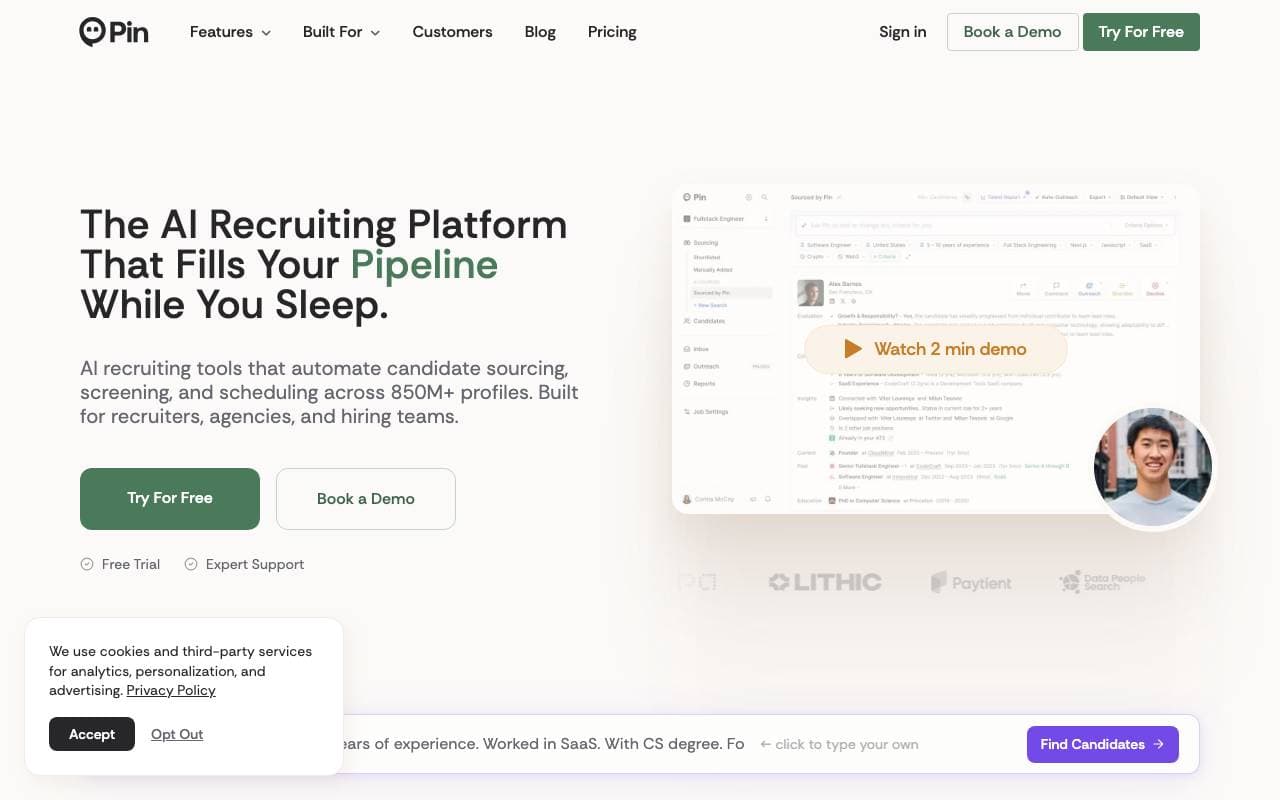

Pin AI
Automação de fluxo de trabalho
Recrutor de IA agêntico que automatiza busca, triagem e divulgação para acelerar contratações.