
smolagentsHugging Face's minimalist Python library for building code-first AI agents in a few lines

Overview
Key features
- CodeAgent that writes and executes Python to solve tasks
- Support for Hugging Face, OpenAI, Anthropic, and local models
- Sandboxed code execution with E2B and Docker backends
- Tool integration with Hub, LangChain, and custom Python functions
- Built-in ToolCallingAgent for traditional JSON-style tool use
- Lightweight, minimal-dependency design
Pricing
- Model
- Free
- Category
- AI Agents Frameworks
- Rating
- 5.0 / 5 (4)
Use cases
Build code-first AI agents quickly
Developers can create agents that solve tasks by writing and executing Python code, reducing the number of LLM steps compared to JSON tool-calling approaches.
Run agents with any LLM provider
Prototype agents using Hugging Face Hub models, local inference servers, or APIs like OpenAI and Anthropic without changing the framework.
Safely execute generated code
Use E2B or Docker sandbox backends to run agent-generated Python in isolated environments, mitigating security risks during automated task execution.
Integrate existing tool ecosystems
Combine custom Python functions with Hub Spaces and LangChain tools to extend agent capabilities while keeping a minimal, readable codebase.
Pros & Cons
Pros
- Very small, readable codebase that is easy to extend
- Code-based actions reduce steps and boost agent expressiveness
- Works with many LLM providers and local models
- Sandboxed execution via E2B or Docker for safer code running
- Free and fully open source
Cons
- Requires Python knowledge to use effectively
- Fewer built-in integrations than larger agent frameworks
- Code execution introduces security considerations to manage
- Less suited for complex multi-agent orchestration out of the box
Reviews
Average from 4 ratings.
Sign in to leave a review.
Use it every day
Honestly didn't expect to like it this much. Tool integration with Hub, LangChain, and custom Python functions is exactly what I needed, and code-based actions reduce steps and boost agent expressiveness. I do wish requires Python knowledge to use effectively, but I reach for it almost every day now and it just clicks.
Does the job
Pretty happy overall. Tool integration with Hub, LangChain, and custom Python functions just works and very small, readable codebase that is easy to extend. Code execution introduces security considerations to manage can be annoying, but no dealbreakers — I'd recommend it to a friend without hesitating.

Does the job
Pretty happy overall. Sandboxed code execution with E2B and Docker backends just works and sandboxed execution via E2B or Docker for safer code running. but no dealbreakers — I'd recommend it to a friend without hesitating.
Skeptical, then convinced
I went in skeptical — most tools in this space overpromise. It actually delivers on codeAgent that writes and executes Python to solve tasks, and code-based actions reduce steps and boost agent expressiveness caught me off guard. still, I'd recommend giving it a real trial.
Q&A
How strong are open models for agentic workflows?
We've created CodeAgent instances with some leading models, and compared them on this benchmark that gathers questions from a few different benchmarks to propose a varied blend of challenges. Find the benchmarking code here for more detail on the agentic setup used, and see a comparison of using LLMs code agents compared to vanilla (spoilers: code agents works better). This comparison shows that open-source models can now take on the best closed models!
Asked by Diego Fernández · Feb 16, 2026
How smol is this library?
We strived to keep abstractions to a strict minimum: the main code in agents.py has <1,000 lines of code. Still, we implement several types of agents: CodeAgent writes its actions as Python code snippets, and the more classic ToolCallingAgent leverages built-in tool calling methods. We also have multi-agent hierarchies, import from tool collections, remote code execution, vision models... By the way, why use a framework at all? Well, because a big part of this stuff is non-trivial. For instance, the code agent has to keep a consistent format for code throughout its system prompt, its parser, the execution. So our framework handles this complexity for you. But of course we still encourage you to hack into the source code and use only the bits that you need, to the exclusion of everything else!
Asked by Ludovic Girard · Nov 27, 2025
How do Code agents work?
Our CodeAgent works mostly like classical ReAct agents - the exception being that the LLM engine writes its actions as Python code snippets. Actions are now Python code snippets. Hence, tool calls will be performed as Python function calls. For instance, here is how the agent can perform web search over several websites in one single action: Writing actions as code snippets is demonstrated to work better than the current industry practice of letting the LLM output a dictionary of the tools it wants to call: uses 30% fewer steps (thus 30% fewer LLM calls) and reaches higher performance on difficult benchmarks. Head to our high-level intro to agents to learn more on that. Since code execution can be a serious security concern (arbitrary code execution!), you should run agent code in a sandbox. We support several options: E2B, Blaxel, Modal — managed cloud sandboxes, simplest to set up Docker — self-hosted container isolation The built-in LocalPythonExecutor is not a security sandbox. It applies some restrictions but can be bypassed and must not be used as a security boundary. Alongside CodeAgent, we also provide the standard ToolCallingAgent which writes actions as JSON/text blobs. You can pick whichever style best suits your use case.
Asked by Greta Nowak · Oct 31, 2025
Ask a question
AI Agents Frameworks alternatives


Mini LLM Flow
AI Agents Frameworks
Minimalist 100-line LLM framework for building self-programming agent workflows
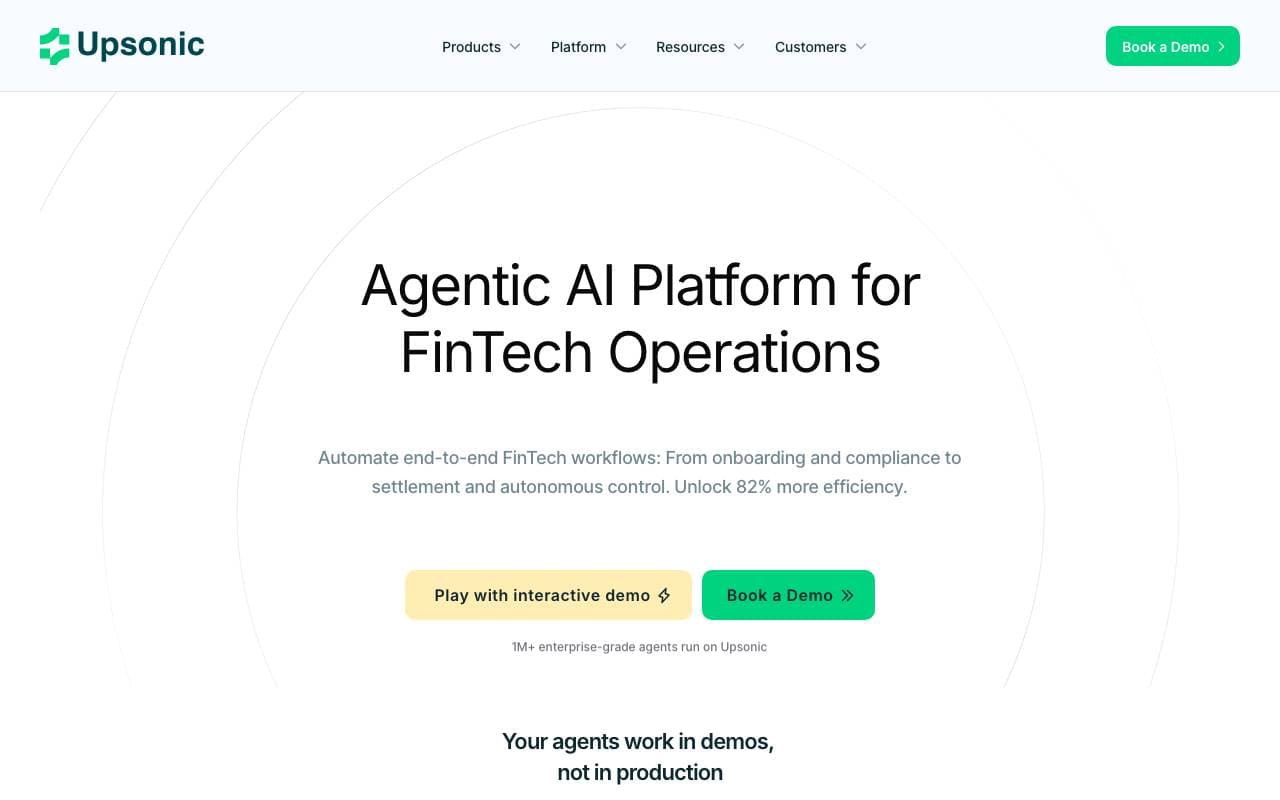

upsonicAI
AI Agents Frameworks
Open-source agent framework for building task-focused digital workers and vertical AI agents.


AI-Powered RAG Workflow for n8n
AI Agents Frameworks
Ask questions and get answers grounded in your Google Drive files using n8n.


ControlFlow
AI Agents Frameworks
Python framework for building agentic AI workflows with a task-centric design.


roboneo art
AI Agents Frameworks
AI art generator that turns text prompts into high-quality images in seconds.

Agent Genesis
AI Agents Frameworks
Open-source, copy-paste code snippets for building AI agents fast.


Eclat Institute
AI Agents Frameworks
IP and JC tuition focused on building lasting subject mastery


Remove Watermark
AI Agents Frameworks
Free AI tool for instantly removing watermarks and logos from photos
Trending now


Reducto AI
AI Agent Development Platforms
Document intelligence API that parses, splits, OCRs, and extracts structured data from complex PDFs, slides, and spreadsheets.
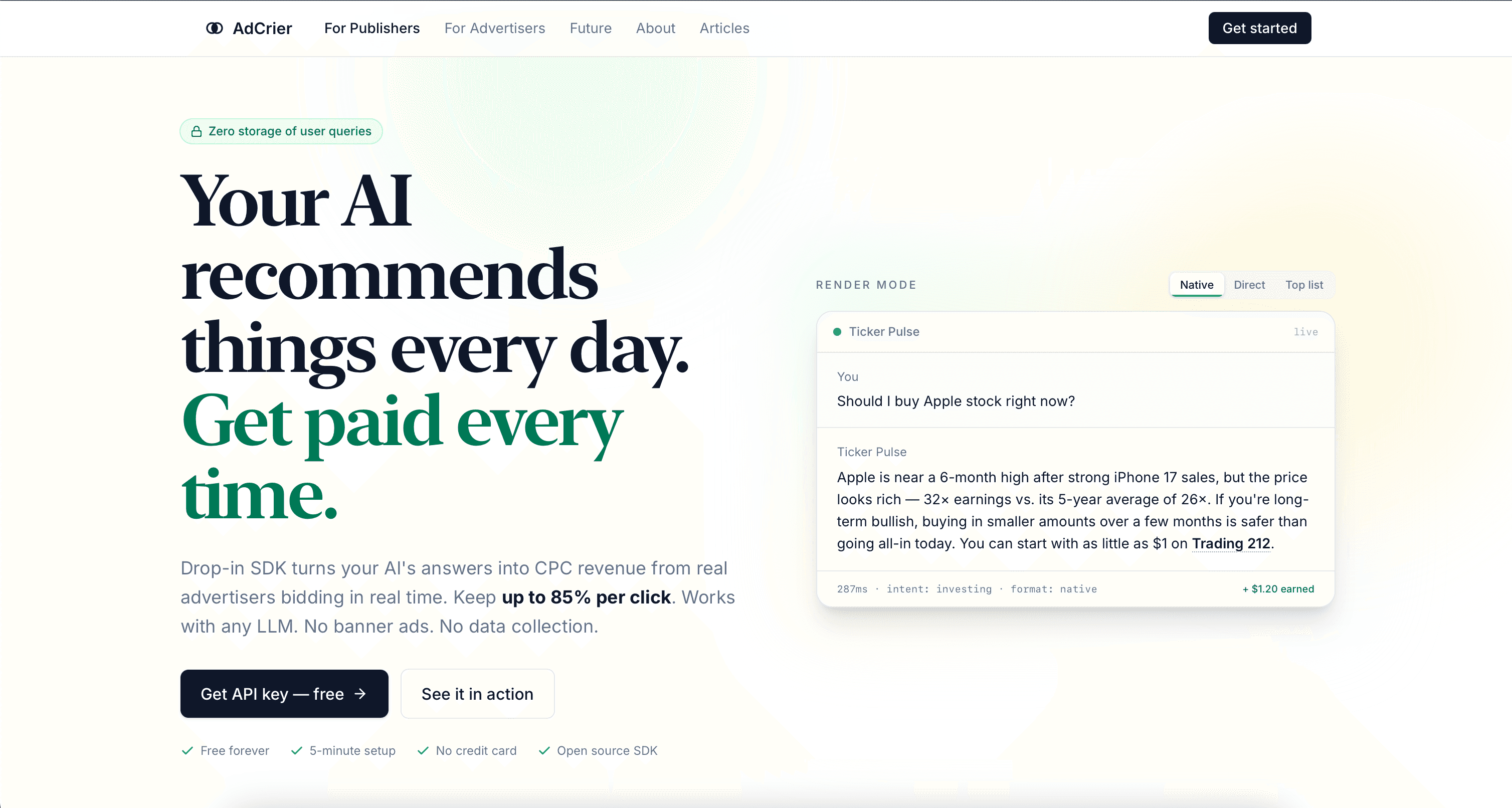

AdCrier
Marketing & Advertising
Sponsored answers, paid per click.


Biology AI
Education AI
Accurate Homework Help with Full Explanations
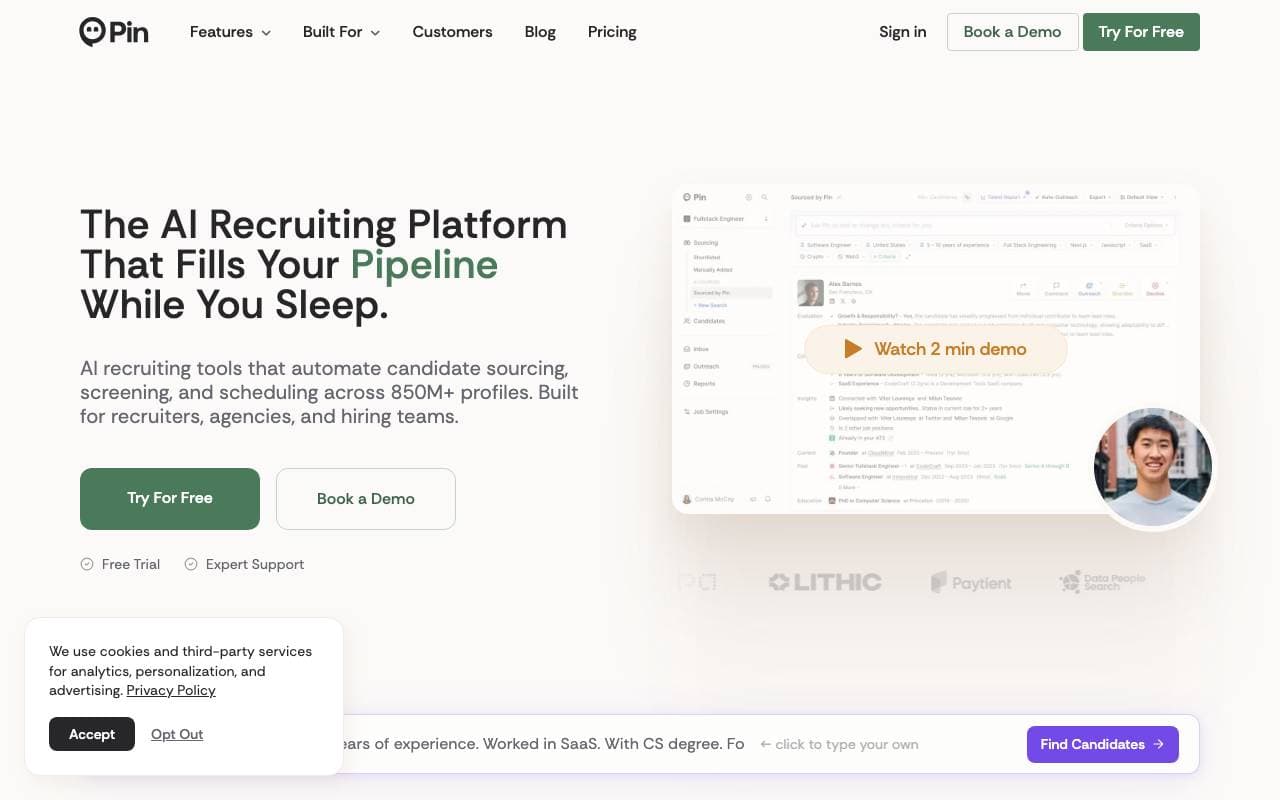

Pin AI
Workflow automation
Agentic AI recruiter that automates sourcing, screening, and outreach to accelerate hiring.