Past battle · 2024-05-03 UTC
Virtual Workers Showdown — May 3, 2024
From the Virtual Workers category. 26 marks placed across 9 fighters. Qevlar AI took the crown.
Final standings








The line-up
The fighters
Profiles of every tool that competed in this battle, ranked by their final score.

Qevlar AI
Autonomous SOC analyst that triages and investigates security alerts in minutes with SIEM/SOAR integrations and flexible deployment.
Qevlar AI is an autonomous Security Operations Center (SOC) analyst that transforms the daily activity of a SOC into a self-improving defense system. It achieves this by continuously sharpening investigation, detection, response, threat hunting, and vulnerability prioritization through contextual intelligence that compounds with every action. Qevlar AI investigates and responds across an organization's stack, connecting related activity into a single incident story and mapping the full blast radius. It drives the next action based on the incident, including containment for malicious activity, tuning for false positives, and policy or compliance follow-up for benign violations. This process improves the defense system over time. One of the key benefits of Qevlar AI is its ability to compound institutional knowledge, making investigations faster, decisions more consistent, and the entire SOC smarter with every cycle. It also connects SOC and vulnerability teams through a shared intelligence layer, prioritizing real risk and elevating vulnerable assets in the remediation queue. Qevlar AI can be integrated into an organization's environment quickly, connecting with tech stack via API in minutes. This allows security teams to see results directly in their console or Qevlar's platform. By using Qevlar AI, organizations can achieve more capacity without headcount growth, handling repetitive operational work and focusing on decisions that matter most. Security leaders can also benefit from the integration of Qevlar's autonomous, adaptive agentic AI with their existing cybersecurity systems, delivering incremental operational excellence and protecting business customer data.
Criteria breakdown
- Autonomous SOC analyst
- Investigates and responds across the stack
- Drives the next action based on incidents
- Compound institutional knowledge
- Connects SOC and vulnerability teams
- Shared intelligence layer for prioritizing real risk

Savery AI
Autonomous software development via agent networks that write, refactor, and test code with GitHub and cloud integrations.
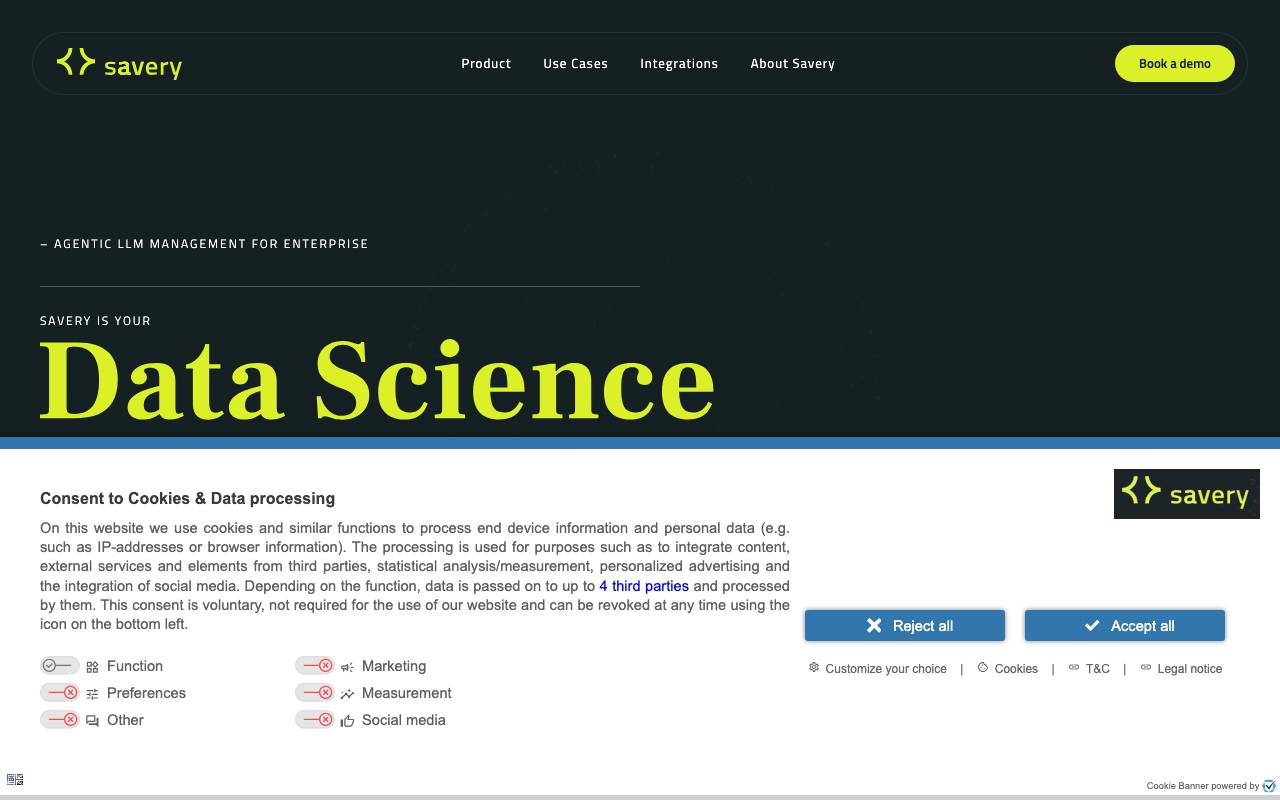
Savery AI is an autonomous software development tool that utilizes agent networks to write, refactor, and test code. It is designed to integrate with platforms like GitHub and cloud services, aiming to streamline and accelerate the software development process. The tool is intended for organizations and developers looking to improve their coding efficiency and reduce manual labor. By automating certain aspects of software development, Savery AI seeks to enhance productivity and accuracy. However, the effectiveness of such tools can depend on various factors, including the complexity of the project and the quality of the integration with existing development environments. Autonomous coding tools like Savery AI represent a growing trend in the tech industry, where AI is being harnessed to assist in coding tasks. The potential benefits include faster development times and reduced costs, but there are also challenges related to ensuring the reliability and security of the code generated by these tools. As the technology evolves, it is likely that we will see more sophisticated autonomous software development solutions. Savery AI, with its focus on integration and automation, is part of this evolving landscape, offering a promising approach to enhancing software development processes.
Criteria breakdown
- Autonomous code writing
- Code refactoring
- Integration with GitHub
- Cloud service integrations
- Automated code testing

One Click Store
AI-powered platform for launching eCommerce stores in minutes with automated content and SEO.
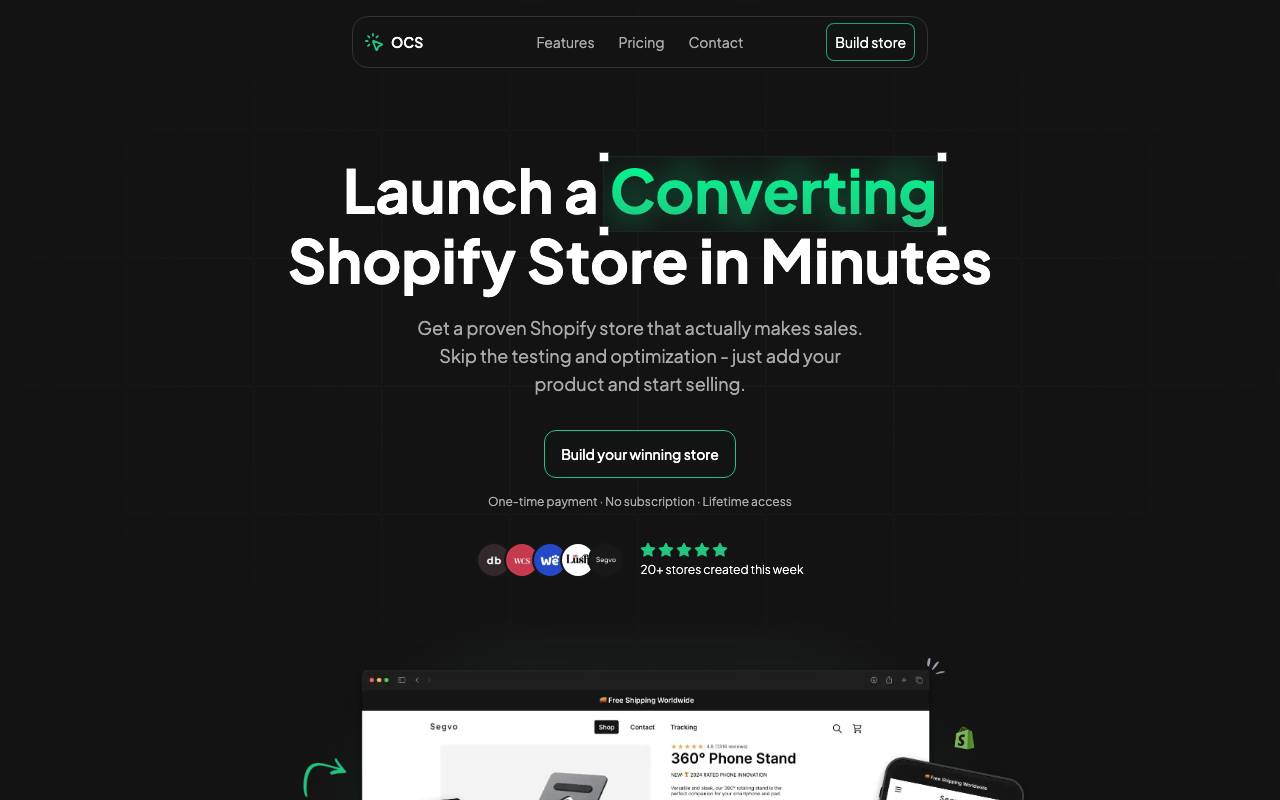
One Click Store is an eCommerce platform that uses AI to streamline the process of building and launching online stores. Instead of manually configuring layouts, writing product copy, and optimizing each page, users can generate a functional storefront quickly with much of the heavy lifting handled automatically. The platform focuses on two areas where new merchants often struggle: producing compelling product descriptions and structuring pages for search visibility. By automating these tasks, it aims to lower the technical barrier for first-time sellers and reduce setup time for experienced ones launching multiple stores.
Criteria breakdown
- One-click store creation
- AI-generated product descriptions
- Automated SEO setup
- Template-based storefronts
- Bulk product handling
- Streamlined onboarding workflow

Ace by General Agents
Desktop AI agent that automates tasks by controlling your mouse and keyboard like a human user.
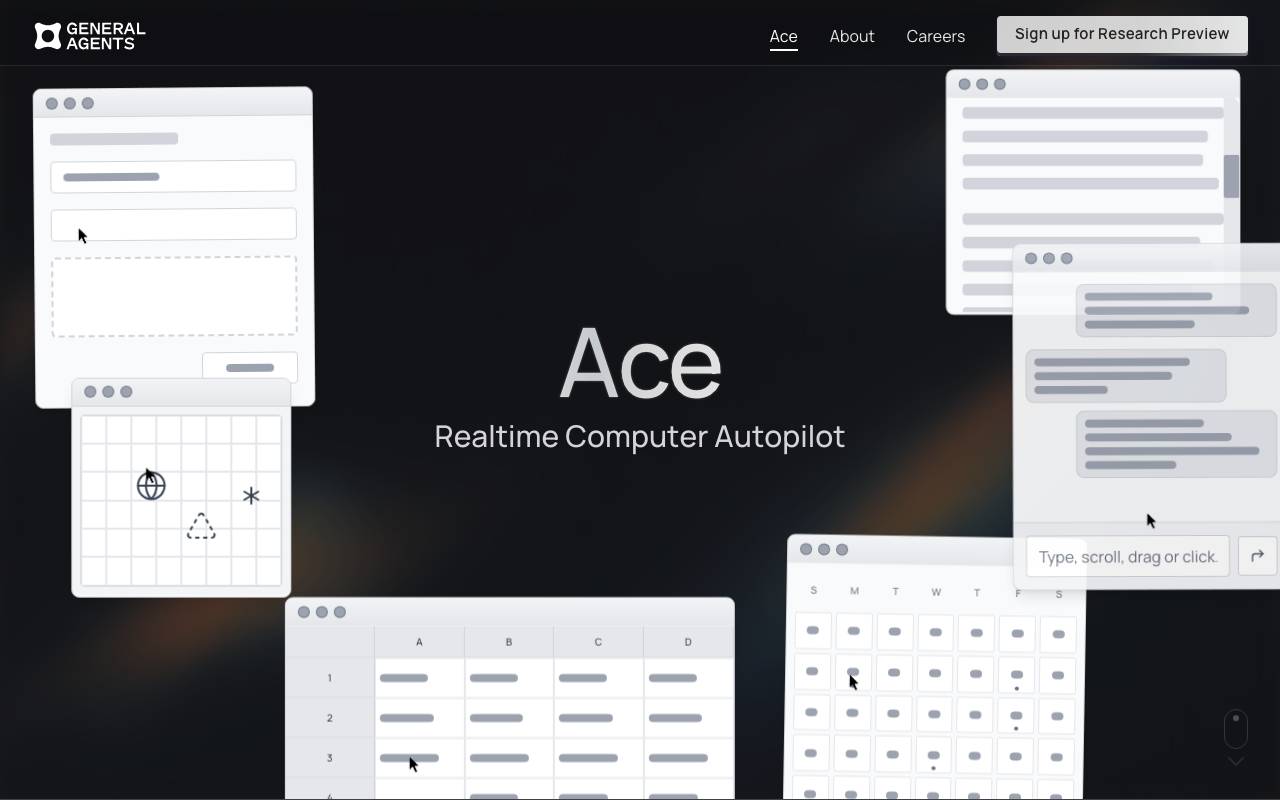
Ace by General Agents is a computer-use AI agent designed to operate desktop applications the same way a person would, by moving the cursor, clicking, typing, and navigating through visible interface elements. Instead of relying on app-specific APIs or integrations, it interprets the screen and produces real input events to complete workflows. This approach lets Ace work across virtually any software installed on a machine, from web browsers to productivity suites and legacy tools. Users can delegate repetitive sequences, multi-step processes, or routine admin work and have the agent carry them out in the background while they focus on other tasks. Ace is positioned for individuals and teams who want to automate desktop activity without writing scripts or maintaining brittle macros, while keeping a human-style interaction model that mirrors how the apps were originally meant to be used.
Criteria breakdown
- Mouse and keyboard input simulation
- Visual interpretation of on-screen elements
- Cross-application task automation
- Natural language task instructions
- Autonomous multi-step execution
- Runs directly on the user's desktop

Convergence Proxy
Adaptive AI assistant that learns new skills on the fly through real-world use.

Convergence Proxy is an AI-powered virtual assistant designed to handle a wide range of tasks while continuously expanding its capabilities. Rather than relying solely on a fixed skill set, it learns from real-time interactions, picking up new workflows and refining its behavior as users guide it. The assistant is suited for professionals and teams who want an agent that grows alongside their needs, whether automating repetitive web tasks, managing research, or coordinating multi-step processes. Its adaptive nature aims to reduce the manual setup typically required for traditional automation tools.
Criteria breakdown
- Real-time skill acquisition
- Autonomous task execution
- Continuous self-improvement
- Natural language instruction
- Multi-step workflow handling
- Adaptive memory of user preferences

OpenAI Operator
An AI agent designed to autonomously perform web-based tasks by interacting with graphical user interfaces.

Operator is a research preview of an agent designed to autonomously perform web-based tasks by interacting with graphical user interfaces. It can "see" and "interact" with a browser, enabling it to take action on the web without requiring custom API integrations. The agent can be asked to handle a wide variety of repetitive browser tasks, such as filling out forms, ordering groceries, and creating memes. Operator is powered by a new model called Computer-Using Agent (CUA), combining GPT-4's vision capabilities with advanced reasoning through reinforcement learning. Operator is currently available to Pro users in the U.S. and is integrated into ChatGPT as "agent mode". Users can personalize their workflows in Operator by adding custom instructions and save prompts for quick access. The agent can run multiple tasks simultaneously by creating new conversations. Operator has limitations and will evolve based on user feedback. To ensure a safe and iterative rollout, it is starting small and expanding to Plus, Team, and Enterprise users in the future. The ability to use the same interfaces and tools that humans interact with on a daily basis broadens the utility of AI, helping people save time on everyday tasks while opening up new engagement opportunities for businesses. This transformative tool can streamline tasks for users and bring the benefits of agents to companies that want innovative customer experiences and desire higher rates of conversion.
Criteria breakdown
- Autonomous web-based task performance
- Customizable workflows with instructions
- Multiple task execution with simultaneous conversations
- Integration with ChatGPT as "agent mode"
- Self-correcting mechanisms for tasks
- Ability to handle CAPTCHAs

Perplexity Computer
Always-on digital worker that executes full workflows using app connectors, research, coding, and scheduled monitoring and actions.

Perplexity Computer is a digital worker designed to operate continuously, automating workflows that involve research, coding, and integration with various applications through connectors. It allows users to set up scheduled monitoring and actions, enabling the tool to run independently. This functionality is geared towards streamlining tasks and augmenting human capabilities. Perplexity Computer's features cater to users seeking efficiency and versatility in their workflows. Its capabilities are centered around automating repetitive tasks, allowing users to focus on strategy and high-level decision making. By leveraging connectors for various apps, Perplexity Computer can access and process data from a wide range of sources. Perplexity Computer is well-suited for users who require a high degree of automation in their workflows and can benefit from a digital co-worker that runs continuously.
Criteria breakdown
- Research integration
- Coding capabilities
- Scheduled actions
- App connectors
- Continuous automation

Avaamo
Enterprise conversational AI platform for building virtual agents and digital workers across business functions.

Avaamo is a conversational AI platform designed for large organizations that want to deploy intelligent virtual agents across customer service, HR, IT support, healthcare, and other business domains. It combines natural language understanding, dialog management, and integration tooling to help teams automate routine interactions and complex workflows through chat and voice channels. The platform supports omnichannel deployment, connecting bots to web, mobile, messaging apps, contact centers, and telephony systems. It includes prebuilt skills, analytics dashboards, and connectors for enterprise systems like Salesforce, ServiceNow, SAP, and Workday, allowing digital workers to perform real transactions rather than just answer questions. Avaamo targets enterprises with security, compliance, and scalability requirements, offering on-premise and cloud deployment options along with multilingual support for global rollouts.
Criteria breakdown
- Conversational AI engine with NLU and dialog management
- Prebuilt skills and industry templates
- Voice and contact center integration
- Connectors for CRM, ITSM, and HRIS platforms
- Analytics and conversation insights dashboards
- Flexible cloud and on-premise deployment

Jumbo Mana
Creates interactive AI avatars, including digital twins, for enhanced user engagement.
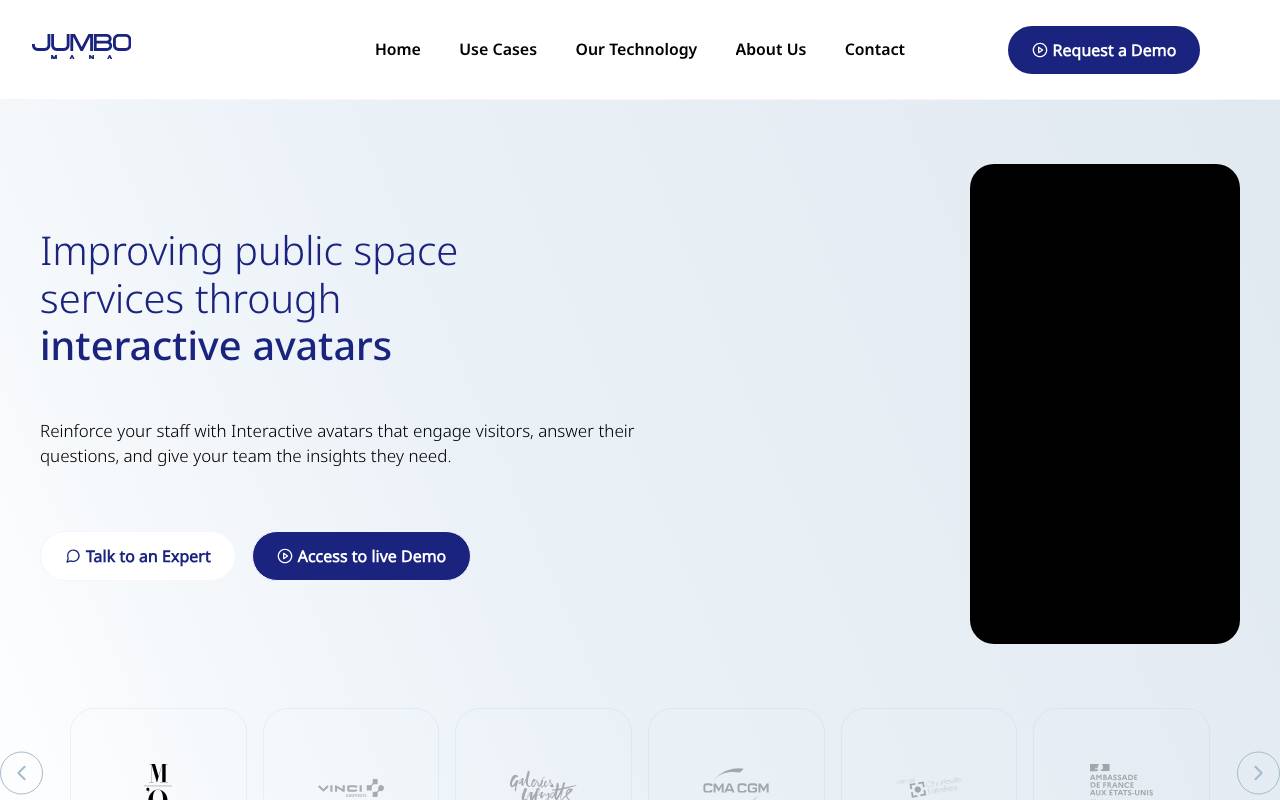
Jumbo Mana is likely a platform designed to create interactive AI avatars, including digital twins, to enhance user engagement across various industries. It probably utilizes AI and machine learning algorithms to generate realistic and interactive digital representations of humans or objects. The platform may be used by businesses, educators, and content creators to create immersive experiences for their audiences. Jumbo Mana could be used to create virtual customer service representatives, virtual teachers, or digital product demos. The platform may also allow users to customize their digital twins to fit their specific needs. As an interactive AI avatar platform, Jumbo Mana may have applications in fields such as education, entertainment, and customer service. It may also be used to create virtual event hosts, virtual tour guides, or other interactive digital experiences. The platform's ability to create interactive digital twins could revolutionize the way businesses interact with their customers and the way educators teach their students. However, the effectiveness of Jumbo Mana would depend on the quality of its AI algorithms and the level of customization it offers. Additionally, the platform may require significant computational resources and infrastructure to support its interactive features. The potential impact of Jumbo Mana on the future of interactive digital experiences is significant, and its applications could be vast. As the platform continues to develop, it will be important to evaluate its capabilities and limitations in order to fully understand its potential. The use of Jumbo Mana could also raise important questions about the ethics of creating and using digital twins, and the potential consequences of such technology on society. The target audience for Jumbo Mana may include businesses looking to enhance customer engagement, educators seeking to create more interactive learning experiences, and content creators wanting to generate more realistic digital content. The platform may also be used by individuals who want to create their own digital twins for personal or professional use. In terms of accessibility, Jumbo Mana may offer a user-friendly interface that allows users to create and customize their digital twins without requiring extensive technical expertise. The technical requirements for using Jumbo Mana may include a computer or mobile device with a stable internet connection, as well as a compatible operating system and software. The platform may also require users to have a basic understanding of AI and machine learning concepts, although this may not be necessary for all users. In terms of its potential impact, Jumbo Mana could have significant effects on the way businesses and educators interact with their audiences. The platform could enable more personalized and engaging experiences, which could lead to increased customer satisfaction and improved learning outcomes. However, it could also raise concerns about the potential misuse of digital twins and the impact on employment and social dynamics. The development and use of Jumbo Mana will likely require ongoing evaluation and refinement to ensure that it is used in ways that are ethical, responsible, and beneficial to society. This may involve ongoing research and development to improve the platform's capabilities and address potential concerns. It may also require the establishment of guidelines and regulations to ensure that the platform is used in ways that are fair, transparent, and respectful of individuals' rights and privacy. The potential applications of Jumbo Mana are vast, and its impact could be significant. As the platform continues to develop, it will be important to monitor its progress and evaluate its effects on society. In conclusion, Jumbo Mana is a platform that has the potential to revolutionize the way businesses and educators interact with their audiences. Its ability to create interactive digital twins could enable more personalized and engaging experiences, which could lead to increased customer satisfaction and improved learning outcomes. However, it will be important to evaluate the platform's capabilities and limitations, as well as its potential impact on society, in order to ensure that it is used in ways that are ethical, responsible, and beneficial.
Criteria breakdown
- Digital twin creation
- Interactive AI avatars
- Customization options
- Immersive experience generation
- Virtual customer service representatives
- Virtual event hosting