Past battle · 2024-10-30 UTC
AI Agents Showdown — October 30, 2024
From the AI Agents category. 23 marks placed across 7 fighters. Levity took the crown.
Final standings






The line-up
The fighters
Profiles of every tool that competed in this battle, ranked by their final score.

Levity
AI automation that turns logistics emails into structured, actionable workflows.
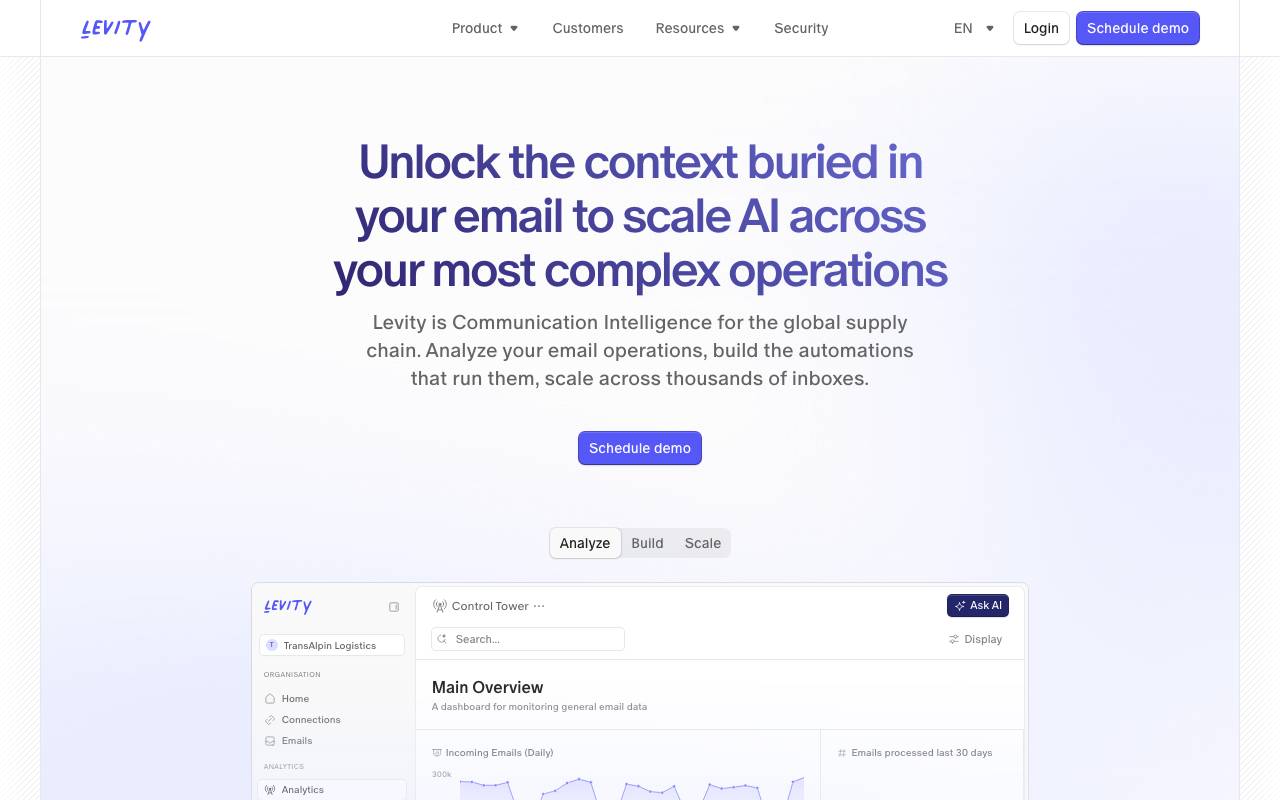
Levity is an AI platform built for freight and logistics teams who spend hours triaging email-based operations. It reads incoming messages, extracts key details like quote requests, shipment updates, or load tenders, and routes them into the right systems or workflows automatically. By combining language models with custom training on a team's own data, Levity helps brokers, forwarders, and 3PLs reduce manual data entry, respond to customers faster, and scale operations without expanding headcount. It integrates with existing TMS, CRM, and email tools so automation fits into current processes rather than replacing them.
Criteria breakdown
- AI email classification and data extraction
- Automated routing into TMS or CRM
- Custom model training on company data
- Quote and load tender handling
- Workflow integrations via API and connectors
- Analytics on processed email volume

Relay.app
AI-powered workflow automation with human-in-the-loop controls and deep app integrations.
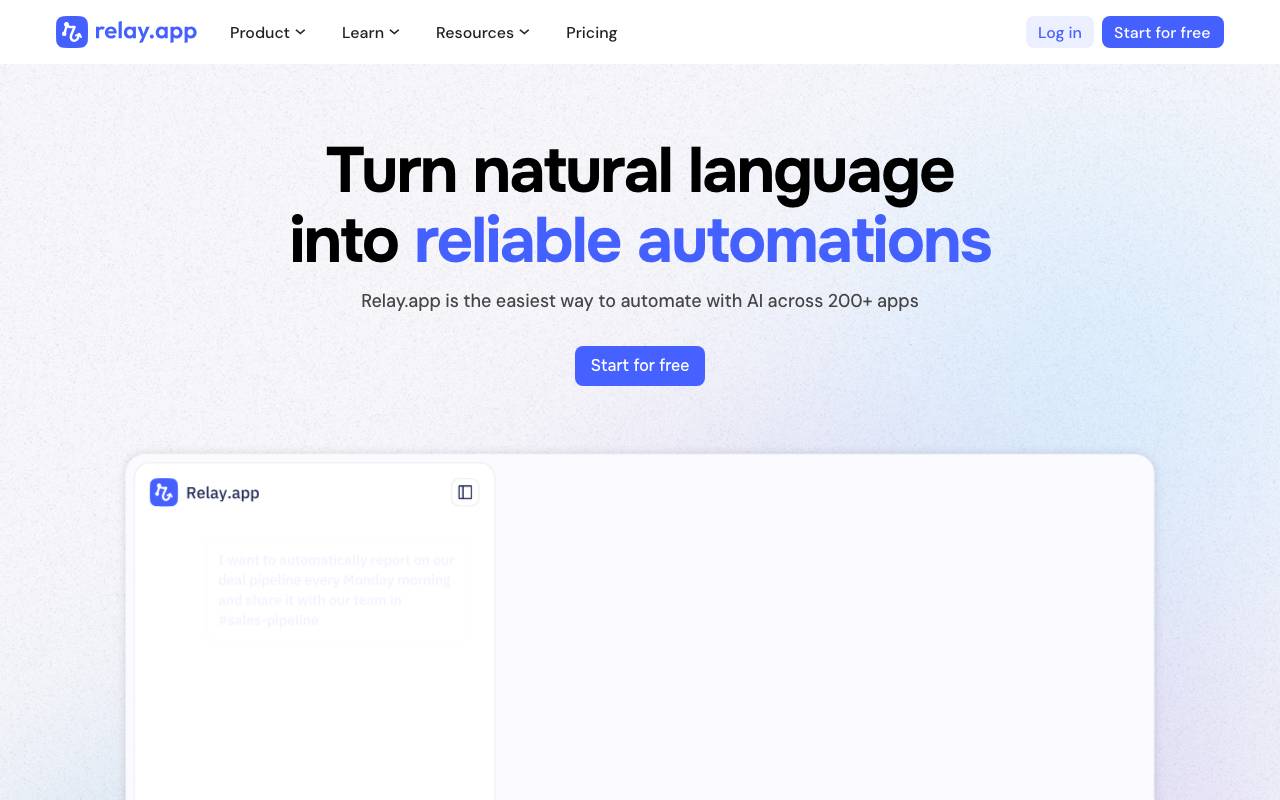
Relay.app is a workflow automation platform that combines AI agents with traditional triggers and actions to automate business processes across hundreds of connected apps. Users can build multi-step workflows that pull data, generate content with LLMs, and push updates to tools like Gmail, Slack, Notion, HubSpot, Salesforce, and Google Workspace. A distinguishing feature is its built-in human-in-the-loop steps, which let teams add approval, review, or data-entry checkpoints inside otherwise automated flows. This makes Relay useful for use cases like outbound sales, customer onboarding, content review, and internal ops where full automation is risky but manual work is tedious. Workflows can be triggered by app events, schedules, forms, or webhooks, and AI agents can be configured to reason over context, draft responses, or classify inputs before handing results back to downstream steps.
Criteria breakdown
- Multi-step workflow builder with AI steps
- Human-in-the-loop approval and review tasks
- Hundreds of app integrations
- AI agents for drafting, classification, and reasoning
- Triggers via webhooks, schedules, forms, and app events
- Team collaboration on shared workflows


Ribbon is an AI recruiter that automates candidate interviews at scale. It allows real recruiters to meet only qualified candidates, saving time and effort. The platform conducts live interviews with candidates, scores their responses, and reviews only the top performers. Ribbon provides features such as customized scoring, real-time two-way conversations, and advanced cheating detection. It also integrates with multiple Applicant Tracking Systems (ATS) and offers omnichannel outreach, enabling recruiters to streamline their hiring process and make data-driven decisions. The platform is trusted by top talent acquisition teams and recruiting companies worldwide, having completed over 1 million interviews with a 4.8-star rating.
Criteria breakdown
- Conversational AI interviews
- Automated candidate scoring and ranking
- Interview transcripts and summaries
- Customizable question sets per role
- Integration with hiring workflows
- Scalable screening for high-volume roles

SocialScan
A community-owned AI platform reimagining Web3 user experience through customizable AI agents specialized in on-chain intelligence.
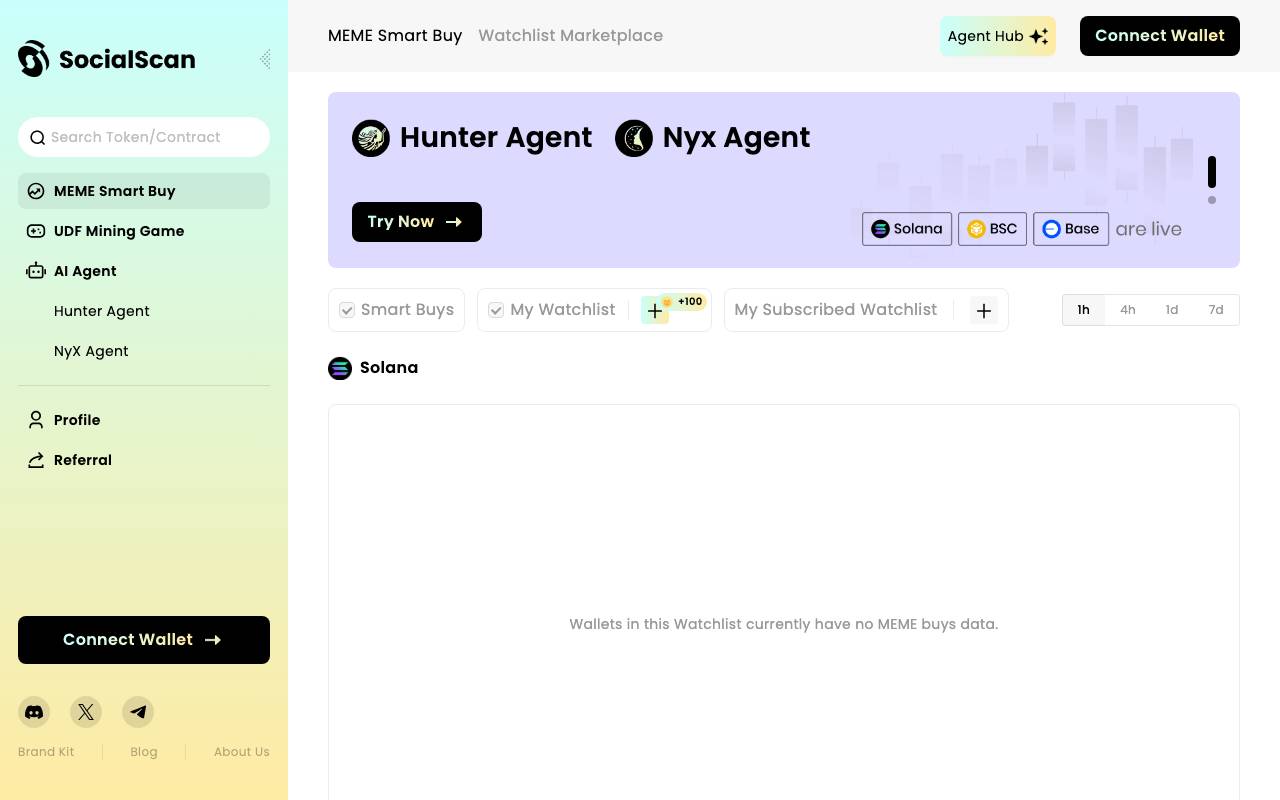
SocialScan is likely a cutting-edge AI platform designed to revolutionize the Web3 user experience. It probably utilizes customizable AI agents that specialize in on-chain intelligence, allowing users to harness the power of artificial intelligence to navigate and interact with blockchain-based systems. The platform may be community-owned, implying a decentralized and collaborative approach to its development and governance. As such, SocialScan could be a pivotal tool for individuals and organizations seeking to leverage AI-driven insights to make informed decisions within the Web3 ecosystem. The use of customizable AI agents suggests a high degree of flexibility and adaptability, potentially enabling users to tailor the platform to their specific needs and use cases. By reimagining the Web3 user experience, SocialScan may aim to bridge the gap between complex blockchain technologies and everyday users, making it more accessible and user-friendly. The platform's focus on on-chain intelligence could also facilitate the development of more sophisticated and decentralized applications. Overall, SocialScan seems poised to play a significant role in shaping the future of Web3 and AI-driven innovation. It may provide a unique combination of AI-powered analytics, data visualization, and user interface design to create a more intuitive and informative experience for users. This could involve integrating with various blockchain networks, wallets, and other Web3 tools to provide a seamless and comprehensive experience. SocialScan's community-owned nature may also lead to a vibrant ecosystem of developers, users, and contributors, driving innovation and growth through collaborative efforts. However, the platform's success will likely depend on its ability to balance the needs of its diverse user base, ensure the security and transparency of its AI agents, and navigate the rapidly evolving landscape of Web3 and AI regulations. The platform's architecture may be designed to accommodate a wide range of use cases, from simple data queries to complex predictive modeling and decision-making. This could involve the development of specialized AI agents that can interact with different blockchain protocols, extract relevant data, and provide actionable insights to users. SocialScan may also incorporate machine learning algorithms to improve the accuracy and effectiveness of its AI agents over time, allowing them to learn from user feedback and adapt to changing market conditions. Furthermore, the platform's community-owned model could facilitate the creation of a decentralized data marketplace, where users can share, buy, and sell data and insights in a secure and transparent manner. This could have significant implications for the development of Web3 applications, enabling the creation of more sophisticated and data-driven services that can compete with traditional centralized platforms. In terms of its potential impact, SocialScan could play a key role in driving the adoption of Web3 technologies, particularly among non-technical users who may be intimidated by the complexity of blockchain systems. By providing a user-friendly interface and AI-driven insights, the platform may help to bridge the gap between the technical and non-technical communities, facilitating greater collaboration and innovation. Additionally, SocialScan's focus on on-chain intelligence could lead to the development of more robust and resilient blockchain networks, as users and developers are able to identify and address potential security vulnerabilities and performance bottlenecks. SocialScan may also have significant implications for the future of AI research and development, particularly in the context of Web3 and blockchain technologies. The platform's use of customizable AI agents and machine learning algorithms could lead to the creation of more sophisticated and autonomous systems, capable of interacting with complex networks and making decisions in real-time. This could have far-reaching consequences for fields such as finance, healthcare, and education, where AI-driven systems are being increasingly used to automate decision-making and improve outcomes. Overall, SocialScan appears to be a groundbreaking platform that has the potential to revolutionize the Web3 user experience and drive the adoption of AI-driven technologies. Its community-owned model, customizable AI agents, and focus on on-chain intelligence make it an exciting and innovative platform that is worth watching in the coming years.
Criteria breakdown
- customizable AI agents
- on-chain intelligence
- community-owned governance
- AI-driven insights and analytics
- integration with blockchain networks and wallets
- machine learning algorithms for improved accuracy and effectiveness

AGENTS.inc
AI agents that automate knowledge work and deliver real-time strategic intelligence.
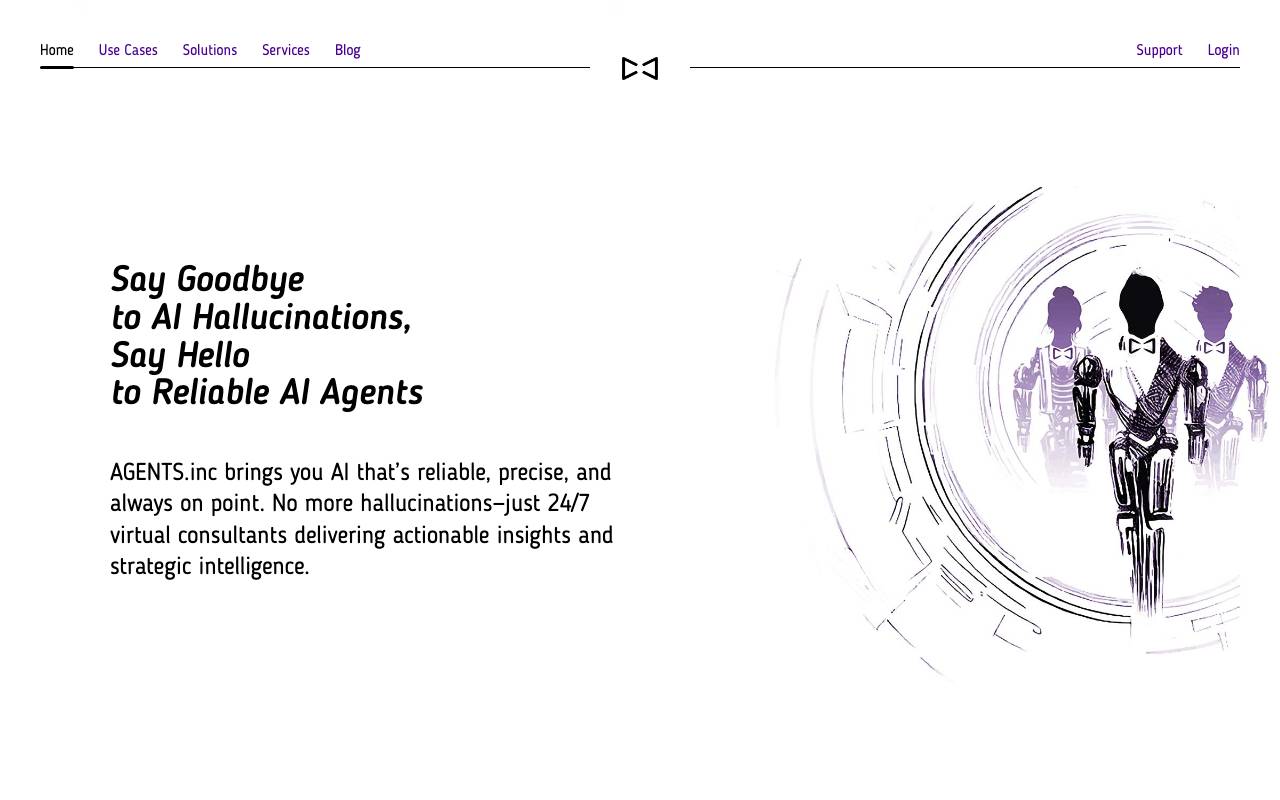
AGENTS.inc is a platform that deploys AI-powered agents designed to take on knowledge-heavy tasks across industries such as finance, consulting, media, and research. The agents gather, synthesize, and analyze information from large volumes of sources, producing decision-ready insights in a fraction of the time of manual workflows. Rather than acting as a generic chatbot, the platform focuses on specialized, role-based agents that can be configured for monitoring markets, tracking competitors, surfacing risks, and generating strategic briefings. Outputs are delivered in real time, allowing teams to act on intelligence as it emerges. The service targets organizations that need to scale analyst-level work without scaling headcount, integrating into existing workflows to support faster, more informed decision-making.
Criteria breakdown
- AI agents for knowledge work automation
- Real-time intelligence and alerts
- Industry-specific use cases
- Strategic briefings and reports
- Data synthesis across multiple sources
- Configurable agent workflows

AppAgent
AI assistant that streamlines mobile app workflows from ASO research to store release.
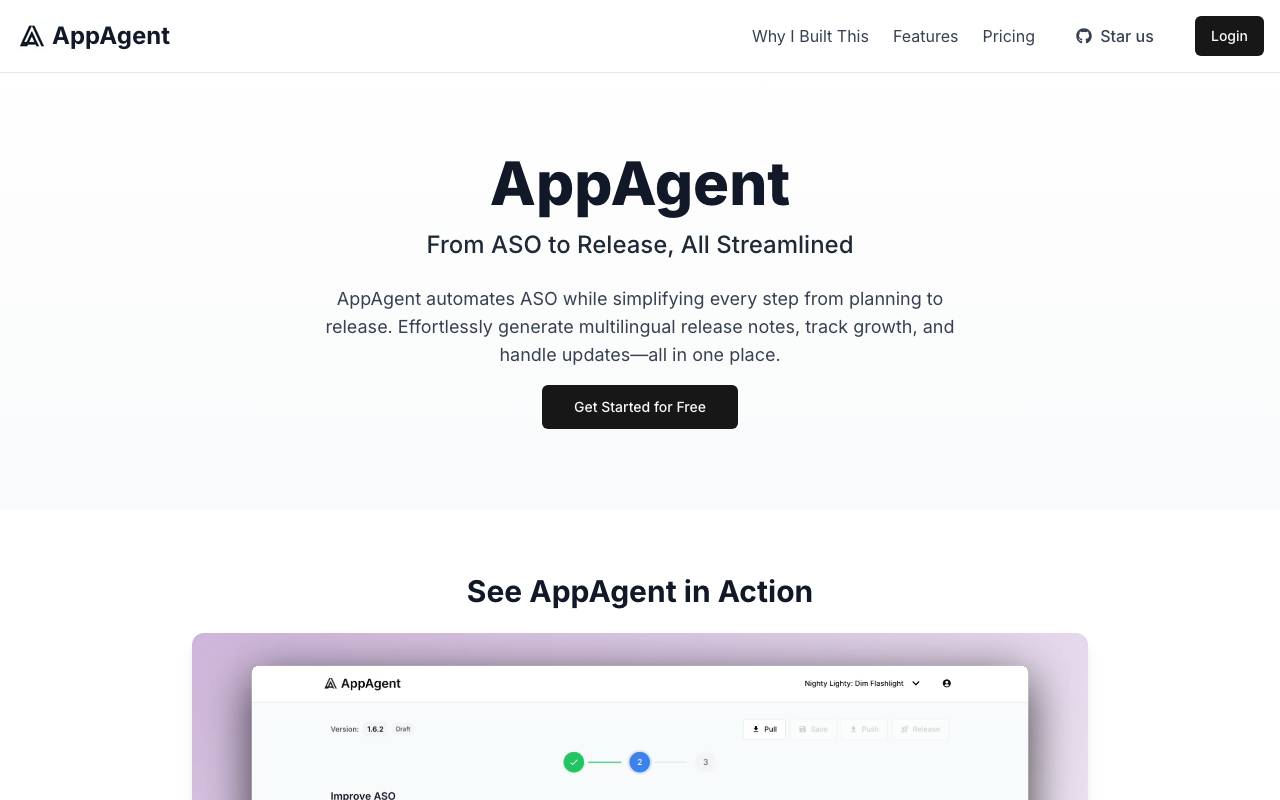
AppAgent is an AI-powered tool designed to support mobile app teams across the full publishing lifecycle. It aims to reduce the manual effort involved in tasks like app store optimization, metadata management, asset preparation, and release coordination by automating repetitive steps and surfacing relevant insights. The platform brings ASO research, listing optimization, and release operations into a single workflow, helping developers, marketers, and indie publishers move faster without juggling multiple disconnected tools. By centralizing these activities, it targets shorter time-to-market and more consistent store performance across iterations.
Criteria breakdown
- AI-assisted ASO keyword and metadata suggestions
- Store listing optimization tools
- Release workflow automation
- Performance insights and tracking
- Asset and copy management
- Support for end-to-end app publishing
Dot
AI data analyst that delivers instant answers to business data questions in plain language.
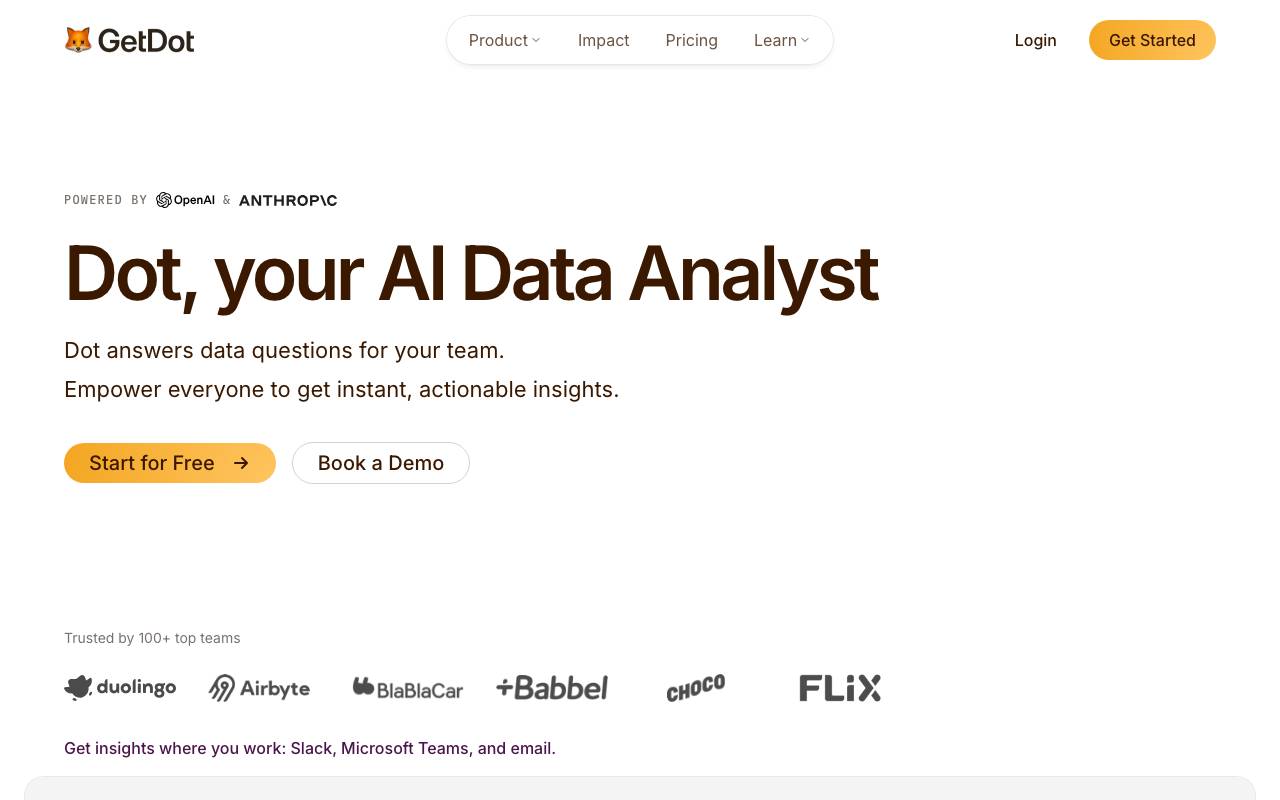
Dot is an AI-powered data analyst designed to help teams get answers from their data without writing SQL or waiting on analytics queues. Users ask questions in natural language and Dot returns charts, tables, and explanations grounded in the organization's connected data sources. Built for business users and data teams alike, Dot integrates with data warehouses and BI stacks, learns from existing metrics and definitions, and provides context-aware responses. It aims to reduce the bottleneck between business questions and trustworthy data insights, making self-serve analytics more practical across an organization.
Criteria breakdown
- Natural language Q&A over business data
- Auto-generated charts and visualizations
- Connections to data warehouses and BI tools
- Semantic layer and metric awareness
- Conversational follow-up questions
- Shareable answers for team collaboration