Past battle · 2024-01-18 UTC
Agent Development Showdown — January 18, 2024
From the Agent Development category. 15 marks placed across 5 fighters. NetX took the crown.
Final standings



The line-up
The fighters
Profiles of every tool that competed in this battle, ranked by their final score.
NetX
Modular economic network combining blockchain infrastructure with AI capabilities.
NetX is a modular economic network designed to bring together blockchain and AI technologies within a unified framework. Its architecture allows developers and organizations to plug in components for decentralized transactions, data exchange, and AI-driven services, supporting a range of use cases across digital economies. The platform aims to bridge traditional blockchain functionality with machine learning workflows, enabling tokenized incentives, smart contract automation, and AI-powered analytics to operate within the same ecosystem. This makes it suitable for teams building Web3 applications that require intelligent processing or data-driven decision making. By emphasizing modularity, NetX seeks to give builders flexibility in how they assemble their stack, choosing the blockchain, AI, and economic primitives that fit their project needs.
Criteria breakdown
- Modular network components
- Blockchain integration layer
- AI service compatibility
- Smart contract support
- Tokenized economic primitives
- Developer-focused tooling

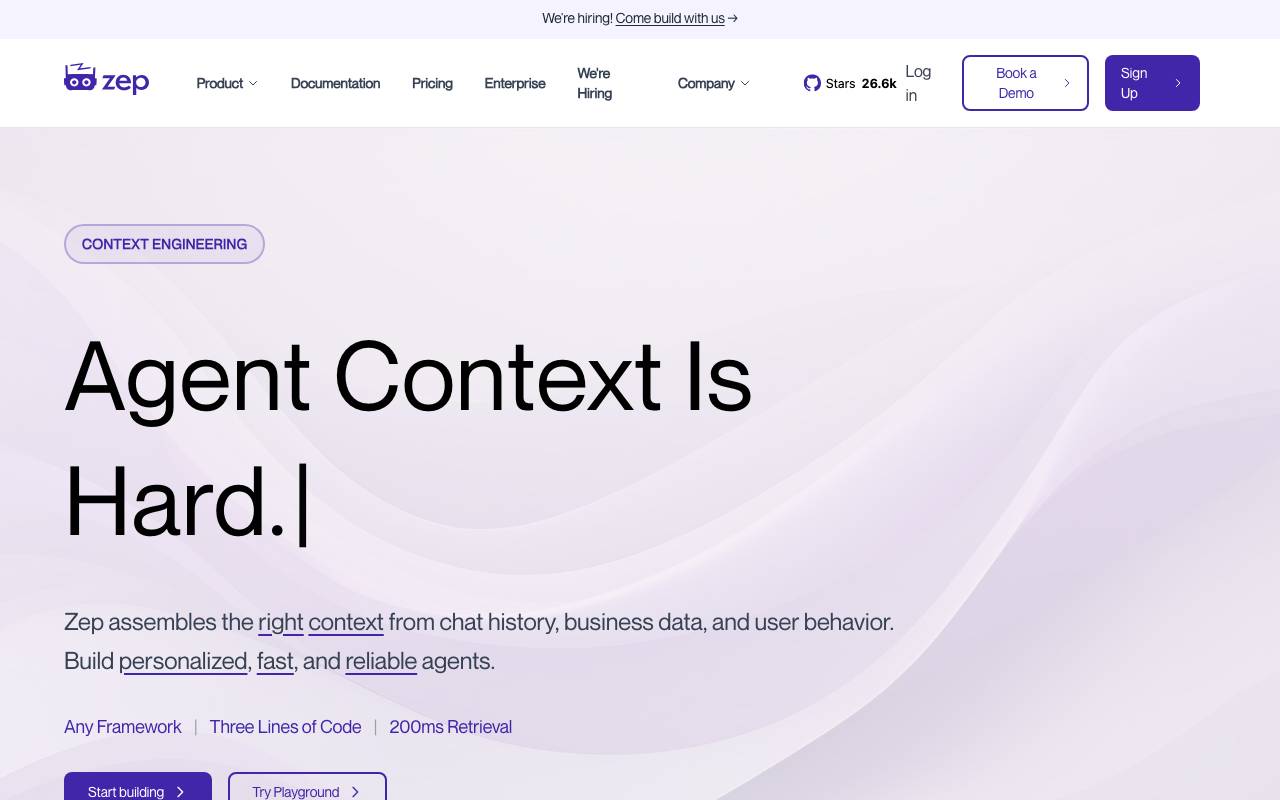
Zep AI Memory is a developer-focused memory service that gives AI agents persistent, structured recall across conversations and sessions. It captures chat history, extracts key facts, and organizes them into a knowledge graph so agents can retrieve relevant context on demand instead of stuffing entire histories into prompts. The platform handles summarization, entity extraction, and semantic search behind a simple API, letting teams add stateful memory to chatbots, copilots, and autonomous agents without building custom retrieval infrastructure. It is designed to scale with production workloads while keeping prompt sizes and token costs predictable. Zep integrates with common LLM frameworks like LangChain and LlamaIndex and provides SDKs for popular languages, making it straightforward to drop into existing agent stacks.
Criteria breakdown
- Long-term conversational memory
- Automatic fact and entity extraction
- Knowledge graph storage
- Semantic and hybrid search
- LangChain and LlamaIndex integrations
- Multi-language SDKs

IsMyStoreReady
Instant audit tool for Shopify and WooCommerce stores to spot conversion and setup issues.
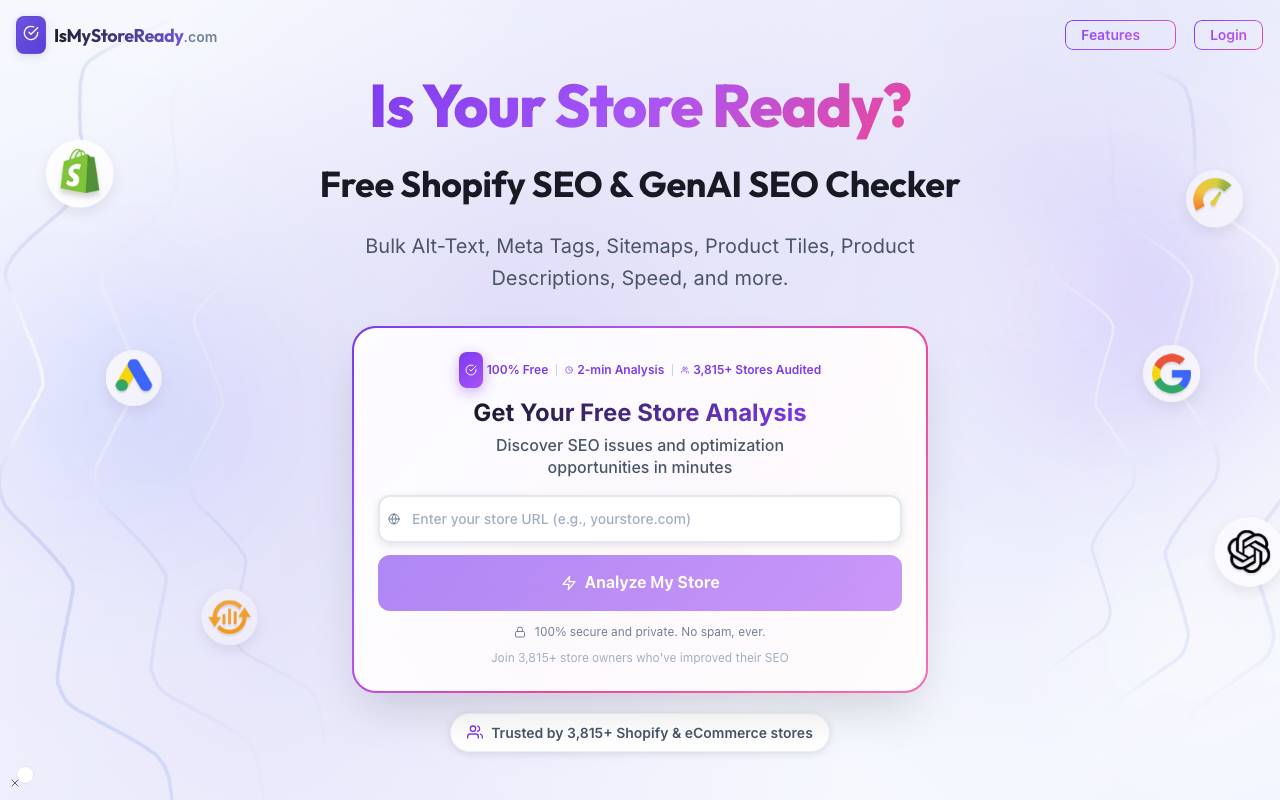
IsMyStoreReady is an automated audit tool built for Shopify and WooCommerce store owners who want a quick health check of their online shop. By scanning a store's public pages, it surfaces common issues that can hurt conversions, SEO, trust, and overall readiness for traffic. The tool generates a structured report covering essentials like product page quality, store policies, performance signals, and trust elements. This gives founders and small ecommerce teams a clear, prioritized starting point without needing to hire a consultant or run multiple separate audits. It's aimed at solo sellers, dropshippers, and growing DTC brands who want a fast second opinion before launching ads or scaling marketing spend.
Criteria breakdown
- One-click store audit
- Shopify and WooCommerce support
- Conversion and trust checks
- SEO and performance signals review
- Prioritized issue reporting
- Actionable improvement suggestions

Vertex AI Agent Builder
A Google Cloud platform that enables developers to create and deploy generative AI agents for enterprise applications.
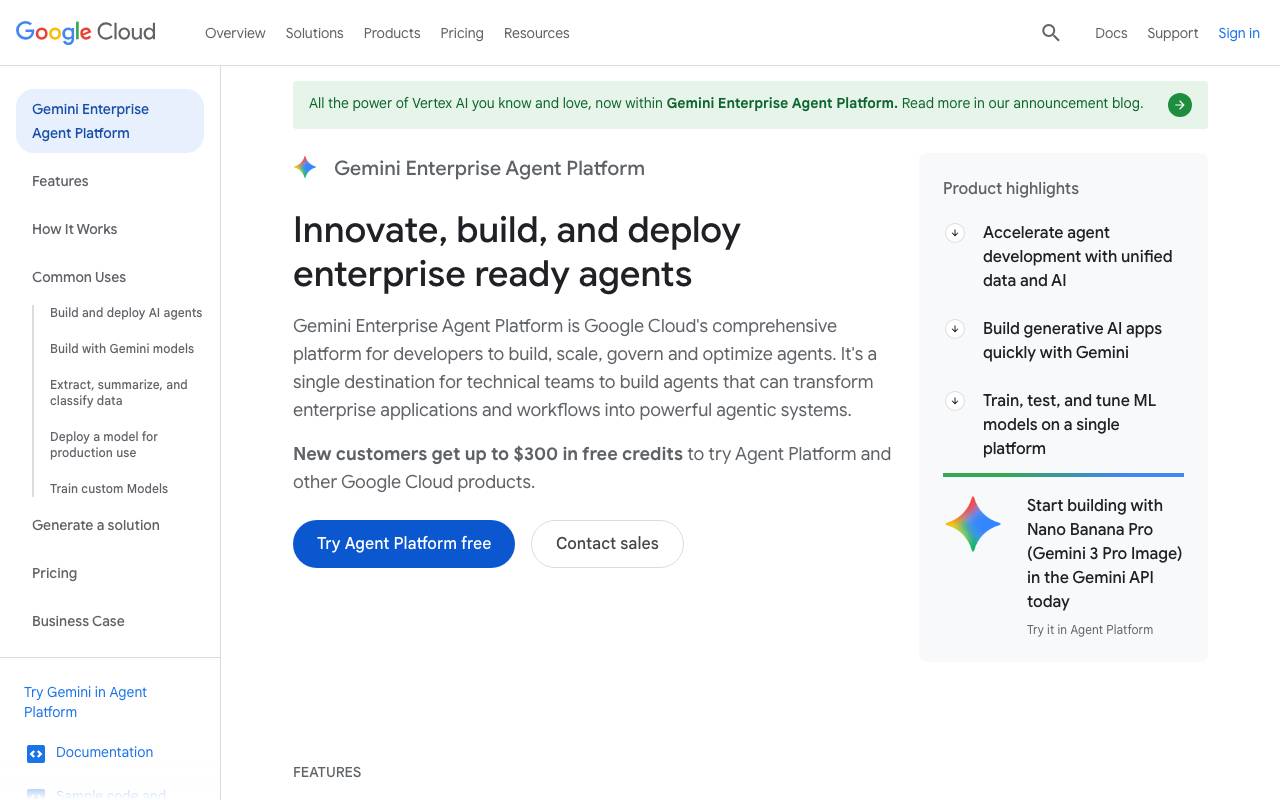
Vertex AI Agent Builder, now part of the Gemini Enterprise Agent Platform within Google Cloud, is a comprehensive platform for developers to build, scale, govern, and optimize enterprise-grade generative AI agents. It allows technical teams to transform enterprise applications and workflows into powerful agentic systems. The platform provides a unified environment for data and AI, enabling quick development of generative AI apps with tools like Gemini. Users can train, test, and tune machine learning models on a single platform. The platform offers an open and comprehensive environment that empowers businesses to rapidly build, scale, govern, and optimize enterprise-grade agents grounded in their enterprise data. It provides a full-stack foundation and extensive developer choice to transform applications and workflows into powerful agentic systems at a global scale. Key features include the ability to choose from over 200 Google and third-party AI models and tools, customize models for specific use cases, and utilize a Model Evaluation service for objective assessment of generative AI models. The platform also supports agent-powered development and workflows through tools like Google Antigravity, which allows for the centralized management and orchestration of agents. The Gemini Enterprise Agent Platform is designed for data scientists and ML engineers, offering tools for training, tuning, and deploying ML models, as well as MLOps for automating, standardizing, and managing ML projects. It provides a range of modular tools to collaborate across teams and improve models throughout the development lifecycle. Overall, Vertex AI Agent Builder within the Gemini Enterprise Agent Platform enables the creation and deployment of sophisticated AI agents for enterprise applications, offering a range of tools and features to support development, scaling, governance, and optimization of these agents.
Criteria breakdown
- Build, scale, govern and optimize enterprise grade AI agents
- Unified data and AI for accelerated agent development
- Gemini Train for building generative AI apps
- Gemini Enterprise app for secure registration, management, and governance of agents
- Google Antigravity for agent-powered development and workflows
- 200+ Google and third-party AI models and tools

Stagehand
Open-source AI browser automation framework built for simplicity and extensibility.
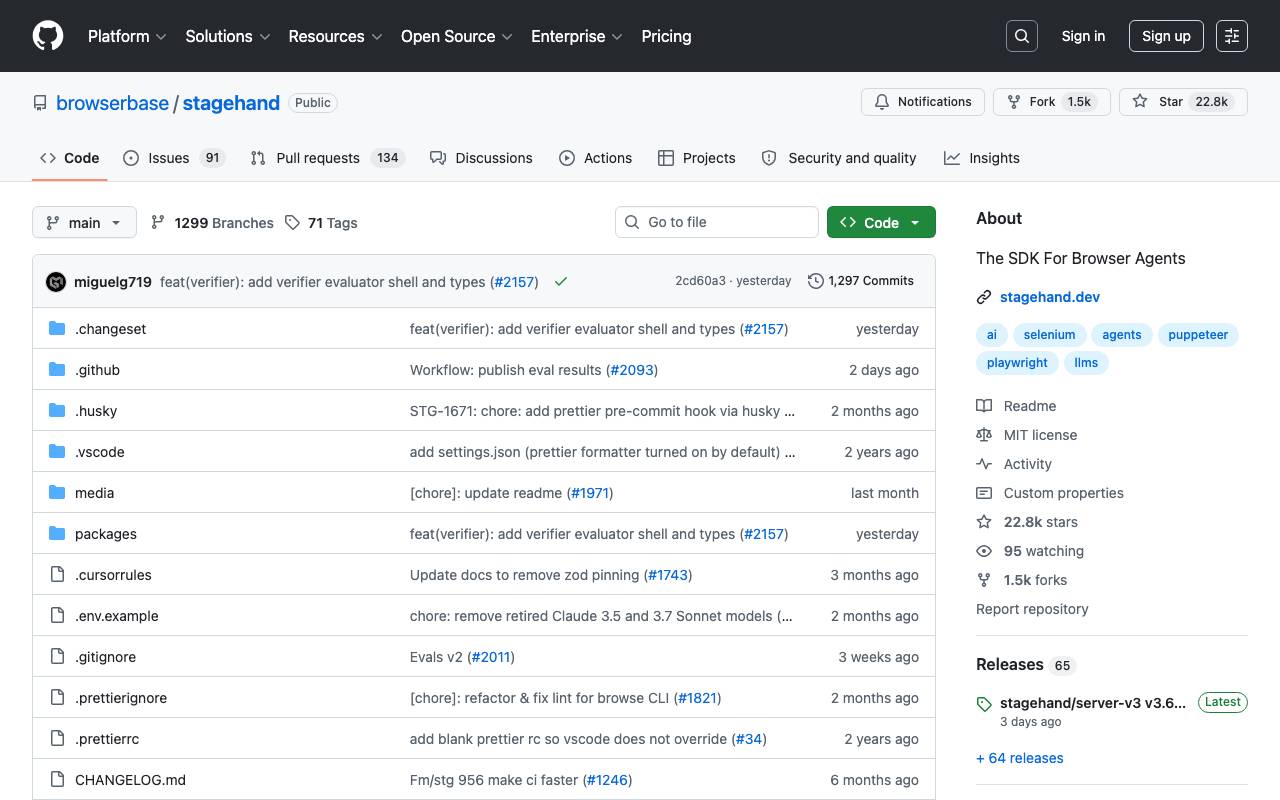
Stagehand is a web browsing framework that lets developers build AI agents capable of navigating, interacting with, and extracting data from websites. It combines deterministic Playwright-style code with natural language instructions, giving teams fine-grained control when they need it and high-level abstractions when they don't. The framework is designed around a small, predictable API focused on actions like observing a page, acting on elements, and extracting structured data. Its extensible architecture supports custom models, caching, and integration into broader agent stacks, making it suitable for everything from quick scraping scripts to production-grade browsing workflows.
Criteria breakdown
- Natural language act, observe, and extract methods
- Structured data extraction with schemas
- Playwright compatibility for low-level control
- Support for multiple LLM providers
- Caching for repeatable browser actions
- Composable with agent frameworks