Past battle · 2025-12-14 UTC
Coding Agent Showdown — December 14, 2025
From the Coding Agent category. 20 marks placed across 5 fighters. a0.dev took the crown.
Final standings

The line-up
The fighters
Profiles of every tool that competed in this battle, ranked by their final score.
a0.dev
AI-powered platform for building and shipping mobile apps to the App Store and Google Play.
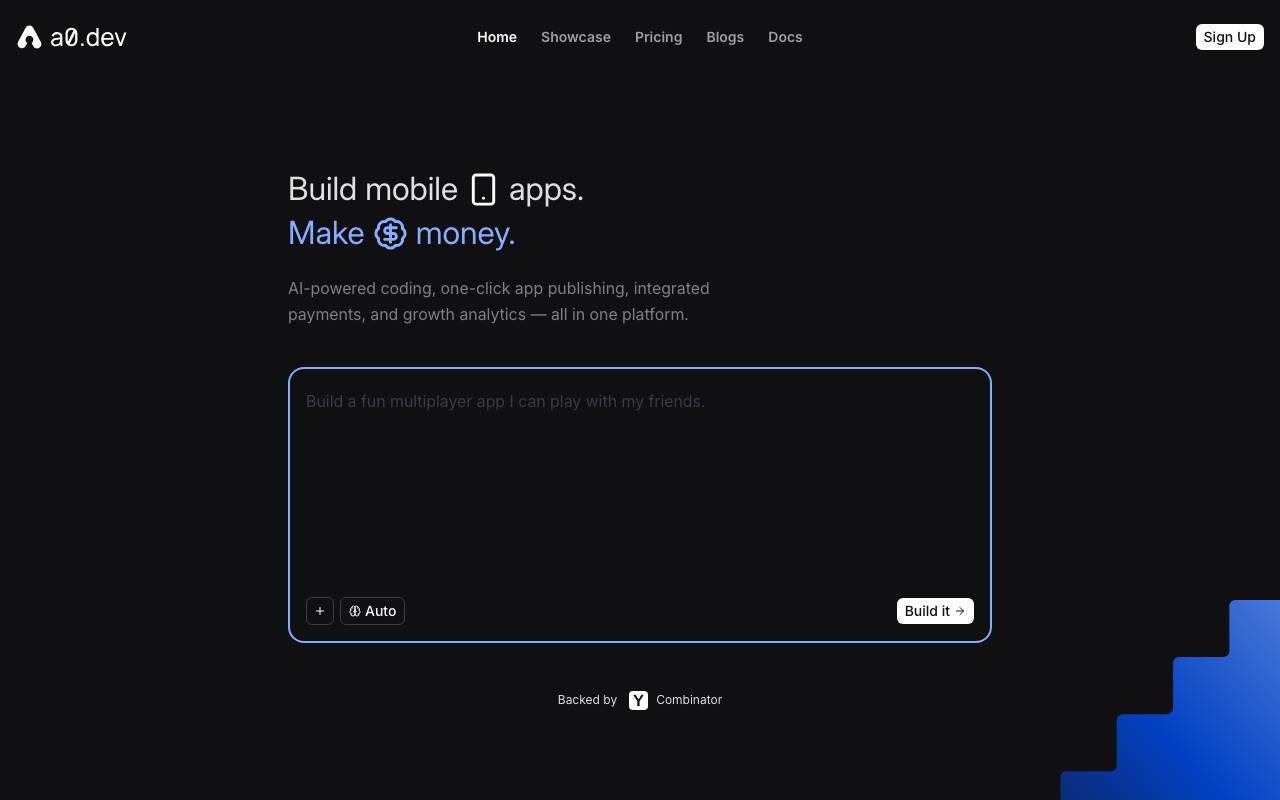
a0.dev is an AI development tool focused on helping users create native mobile applications without deep coding expertise. Through natural language prompts, it generates app structures, interfaces, and functionality, aiming to reduce the time between idea and a working product. The platform supports the full lifecycle of mobile app creation, from initial prototype through to publishing on the Apple App Store and Google Play. This makes it useful for solo founders, indie developers, and teams who want to ship mobile products quickly without managing complex build pipelines. By combining AI code generation with deployment tooling, a0.dev positions itself as an end-to-end solution for turning concepts into installable mobile apps.
Criteria breakdown
- AI-generated mobile app code
- Natural language prompt interface
- App Store and Google Play publishing
- Cross-platform iOS and Android support
- Rapid prototyping and iteration
- Built-in deployment pipeline

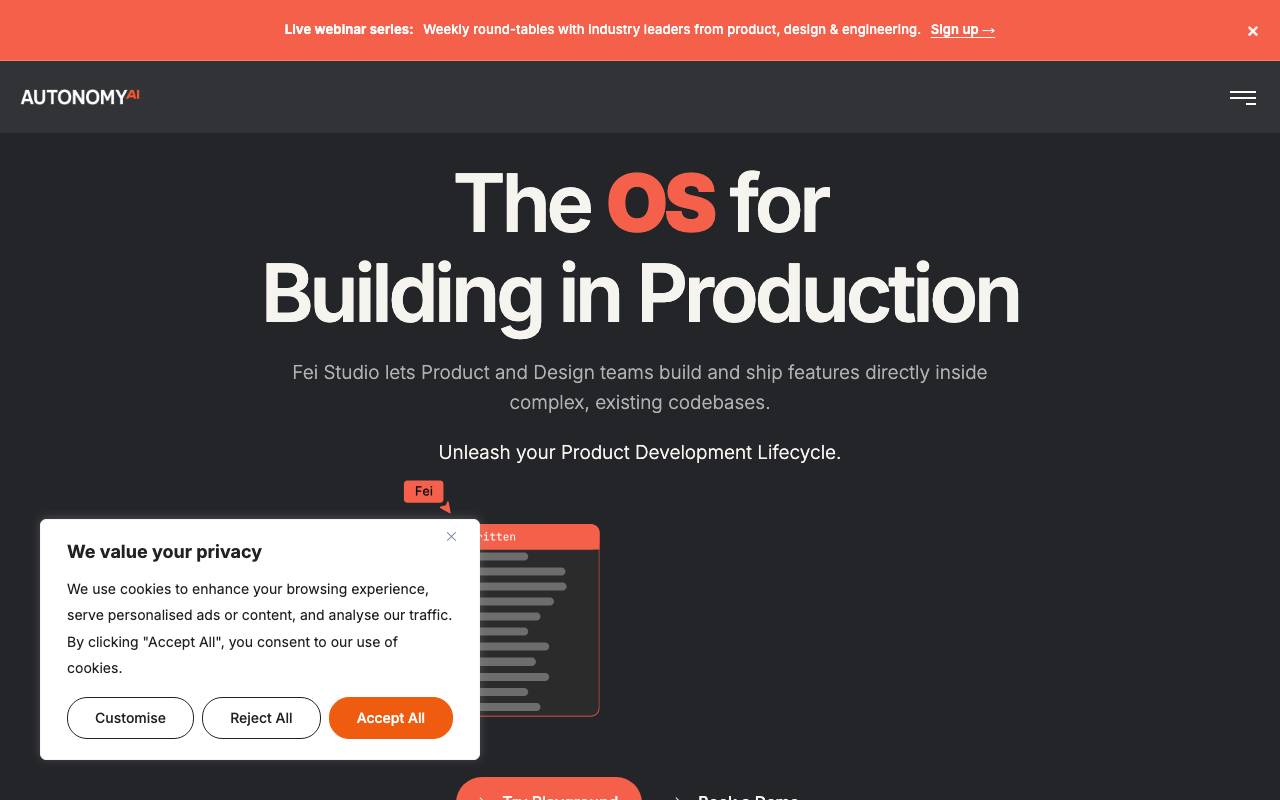
AutonomyAI is an AI-powered development workflow automation tool that accelerates front-end development. It allows product managers and designers to build and ship products directly into production by automating the development process. AutonomyAI's key feature is its Fei Studio operating layer, which connects the product idea to the production codebase, ingesting the codebase and modeling how engineers write code. This enables product and design teams to turn their ideas into production-ready updates with just a few clicks. The tool is designed to bypass the traditional bottlenecks in front-end development, such as lengthy engineering review cycles and manual configuration. AutonomyAI's goal is to empower product and design teams to take ownership of their products, ship features faster, and reduce the workload for engineers. AutonomyAI works by allowing product and design teams to run tasks on their codebase, which are then reviewed and approved by engineering. The tool takes raw product ideas and translates them into production-grade code, including a clean PR and full specs. This enables engineering to review and merge the changes quickly, without wasting time on manual setup and review. AutonomyAI is not just a coding agent, but a solution that enables product and design teams to build and ship products directly into production. It addresses the pain points of traditional development workflows, such as lengthy engineering review cycles and manual configuration. While other tools, such as Claude Code, aim to automate the coding process, AutonomyAI goes a step further by providing a seamless experience for product and design teams to build and ship products directly into production.
Criteria breakdown
- AI agents for front-end development
- Design-to-code generation
- Component scaffolding
- Codebase-aware integration
- Workflow automation for UI tasks

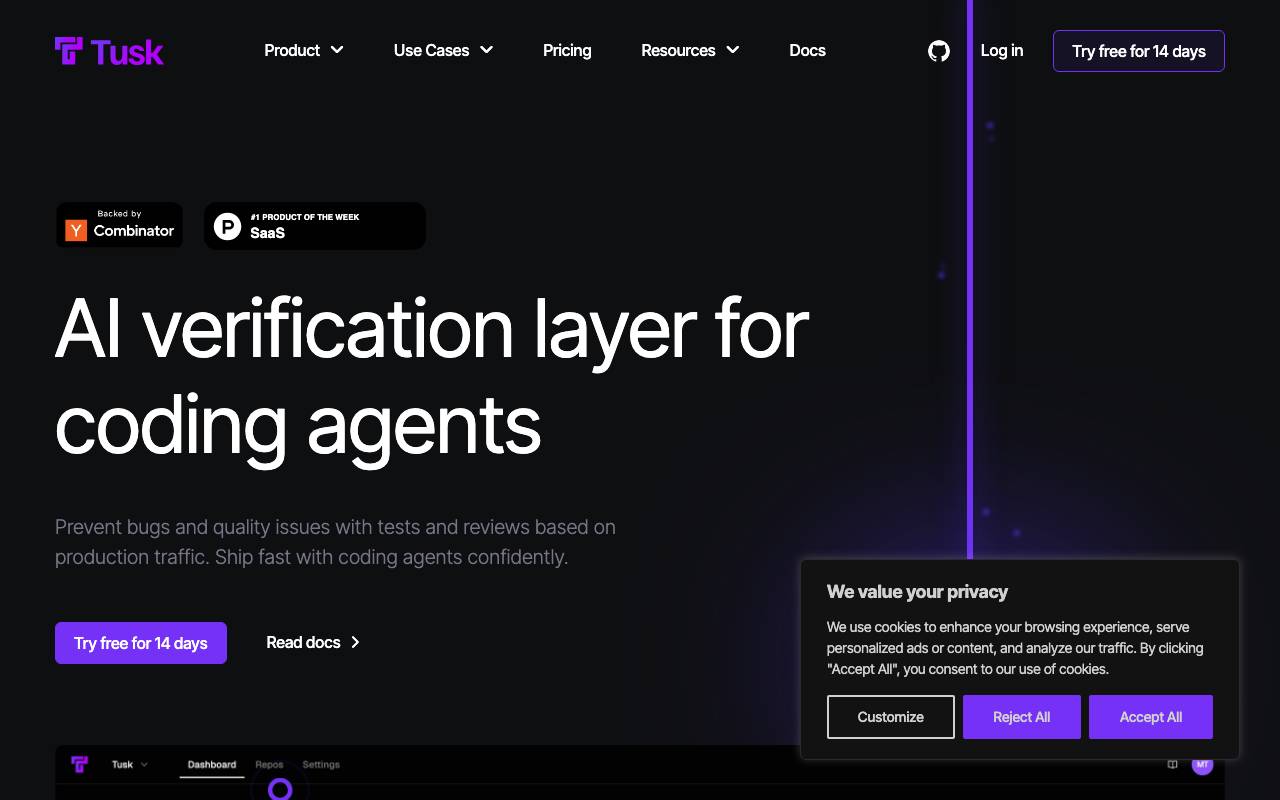
Tusk is an AI-powered tool that generates unit and integration tests for codebases using live traffic and business context. It aims to reduce testing time and increase code quality by automatically maintaining test suites and detecting real-world regressions. The tool is designed to work with coding agents and can be integrated into continuous integration and delivery pipelines. It optimizes test coverage and code quality without disrupting engineers' workflow. Tusk is self-iterative and self-healing, ensuring that tests are up-to-date and executable. Some of its key features include optimizing test coverage, automatic generation of high-quality tests, and seamless integration with CI/CD pipelines. Tusk is used by engineering leaders at fast-growing companies, who praise its ease of use and effectiveness in reducing testing time and improving code quality. However, it is worth noting that Tusk is sunsetting on June 10, 2026.
Criteria breakdown
- Automated unit test generation
- Integration test creation
- Codebase-aware context analysis
- Coverage gap detection
- Workflow and CI integration
- Iterative test refinement
Fine is a development platform that enables users to quickly build, test, and deploy AI-powered applications. It aims to simplify the process of integrating AI capabilities into software projects. The platform is designed for developers and businesses looking to leverage AI without extensive setup or infrastructure requirements. Fine provides a streamlined workflow for creating and deploying AI-driven applications, focusing on ease of use and rapid development. While specific features and integrations are not detailed, Fine's primary goal is to make AI application development more accessible and efficient.
Criteria breakdown
- AI application scaffolding
- Integrated testing environment
- One-click or streamlined deployment
- Rapid prototyping workflow
- Support for AI model integration
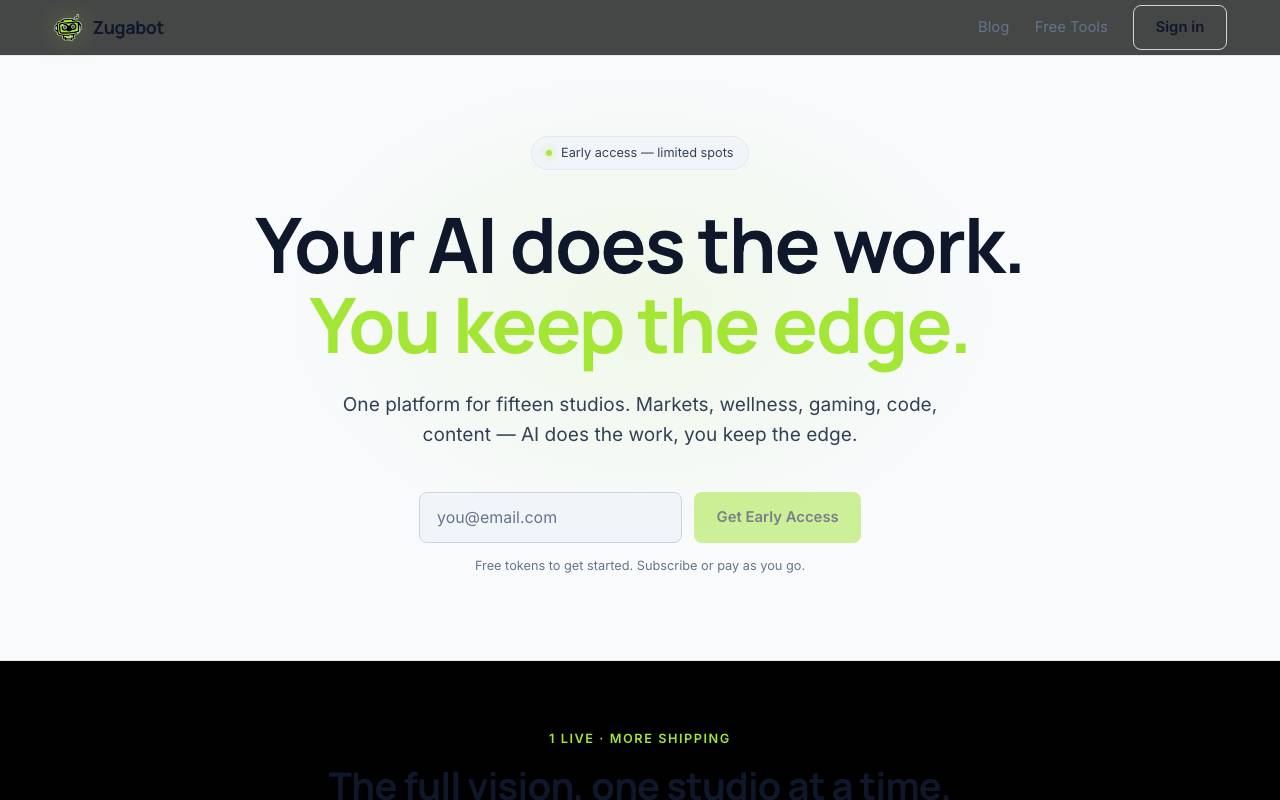
Zugabot is an AI-powered development assistant that acts like an on-demand engineering team, helping developers ship higher-quality code faster. It automates routine but critical tasks such as code review, bug triage, and test generation, reducing the time engineers spend on repetitive work. Designed to slot into existing workflows, Zugabot analyzes code changes and surfaces issues, suggestions, and fixes in seconds rather than hours. It aims to help small teams punch above their weight and larger teams maintain consistent code quality across projects.
Criteria breakdown
- Automated code reviews
- AI-driven bug detection and fixes
- Test generation
- Fast turnaround on pull requests
- Workflow integration for dev teams