Past battle · 2025-08-17 UTC
Programming Assistants Showdown — August 17, 2025
From the Programming Assistants category. 27 marks placed across 7 fighters. Moddy took the crown.
Final standings







The line-up
The fighters
Profiles of every tool that competed in this battle, ranked by their final score.

Moddy is an AI agent built to work across many repositories at once, helping engineering teams understand and modernize sprawling codebases. Instead of treating each repo in isolation, it reasons about shared dependencies, patterns, and cross-cutting changes that typically slow down large migrations. The tool focuses on practical modernization tasks such as upgrading frameworks, refactoring legacy patterns, replacing deprecated APIs, and aligning code with current standards. It is aimed at platform teams, staff engineers, and architects responsible for keeping large software estates maintainable. By automating repetitive analysis and edits while keeping humans in the loop for review, Moddy aims to shorten modernization cycles that would otherwise take quarters or years.
Criteria breakdown
- Cross-repository code analysis
- Automated modernization and refactoring
- Framework and dependency upgrade support
- Detection of deprecated patterns and APIs
- Bulk change orchestration across codebases
- Human-in-the-loop review workflows

PubNub MCP Server
MCP server bridging AI coding assistants to PubNub docs, apps, and real-time messaging APIs.
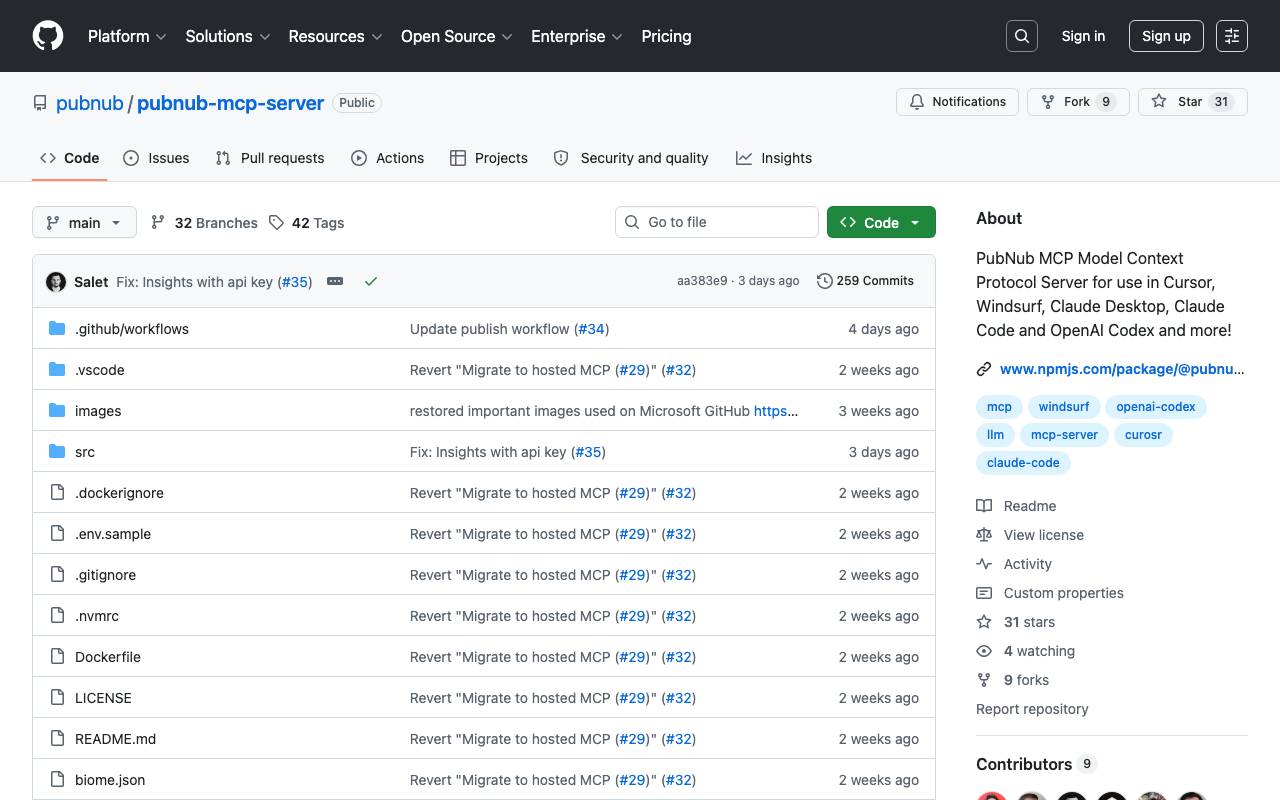
PubNub MCP Server is a Model Context Protocol implementation that connects AI coding assistants like Claude, Cursor, and other MCP-compatible clients directly to PubNub's platform. It exposes PubNub's documentation, SDK references, and account management capabilities as tools the assistant can call during a coding session. Beyond documentation lookup, the server allows assistants to manage PubNub apps and keysets, publish and subscribe to messages, query presence data, and work with channel and user object metadata. This turns the assistant into a hands-on collaborator that can scaffold, test, and operate real-time features without constant context switching. It is aimed at developers building chat, notifications, IoT, or live experiences who want their AI tooling to understand PubNub conventions and act on their account directly.
Criteria breakdown
- Documentation and SDK reference retrieval
- App and keyset management
- Publish, subscribe, and message history tools
- Presence and occupancy queries
- Channel and user object metadata operations
- MCP-standard integration with AI assistants
Codiga
Static code analysis and automated code reviews with IDE/CI integrations, security rulesets, custom rules, and one-click autofix.
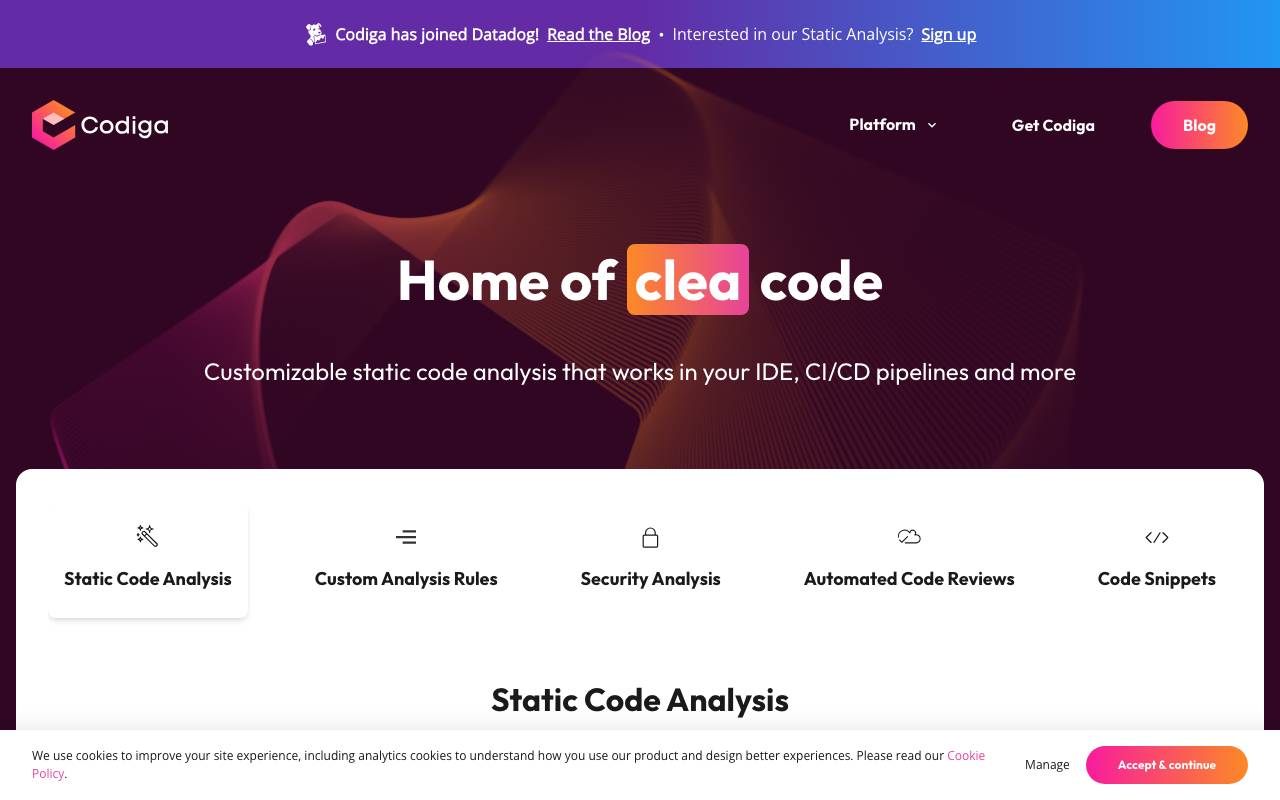
Codiga is a static code analysis tool that provides automated code reviews with IDE and CI/CD integrations. It offers customizable static code analysis, security-focused rulesets, and the ability to create custom rules. The tool supports multiple IDEs including VS Code, JetBrains, and Visual Studio, as well as platforms like GitHub, GitLab, and Bitbucket. It provides real-time code analysis with one-click autofix capabilities. Codiga covers common threats and software vulnerabilities with support for OWASP 10, MITRE CWE, and SANS/CWE Top 25. It also offers automated security fixes, detection of leaked secrets, and infrastructure code analysis for Terraform and Docker. The tool supports over 12 languages and 1800+ rules.
Criteria breakdown
- Static code analysis
- Automated code reviews
- Custom rules creation
- Real-time code analysis
- One-click autofix
- Security-focused rulesets

Kimi‑Dev
Open‑source coding LLM optimized for automated debugging and issue resolution tasks.
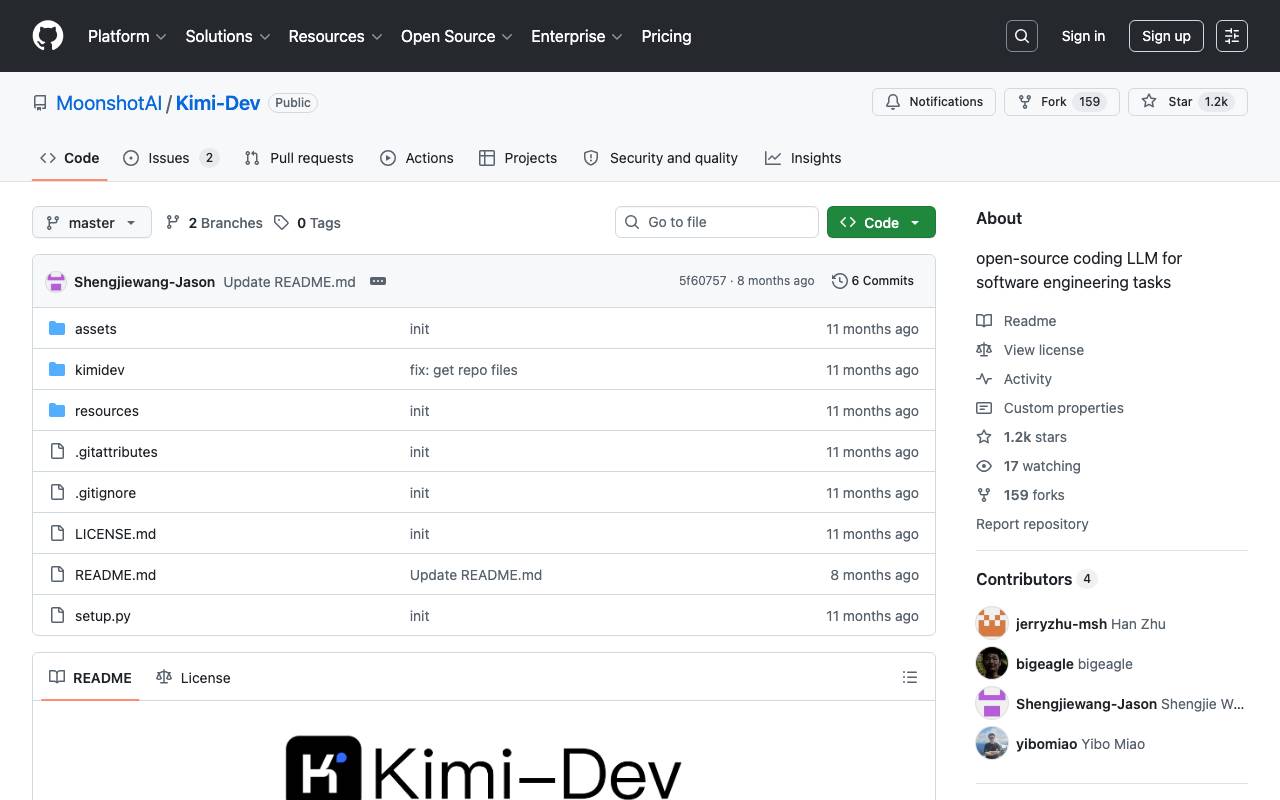
Kimi-Dev is an open-source coding Large Language Model (LLM) optimized for automated debugging and issue resolution tasks in software engineering. It uses a simplified two-stage framework to handle code repair and test writing tasks, consisting of file localization and code editing. Kimi-Dev achieves a new state-of-the-art on SWE-bench Verified, surpassing the runner-up among open-source models. It is optimized via large-scale reinforcement learning and is available for download and deployment on Hugging Face and GitHub. The model is trained to autonomously patch real repositories in Docker and gain rewards only when the entire test suite passes, ensuring correct and robust solutions. Kimi-Dev is designed to be easily deployable and maintainable, with a roll-out script provided for demonstration. Kimi-Dev's capabilities make it suitable for developers and researchers who want to explore its potential and contribute to its development.
Criteria breakdown
- File localization
- Code editing
- Bug fixes
- Unit test insertions
- Large-scale reinforcement learning
- Autonomous patching of real repositories

Claude Code Telegram Bot
Open-source Telegram bot that gives remote, chat-based access to Claude Code with per-project session persistence and safe directory sandboxing.
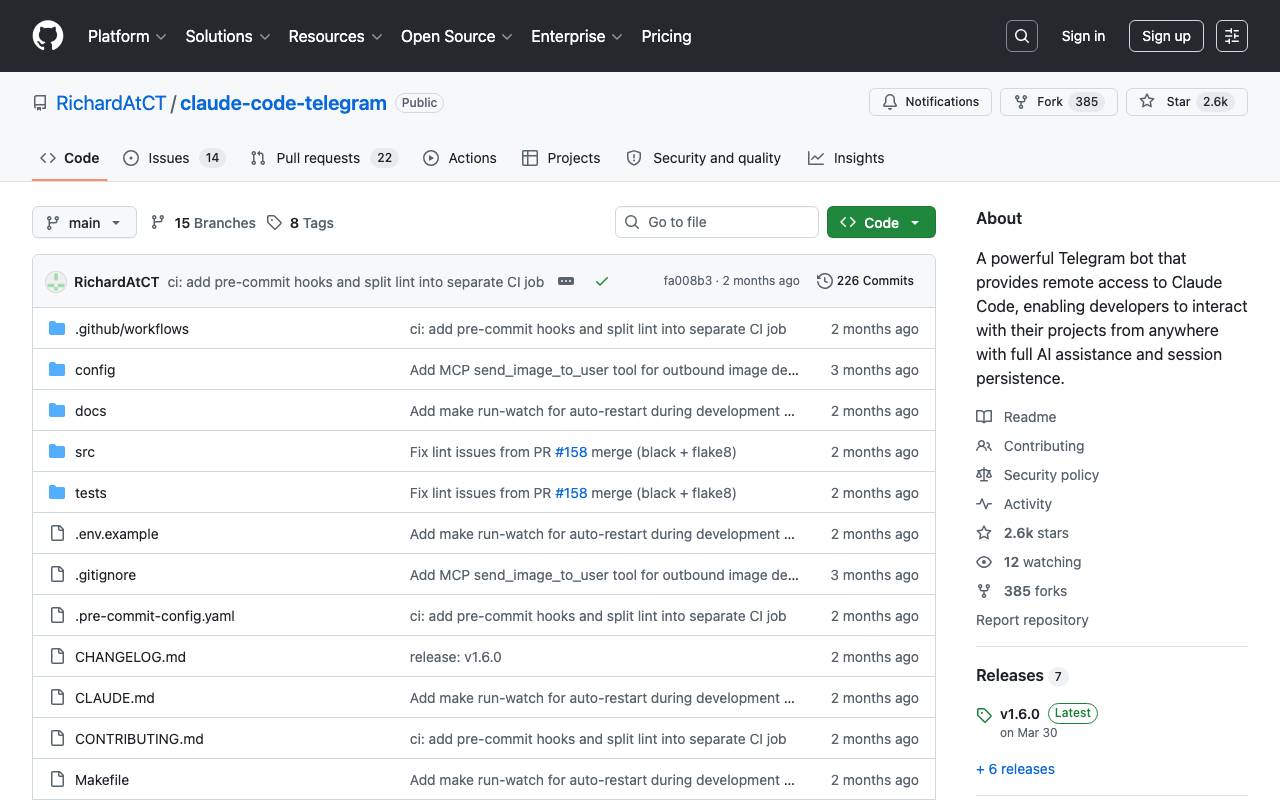
The Claude Code Telegram Bot is an open-source bot that provides remote, chat-based access to Claude Code with per-project session persistence and safe directory sandboxing. It allows users to interact with Claude naturally, asking it to analyze, edit, or explain code without needing to write terminal commands. The bot maintains context across conversations, enabling users to work on their codebases from anywhere with Telegram, receiving proactive notifications and staying secure with built-in authentication, directory sandboxing, and audit logging.
Criteria breakdown
- Agentic Mode for conversational interaction
- Automatic session persistence per project
- Directory sandboxing for safe code analysis
- Proactive notifications from webhooks and CI/CD events
- Built-in authentication and audit logging

GitNexus
Zero-server code intelligence engine that builds an in-browser knowledge graph over a repo and includes a Graph RAG agent for exploration.
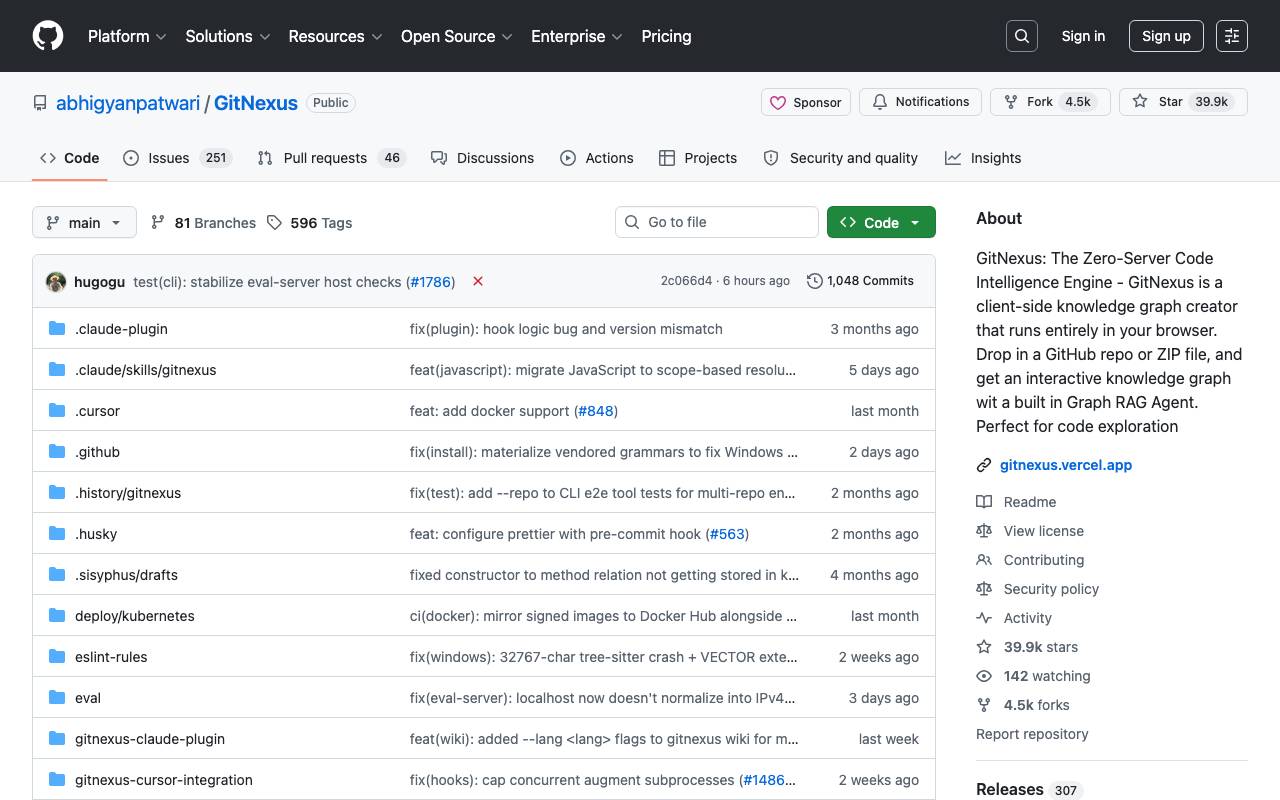
GitNexus is a zero-server code intelligence engine that builds an in-browser knowledge graph over a repository. It includes a Graph RAG agent for exploration. The tool indexes any codebase into a knowledge graph, tracking every dependency, call chain, cluster, and execution flow, then exposes it through smart tools so AI agents can analyze the code reliably. GitNexus offers two primary modes of use: a CLI + MCP for making AI agents reliable by providing a deep architectural view of the codebase, and a Web UI for quick chat and exploration of repositories. It's designed to help developers and AI agents understand codebases, especially for daily development with Cursor, Claude Code, Antigravity, Codex, and similar tools.
Criteria breakdown
- In-browser knowledge graph
- Graph RAG agent for exploration
- Indexes codebase dependencies and call chains
- Exposes code through smart tools for AI agents
- CLI + MCP for reliable AI agent integration
- Web UI for quick repo analysis and chat

Superpowers
Open-source workflow layer that gives coding agents structured planning, review, and QA skills.
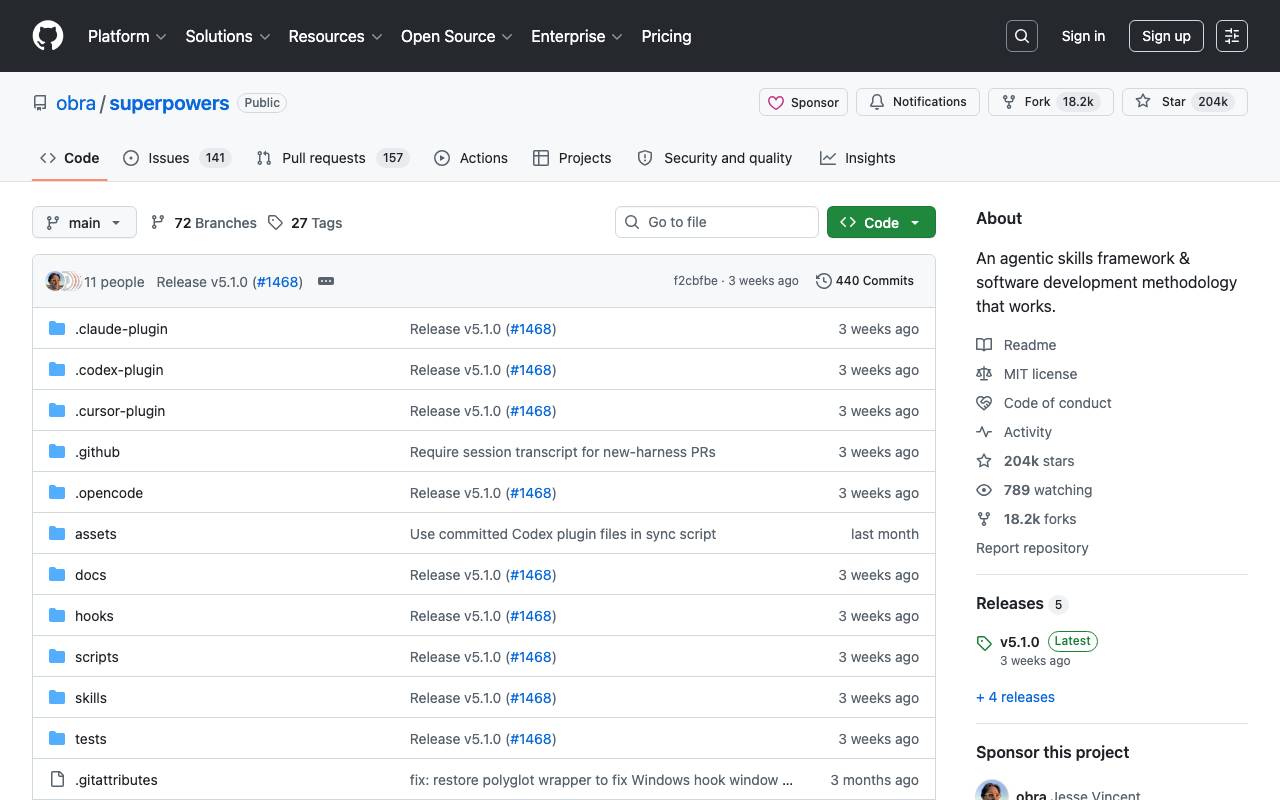
Superpowers is an open-source framework that extends AI coding agents with disciplined software engineering workflows. Instead of letting an agent improvise, it wraps tasks in structured stages for planning, implementation, review, quality assurance, and delivery, helping produce more predictable and auditable results. The system is designed to plug into existing agent setups and codebases, layering repeatable skills on top of whatever model or runtime a developer uses. Teams can customize the workflows, inspect intermediate steps, and treat agent output more like a managed engineering process than a one-shot prompt. Because it is open source, Superpowers can be self-hosted, audited, and extended, making it suitable for developers who want transparency and control over how AI assistants build and ship code.
Criteria breakdown
- Structured planning stage for tasks
- Automated code review steps
- Built-in QA and testing workflow
- Delivery and handoff process
- Extensible skill definitions
- Works with existing coding agents