Past battle · 2024-10-20 UTC
Storage Showdown — October 20, 2024
From the Storage category. 3 marks placed across 2 fighters. Milvus AI took the crown.
Final standings
 Openfabric
 Milvus AI
The line-up
The fighters
Profiles of every tool that competed in this battle, ranked by their final score.

Milvus AI
Open-source vector database built for scalable similarity search and AI applications.
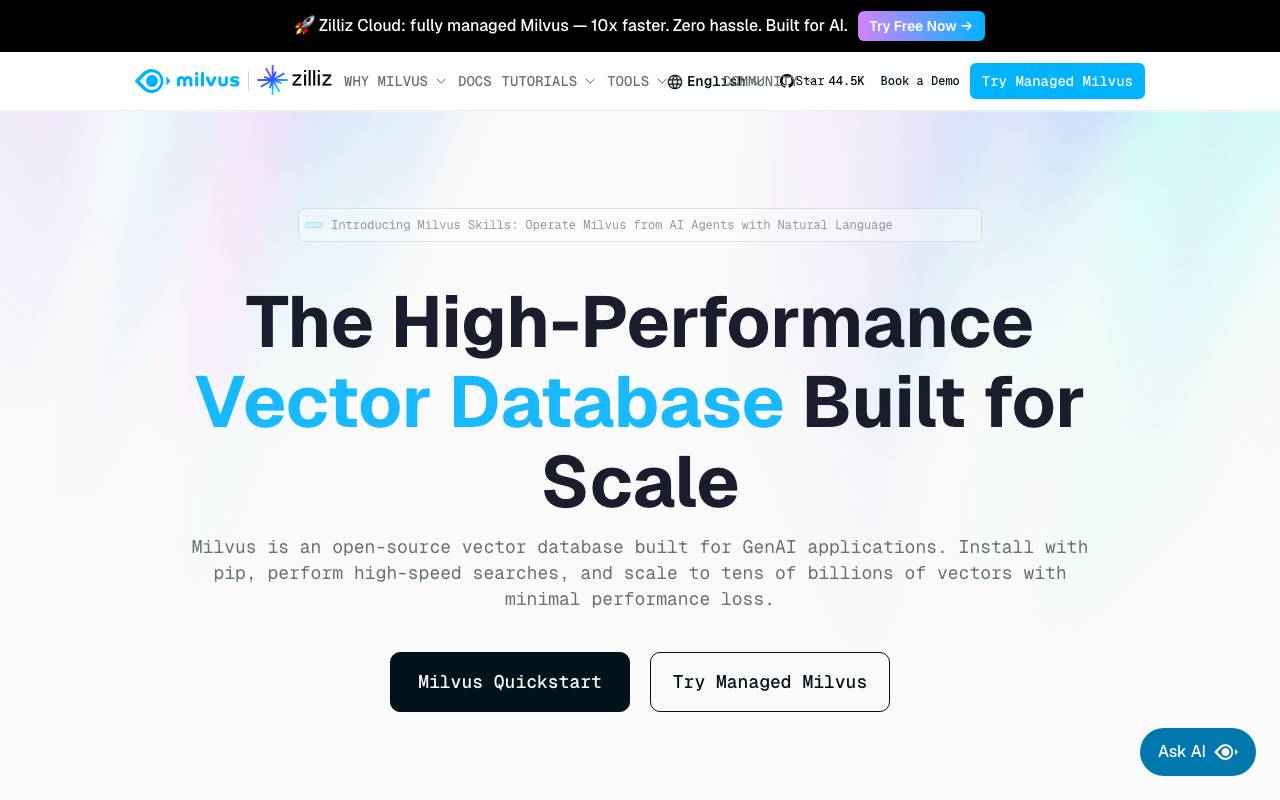
Milvus AI is an open-source vector database designed to store, index, and search massive collections of high-dimensional vector embeddings. It powers use cases like semantic search, recommendation systems, retrieval-augmented generation (RAG), image and video retrieval, and anomaly detection. Built with a cloud-native, distributed architecture, Milvus supports billions of vectors with low-latency queries and offers multiple index types to balance speed, accuracy, and resource usage. It integrates with popular AI frameworks and embedding models, making it a common choice for teams building production-grade AI pipelines. Milvus can be deployed locally, on Kubernetes, or consumed as a managed service through Zilliz Cloud, giving developers flexibility from prototyping to enterprise-scale workloads.
Criteria breakdown
- Distributed, cloud-native architecture
- Support for multiple ANN index types
- Hybrid search with scalar filtering
- SDKs for Python, Java, Go, and Node.js
- Kubernetes and Docker deployment options
- Integration with LangChain, LlamaIndex, and major embedding models

Openfabric
Decentralized framework for building, connecting, and running AI agents with on-chain data and storage.
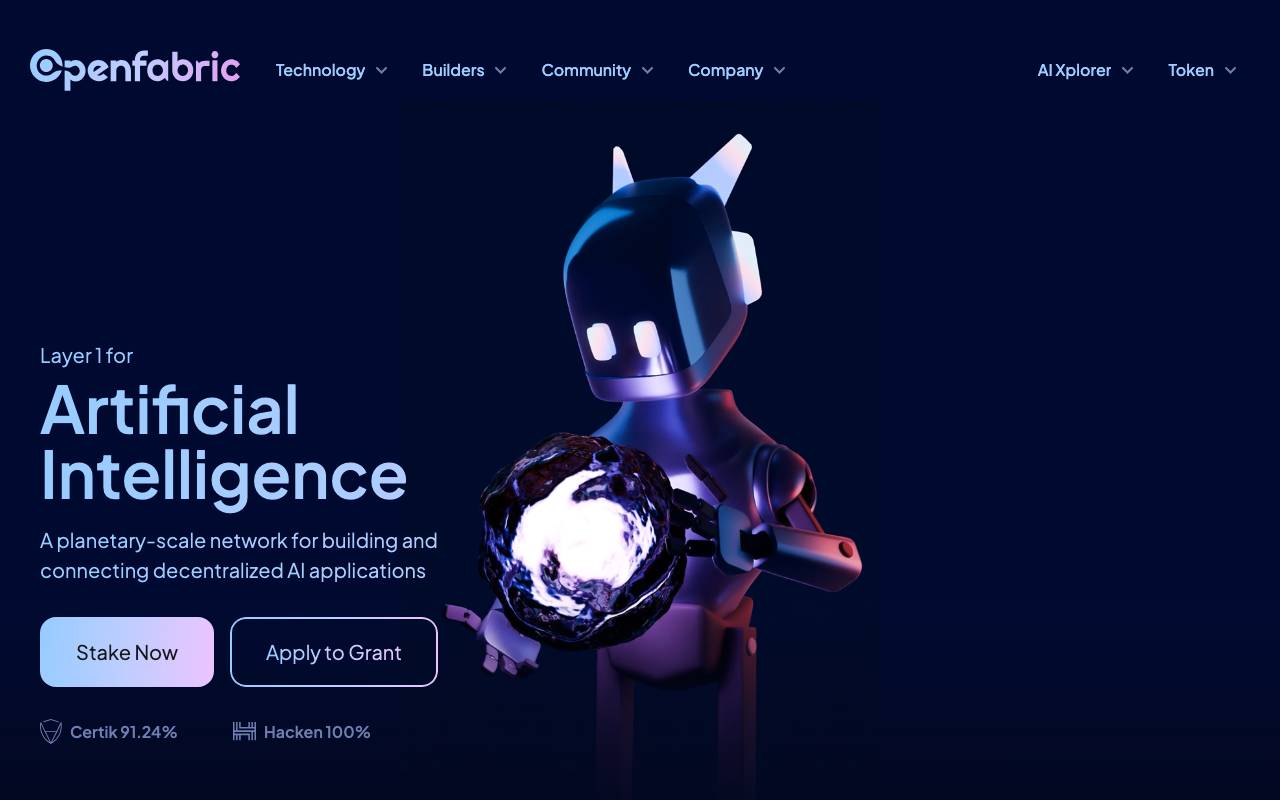
Openfabric is an open infrastructure for developing and deploying interoperable AI agents in a decentralized environment. It provides the tooling, runtime, and protocols needed for agents to discover one another, exchange data, and coordinate tasks without relying on a single centralized provider. The platform combines distributed storage, identity, and execution layers so developers can publish AI services that remain verifiable, composable, and resilient. Builders can chain models and data sources into pipelines, while end users access them through a unified marketplace of agents. It is aimed at developers, data scientists, and organizations exploring Web3-native AI applications, agent marketplaces, or use cases that require transparent and trust-minimized AI execution.
Criteria breakdown
- Decentralized AI agent runtime
- Distributed data and model storage
- Agent discovery and marketplace
- SDKs for building and connecting agents
- On-chain identity and verification
- Pipeline orchestration across multiple agents