Best Storage (2026)

3 min read
If you sign up through a link on this page, we may earn a commission — it never affects our rankings.
A curated guide to the best AI-powered storage tools, covering cloud platforms, smart file organization, and intelligent data management solutions for individuals and teams.
You've finally finished that thrilling project, and now you're faced with a daunting prospect: what to do with the vast amounts of data you've generated. It's not just about storing it somewhere; it's about making sure that this data remains accessible and usable in the months and years to come. That's where AI storage tools come in – they help you manage and retrieve large volumes of data, often with a focus on specific types of information like images, texts, or AI model weights.
When choosing an AI storage tool, the first thing to consider is the type of data you'll be working with. Some tools are geared toward vector databases, which are perfect for applications like similarity search or recommendations, while others focus on more traditional relational databases or blockchains. Milvus AI, for instance, is an open-source vector database designed specifically for scalable similarity search, making it a great fit for projects involving image recognition or natural language processing.
Another crucial factor is scalability – can the tool handle large volumes of data as your project grows? Openfabric provides a decentralized framework that can scale with your AI agents, ensuring that your data remains accessible even as your application expands. If you're already invested in other platforms, however, you may want to look for tools that integrate well with your existing ecosystem. *Flora*, for example, serves as an intelligent canvas that connects various creative AI tools into a single visual workflow, making it a great fit for teams that need to collaborate on AI-driven projects.
Of course, there's also cost to consider – most AI storage tools operate on a freemium model, so you'll need to pay attention to pricing tiers and limitations. *Pinecone AI*, for instance, offers a managed vector database with fast, scalable semantic search capabilities, but its free tier is limited to 10 million vectors. This means that if your project requires a large-scale vector database, you'll need to upgrade to one of its paid plans.
Some common pitfalls to watch out for include choosing a tool that's too specialized – while a vector database like Milvus AI might be perfect for a specific use case, it might not integrate well with other tools in your toolkit. Additionally, don't be swayed by marketing buzzwords – some AI storage tools might promise the world, but ultimately fall short when it comes to actual performance.
In the end, the key to choosing the right AI storage tool is to carefully consider your project's specific needs, weighing factors like scalability, integration, and cost. With the right tool in place, you'll be able to focus on what really matters: developing innovative AI applications that drive real results.
Storage by the numbers
Pricing mix
Best Storage (2026)
- 1
 FloraAn intelligent canvas that connects creative AI tools into a single visual workflow.5.0 (5)
 - 2
 Pinecone AIManaged vector database for fast, scalable semantic search and RAG applications.4.8 (5)
 - 3
 OpenfabricDecentralized framework for building, connecting, and running AI agents with on-chain data and storage.4.8 (4)
 - 4
 Milvus AIOpen-source vector database built for scalable similarity search and AI applications.4.5 (4)

Flora
An intelligent canvas that connects creative AI tools into a single visual workflow.
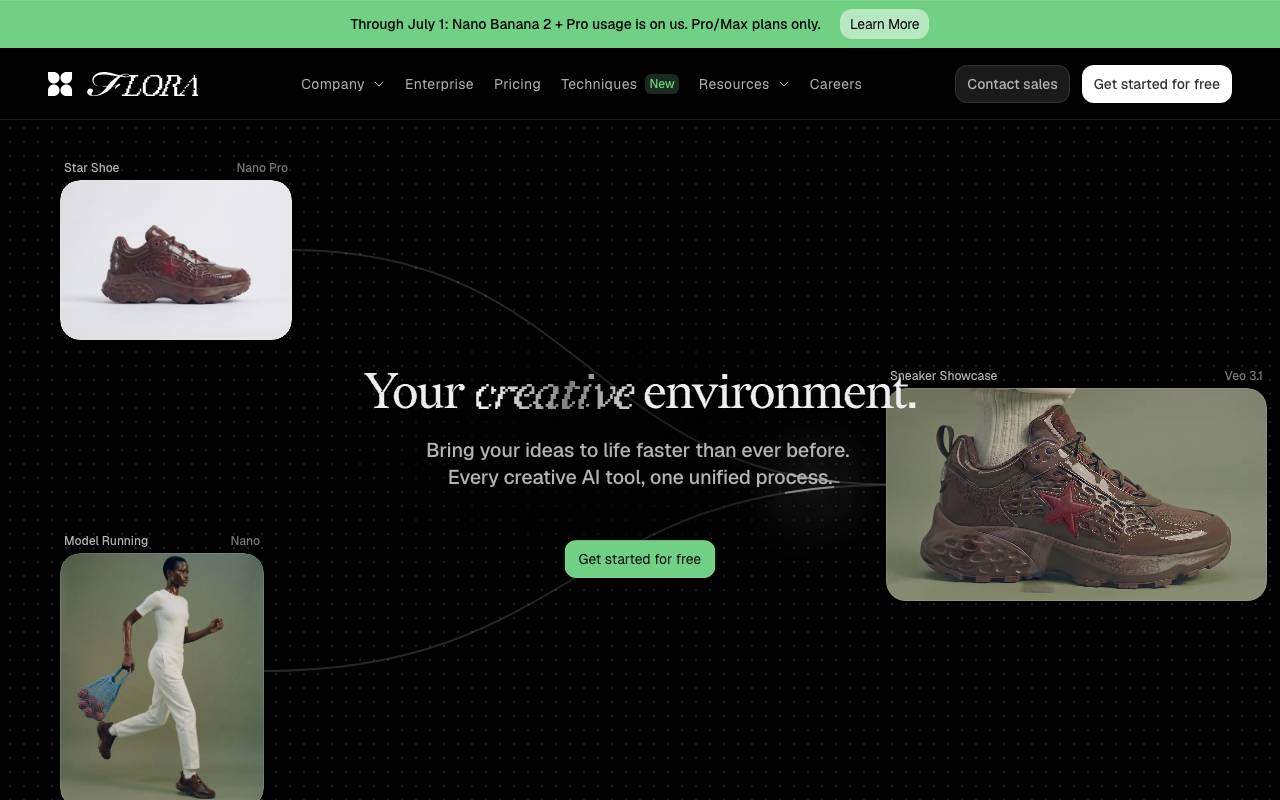
Flora is a creative tool that combines an intelligent design canvas, feature-rich Creative workflow, and reusable techniques. The tool helps teams align on a shared direction and explore a logo or mood board from a photo, character lock, and Seedance 2.0 Compliance Trick (Human Face Pass-Through). The platform integrates with the approved AI partners, including Wonder, LLM, and Mint. Join FLORA's creative ecosystem and easily create a mood board, human face pass-through trick, character lock, or logo completion from a photo. Leverage the diverse range of Flora's AI partners: LLM, Mint, and Wonder. Edit, Render, and Experiment even better with Flora's intuitive workspace. Engage, inspire, and work faster. The platform welcomes agencies and freelancers alike.
- Infinite canvas with connectable nodes
- Integrated text, image, and video AI tools
- Branching and remixing of outputs
- Visual prompt and asset organization
- Workflow sharing and collaboration
- Iterative editing across linked steps

Pinecone AI
Managed vector database for fast, scalable semantic search and RAG applications.
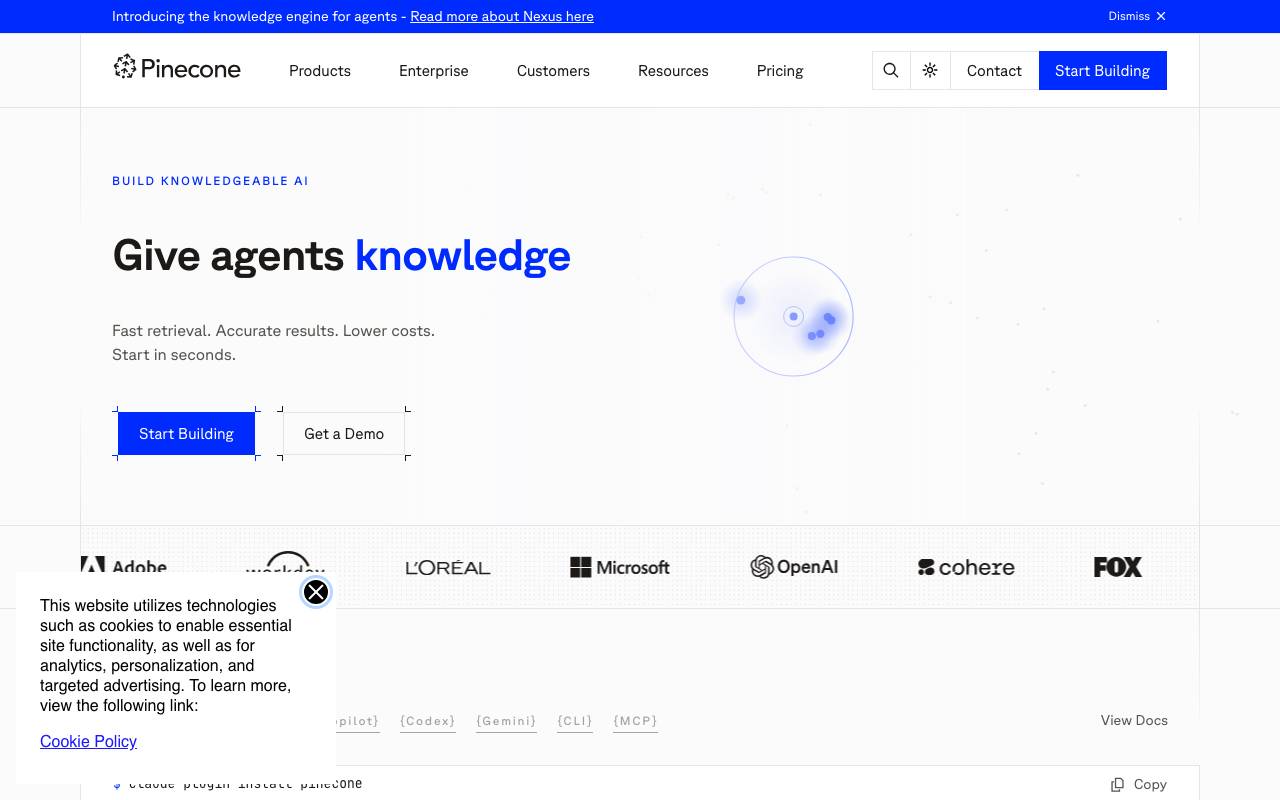
Pinecone is a managed vector database built to power AI applications that rely on semantic search, recommendations, and retrieval-augmented generation (RAG). It stores high-dimensional embeddings and lets developers query them with low latency at large scale, without managing infrastructure. The platform integrates with popular embedding models and frameworks like LangChain and LlamaIndex, making it straightforward to add long-term memory and knowledge grounding to LLM-based apps. Features such as metadata filtering, hybrid search, and namespaces help teams build production-grade systems for chatbots, search, and personalization.
- Managed vector indexing and storage
- Hybrid (dense + sparse) search
- Metadata filtering and namespaces
- Real-time upserts and queries
- Integrations with LangChain, LlamaIndex, OpenAI
- Horizontal scaling across pods or serverless

Openfabric
Decentralized framework for building, connecting, and running AI agents with on-chain data and storage.
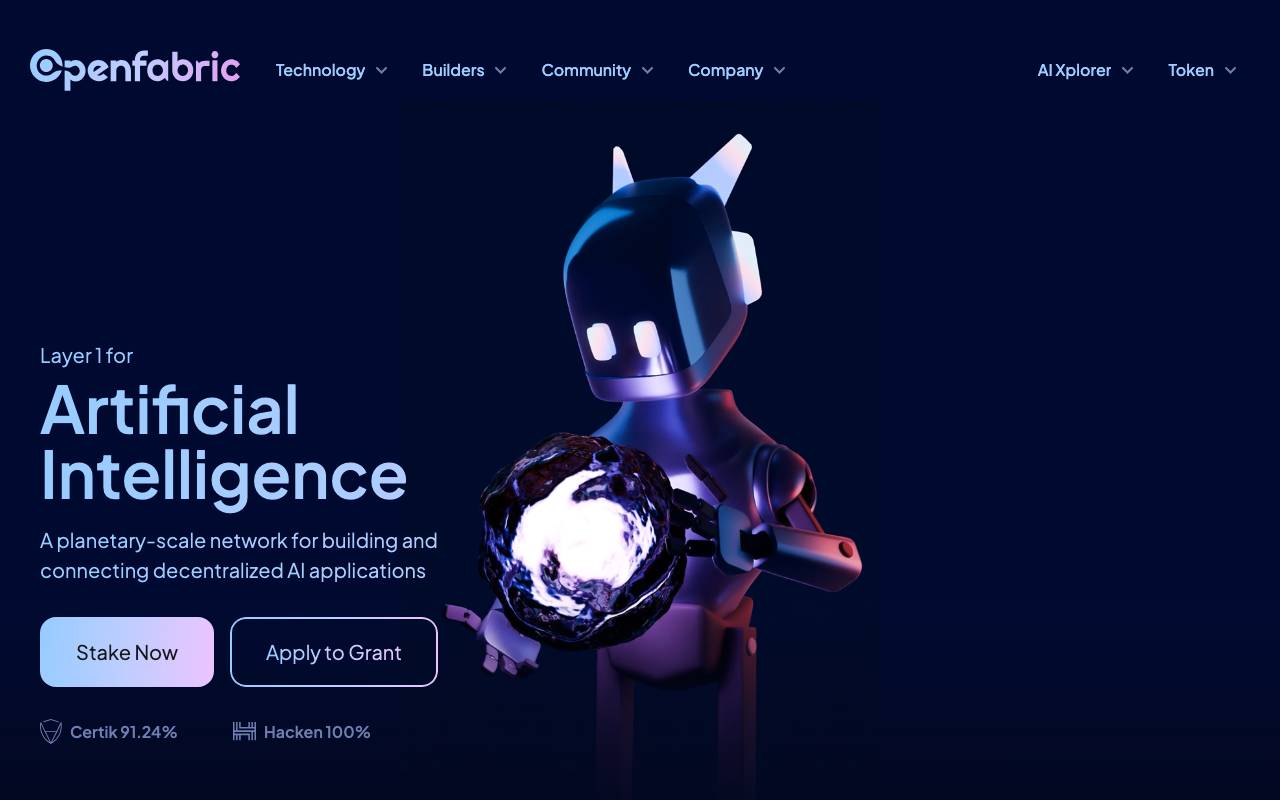
Openfabric is an open infrastructure for developing and deploying interoperable AI agents in a decentralized environment. It provides the tooling, runtime, and protocols needed for agents to discover one another, exchange data, and coordinate tasks without relying on a single centralized provider. The platform combines distributed storage, identity, and execution layers so developers can publish AI services that remain verifiable, composable, and resilient. Builders can chain models and data sources into pipelines, while end users access them through a unified marketplace of agents. It is aimed at developers, data scientists, and organizations exploring Web3-native AI applications, agent marketplaces, or use cases that require transparent and trust-minimized AI execution.
- Decentralized AI agent runtime
- Distributed data and model storage
- Agent discovery and marketplace
- SDKs for building and connecting agents
- On-chain identity and verification
- Pipeline orchestration across multiple agents

Milvus AI
Open-source vector database built for scalable similarity search and AI applications.
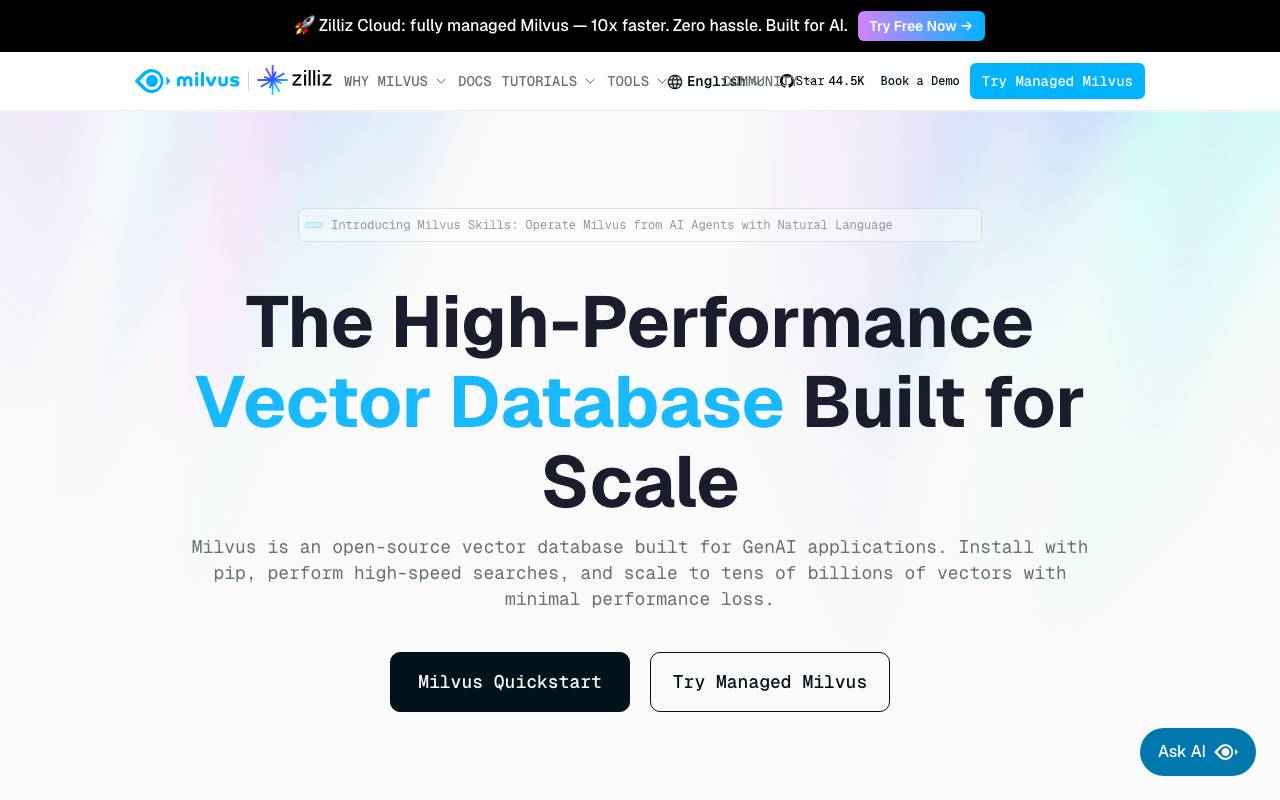
Milvus AI is an open-source vector database designed to store, index, and search massive collections of high-dimensional vector embeddings. It powers use cases like semantic search, recommendation systems, retrieval-augmented generation (RAG), image and video retrieval, and anomaly detection. Built with a cloud-native, distributed architecture, Milvus supports billions of vectors with low-latency queries and offers multiple index types to balance speed, accuracy, and resource usage. It integrates with popular AI frameworks and embedding models, making it a common choice for teams building production-grade AI pipelines. Milvus can be deployed locally, on Kubernetes, or consumed as a managed service through Zilliz Cloud, giving developers flexibility from prototyping to enterprise-scale workloads.
- Distributed, cloud-native architecture
- Support for multiple ANN index types
- Hybrid search with scalar filtering
- SDKs for Python, Java, Go, and Node.js
- Kubernetes and Docker deployment options
- Integration with LangChain, LlamaIndex, and major embedding models
Browse all 4 Storage tools
The complete, searchable directory — ranked by real user reviews.



