Past battle · 2026-08-11 UTC
Computer Vision Showdown — August 11, 2026
From the Computer Vision category. 39 marks placed across 10 fighters. LoRA AI took the crown.
Final standings





The line-up
The fighters
Profiles of every tool that competed in this battle, ranked by their final score.

LoRA AI
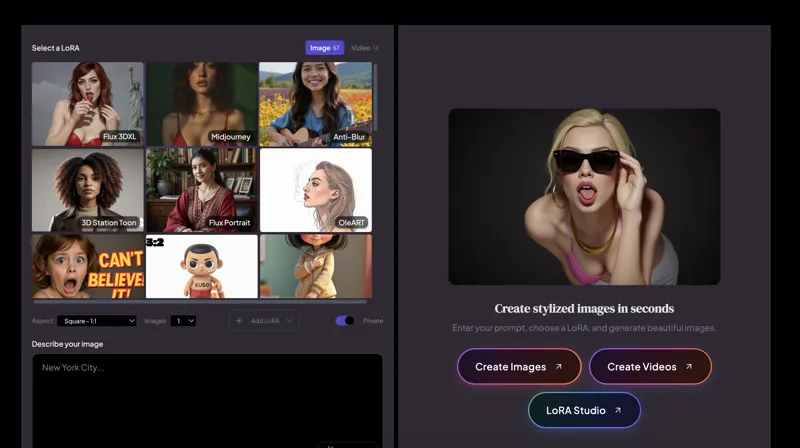
Generate AI images, videos, and train custom LoRA models without coding or GPU setup.
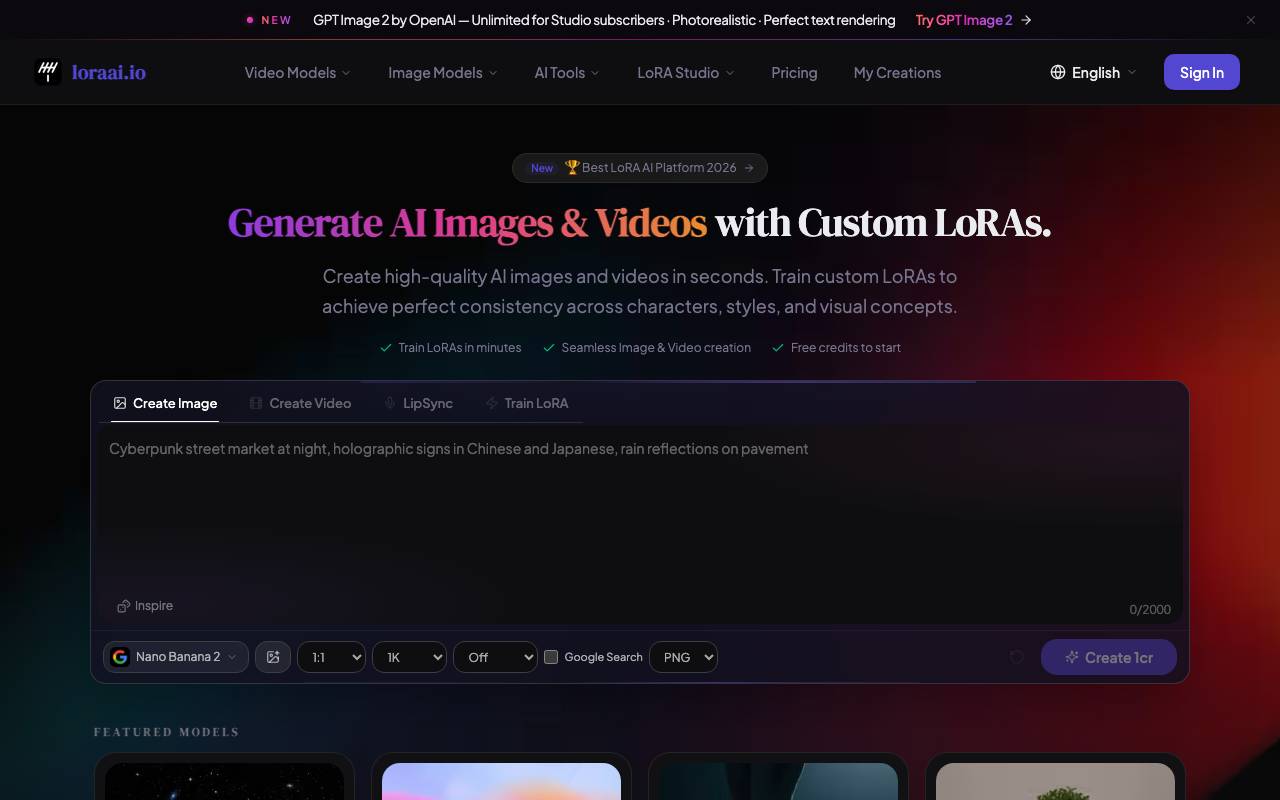
LoRA AI is a creative platform that lets users produce professional-grade images, cinematic video clips, and personalized LoRA models from a single browser-based interface. It removes the typical barriers of running diffusion models locally, such as managing GPUs, dependencies, and training scripts. The service is aimed at designers, marketers, content creators, and hobbyists who want fine-tuned visual outputs that reflect a specific style, character, or brand. Users can upload reference data, train custom models, and then apply them across image and video generation workflows. With preset styles, prompt assistance, and managed cloud infrastructure, LoRA AI shortens the path from idea to polished visual asset without requiring technical expertise.
Criteria breakdown
- Custom LoRA model training in the cloud
- AI image generation with style presets
- Cinematic AI video creation
- Browser-based, no installation needed
- Reference upload for personalized models
- Prompt tools for guided generation


Pykaso is an AI tool for creating ultra-realistic images and videos. Users can access pre-trained models and custom workflows to generate AI content at scale. The platform features a library of pre-existing AI characters from which users can select or create their own AI influencer to represent their brand. Key tools include an image-to-image feature, which allows users to recreate visuals with their AI character, and an image-to-prompt feature, which generates realistic prompts to create AI images. Additionally, the platform offers an AI image editor, allowing users to edit images from simple prompts without needing photo editing software like Photoshop. AI video generation is also possible, and the skin enhancer (upscaler) feature can be used to enhance images in high-resolution, adding details and natural skin.
Criteria breakdown
- Custom LoRA model training
- Photorealistic image generation
- AI video generation tools
- Character and style consistency controls
- Reference image and prompt-based editing
- Library for managing trained models

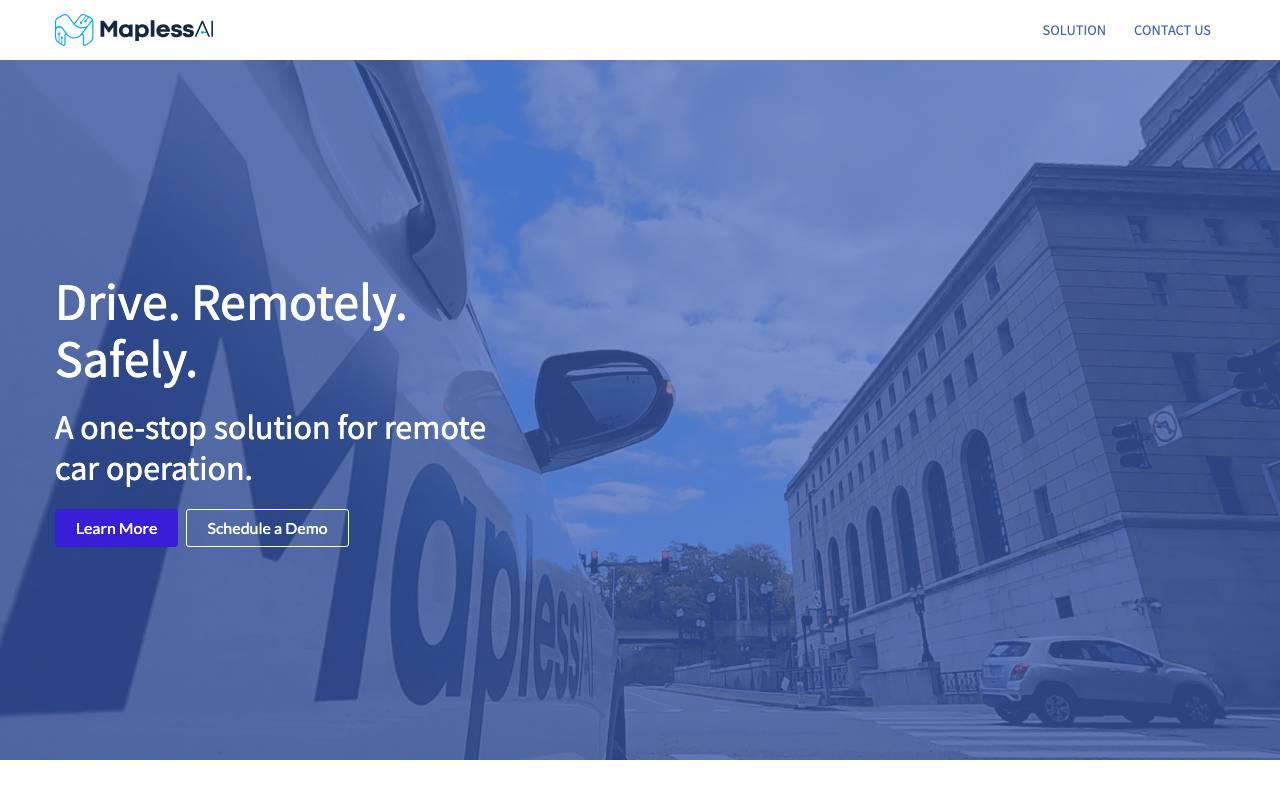
Mapless AI develops teleoperation technology that lets human operators remotely supervise and control autonomous vehicles when they encounter situations beyond their self-driving capabilities. The platform is designed to keep driverless fleets moving safely without requiring detailed pre-mapped environments. By combining low-latency video streaming, remote control interfaces, and AI-assisted decision support, Mapless AI aims to bridge the gap between current autonomy and fully driverless operations. It targets fleet operators in logistics, mobility, and industrial settings that need reliable fallback control for their automated vehicles.
Criteria breakdown
- Remote teleoperation interface
- Low-latency video and telemetry
- Mapless navigation support
- Fleet management dashboard
- AI-assisted operator tools
- Integration with autonomous vehicle stacks

Nanonets
AI-powered document processing and data extraction for automated business workflows.
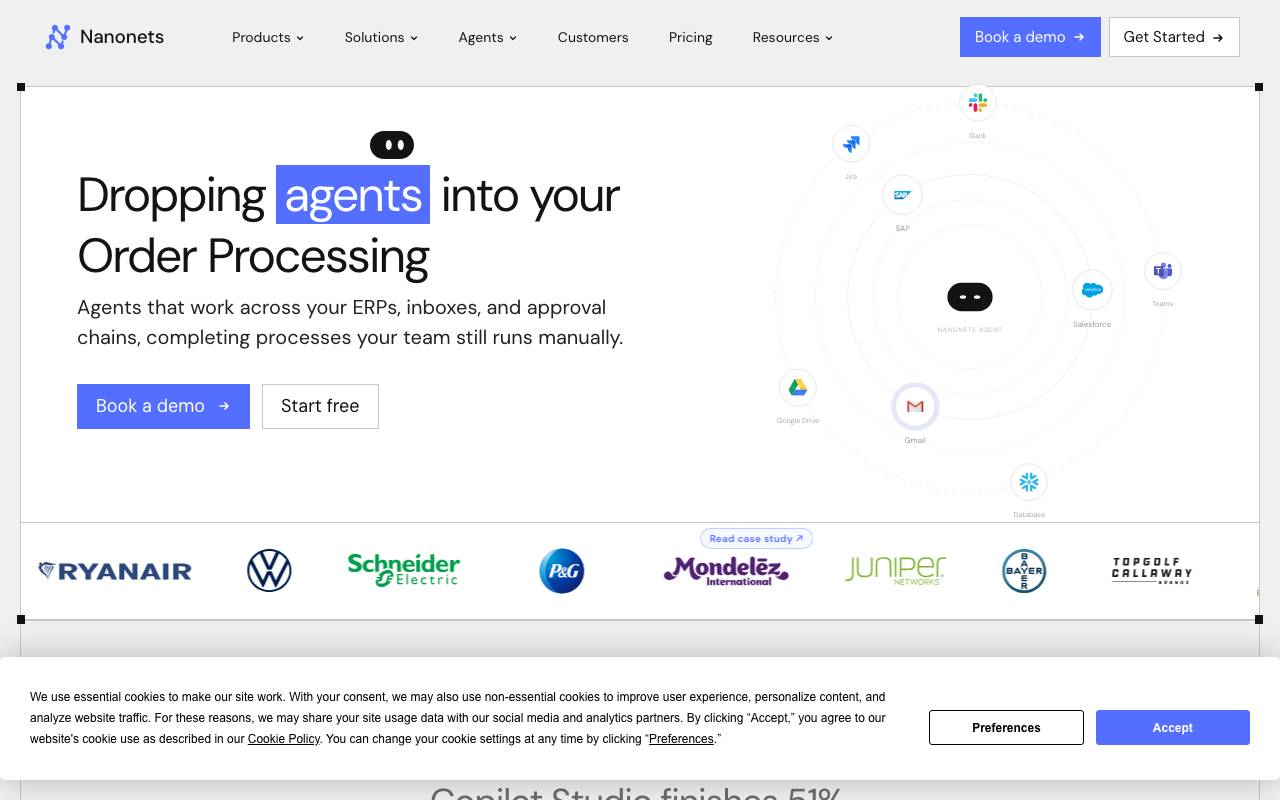
Nanonets is an intelligent document processing platform that uses machine learning and OCR to extract structured data from invoices, receipts, forms, contracts, and other unstructured documents. It enables organizations to automate manual data entry tasks and integrate extracted information directly into their existing systems. The platform offers pre-trained models for common document types as well as the ability to train custom models on specific document formats. With integrations across ERPs, accounting tools, and databases, Nanonets is commonly used by finance, operations, and back-office teams to streamline accounts payable, KYC, claims processing, and similar workflows.
Criteria breakdown
- AI-based OCR and data extraction
- Custom model training
- Pre-built workflows for invoices and receipts
- API and third-party integrations
- Approval and validation interface
- Bulk document processing

Renovate AI
Instantly visualize new interior styles for your home from a single photo.
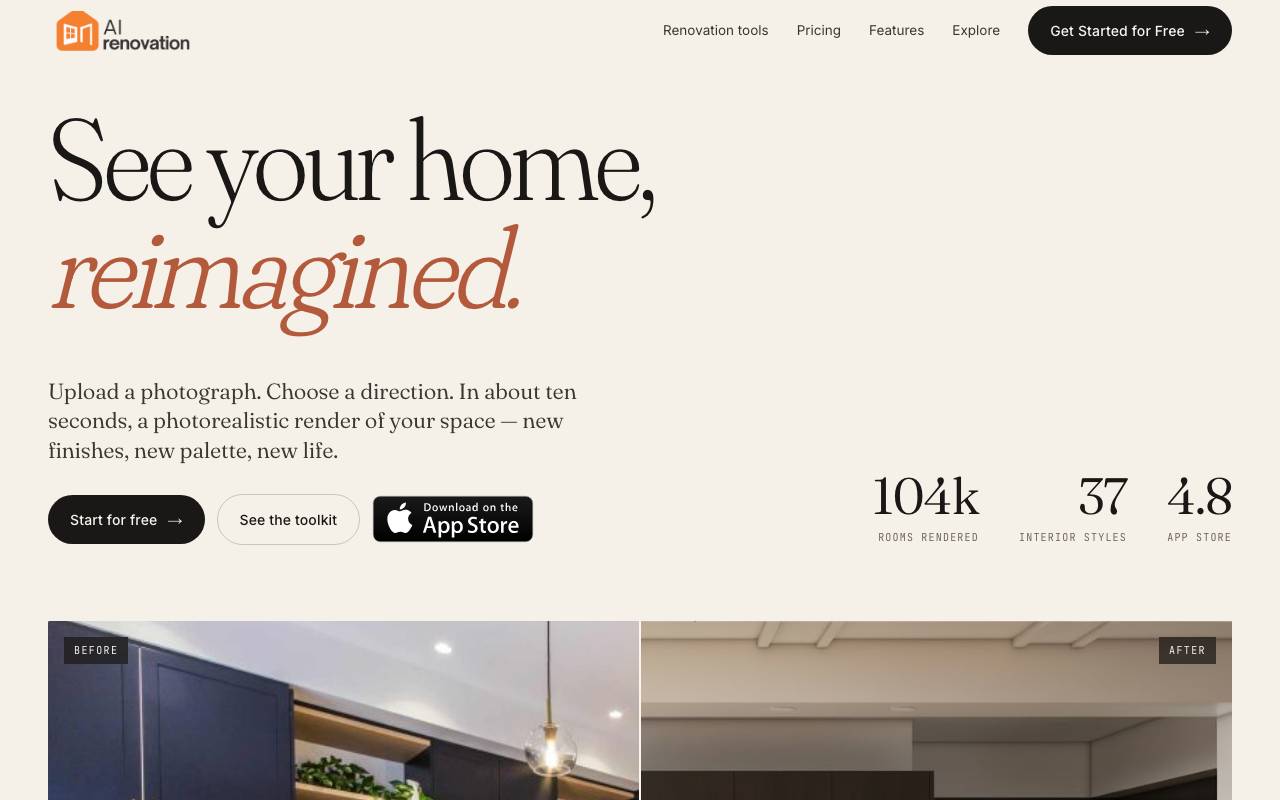
Renovate AI is an interior design tool that uses generative AI to reimagine rooms in different styles. Users upload a photo of a space and receive redesigned versions, helping them explore looks before committing to real-world changes. The tool is aimed at homeowners, renters, real estate agents, and designers who want quick visual inspiration without hiring a professional or learning 3D software. It can suggest furniture arrangements, color palettes, and decor themes ranging from modern minimalist to rustic or industrial. By generating multiple style variations in seconds, Renovate AI shortens the early ideation phase of any renovation or staging project and makes design experimentation accessible to non-experts.
Criteria breakdown
- Photo-based room redesign
- Multiple interior style presets
- AI-generated furniture and decor suggestions
- Side-by-side before and after views
- Quick iteration on color and layout
- Shareable design outputs

Skaivision
AI-powered computer vision for car dealerships to streamline sales and service operations.
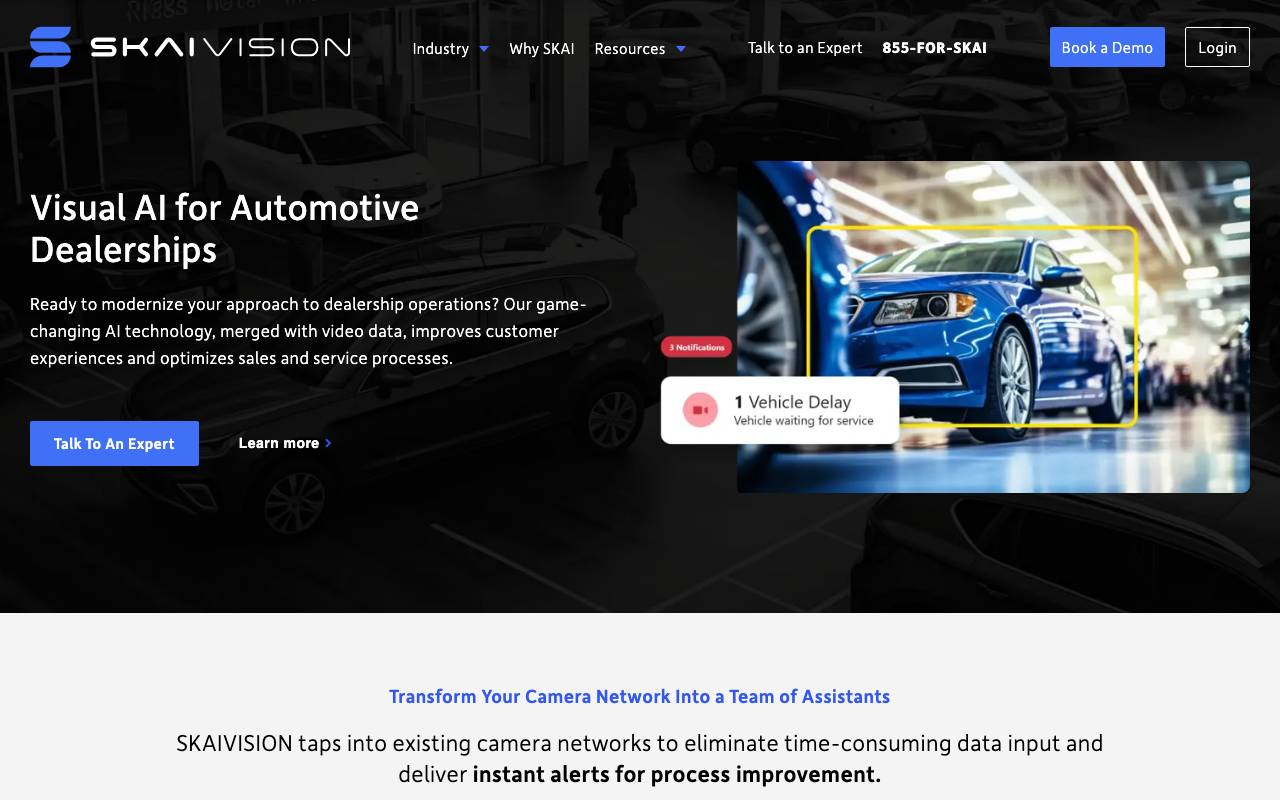
Skaivision applies computer vision and AI to the daily workflows of automotive dealerships, turning footage from existing cameras into actionable insights. It helps dealers track customer activity on the lot, monitor service bay throughput, and identify bottlenecks that slow down sales or repairs. By automating tasks like visitor counting, vehicle movement tracking, and service process timing, the platform gives managers data they would otherwise have to collect manually. The result is better staffing decisions, faster customer response times, and more visibility into how each part of the dealership performs.
Criteria breakdown
- Customer and visitor tracking on the lot
- Service bay activity and timing analysis
- Vehicle movement and inventory monitoring
- Performance dashboards and reporting
- Alerts for unattended customers or delays
- Integration with existing surveillance systems

Microsoft Azure Computer Vision
Microsoft Azure's cloud API for image analysis, OCR, and visual recognition.
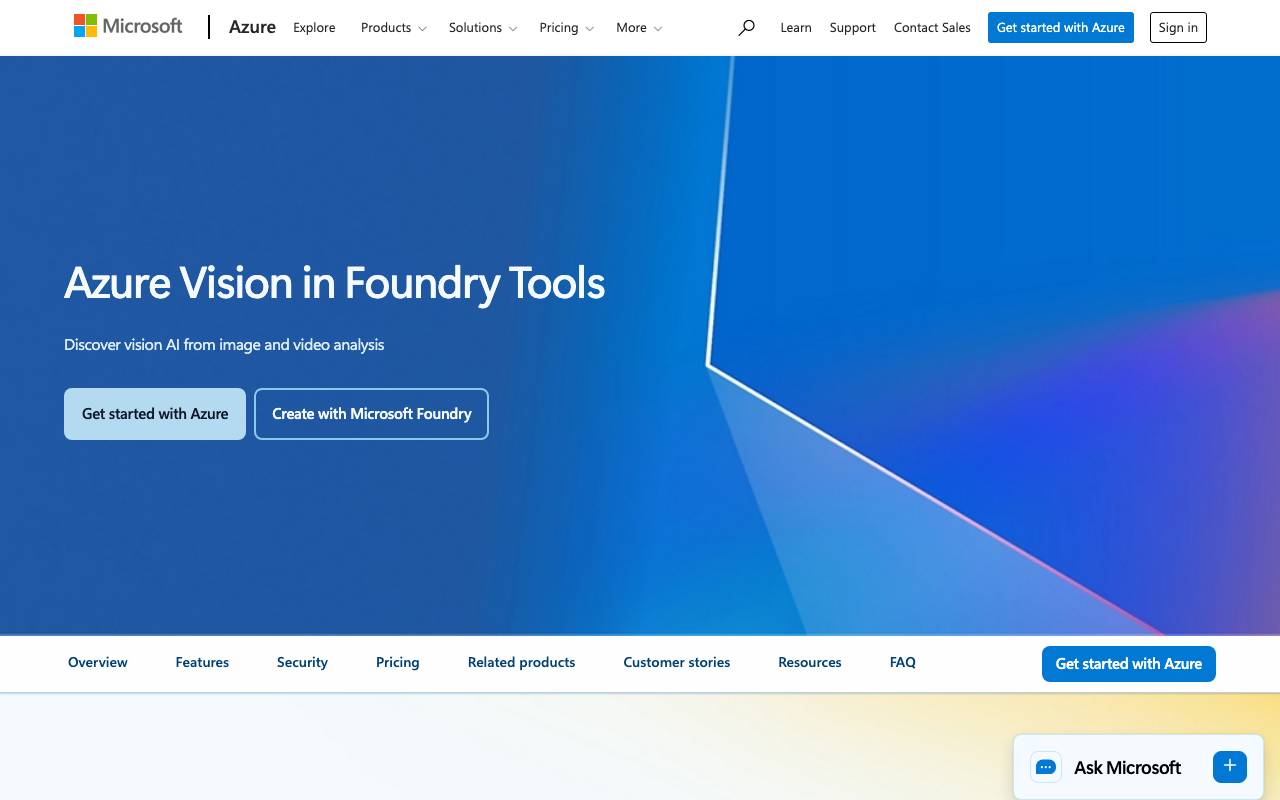
Microsoft Azure Computer Vision is a cloud-based service that lets developers add image understanding capabilities to their applications through REST APIs and SDKs. It can analyze still images and video frames to extract information such as objects, text, faces, and descriptive tags without requiring teams to train their own models. The service supports a wide range of use cases, including document digitization with OCR, content moderation, accessibility features like image captioning, and visual search. It integrates with the broader Azure ecosystem, so teams can combine it with services like Azure Storage, Functions, and Cognitive Search for end-to-end pipelines. Pricing is consumption-based with a free tier, making it accessible for prototyping while scaling to enterprise workloads backed by Microsoft's compliance and security commitments.
Criteria breakdown
- Image tagging and object detection
- Optical character recognition (OCR)
- Image captioning and description
- Spatial analysis and face detection
- Content moderation for adult or unsafe imagery
- REST API and SDKs for major languages

RoomHaven
AI interior design platform that reimagines rooms from a single photo in seconds.
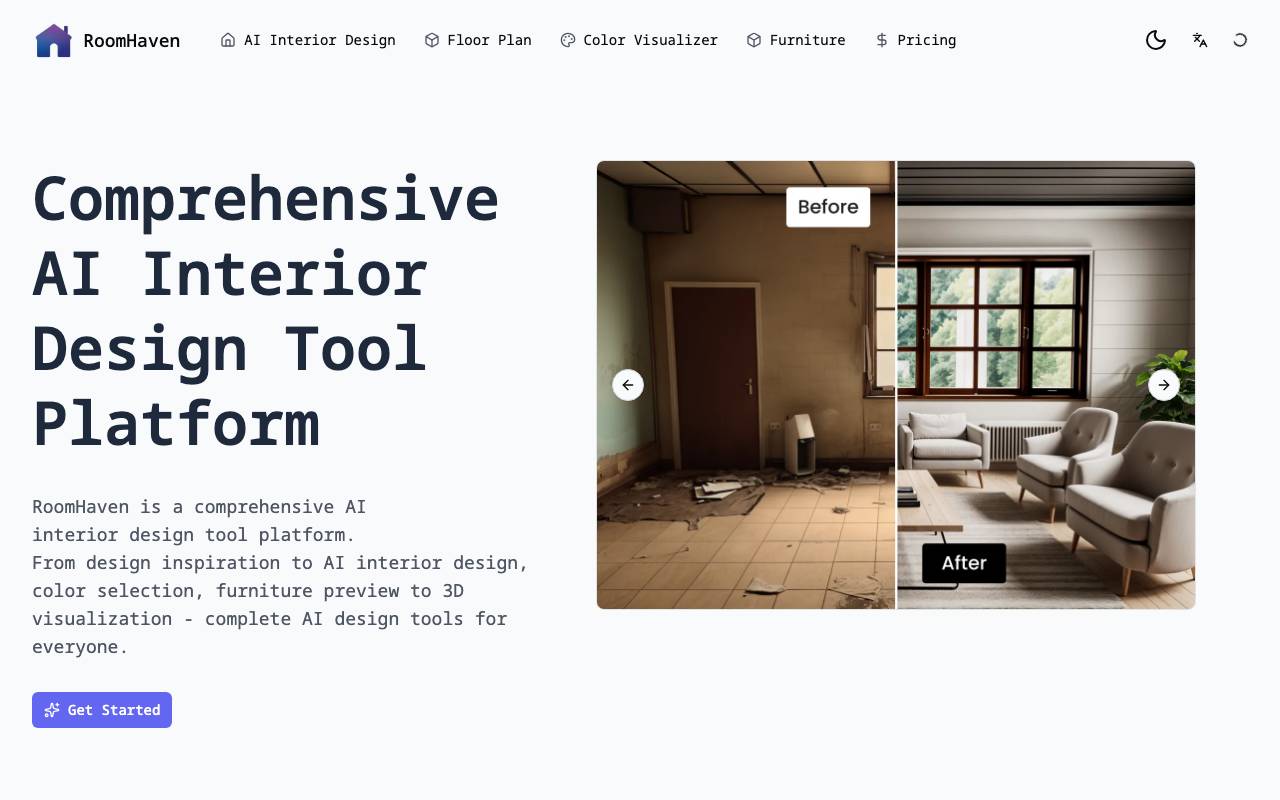
RoomHaven is an AI-powered interior design tool that lets users upload a photo of any room and instantly generate redesigned versions in a variety of styles. It's aimed at homeowners, renters, and design enthusiasts who want to visualize changes before committing to renovations or new furniture. The platform uses generative AI to produce realistic room makeovers across styles like modern, Scandinavian, industrial, and minimalist. Users can experiment with different looks, compare options, and use the results as inspiration for real-world projects or conversations with designers and contractors.
Criteria breakdown
- AI room redesign from photo uploads
- Multiple interior design style presets
- Quick before-and-after previews
- Side-by-side style comparisons
- Downloadable design renders
- Web-based, no installation required

SuperAnnotate
End-to-end data annotation and management platform for building high-quality AI training datasets.
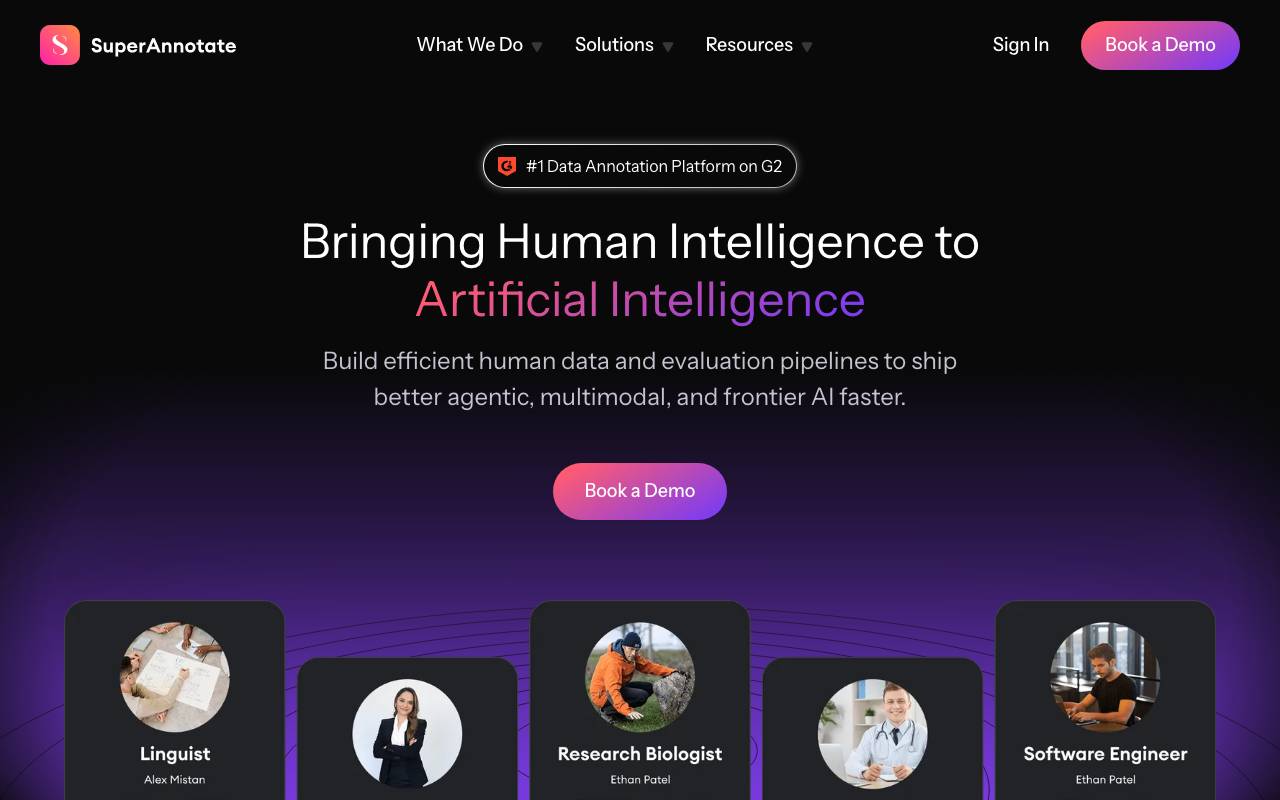
SuperAnnotate is a data labeling and dataset management platform designed for teams building computer vision, NLP, and multimodal AI models. It combines annotation tooling, project management, quality assurance workflows, and access to a network of professional annotators in a single environment. The platform is widely used in domains like autonomous vehicles, robotics, healthcare, and retail, where it supports image, video, text, audio, and LiDAR data. Built-in automation features, model-assisted labeling, and integrations with major MLOps stacks help teams iterate on datasets and ship models faster.
Criteria breakdown
- Multi-format annotation: image, video, text, LiDAR
- Model-assisted and automated labeling
- Built-in QA, review, and versioning workflows
- Team and project management dashboards
- Access to a vetted annotation workforce
- APIs and SDK for MLOps integration

NVIDIA Metropolis
NVIDIA's application framework for building AI-powered video analytics at the edge and in the cloud.
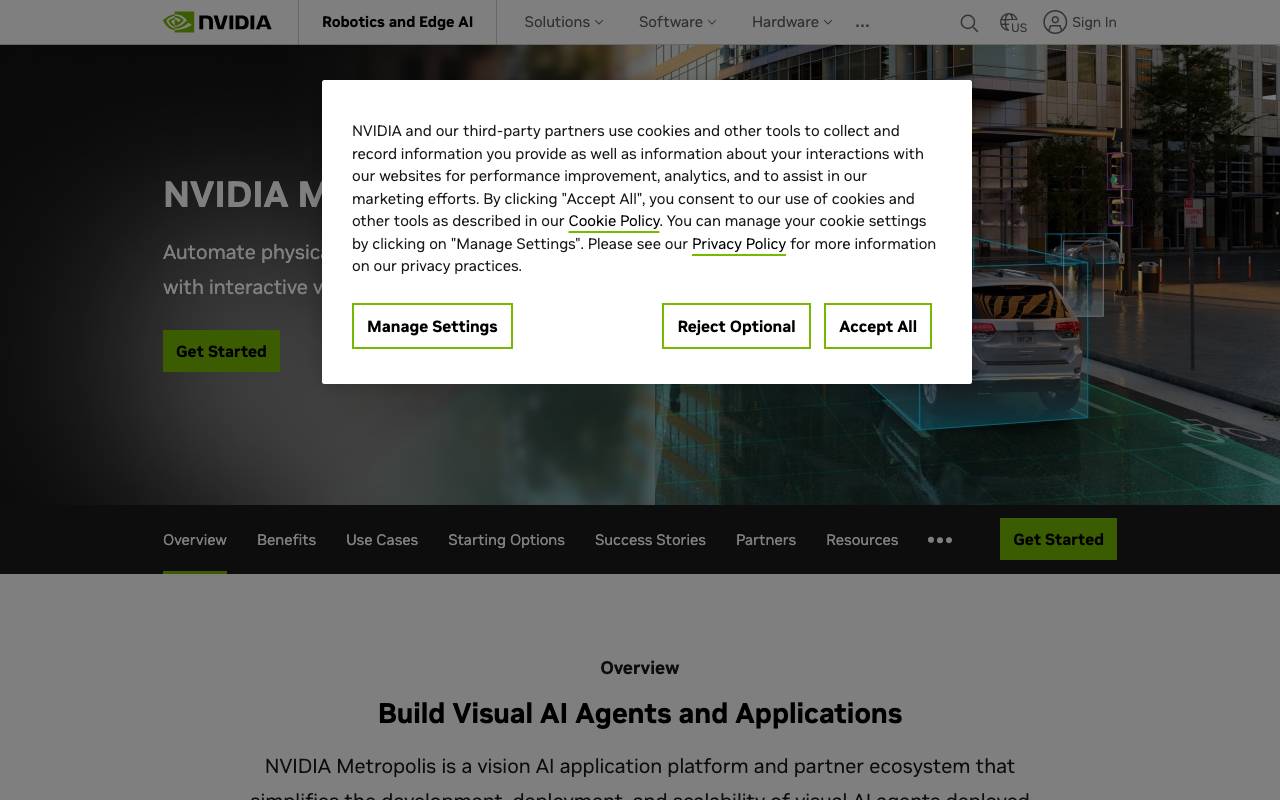
NVIDIA Metropolis is a development platform that combines GPU-accelerated SDKs, pretrained models, and reference workflows to help developers build intelligent video analytics (IVA) applications. It is used across industries such as retail, manufacturing, transportation, healthcare, and public infrastructure to extract real-time insights from cameras and other visual sensors. The platform integrates tools like DeepStream for streaming analytics, TAO Toolkit for model training and fine-tuning, and Isaac and Jetson for edge deployment. Developers can build pipelines that detect, classify, and track objects, monitor environments, and feed data into downstream business or operational systems. Metropolis is aimed at enterprises and solution providers building production-grade vision AI, rather than end users. It supports deployment on NVIDIA hardware ranging from Jetson edge devices to data center GPUs, with cloud-native orchestration through Kubernetes.
Criteria breakdown
- DeepStream SDK for real-time video pipelines
- TAO Toolkit for transfer learning and model tuning
- Pretrained vision AI models
- Edge deployment via Jetson devices
- Cloud-native, Kubernetes-ready architecture
- Multi-camera object detection and tracking