Past battle · 2026-08-10 UTC
Coding assistant Showdown — August 10, 2026
From the Coding assistant category. 25 marks placed across 7 fighters. Project Oscar took the crown.
Final standings






The line-up
The fighters
Profiles of every tool that competed in this battle, ranked by their final score.

Project Oscar
Open-source AI agent platform for automating open-source project maintenance tasks.
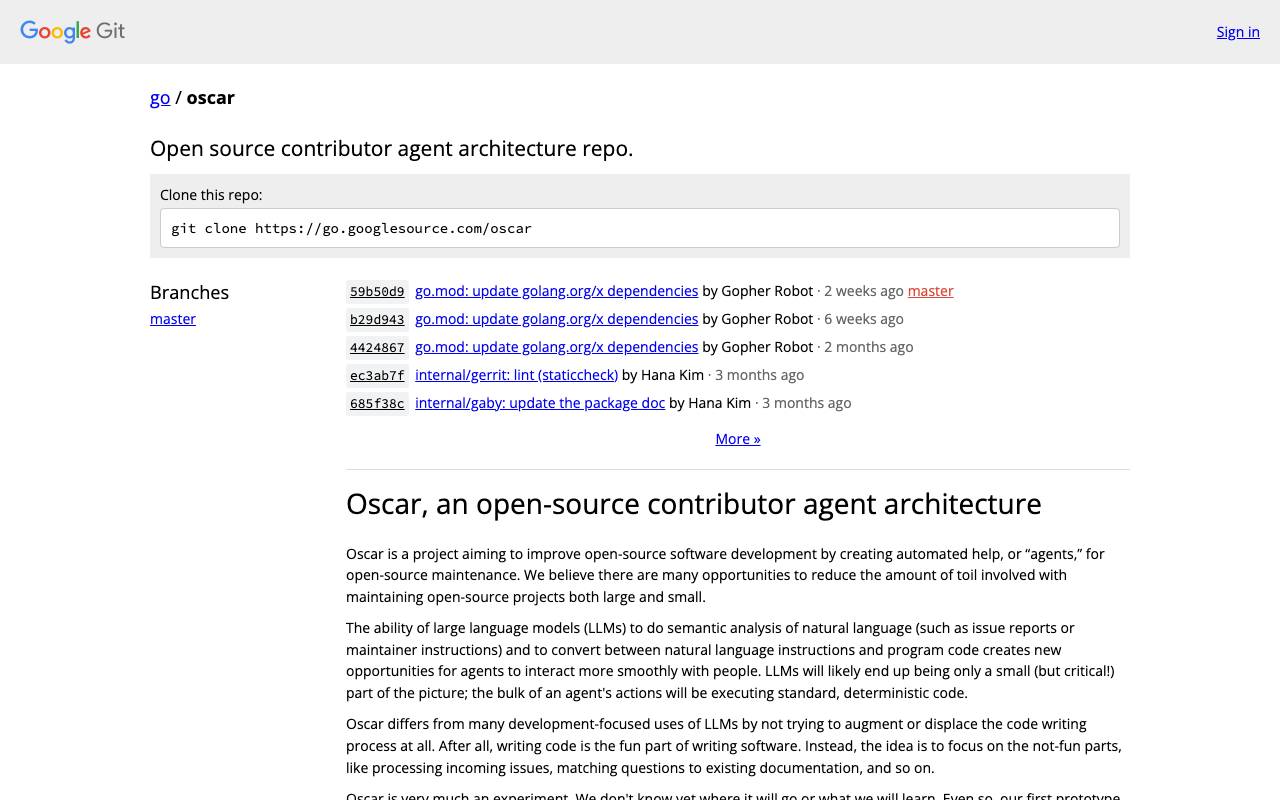
Project Oscar is an open-source platform for building AI agents that help maintain open-source repositories. It targets the repetitive overhead maintainers face, such as triaging incoming issues, identifying duplicates, and matching reports to relevant documentation or prior discussions. Rather than acting as a single bot, Oscar provides a framework for defining agents that can observe project activity and respond with useful context. Maintainers can configure agents to summarize issues, suggest labels, point contributors to existing resources, or flag missing information, reducing the manual load on small teams. Because the project itself is open source, teams can self-host, extend, and audit the agents they deploy, adapting Oscar to the conventions of their own communities.
Criteria breakdown
- Automated issue triage
- Duplicate detection for issues
- Documentation matching for questions
- Configurable AI agent framework
- Integration with project repositories
- Self-hosted deployment

DevArchitect
AI-assisted coding companion for planning, building, and refining software projects.
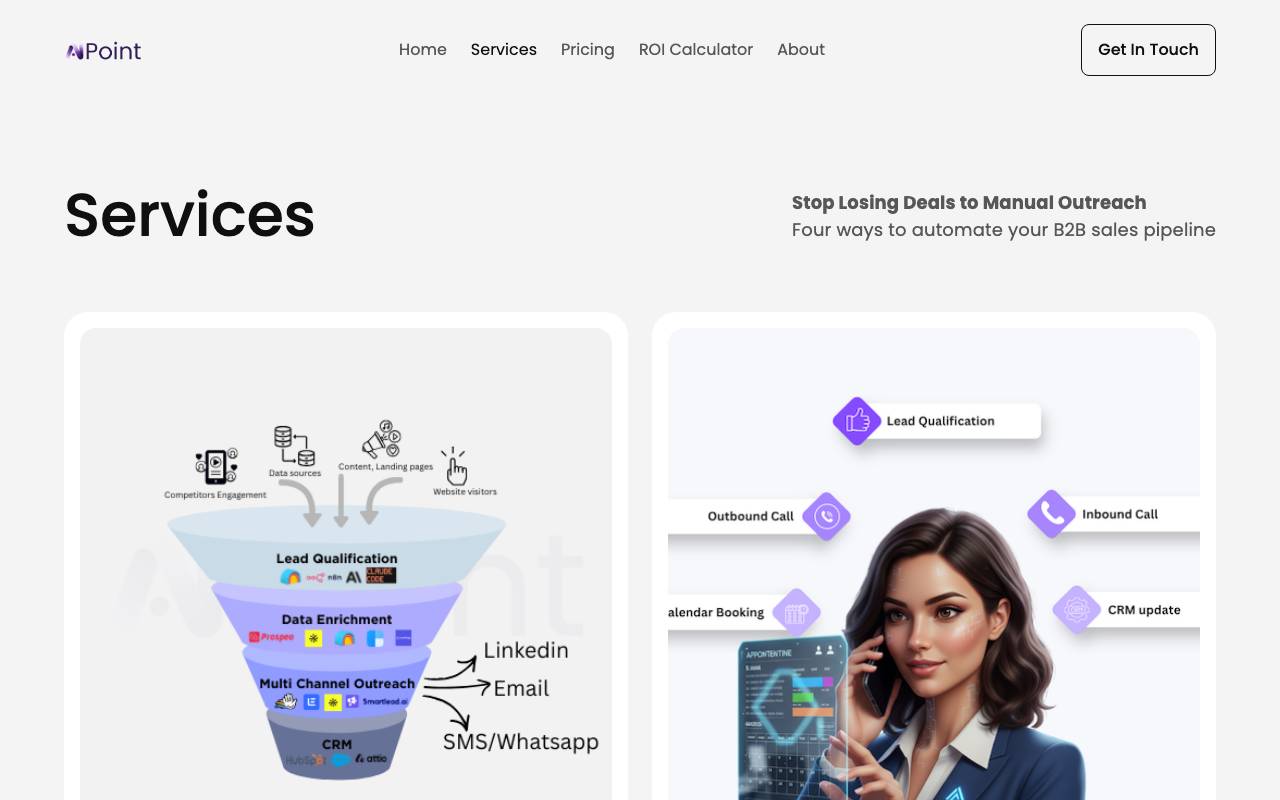
DevArchitect is an AI-powered development assistant designed to help engineers move from idea to implementation more quickly. It supports tasks like generating code, structuring project architectures, reviewing snippets, and suggesting improvements across common programming languages and frameworks. The tool aims to act as a collaborative partner during the software development lifecycle, offering contextual guidance whether you're scaffolding a new application, debugging an existing codebase, or exploring design patterns. By combining code generation with architectural reasoning, it targets both individual developers and small teams looking to streamline their workflow.
Criteria breakdown
- AI-driven code generation and completion
- Project architecture suggestions
- Code review and improvement hints
- Multi-language and framework support
- Debugging and refactoring assistance
- Context-aware development workflow

PR-Agent
AI assistant that automates pull request reviews with analysis, feedback, and code suggestions.
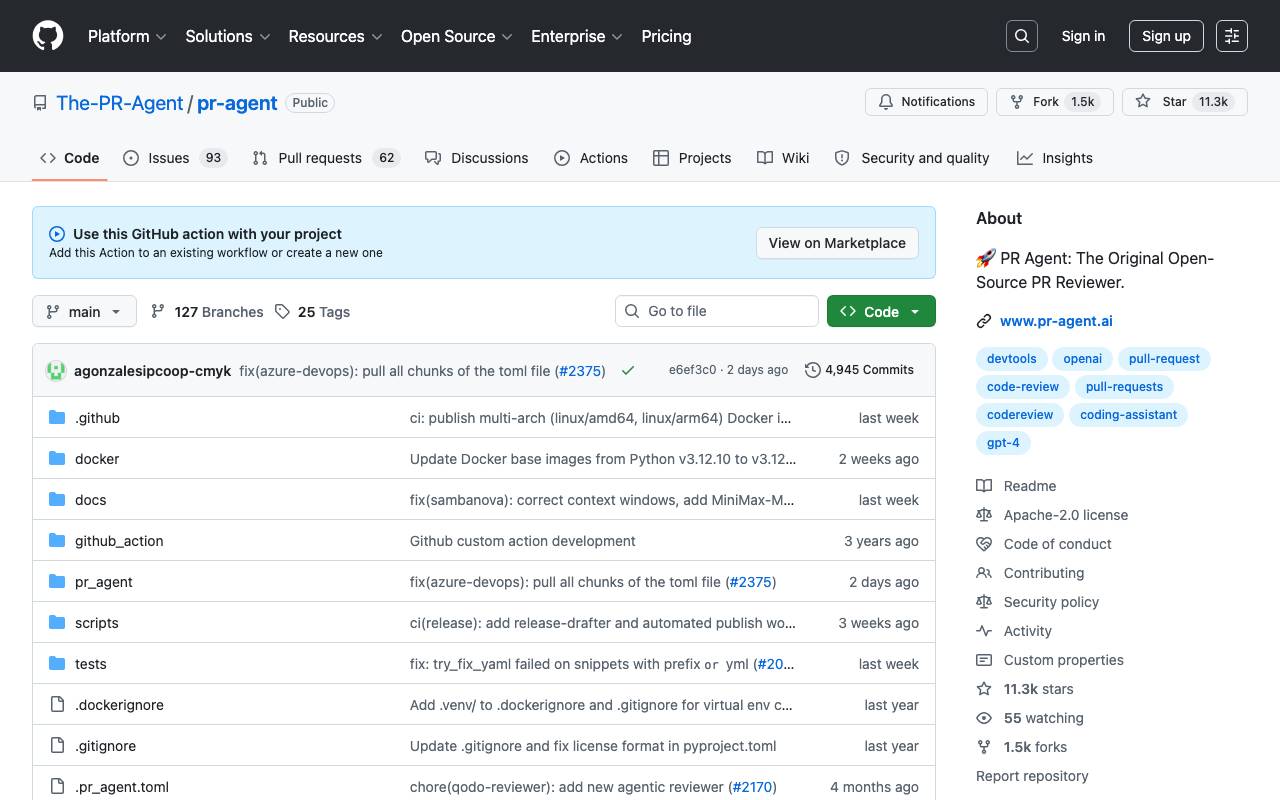
PR-Agent is an AI-powered tool designed to streamline the code review process by automatically analyzing pull requests and surfacing actionable insights. It integrates with common Git platforms and helps teams reduce review bottlenecks by handling repetitive checks before a human reviewer steps in. The tool can generate PR descriptions, summarize changes, suggest code improvements, and answer questions about the diff. By offloading routine review tasks to an AI agent, developers can focus on architectural decisions and higher-level feedback. PR-Agent is suitable for individual developers and engineering teams that want to maintain code quality while accelerating their delivery pipeline.
Criteria breakdown
- Automated pull request analysis
- AI-generated PR descriptions and summaries
- Inline code improvement suggestions
- Interactive Q&A on code changes
- Customizable review prompts
- Support for multiple Git platforms

Smol AI Developer
Open-source AI agent that scaffolds entire codebases from a single prompt.
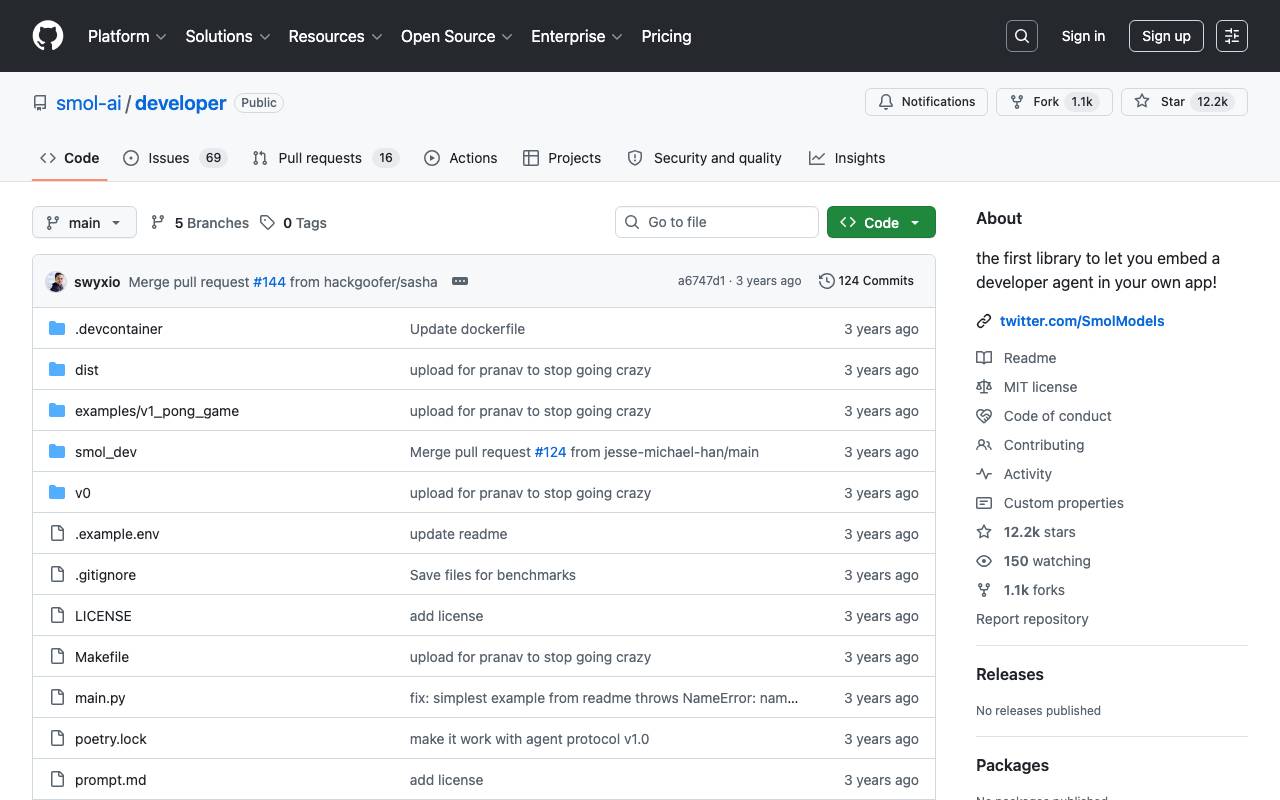
Smol AI Developer is an open-source command-line tool that acts like a virtual junior developer, turning a single product specification into a working codebase. You describe what you want to build in plain language, and the agent plans, writes, and organizes the files needed to bring the idea to life. It is designed to be small, hackable, and easy to iterate on. Developers can tweak the underlying prompts, swap models, and rerun generations to refine output, making it useful for rapid prototyping, learning, and experimenting with AI-driven software development workflows.
Criteria breakdown
- Whole-codebase generation from a single spec
- Command-line interface for quick iteration
- Customizable prompt templates
- Works with major LLM providers
- Debug logs of intermediate reasoning
- Lightweight, self-contained Python project

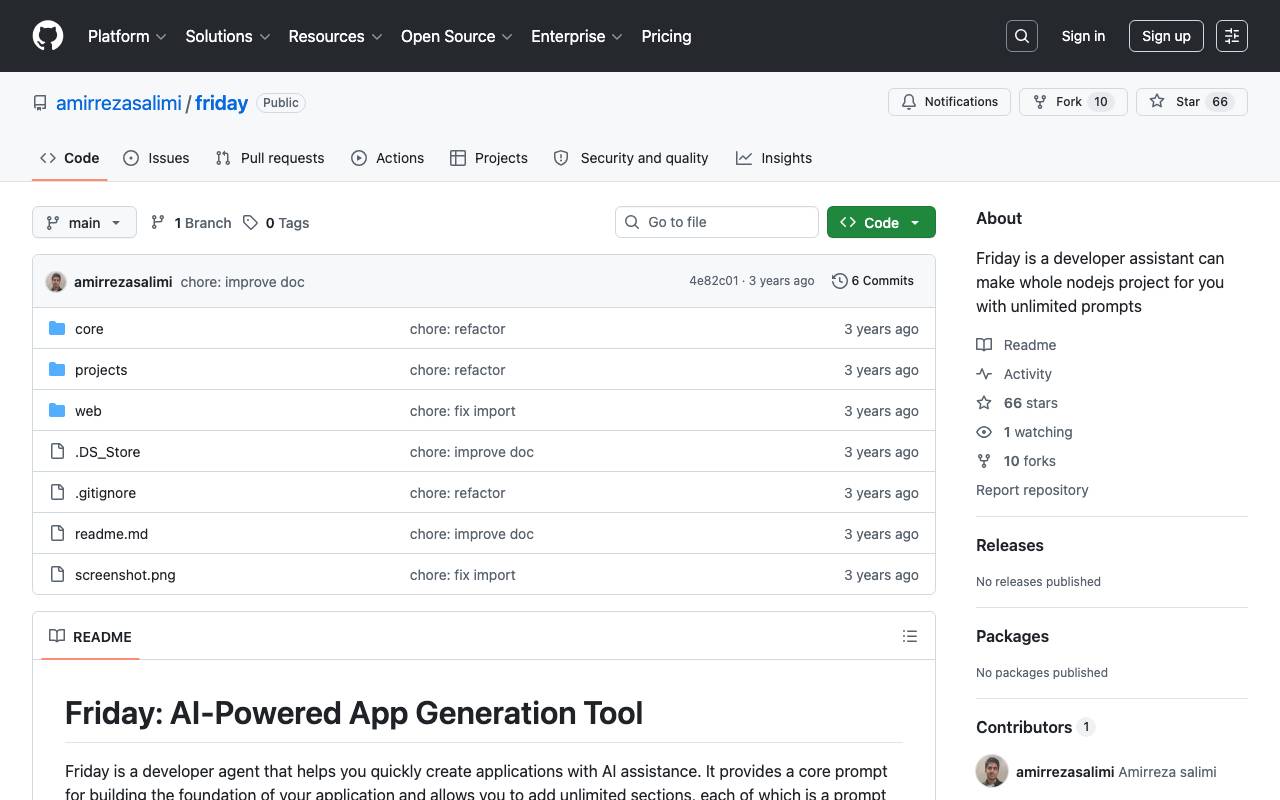
Friday is an AI-powered developer assistant designed to rapidly scaffold Node.js projects. It utilizes GPT-4 for AI assistance, optimized with GPT-4-32k for better performance. The tool provides a core foundation for applications and allows users to add unlimited sections, each representing a specific part of the app through prompts. Friday employs esbuild behind the scenes for every app created. To use it, a GPT-like chat completion API, such as GPT-4 or GPT-4-32k, is required. The project structure includes a core module, web frontend, and backend module. Setup involves configuring the AI API key and endpoint, building the core module, and running the backend and frontend servers. The tool is licensed under the MIT License. Known limitations include occasional issues with package inclusion in the packages.json file and a simple user interface. Future goals include enhancing scalability for multi-file apps, improving the user interface, implementing documentation features, and introducing a code debugger. Friday is suitable for developers looking to quickly create Node.js applications with AI assistance. While it streamlines the scaffolding process, users should be aware of its current limitations and potential areas for improvement.
Criteria breakdown
- AI-assisted project scaffolding
- Natural language code generation
- Automatic dependency configuration
- Boilerplate for routes and modules
- Rapid prototyping support

Promptables is a platform designed to help teams build, test, and refine AI prompts as part of their product development workflow. It aims to shorten the cycle between prompt ideation and production-ready deployment, making prompt engineering more systematic and repeatable. The tool focuses on streamlining how developers and product teams create AI-driven features, offering structured tooling around prompt creation, iteration, and integration. This can be useful for startups and product teams looking to ship AI capabilities quickly without building prompt infrastructure from scratch.
Criteria breakdown
- Prompt development tooling
- Iteration and testing workflows
- Deployment-oriented prompt management
- Support for AI product workflows
- Structured prompt organization

Sweep AI
An AI-powered junior developer that transforms bug reports and feature requests into code changes, streamlining the software development process.
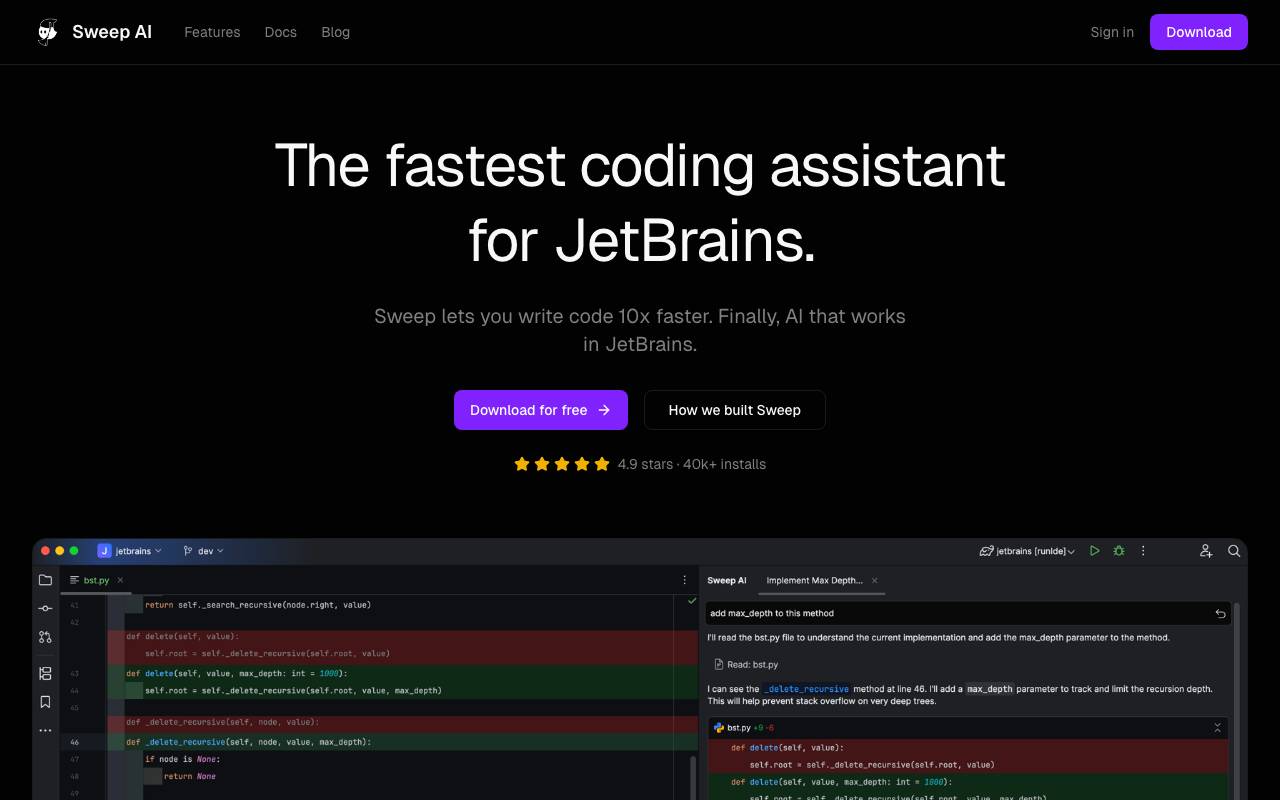
Sweep AI is an artificial intelligence-powered coding assistant designed to work seamlessly within JetBrains integrated development environments (IDEs). It aims to streamline the software development process by suggesting precise code changes, effectively acting as a junior developer. Sweep integrates with various JetBrains IDEs, including IntelliJ IDEA, PyCharm, and WebStorm, making it a versatile tool for developers across different projects. The AI technology behind Sweep, including its custom Tab model and autocomplete features, enables developers to write code faster and more efficiently. Sweep's ability to index the entire project for context-aware suggestions underscores its potential to understand complex codebases and provide relevant assistance. By facilitating rapid and accurate coding, Sweep seeks to boost developer productivity and transform the development workflow. Sweep also emphasizes security and privacy, boasting SOC 2 compliance and zero data retention, which is crucial for enterprises handling sensitive information. The tool's instantaneous code suggestions and comprehensive indexing contribute to its appeal as a productivity-enhancing solution for professional developers. With a strong focus on performance, security, and ease of use, Sweep positions itself as a valuable asset for developers seeking to enhance their coding experience within the JetBrains ecosystem. Sweep's integration with JetBrains IDEs and its commitment to privacy and security standards make it an attractive option for developers looking for a reliable and efficient coding assistant. The tool's impact on developer productivity is highlighted by testimonials from users who have experienced significant improvements in their workflow efficiency. By leveraging AI to automate certain aspects of coding, Sweep enables developers to focus on more complex and creative tasks, potentially leading to better software quality and faster development cycles. Overall, Sweep AI represents a noteworthy innovation in coding assistance, offering a powerful combination of AI-driven code completion, project indexing, and seamless integration with popular development environments.
Criteria breakdown
- AI-powered code completion
- Custom Tab model for precise code suggestions
- Project indexing for context-aware assistance
- Seamless integration with JetBrains IDEs
- SOC 2 compliance and zero data retention for enhanced security and privacy