Past battle · 2025-11-08 UTC
Coding Agent Showdown — November 8, 2025
From the Coding Agent category. 35 marks placed across 8 fighters. AutonomyAI took the crown.
Final standings







The line-up
The fighters
Profiles of every tool that competed in this battle, ranked by their final score.

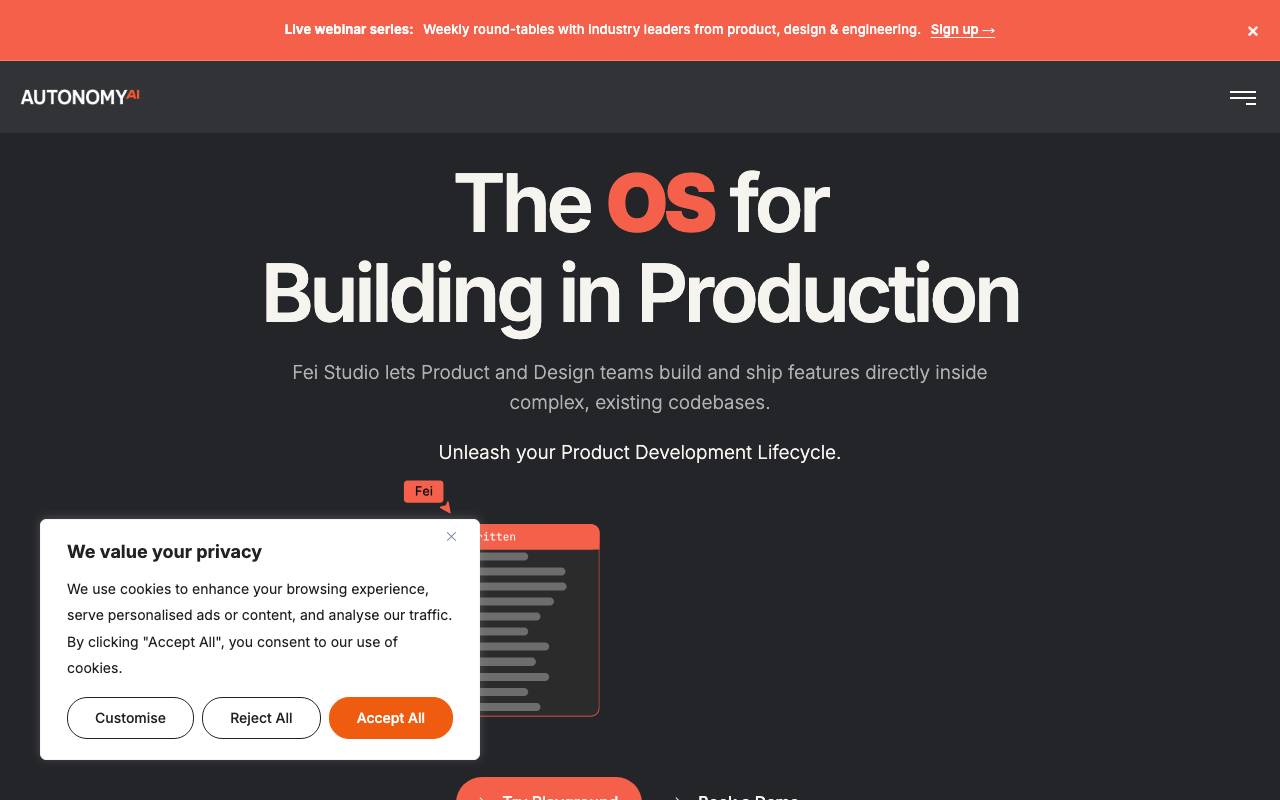
AutonomyAI is an AI-powered development workflow automation tool that accelerates front-end development. It allows product managers and designers to build and ship products directly into production by automating the development process. AutonomyAI's key feature is its Fei Studio operating layer, which connects the product idea to the production codebase, ingesting the codebase and modeling how engineers write code. This enables product and design teams to turn their ideas into production-ready updates with just a few clicks. The tool is designed to bypass the traditional bottlenecks in front-end development, such as lengthy engineering review cycles and manual configuration. AutonomyAI's goal is to empower product and design teams to take ownership of their products, ship features faster, and reduce the workload for engineers. AutonomyAI works by allowing product and design teams to run tasks on their codebase, which are then reviewed and approved by engineering. The tool takes raw product ideas and translates them into production-grade code, including a clean PR and full specs. This enables engineering to review and merge the changes quickly, without wasting time on manual setup and review. AutonomyAI is not just a coding agent, but a solution that enables product and design teams to build and ship products directly into production. It addresses the pain points of traditional development workflows, such as lengthy engineering review cycles and manual configuration. While other tools, such as Claude Code, aim to automate the coding process, AutonomyAI goes a step further by providing a seamless experience for product and design teams to build and ship products directly into production.
Criteria breakdown
- AI agents for front-end development
- Design-to-code generation
- Component scaffolding
- Codebase-aware integration
- Workflow automation for UI tasks

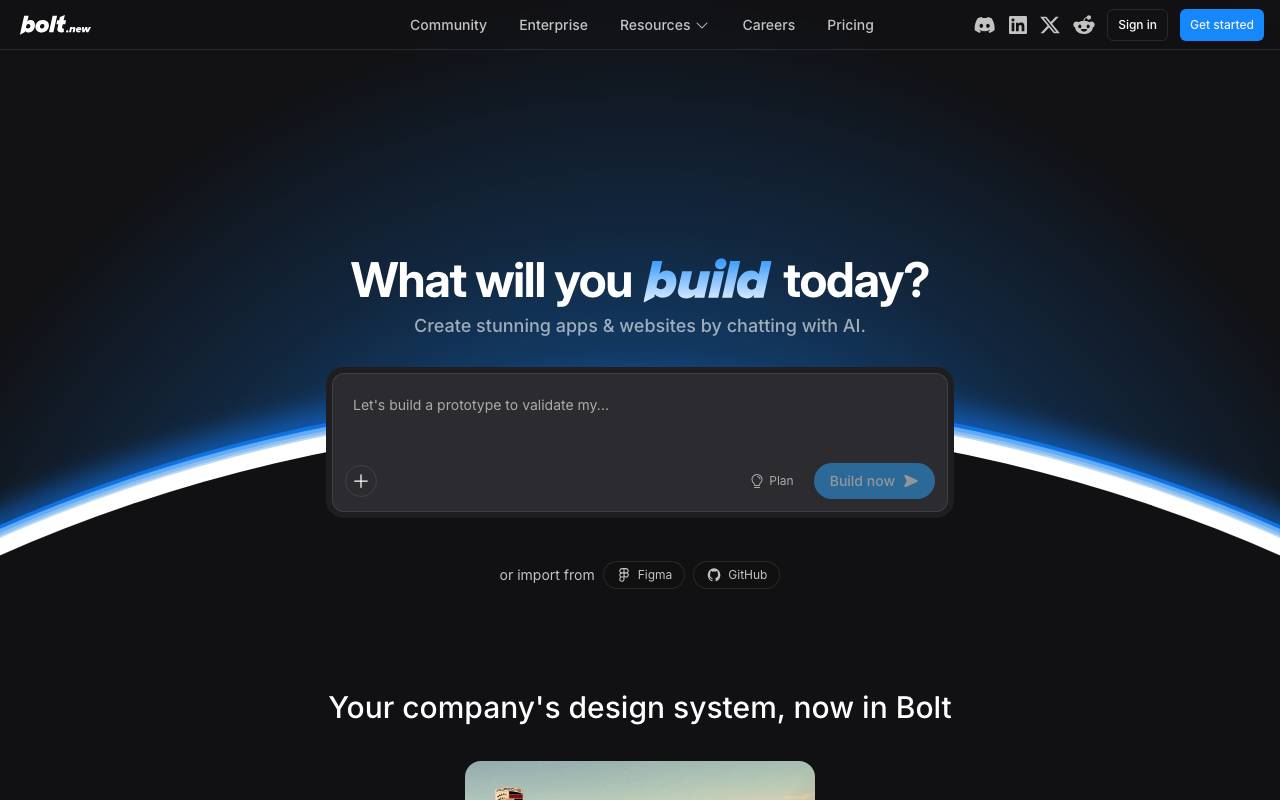
Bolt is an AI-powered web development platform that lets users generate, edit, run, and deploy full-stack applications directly from the browser. By describing what they want in natural language, developers and non-developers alike can scaffold projects with frameworks like React, Next.js, Astro, and Vue without manual setup. The environment combines a chat-based AI assistant with a live code editor, terminal, and preview, so iteration happens in one place. Bolt can install npm packages, run servers, troubleshoot errors, and push finished projects to hosting providers, making it useful for prototyping, MVPs, and rapid client work.
Criteria breakdown
- Natural-language project generation
- In-browser code editor and terminal
- Live app preview and hot reload
- AI-assisted debugging and refactoring
- Package installation and backend support
- Direct deployment to the web

DeepSite
AI-powered document processing for automated data extraction and workflow integration.
DeepSite is a document processing platform that uses AI to read, classify, and extract structured data from a wide range of business documents. It aims to replace manual data entry by turning invoices, contracts, forms, and reports into usable information that can flow directly into downstream systems. The platform connects with common business tools and workflows, allowing teams to route extracted data into ERPs, CRMs, databases, or custom applications. Built-in validation and review steps help maintain accuracy while reducing the time spent handling repetitive paperwork. DeepSite is geared toward operations, finance, and back-office teams looking to automate document-heavy processes without building custom machine learning pipelines from scratch.
Criteria breakdown
- AI-based data extraction from documents
- Workflow automation and routing
- Pre-built integrations with business tools
- Validation and human-in-the-loop review
- Support for structured and unstructured documents
- Scalable batch processing

Jules
Google's asynchronous AI coding agent that tackles bugs and tests inside your GitHub workflow.
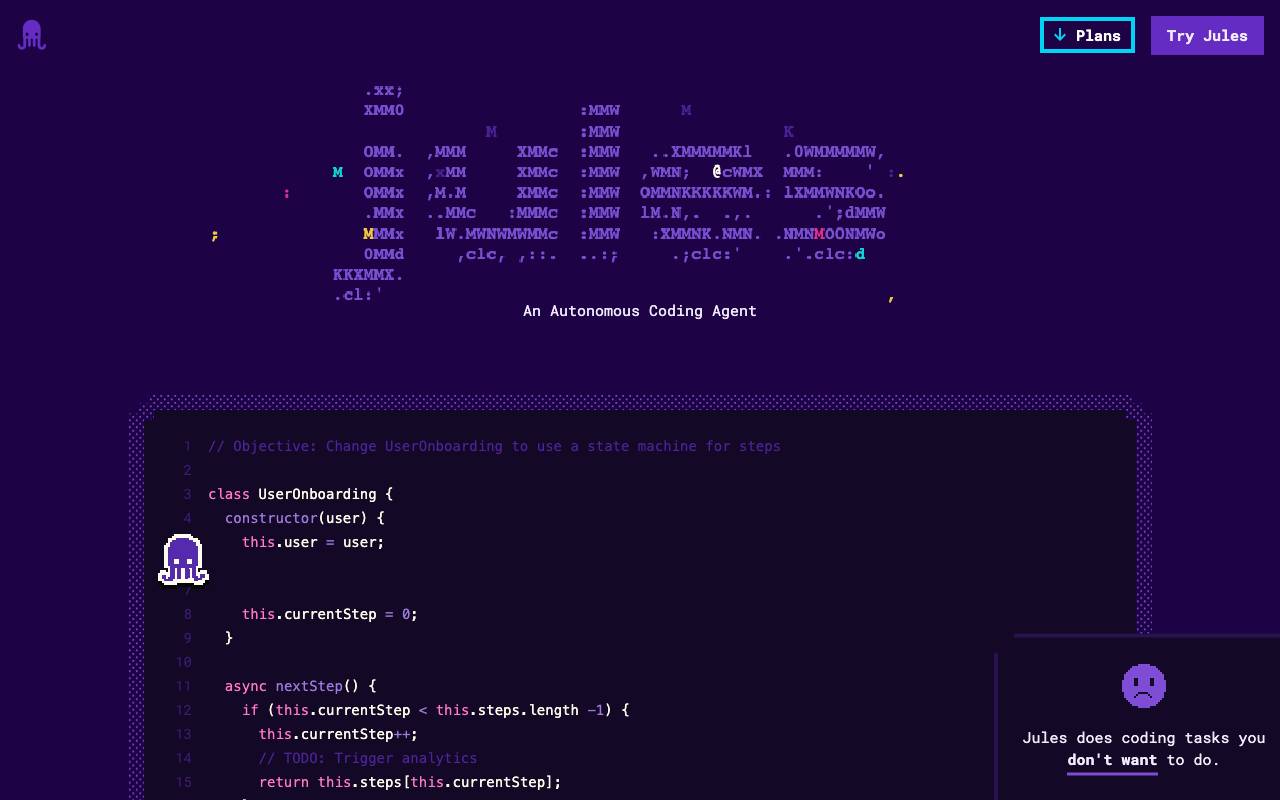
Jules is an asynchronous coding agent from Google designed to take on routine software engineering tasks without constant developer supervision. It plugs into GitHub repositories, reads the codebase, and works through assigned issues such as bug fixes, refactors, dependency updates, and test creation in the background. Rather than acting as a chat-based pair programmer, Jules operates more like a remote teammate: you hand it a task, it plans an approach, executes changes in an isolated environment, and returns a pull request for human review. This makes it well suited for offloading maintenance work while developers focus on higher-impact problems. Because it runs asynchronously and integrates with existing review processes, teams can use Jules to parallelize work across multiple issues and keep humans in control through standard PR workflows.
Criteria breakdown
- Autonomous task execution in isolated environments
- Pull request-based change delivery
- Automated bug fixing and patching
- Unit test generation and updates
- Dependency and version upgrades
- GitHub repository integration

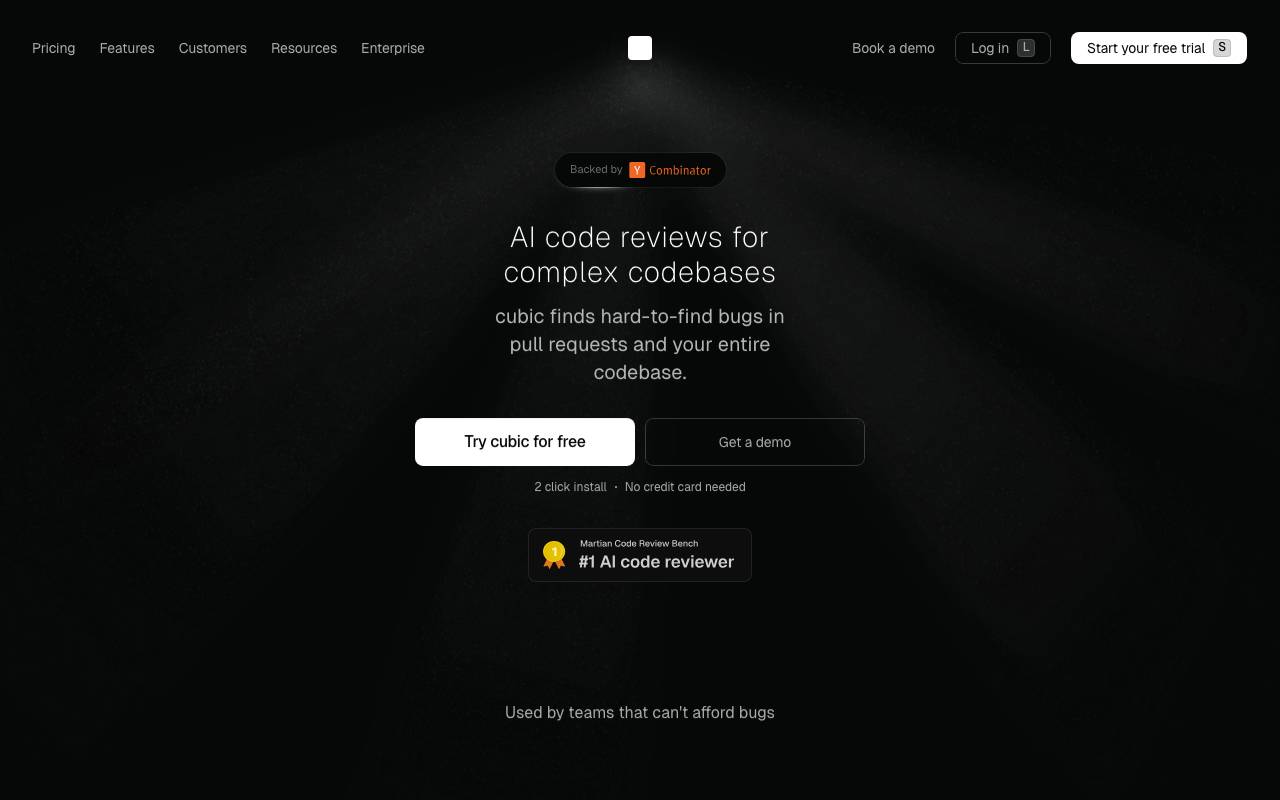
Rizwan is an AI tool designed to streamline the code review process, bringing a Cursor-like experience to pull requests and diffs. It analyzes code changes, surfaces potential issues, and suggests improvements so engineering teams can ship faster with greater confidence. By combining context-aware AI suggestions with familiar review workflows, Rizwan helps reviewers focus on high-impact feedback rather than repetitive checks. It can flag bugs, style inconsistencies, security concerns, and opportunities for refactoring directly within the review interface. The tool is aimed at development teams that want to reduce review bottlenecks, maintain code quality at scale, and integrate AI assistance into their existing version control workflows.
Criteria breakdown
- AI-assisted pull request reviews
- Inline code suggestions and explanations
- Automated bug and issue detection
- Refactoring and style recommendations
- Integration with version control workflows

Floot
AI-powered no-code builder for turning plain-language prompts into working apps and websites.
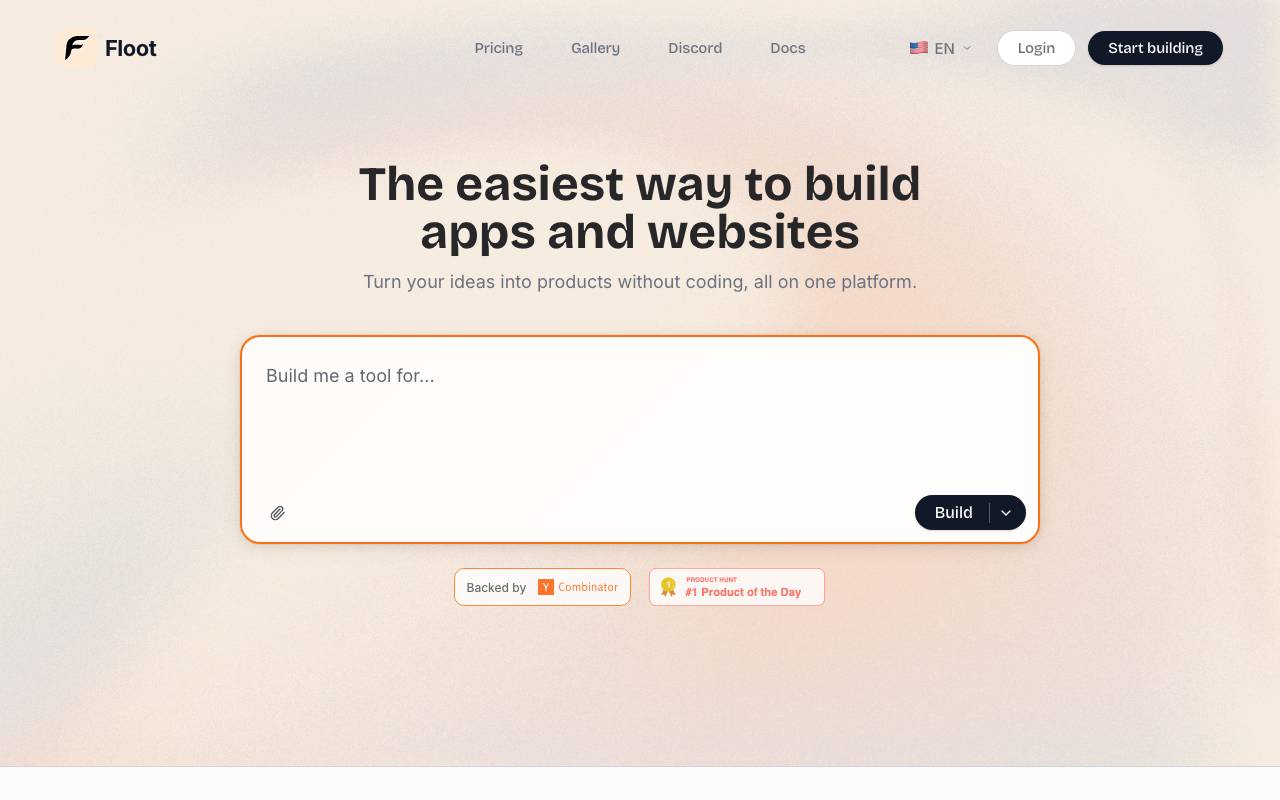
Floot is an AI app and website builder designed for 'vibe coding'—describing what you want in natural language and letting the platform generate a functional product. It targets makers, founders, and non-technical creators who want to ship working software without writing code from scratch. Users can prompt Floot to scaffold full applications, iterate on designs, and adjust functionality through conversation. The tool handles UI generation, basic logic, and deployment steps, aiming to compress the path from idea to live app. It fits early-stage prototyping, internal tools, landing pages, and MVPs where speed matters more than custom-engineered architecture.
Criteria breakdown
- Natural-language app generation
- No-code visual editing
- Website and web app support
- Conversational iteration on designs
- Built-in deployment
- Templates for common use cases

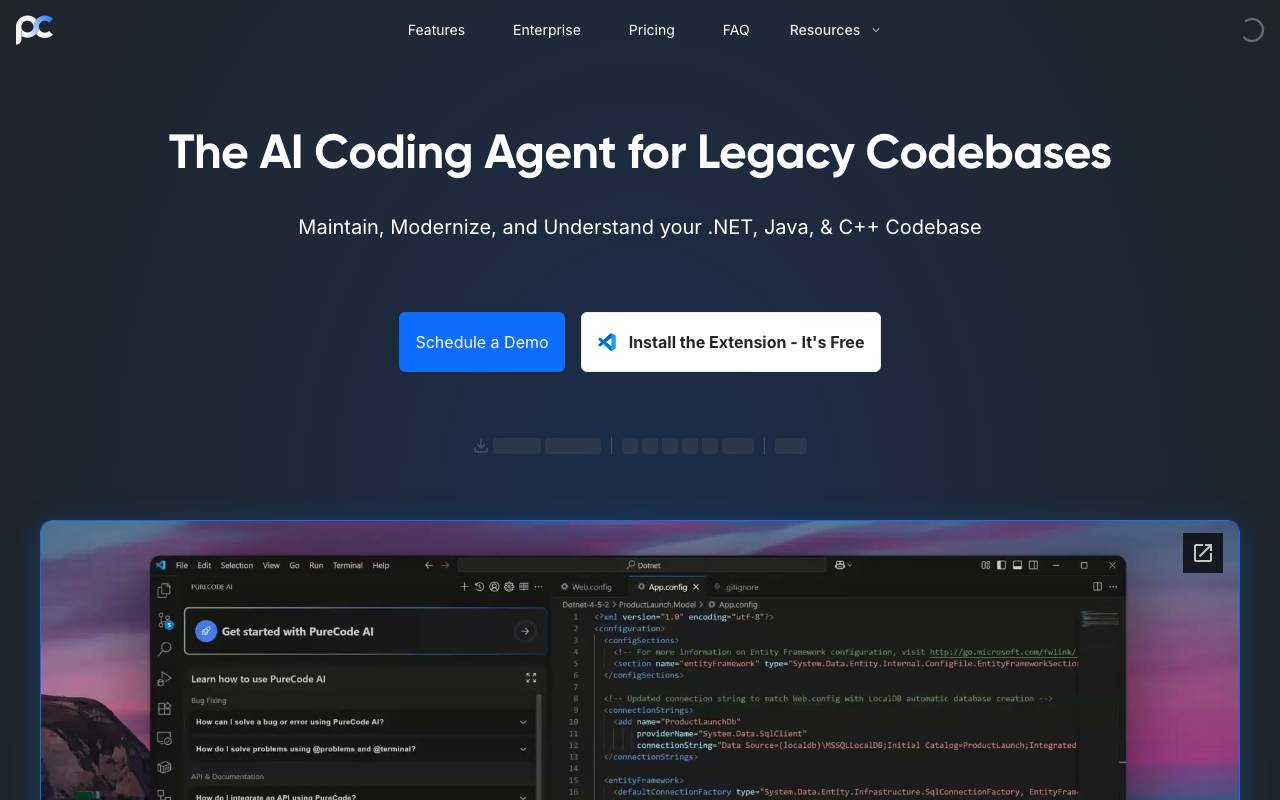
K G is an AI coding agent designed to work across the full stack while maintaining context of your existing codebase. Rather than generating isolated snippets, it reasons about project structure, dependencies, and conventions to produce changes that fit your application. It aims to handle tasks that span frontend, backend, and infrastructure layers, helping developers implement features, refactor code, and debug issues without manually feeding context into a chat window. By indexing the repository, it can navigate, edit, and explain code in a way that aligns with how the project is actually built.
Criteria breakdown
- Repository indexing and context awareness
- Fullstack code generation
- Multi-file edits and refactors
- Integrated debugging assistance
- Works across frontend and backend
- Natural language task input

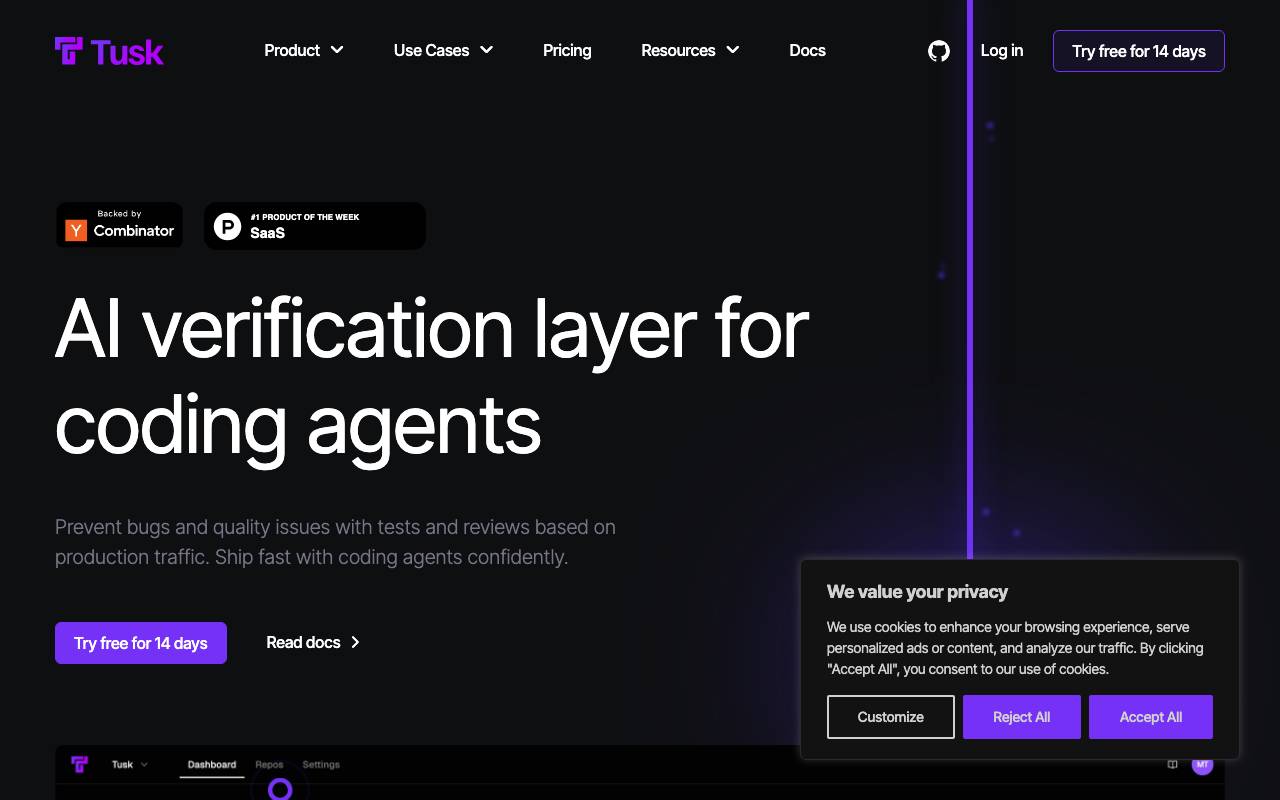
Tusk is an AI-powered tool that generates unit and integration tests for codebases using live traffic and business context. It aims to reduce testing time and increase code quality by automatically maintaining test suites and detecting real-world regressions. The tool is designed to work with coding agents and can be integrated into continuous integration and delivery pipelines. It optimizes test coverage and code quality without disrupting engineers' workflow. Tusk is self-iterative and self-healing, ensuring that tests are up-to-date and executable. Some of its key features include optimizing test coverage, automatic generation of high-quality tests, and seamless integration with CI/CD pipelines. Tusk is used by engineering leaders at fast-growing companies, who praise its ease of use and effectiveness in reducing testing time and improving code quality. However, it is worth noting that Tusk is sunsetting on June 10, 2026.
Criteria breakdown
- Automated unit test generation
- Integration test creation
- Codebase-aware context analysis
- Coverage gap detection
- Workflow and CI integration
- Iterative test refinement