
Semantic ScholarAI-powered academic search engine for navigating scientific literature

Overview
Key features
- AI-generated TLDR paper summaries
- Semantic search across 200M+ papers
- Citation context and influential citation tracking
- Personalized research feeds and alerts
- Author profiles and h-index metrics
- Public API and dataset for research use
Pricing
- Model
- Freemium
- Category
- Research Assistants
- Rating
- 4.2 / 5 (5)
Use cases
Accelerate literature reviews
Use semantic search and TLDR summaries to quickly scan hundreds of papers, identify the most relevant studies, and build a foundation for a literature review.
Track scholarly impact and influence
Explore citation graphs, influential citation metrics, and author h-index data to evaluate the impact of papers and researchers in a given field.
Stay current with personalized feeds
Set up personalized research alerts and feeds to follow new publications, authors, or topics and stay up to date with the latest developments.
Build research tools via API
Developers and data scientists can leverage the public API and open dataset to power custom academic apps, bibliometric analyses, or AI research projects.
Pros & Cons
Pros
- Free to use with no account required
- TLDR summaries save reading time
- Strong citation graph and influence metrics
- Open API for developers and researchers
- Broad coverage across scientific disciplines
Cons
- Coverage of niche or non-English journals can be uneven
- Summaries are not available for every paper
- Full-text access still depends on publisher paywalls
Battle record
Across 1 battle in the Pantheon.
Last battle
Reviews
Average from 5 ratings.
Sign in to leave a review.
Compared a few options
Evaluated this against two competitors. Where it wins: personalized research feeds and alerts and open API for developers and researchers. On balance the feature set — especially aI-generated TLDR paper summaries — justifies the 5 stars for our use case.
Years in this space
I've evaluated a lot of these over the years. What stands out here is semantic search across 200M+ papers — handled better than most — and broad coverage across scientific disciplines. Full-text access still depends on publisher paywalls is my one real gripe. Worth the time if this is your use case.
Years in this space
I've evaluated a lot of these over the years. What stands out here is public API and dataset for research use — handled better than most — and broad coverage across scientific disciplines. Full-text access still depends on publisher paywalls is my one real gripe. Worth the time if this is your use case.
Use it every day
Honestly didn't expect to like it this much. Semantic search across 200M+ papers is exactly what I needed, and broad coverage across scientific disciplines. I do wish full-text access still depends on publisher paywalls, but I reach for it almost every day now and it just clicks.
Does the job
Pretty happy overall. Public API and dataset for research use just works and open API for developers and researchers. Full-text access still depends on publisher paywalls can be annoying, but no dealbreakers — I'd recommend it to a friend without hesitating.
Q&A
What are the benefits of creating an account?
Creating a Semantic Scholar account enables you to: create email alerts for new papers; generate research feeds for new paper recommendations; save papers that you'd like to revisit in a library; claim an author page so you can better manage your author details and papers. Please note that you do not need to create an account to access papers on Semantic Scholar.
Asked by Sarai Cohen · May 15, 2026
Does Semantic Scholar support integration with Zotero?
Yes, you can use Zotero in multiple ways on Semantic Scholar: Semantic Reader – you can save any paper in Semantic Reader. By selecting the Zotero extension on your browser, the paper information, URL, PDF, and TLDR (if available) will be sorted and saved to your Zotero library. You can then easily reopen a paper in Semantic Reader from Zotero and read with AI-powered augmentations such as citation cards. Paper page – you can save any paper on any paper page. By selecting the Zotero extension on your browser, the paper information, URL, PDF (if available), and TLDR (if available) will be sorted and saved to your Zotero library. Search results page – you can bulk save multiple papers on any search results page. By selecting the Zotero extension on your browser and selecting the paper(s) you want to save on that page, the paper information, URL, PDF (if available), and TLDR (if available) will all be sorted and saved to your Zotero library.
Asked by Youssef El-Sayed · May 3, 2026
How does Semantic Scholar determine a paper’s Field of Study?
Semantic Scholar assigns Field of Study using a machine learning classification model based on a paper’s title and abstract. A paper may be assigned up to three Fields of Study. Field of Study classification is currently limited to English-language papers. It is most reliable when both title and abstract are available, but works on just titles as well. If a paper’s title is too ambiguous, it may not be assigned any Field of Study. To learn more about Field of Study classification on Semantic Scholar, see our blog post.
Asked by Nils Johansson · Apr 25, 2026
How does Semantic Scholar support libraries?
For information on how Semantic Scholar can help your researchers, please visit our Librarian Resources page.
Asked by Liam O’Connor · Apr 15, 2026
What is a TLDR?
A TLDR is an AI-generated summarization for a scientific paper that helps researchers quickly determine the key important aspects of a paper. These extreme paper summaries are an alternative to abstracts, intended to help researchers navigate and understand scientific literature easily and efficiently. TLDRs are currently limited to the computer science and biomedical domains. To find out more about TLDRs, see our TLDR page, try our demo, or read the paper on Semantic Scholar.
Asked by Lucas Petit · Apr 6, 2026
Ask a question
Research Assistants alternatives

 LevelFields AIResearch Assistants
AI-driven platform that surfaces event-based stock trade ideas and automates investment research.

 Foundry.aiResearch Assistants
A technology studio creating AI software products and companies in partnership with Global 2000 firms.
GPT-4 powered autonomous agent for chemistry research and synthesis planning.

 Atria by Senso LabsResearch Assistants
AI assistant for architects that streamlines code compliance, sustainability analysis, and project data.

 WhispriNoteResearch Assistants
Turn voice, audio, and YouTube links into structured study notes with flowcharts.

 Ticker PulseResearch Assistants
Discover Market Trends Before They Become Headlines

 Unhosted AIResearch Assistants
AI-powered crypto analytics assistant for smarter, data-driven trading decisions.
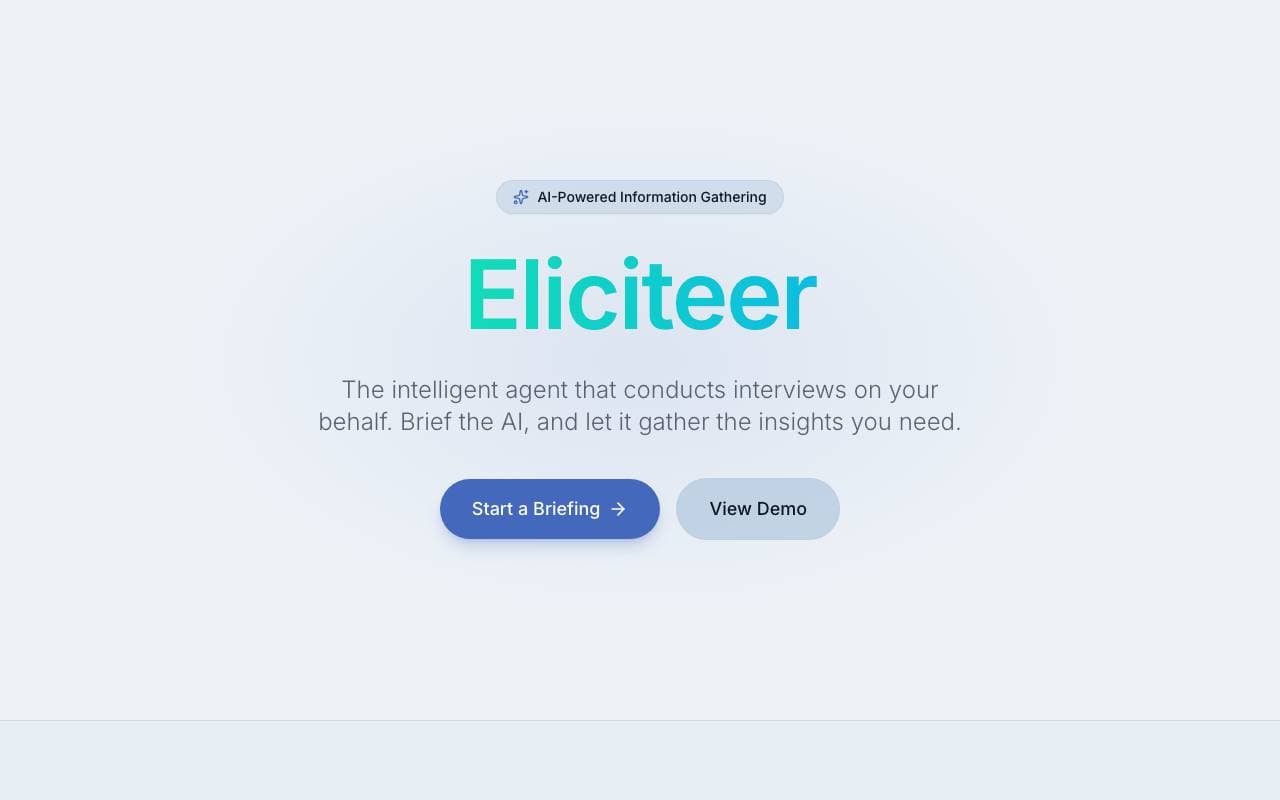
 EliciteerResearch Assistants
AI-powered interviews that scale—brief, share a link, get structured insights without meetings.
Trending now

 Biology AIEducation AI
Accurate Homework Help with Full Explanations

 Reducto AIAI Agent Development Platforms
Document intelligence API that parses, splits, OCRs, and extracts structured data from complex PDFs, slides, and spreadsheets.
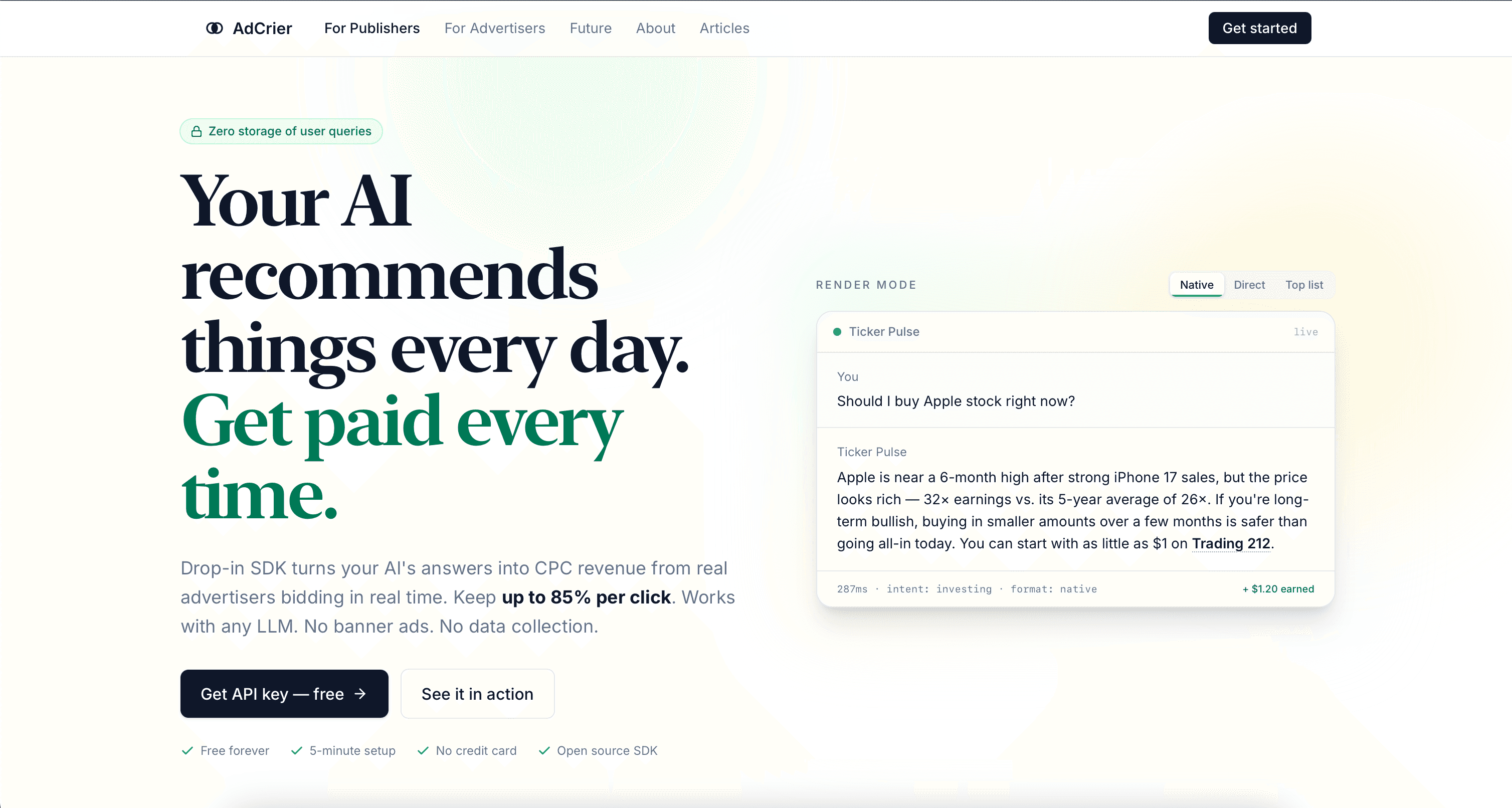
 AdCrierMarketing & Advertising
Sponsored answers, paid per click.

 Pixtral 12B 24.09LLM
Open multimodal 12B model handling interleaved images and text with a 128K context window.