OllamaRun open-source large language models locally on your own machine

Overview
Key features
- One-command model download and run
- Local REST API for app integration
- Model library with quantized versions
- Custom Modelfile for tailored model configs
- GPU acceleration on supported hardware
- Works offline after initial setup
Pricing
- Model
- Freemium
- Category
- Large Language Models (LLMs)
- Rating
- 4.4 / 5 (5)
Use cases
Private offline LLM chat
Run models like Llama or Mistral locally to chat with an AI assistant without sending prompts or data to external cloud services.
Local AI app development
Use Ollama's local REST API to integrate open-weight LLMs into custom applications, chatbots, or internal tools during prototyping and production.
Coding assistant on your machine
Pair Ollama with code-focused models to get autocomplete, refactoring, and explanation help directly on your laptop, even without internet access.
Model experimentation for researchers
Quickly download, swap, and benchmark different open models with custom Modelfile configs to evaluate performance for research or fine-tuning workflows.
Pros & Cons
Pros
- Fully local execution keeps data private
- Free and open source
- Supports many popular open-weight models
- Simple CLI and local API for easy integration
- Cross-platform (macOS, Linux, Windows)
Cons
- Requires capable hardware for larger models
- No built-in graphical interface by default
- Performance depends heavily on local GPU or RAM
- Limited to open-weight models, not proprietary ones
Battle record
Across 1 battle in the Pantheon.
Last battle
Reviews
Average from 5 ratings.
Sign in to leave a review.
Years in this space
I've evaluated a lot of these over the years. What stands out here is works offline after initial setup — handled better than most — and free and open source. Requires capable hardware for larger models is my one real gripe. Worth the time if this is your use case.
Solid for our team
We rolled this out across the team last quarter and cross-platform (macOS, Linux, Windows). Works offline after initial setup fits neatly into how we already work, and works offline after initial setup removed a step we used to do by hand. No built-in graphical interface by default, which is the main caveat, but it has held up under daily use.
Years in this space
I've evaluated a lot of these over the years. What stands out here is custom Modelfile for tailored model configs — handled better than most — and cross-platform (macOS, Linux, Windows). Limited to open-weight models, not proprietary ones is my one real gripe. Worth the time if this is your use case.
Skeptical, then convinced
I went in skeptical — most tools in this space overpromise. It actually delivers on custom Modelfile for tailored model configs, and free and open source caught me off guard. No built-in graphical interface by default is why this isn't a perfect score, still, I'd recommend giving it a real trial.

Solid for our team
We rolled this out across the team last quarter and simple CLI and local API for easy integration. Local REST API for app integration fits neatly into how we already work, and works offline after initial setup removed a step we used to do by hand. but it has held up under daily use.
Q&A
How does extra usage work?
Pro and Max users can add extra usage balance. Ollama uses included plan limits first, then draws from the extra usage balance. Team usage draws from one balance shared by the organization.
Asked by Ekaterina Orlova · Aug 26, 2025
How much usage does each model use?
Models consume a different amount of usage based on how difficult they are to run. To view a model's usage level, visit the model's page, where its usage level is displayed from small, light models (level 1), like gpt-oss:20b, to extra heavy models (level 4), like deepseek-v4-pro.
Asked by Greta Nowak · Aug 21, 2025
How is usage measured?
Individual plans have usage limits based on the model and the number of input, cached input, and output tokens processed. They don't cap you at a fixed number of tokens because different models use different amounts of compute. For teams, each member's usage draws from the usage included with their seat first. Once it's used, further usage draws from the team's shared extra usage balance at the model's token rate.
Asked by Ravi Kapoor · Aug 16, 2025
What are the usage limits for each plan?
Running models on your own hardware is always unlimited. Cloud usage varies by plan: Plan Usage Example use cases Free Light usage Chatting with models, evaluating larger models, coding and AI assistants with smaller models Pro Day-to-day work Larger models, coding automation, deep research Max Heavy, sustained usage Continuous agent tasks, multiple concurrent agents, large models over extended sessions Each plan has session limits that reset every 5 hours and weekly limits that reset every 7 days.
Asked by Noor Siddiqui · Aug 12, 2025
How fast is Ollama?
Speed depends on model size, architecture, and hardware optimization. We target and monitor for low time-to-first-token and high throughput across all cloud models. Priority tiers with faster performance may be available in the future.
Asked by Constantin Ionescu · Aug 11, 2025
Ask a question
Large Language Models (LLMs) alternatives
 Mistral AILarge Language Models (LLMs)
Open-weight frontier models

 🍌 Nano Banana - Where Ideas Instantly Come to Life, The New Era of AI Image GenerationLarge Language Models (LLMs)
Fast AI image generation powered by Google Gemini 2.5 Flash for rapid visual prototyping.

 Kore.aiLarge Language Models (LLMs)
A no-code conversational AI platform enabling enterprises to build and deploy intelligent virtual assistants.

 Reka AILarge Language Models (LLMs)
Multimodal foundation models that understand text, images, video, and audio.
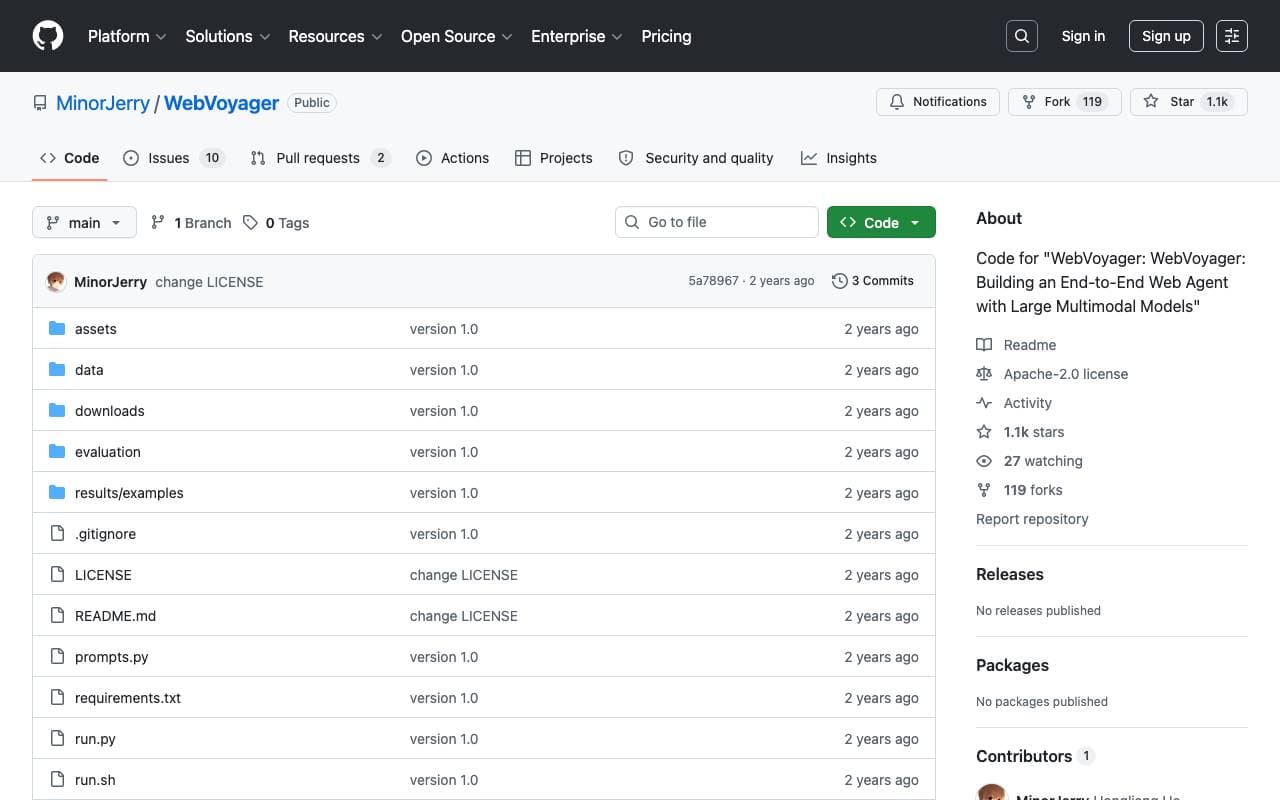
 WebVoyagerLarge Language Models (LLMs)
An LMM-powered web agent completing user instructions end-to-end by interacting with real-world websites.

 AI WriterLarge Language Models (LLMs)
AI-assisted writing platform for generating, researching, and refining long-form content.
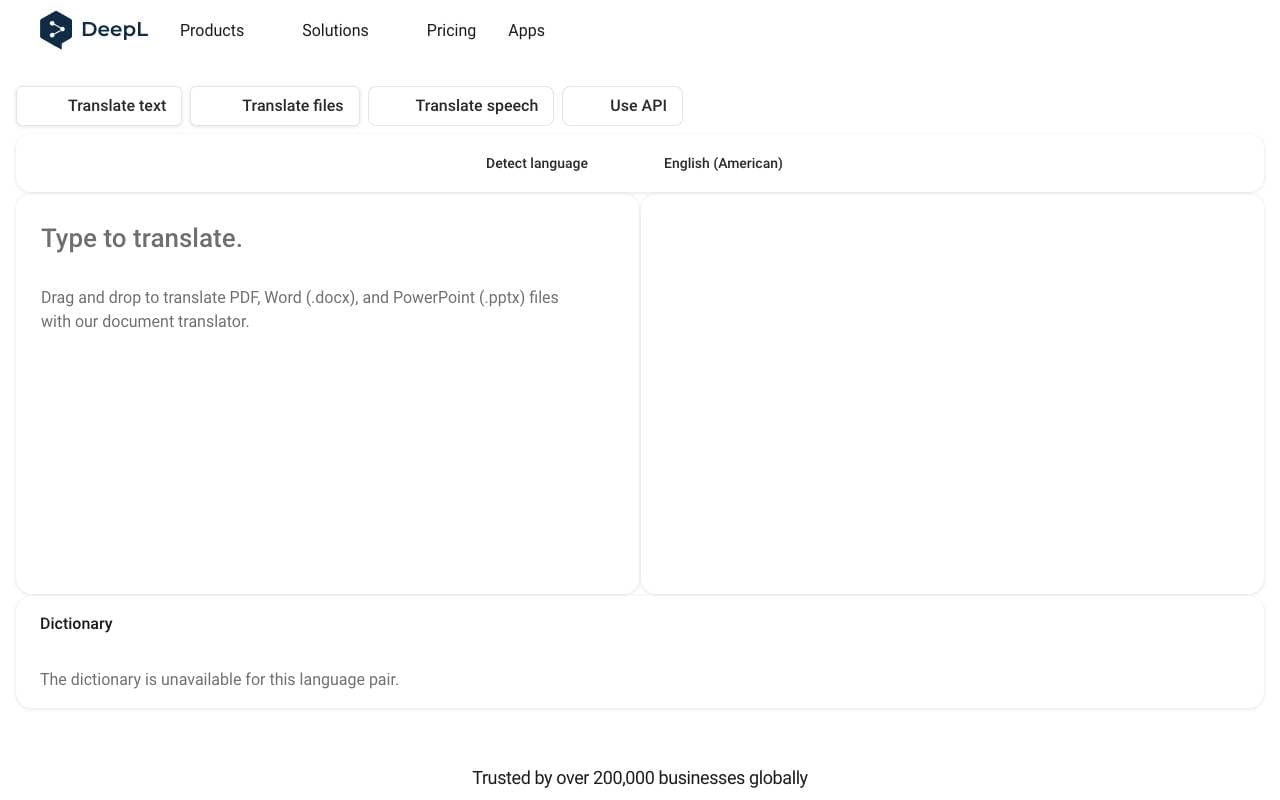
 DeepLLarge Language Models (LLMs)
Neural machine translation tool known for accurate, natural-sounding results across major languages.

 Slesh.aiLarge Language Models (LLMs)
AI-powered browsing assistant that turns web research into instant answers.
Trending now

 Biology AIEducation AI
Accurate Homework Help with Full Explanations

 Reducto AIAI Agent Development Platforms
Document intelligence API that parses, splits, OCRs, and extracts structured data from complex PDFs, slides, and spreadsheets.

 Pixtral 12B 24.09LLM
Open multimodal 12B model handling interleaved images and text with a 128K context window.

 AdCrierMarketing & Advertising
Sponsored answers, paid per click.