
Auto-GPTAn open-source AI agent capable of autonomously completing complex tasks using GPT models.

Overview
Key features
- Agent builder and customization tools
- Workflow management and optimization capabilities
- Ready-to-use AI agents
- Agent interaction and deployment controls
- Customizable and scalable AI agents
Pricing
- Model
- Free
- Category
- AI Agent Development Frameworks
- Rating
- 4.8 / 5 (4)
Use cases
Autonomous Research Assistant
Delegate multi-step research tasks to Auto-GPT, which can break down goals, browse information, and compile findings without constant human prompting.
Task Automation Workflows
Use Auto-GPT to chain together complex tasks autonomously, executing sequences of actions powered by GPT models to complete objectives end-to-end.
Experimenting with AI Agents
Developers can explore and extend an open-source autonomous agent framework to prototype custom AI workflows and study agent behavior.
Pros & Cons
Pros
- User-friendly interface for building and modifying automation workflows
- Support for both custom-built and pre-configured AI agents
- Scalable and suitable for a range of use cases
- Combination of AI and automation capabilities
Cons
- High technical requirements for self-hosting
- Current cloud-hosted beta is still in development
- Potential limitations for users without significant technical expertise
Reviews
Average from 4 ratings.
Sign in to leave a review.

Skeptical, then convinced
I went in skeptical — most tools in this space overpromise. It actually delivers on the automation, and the value for money is strong caught me off guard. The mobile experience lags is why this isn't a perfect score, still, I'd recommend giving it a real trial.
Does the job
Pretty happy overall. The onboarding just works and it is genuinely easy to set up. but no dealbreakers — I'd recommend it to a friend without hesitating.

Use it every day
Honestly didn't expect to like it this much. The onboarding is exactly what I needed, and the value for money is strong. but I reach for it almost every day now and it just clicks.
Years in this space
I've evaluated a lot of these over the years. What stands out here is the core workflow — handled better than most — and it is genuinely easy to set up. Worth the time if this is your use case.
Q&A
What can I build with it?
Anything that's repeatable work rather than a one-off — that's the sweet spot for no-code AI automation. Teams use AutoGPT agents to monitor the web and send an alert the moment something changes, draft and send outreach, research prospects before a sales call, turn long documents into clean summaries, generate content briefs, triage a support queue, and keep spreadsheets and CRMs up to date without anyone touching them. You don't have to start from a blank canvas either: the marketplace is full of ready-made agents you can deploy in a click and then tweak to fit how you work. A good rule of thumb — if you can describe the job clearly enough to hand it to a capable assistant, you can build an AI agent for it, and the agent will keep doing it on whatever schedule or trigger you choose.
Asked by Oksana Melnyk · Sep 7, 2025
What is AutoGPT?
AutoGPT is an AI agent platform: software for building, deploying, and running agents you can hand a goal to — they make a plan, then carry out every step using AI models and your everyday apps along the way. Unlike a chatbot that waits for your next message, an AutoGPT agent does the whole job itself: it can research a market, draft and send outreach, watch competitors, or keep a spreadsheet current, end to end. You build agents whichever way suits you — describe the outcome in plain language and let AutoPilot assemble it, or wire the steps together in the visual no-code builder. Agents then run in the cloud on schedules and triggers, with every run visible in your dashboard. The platform is open source, with a hosted cloud for teams who would rather not run their own infrastructure — start from a marketplace agent or build your own from scratch.
Asked by Jasper Vermeer · Sep 1, 2025
How does AutoGPT work?
You create an agent by describing the outcome you want in plain English, or by wiring up the steps in the visual builder — no code needed on either path. Under the hood an agent is a graph of blocks, where each block does one job: reading email, calling an AI model, scraping a page, updating a row in a sheet. AutoGPT connects those blocks to the models and apps the task needs and runs the work in the background. Every run is recorded step by step, so you can open the dashboard and see exactly what an agent did and why. Agents run once on demand, on a schedule — say, every morning at eight — or on a trigger like a new email or form submission. Once it's set up, the agent keeps working without you watching, and you only step in when it needs a decision.
Asked by Fatima Zahra · Aug 16, 2025
What can I build with AutoGPT?
Anything that's repeatable work rather than a one-off — that's the sweet spot for no-code AI automation. Teams use AutoGPT agents to monitor the web and send an alert the moment something changes, draft and send outreach, research prospects before a sales call, turn long documents into clean summaries, generate content briefs, triage a support queue, and keep spreadsheets and CRMs up to date without anyone touching them. You don't have to start from a blank canvas either: the marketplace is full of ready-made agents you can deploy in a click and then tweak to fit how you work. A good rule of thumb — if you can describe the job clearly enough to hand it to a capable assistant, you can build an AI agent for it, and the agent will keep doing it on whatever schedule or trigger you choose.
Asked by Elif Yildiz · Aug 10, 2025
How does AutoGPT compare to hiring a contractor?
A contractor is the right call for judgement-heavy, one-off work — a brand redesign, a tricky migration, advice you'll act on once. AutoGPT is built for the repeatable kind of work that comes back every day or every week. An agent runs around the clock, handles many tasks in parallel, responds in seconds rather than days, and costs a fraction of an hourly rate, because you only pay for the compute and model usage each run actually consumes. Agents also don't context-switch or take holidays: the daily briefing lands every morning and the competitor watch never blinks. They're not a replacement for human judgement on novel, high-stakes decisions — they're leverage for everything that happens again and again. Most people end up using both: a person for the bespoke work, and a handful of agents for the recurring tasks that used to eat that person's week.
Asked by Gustav Lindberg · Jul 27, 2025
Ask a question
AI Agent Development Frameworks alternatives

 Wildcard AI / agents.jsonAI Agent Development Frameworks
Open spec and platform that lets AI agents discover and call API workflows through an agents.json file.

 Strands AgentsAI Agent Development Frameworks
Open‑source SDK for building and orchestrating single or multi‑agent systems with LLMs and tool integration.

 BabyCatAGIAI Agent Development Frameworks
Lightweight autonomous AI agent framework for streamlined task automation

 Awesome MCP ServersAI Agent Development Frameworks
A curated directory of Model Context Protocol servers for extending AI assistants with tools and data.

 Gemma 3AI Agent Development Frameworks
An open-source AI model optimized for single-GPU performance, supporting multimodal inputs and over 140 languages.
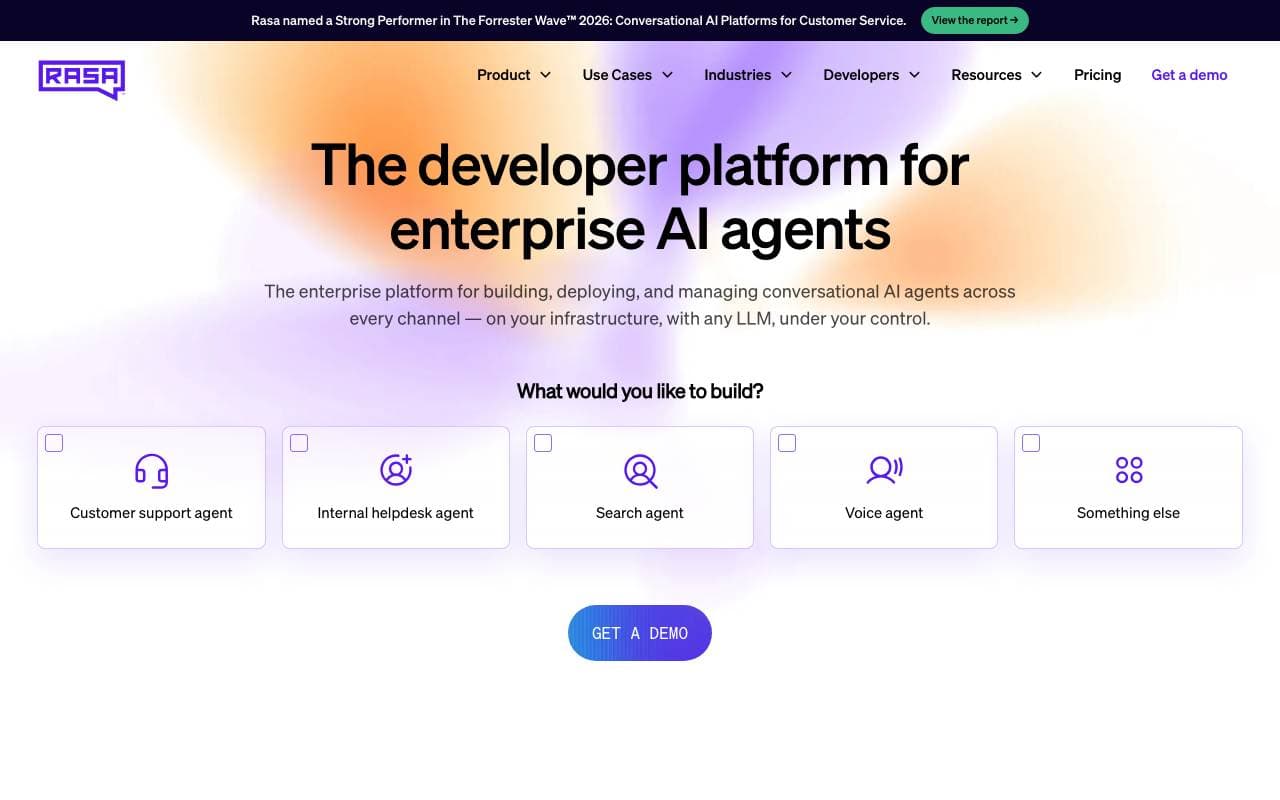
 RasaAI Agent Development Frameworks
Open-source framework for building production-grade chat and voice assistants
 BabyElfAGIAI Agent Development Frameworks
Experimental AI agent framework with a modular Skills class for dynamic task planning and execution.

 MCP‑UseAI Agent Development Frameworks
Open‑source platform to connect LLMs with MCP servers and build custom AI agents with tool access.
Trending now

 Reducto AIAI Agent Development Platforms
Document intelligence API that parses, splits, OCRs, and extracts structured data from complex PDFs, slides, and spreadsheets.
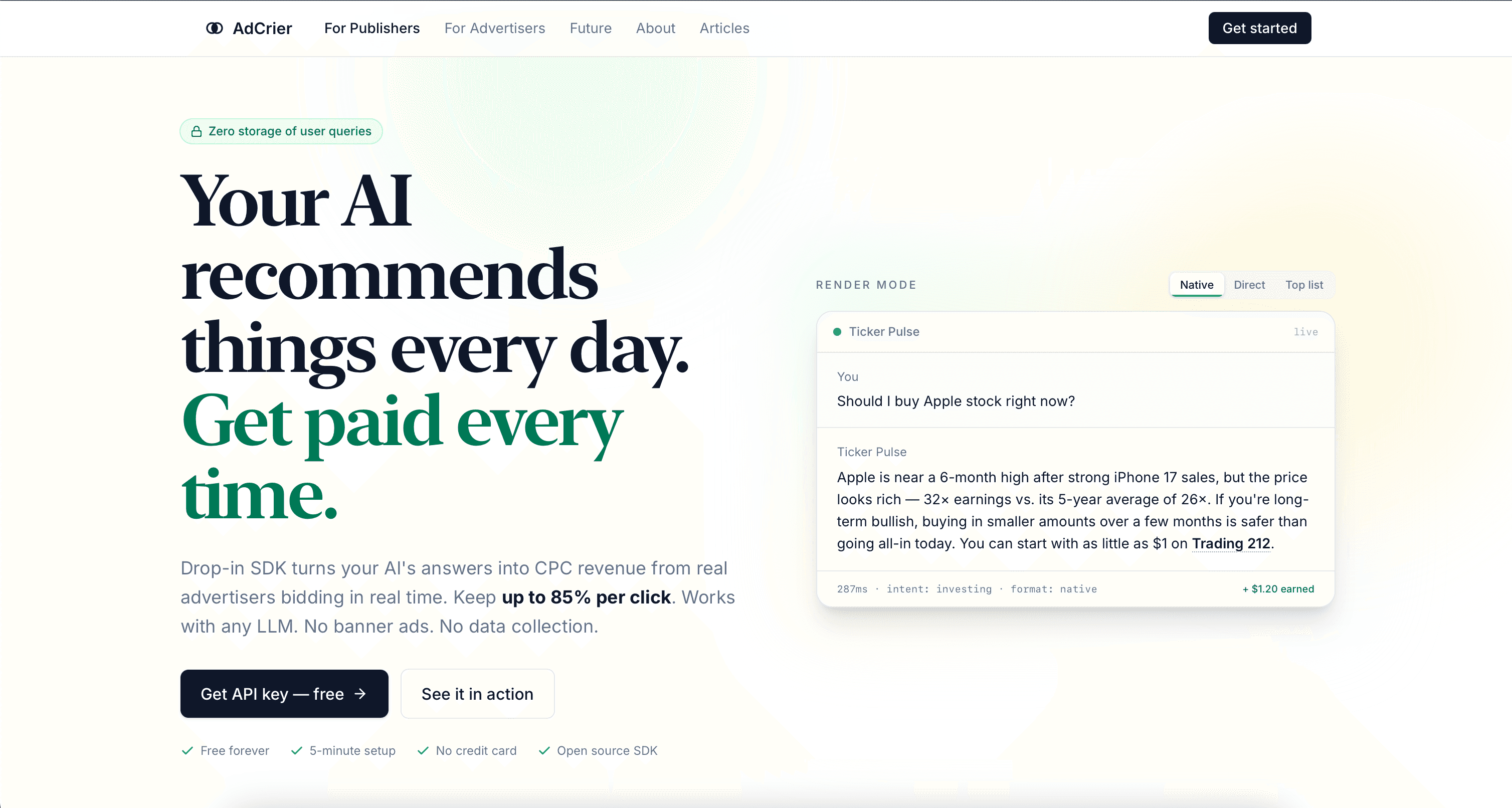
 AdCrierMarketing & Advertising
Sponsored answers, paid per click.

 Biology AIEducation AI
Accurate Homework Help with Full Explanations

 Pixtral 12B 24.09LLM
Open multimodal 12B model handling interleaved images and text with a 128K context window.