EchovaneAI-gestützte Gespräche mit Kunden für schnelles, tiefergehendes Feedback und Konzepttests.

Übersicht
Hauptfunktionen
- stimmenbasierte Interviews
- adaptive Nachfragen
- Automatisierte Transkriptionen und Zusammenfassungen
- Themen- und Emotionsanalyse
- Konzept- und Botschaftsteste für Flüsse
- Unterstützung zur Teilnehmerrekrutierung
Preise
- Modell
- Free
- Kategorie
- Marketing & Werbung
- Bewertung
- 4.5 / 5 (4)
Anwendungsfälle
Neue Produktkonzepte bewerten
Laufe Stimmeninterviews mit Zielgruppen durch, um Produktideen zu testen, Widersprüche aufzudrängen und differenziertes Feedback zu sammeln, bevor man sich Ingenieursressourcen zumuten muss.
Marketingbotschaften auf großem Maßstab testen
Auswerte Slogans, Werteangebote und Kampagnenkoncepte, indem du mit vielen Konsumenten in parallelem parallel sprichst und Reaktionen auf synthetisierst.
UX-Entdeckungs-Forschung beschleunigen
Ersetze Wochen des Terminierens von moderierten Sitzungen durch adaptive AI-interviews, die Nutzenerfordernisse aufdrängen und Transkriptionen und Themen in Stunden liefern.
Kundenfeedback-Kreisläufe kontinuierlich führen
Interviuiere Kunden regelmäßig zu Schmerzpunkten und Vorschlägen für Funktionen, nutzt Emotion- und Themenanalyse, um Produkt- und Marketingentscheidungen zu informieren.
Pro & Contra
Pro
- schnellere Durchlaufzeit als herkömmliche Interviews
- Erfasst qualitative Tiefe jenseits von Umfragen
- Skaliert auf viele Teilnehmer gleichzeitig
- Automatisierte Transkription und Themen‑Synthese
Contra
- Stimmenformat passt nicht zu jeder Zielgruppe
- AI-basierte Moderation fehlt in Randfällen menschliche Intuition
- Erfolgswert der Einblicke von den Frage- und Skriptdesigns abhängig
Schlacht-Bilanz
Aus 2 Schlachten im Pantheon.
Last 2 battles
Bewertungen
Durchschnitt aus 4 Bewertungen.
Melde dich an, um eine Bewertung abzugeben.

Years in this space
I've evaluated a lot of these over the years. What stands out here is concept and message testing workflows — handled better than most — and faster turnaround than traditional interviews. Worth the time if this is your use case.

Solid for our team
We rolled this out across the team last quarter and faster turnaround than traditional interviews. Concept and message testing workflows fits neatly into how we already work, and automated transcripts and summaries removed a step we used to do by hand. Insight quality depends on prompt and script design, which is the main caveat, but it has held up under daily use.
Use it every day
Honestly didn't expect to like it this much. Adaptive follow-up questioning is exactly what I needed, and faster turnaround than traditional interviews. I do wish aI moderation lacks human intuition in edge cases, but I reach for it almost every day now and it just clicks.
Skeptical, then convinced
I went in skeptical — most tools in this space overpromise. It actually delivers on adaptive follow-up questioning, and captures qualitative depth beyond surveys caught me off guard. Voice format may not suit every audience is why this isn't a perfect score, still, I'd recommend giving it a real trial.
Fragen & Antworten
What types of CPG research can be conducted with AI-moderated interviews?
The honest answer is: nearly everything that matters to a CPG insights function. We support concept testing and idea screening, ad and creative evaluation, brand equity and positioning studies, usage and attitude explorations, shopper journey and path-to-purchase research, ethnographic observation, pack testing, claims validation, and foundational exploratory work. Our platform handles both tightly structured studies where the discussion guide needs to follow a precise sequence and open-ended explorations where the most valuable insight comes from following the participant's lead into unexpected territory. The use cases that tend to surprise people most are the ones where observation matters. EchoAI's multimodal capability means it doesn't just listen, it watches and analyzes what's happening in the participant's environment.
Asked by Gabriel Duarte · Aug 21, 2025
Can Echovane run multilingual qualitative studies across multiple markets simultaneously?
This is where the operational reality of global research has always been painful. Coordinating moderators, translation agencies, and fieldwork across markets turns a straightforward research question into a project management nightmare that stretches across months. EchoAI conducts interviews natively in over 65 languages. Not translating on the fly, but actually conversing with cultural and contextual fluency in each participant's language. You can run the same study across every market you operate in, simultaneously, and receive unified analysis without waiting for transcription and translation chains to complete. We built this capability because we saw global brands consistently cutting multi-market research for time or budget reasons, and we believe those are exactly the studies that shouldn't get cut.
Asked by Yara Mansour · Aug 4, 2025
How does Echovane ensure respondent quality and prevent fraud in global research?
Every experienced researcher has a horror story about bad panel data contaminating a study. We treat this as a first-order problem, not an afterthought. Our respondents go through multi-layered vetting before they ever enter an interview. Identity checks, behavioral screening, and fraud detection that catches the patterns human screeners often miss. But our real quality gate is the interview itself. EchoAI can tell when someone is disengaged, contradictory, or not a genuine category user, because it's actually listening and evaluating coherence across the full conversation. This is a fundamentally different quality standard than checking a few screening questions at the top of a survey.
Asked by Ingrid Bauer · Jun 23, 2025
Can AI interviewers probe deeply enough for high-stakes decisions like product launches or brand repositioning?
This is the right question to ask, and the answer matters because nobody should make a bet-the-brand decision on shallow data. Our AI interviewer, EchoAI, is not a survey bot. It builds rapport, follows conversational threads, and probes contextually, the way a skilled qualitative moderator does when they sense there's more beneath a participant's first answer. It also reads what people don't say: facial micro-expressions, hesitation, emotional shifts that reveal true sentiment. We've run 90-minute in-depth interviews where participants were so engaged they didn't want to stop talking. That's not something you get from a tool that lacks depth. It happens because EchoAI listens, remembers context from earlier in the conversation, and asks the kind of follow-ups that make people feel genuinely heard. The result is the kind of depth that organizations have traditionally only gotten from expensive, small-scale qual, but at a breadth that actually represents your consumer base. Our clients trust us for product launch decisions, brand equity research, and category strategy precisely because the depth holds up to scrutiny in a boardroom.
Asked by Ulla Nielsen · Jun 11, 2025
How do AI-moderated interviews compare to traditional focus groups for qualitative research?
Anyone who has run focus groups knows the tradeoffs. Small sample sizes, groupthink, dominant personalities steering the conversation, and timelines that rarely fit the speed of business decisions. We built Echovane to fundamentally change this equation. You get genuine depth at scale, with each participant having a private, unhurried conversation where there's no audience to perform for. The most important difference isn't speed or cost, though both improve dramatically. It's honesty. Participants consistently share things with our AI interviewer that they would never say in a room full of strangers or even to a human moderator. In research where people routinely overstate their healthy eating, understate their impulse buying, and rationalize their brand choices, that honesty gap is the difference between insight and self-deception.
Asked by Freya Solberg · Jun 2, 2025
Frage stellen
Alternativen zu Marketing & Werbung
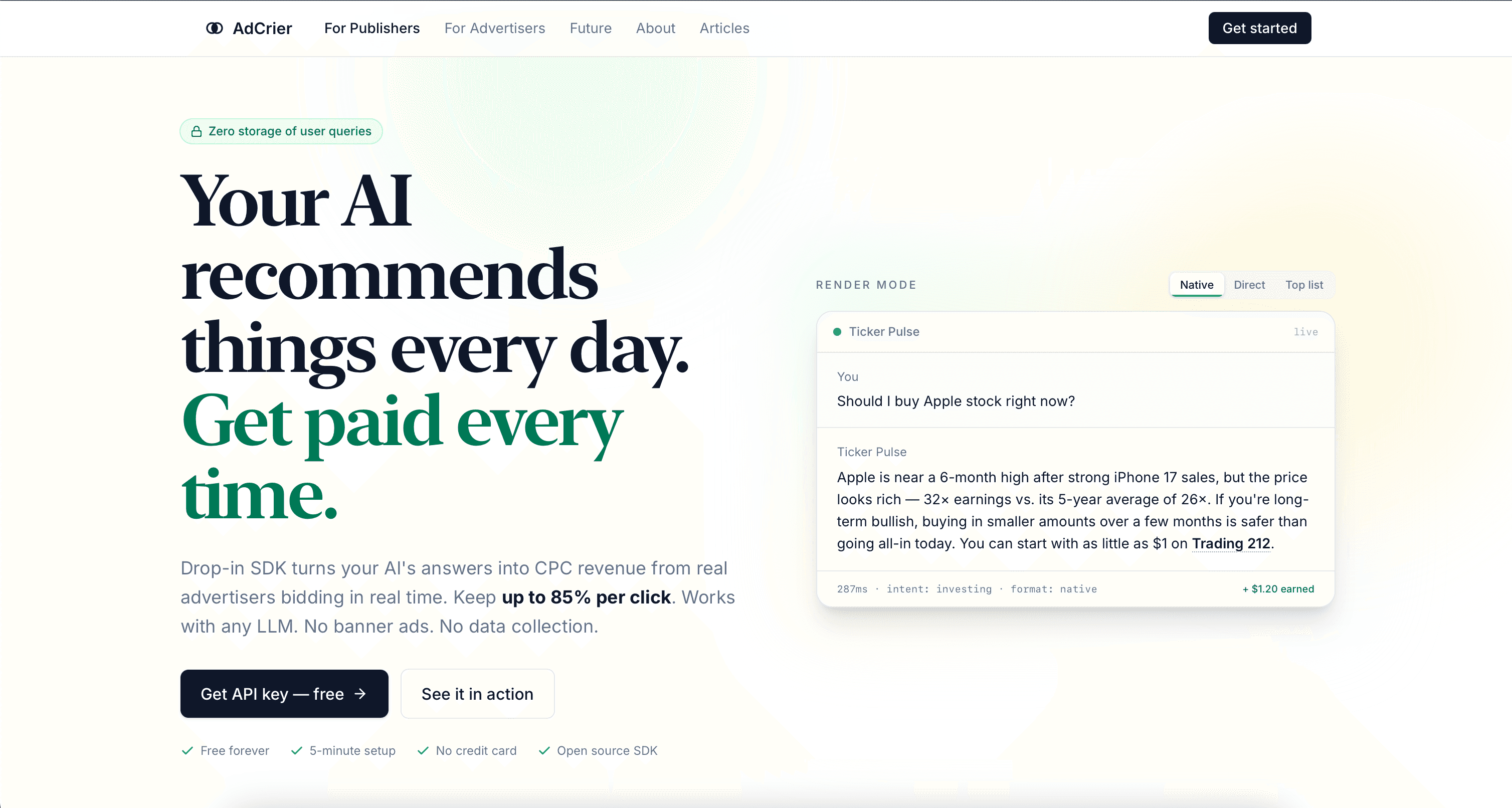

AdCrier
Marketing & Werbung
Gepflichtete Antworten mit Provision pro Klick.


Viral AI Video Maker
Marketing & Werbung
Ideen in kurze, teilebare Videos mit AI-gestützter Erstellung umwandeln.


mesha AI
Marketing & Werbung
KI-Wachstumsteam, das Kunden findet, Werbekampagnen erstellt und Gewinnmargen optimiert.
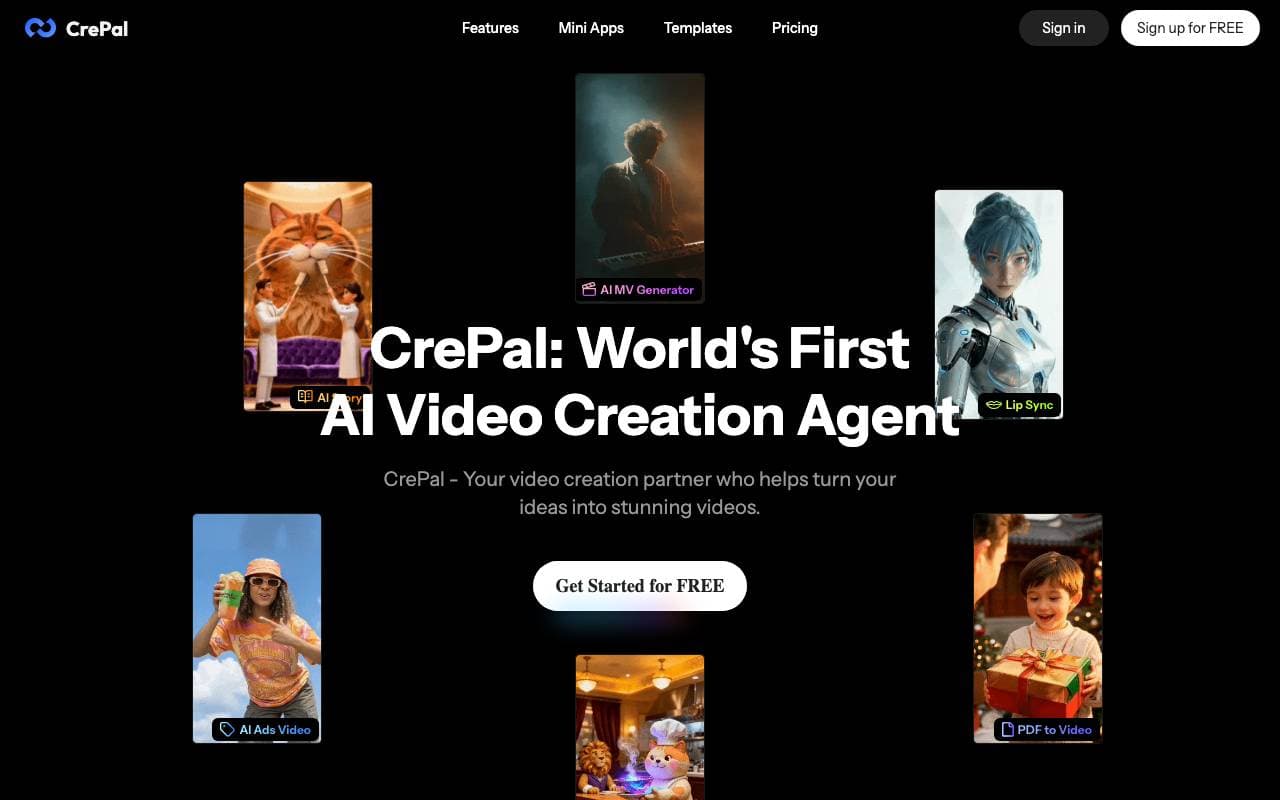

CrePal
Marketing & Werbung
KI-gestützte Videoerstellungsplattform für die schnelle Umsetzung von Ideen in fertige Videos.


whaaat.ai
Marketing & Werbung
AI-Agenten, die Marketinginhalte erstellen und Kampagnen mit hoher Geschwindigkeit durchführen


Nexus AI
Marketing & Werbung
All-in-one AI-Arbeitsbereich für Schreiben, Bildgenerierung und Forschung.


Elastic Email MCP Server
Marketing & Werbung
Verwandeln Sie Ihr bevorzugtes KI-Tool in einen persönlichen E-Mail-Agenten mit Elastic Email.
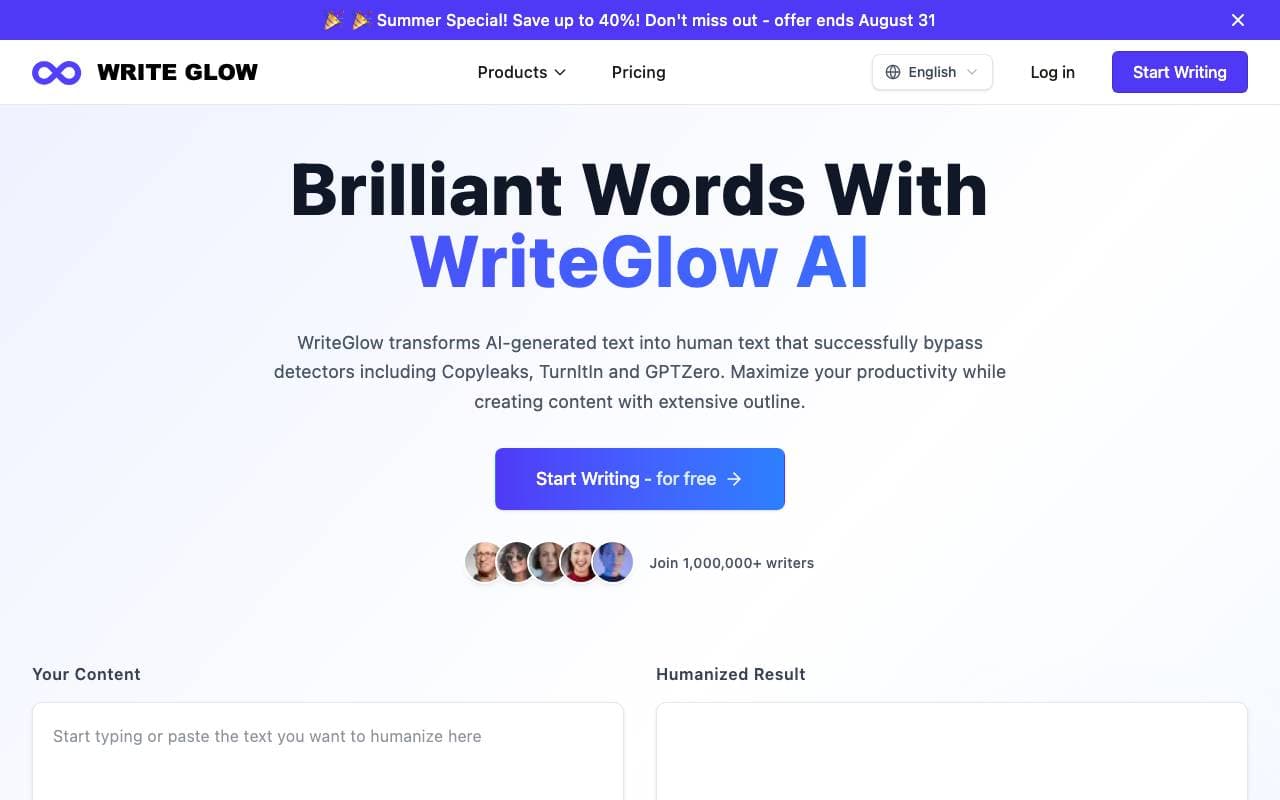
WriteGlow
Marketing & Werbung
Menschliche Sprache verleihen maschinengenerierten Texten für eine natürliche Lesung und den Durchgang durch AI-Detektoren.
Trending now
AdCrier
Marketing & Werbung
Gepflichtete Antworten mit Provision pro Klick.


Reducto AI
Plattformen für die Entwicklung von Agenten mit künstlicher Intelligenz
Intelligenter Dokument API zur Analyse, Trennung, OCR-Analyse und Strukturierung von komplexen PDFs, Präsentationen und Tabellenkalkulationen.


Biology AI
Bildung AI
Genaue Hilfe bei Hausaufgaben mit ausführlichen Erklärungen
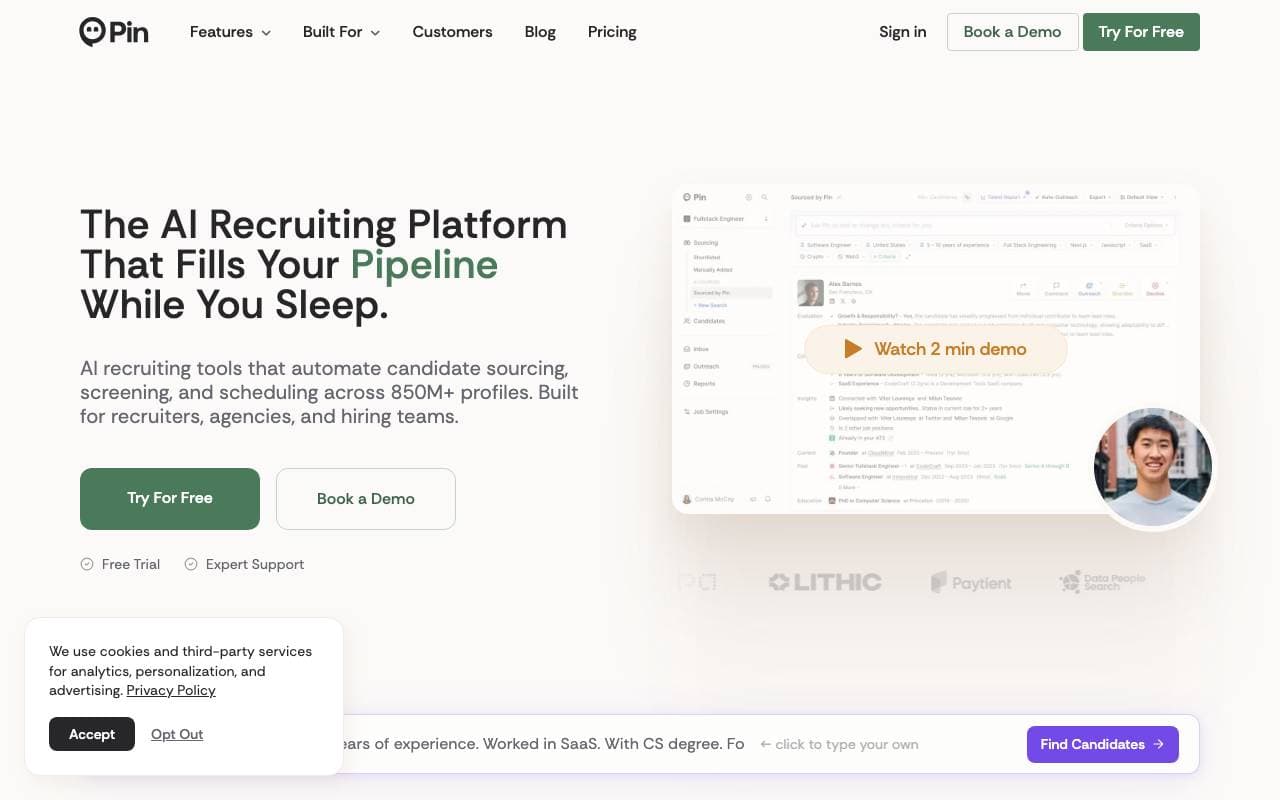

Pin AI
Arbeitsablaufautomatisierung
Agentic AI Recruiter, der Sourcing, Screening und Outreach automatisiert, um den Einstellungsprozess zu beschleunigen.