LangChainOpen-source framework and platform for building, deploying, and monitoring reliable LLM-powered agents.

Overview
Key features
- Composable chains and agents for LLM applications
- LangGraph for stateful, multi-step agent workflows
- LangSmith for tracing, evaluation, and monitoring
- Integrations with major LLMs, vector databases, and APIs
- Python and JavaScript/TypeScript SDKs
- Tooling for retrieval-augmented generation (RAG)
Pricing
- Model
- Free
- Category
- AI Agents Frameworks
- Rating
- 4.5 / 5 (4)
Use cases
Build Tool-Using LLM Agents
Use LangChain and LangGraph to design agents that reason through multi-step tasks, call APIs or tools, and maintain state across stateful workflows.
Retrieval-Augmented Generation Apps
Combine LangChain's RAG tooling with vector database integrations to ground LLM responses in your own documents and knowledge bases.
Debug and Monitor AI Pipelines
Leverage LangSmith for tracing, evaluation, and monitoring of agent behavior, helping teams debug failures and iterate on complex LLM pipelines.
Prototype to Production LLM Systems
Use composable chains in Python or JavaScript to move from quick prototypes to production-grade applications with consistent prompts, memory, and model calls.
Pros & Cons
Pros
- Large ecosystem of integrations with models, tools, and data sources
- Strong observability and debugging via LangSmith
- Flexible agent orchestration with LangGraph
- Active community and frequent updates
Cons
- Abstractions can feel heavy for simple use cases
- Frequent API changes require ongoing maintenance
- Learning curve across the broader ecosystem
Reviews
Average from 4 ratings.
Sign in to leave a review.
Skeptical, then convinced
I went in skeptical — most tools in this space overpromise. It actually delivers on langSmith for tracing, evaluation, and monitoring, and flexible agent orchestration with LangGraph caught me off guard. still, I'd recommend giving it a real trial.

Years in this space
I've evaluated a lot of these over the years. What stands out here is python and JavaScript/TypeScript SDKs — handled better than most — and strong observability and debugging via LangSmith. Learning curve across the broader ecosystem is my one real gripe. Worth the time if this is your use case.
Solid for our team
We rolled this out across the team last quarter and active community and frequent updates. Integrations with major LLMs, vector databases, and APIs fits neatly into how we already work, and integrations with major LLMs, vector databases, and APIs removed a step we used to do by hand. Abstractions can feel heavy for simple use cases, which is the main caveat, but it has held up under daily use.

Solid for our team
We rolled this out across the team last quarter and large ecosystem of integrations with models, tools, and data sources. LangSmith for tracing, evaluation, and monitoring fits neatly into how we already work, and tooling for retrieval-augmented generation (RAG) removed a step we used to do by hand. but it has held up under daily use.
Q&A
What does uptime mean for LangSmith Deployment usage?
Uptime is the duration your deployment’s database is live and persisting state. Uptime will be tracked as soon as your deployment is live and ends when you shut it down. Dev agent deployments are typically short-lived (used during iteration, then deleted) – whereas Production agent deployments stay live and are updated via revisions (rather than being deleted).
Asked by Aaliyah Johnson · Feb 4, 2026
Does LangSmith Deployment include any free deployments?
Plus plans include 1 free small serverless deployment. If you spin up additional serverless or dedicated deployments, you’ll be charged on usage (resource time).
Asked by Paulo Cardoso · Jan 28, 2026
Why would I upgrade a base trace to an extended trace?
Base traces are short-lived (14-day retention) and ideal for quick debugging or ad-hoc analysis. They’re priced for volume and short-term utility. Extended traces are retained for 400 days. This is useful when traces include valuable feedback associated with them, such as from users, evaluators, or human labelers. This feedback makes them valuable for ongoing improvement and model tuning. LangSmith lets you choose the right retention for each trace, helping you balance cost and value.
Asked by Lorenzo Bianchi · Jan 19, 2026
What is the difference between a base trace and an extended trace?
Base traces have a shorter retention period of 14 days. Extended traces have a longer retention period of 400 days. You can "upgrade" base traces to extended traces for an additional fee.
Asked by Yaw Owusu · Jan 8, 2026
What is a trace? Can it contain multiple events?
A trace represents a single execution of your application—whether it’s an agent, evaluator, or playground session. It can include many individual steps, such as LLM calls and other tracked events. Here's an example of a single trace.
Asked by Noor Siddiqui · Dec 26, 2025
Ask a question
AI Agents Frameworks alternatives
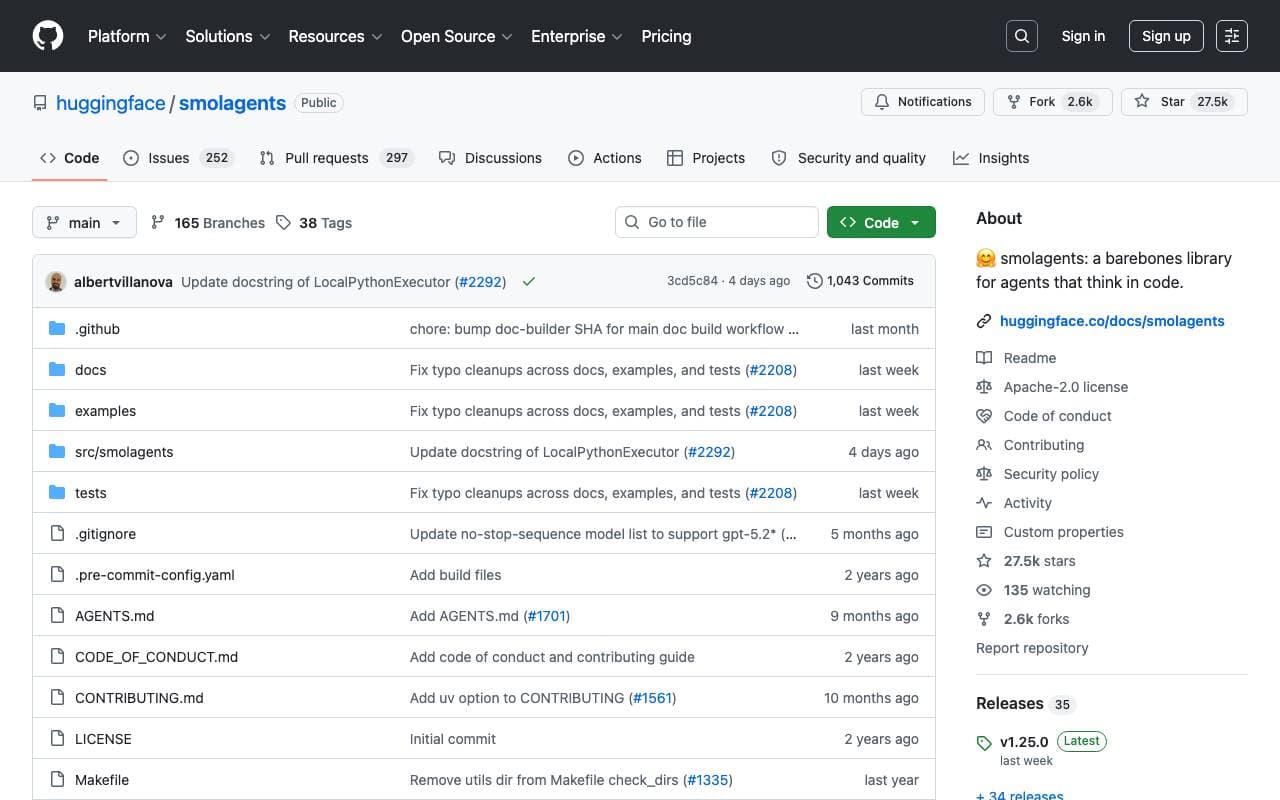

smolagents
AI Agents Frameworks
Hugging Face's minimalist Python library for building code-first AI agents in a few lines


Mini LLM Flow
AI Agents Frameworks
Minimalist 100-line LLM framework for building self-programming agent workflows

upsonicAI
AI Agents Frameworks
Open-source agent framework for building task-focused digital workers and vertical AI agents.


AI-Powered RAG Workflow for n8n
AI Agents Frameworks
Ask questions and get answers grounded in your Google Drive files using n8n.


ControlFlow
AI Agents Frameworks
Python framework for building agentic AI workflows with a task-centric design.


roboneo art
AI Agents Frameworks
AI art generator that turns text prompts into high-quality images in seconds.

Agent Genesis
AI Agents Frameworks
Open-source, copy-paste code snippets for building AI agents fast.


Eclat Institute
AI Agents Frameworks
IP and JC tuition focused on building lasting subject mastery
Trending now


Reducto AI
AI Agent Development Platforms
Document intelligence API that parses, splits, OCRs, and extracts structured data from complex PDFs, slides, and spreadsheets.
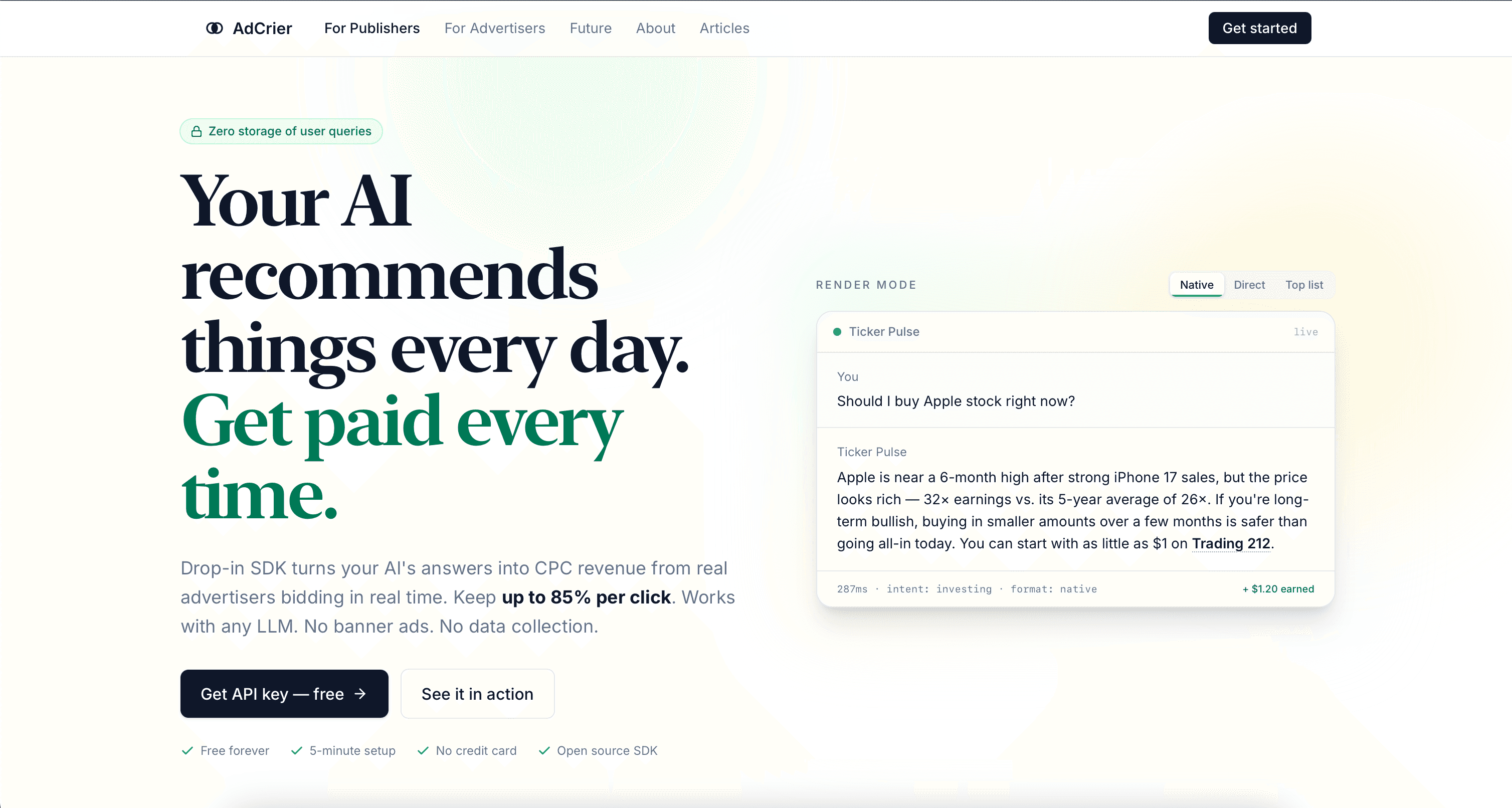

AdCrier
Marketing & Advertising
Sponsored answers, paid per click.


Biology AI
Education AI
Accurate Homework Help with Full Explanations
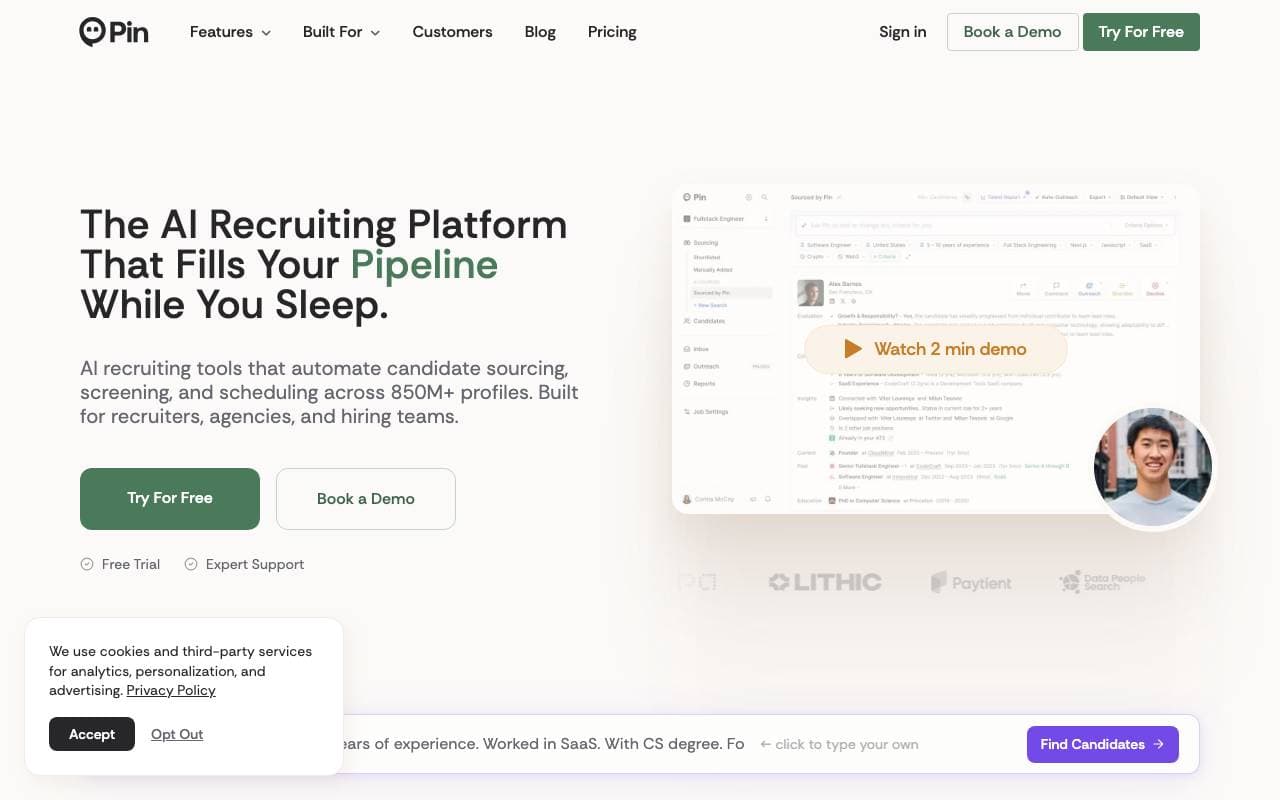

Pin AI
Workflow automation
Agentic AI recruiter that automates sourcing, screening, and outreach to accelerate hiring.