概览
主要功能
- 可定制的代理角色
- 对提示/指令的完全控制
- 开发用的类型安全工具
- 编排的代理通信
- 灵活的状态持久化
- 多代理编排
价格
- 模型
- Free
- 评分
- 4.6 / 5 (5)
使用场景
自动化AI开发工作流程
使用协作智能体群组简化重复的AI开发任务,加速原型设计并减少手动编码开销。
构建多智能体应用程序
利用开源框架设计和部署多个专门的AI智能体协调解决复杂问题的系统。
智能体间任务委托编排
协调基于角色的智能体相互委托子任务,模拟虚拟机构结构进行端到端项目执行。
实验智能体协作模式
研究人员和开发人员可以在灵活的开源环境中原型和测试不同的智能体通信和协作策略。
优点 & 缺点
优点
- Python/Linux环境中的稳定性
- 与您的应用程序轻松集成
- 可组合且易于使用的CLI工具
- 可定制的智能体角色
缺点
- 语言模型兼容性限制(个人聊天机器人:GPT-3等)
- 开发环境要求
- 有限的模型后端支持
- 基本用户界面
- 学习能力
- 功能集成
- 文档编制过程
- 机器学习AI能力
- 高级对话流程管理
- 多层应用程序
- 同时执行
- 访问应用程序状态
- 自动部署
- 高级任务执行
- 自定义智能体类型
- 大型语言模型支持
- 仅在Python中运行
- 完全控制
- 性能测量
- 提供本地工作区
- 与OpenALink集成:Python应用程序的Web开发框架
- 与AI智能体在项目中协作
- 可解释性
- 监控
- 完整源代码集成
- 可扩展性
- 低性能
对决战绩
在万神殿中参与了 1 对决。
Last battle
评测
5 个评分的平均值。
登录以留下评测。
Solid for our team
We rolled this out across the team last quarter and support is responsive. The dashboard fits neatly into how we already work, and the dashboard removed a step we used to do by hand. but it has held up under daily use.
Solid for our team
We rolled this out across the team last quarter and support is responsive. The dashboard fits neatly into how we already work, and the core workflow removed a step we used to do by hand. but it has held up under daily use.
Compared a few options
Evaluated this against two competitors. Where it wins: the integrations and it saves real time. On balance the feature set — especially the dashboard — justifies the 5 stars for our use case.
Skeptical, then convinced
I went in skeptical — most tools in this space overpromise. It actually delivers on the automation, and it is genuinely easy to set up caught me off guard. The docs could be deeper is why this isn't a perfect score, still, I'd recommend giving it a real trial.

Years in this space
I've evaluated a lot of these over the years. What stands out here is the API — handled better than most — and it is genuinely easy to set up. A few rough edges remain is my one real gripe. Worth the time if this is your use case.
问答
How do I deploy my agency to production?
Build a dedicated API backend (FastAPI is recommended) that manages authentication and persists thread state using callbacks. See the Deployment to Production guide for detailed steps.
Asked by Celia Ramirez · Nov 23, 2025
How can I serve an Agency as an API using FastAPI?
Embed your agency within a FastAPI endpoint: ```python from fastapi import FastAPI from uuid import uuid4 app = FastAPI() @app.post("/chat") async def chat(user_request: UserRequest): chat_id = user_request.chat_id or str(uuid4()) agency = Agency( agent, load_threads_callback=lambda: load_threads(chat_id), save_threads_callback=lambda thread_dict: save_threads(thread_dict, chat_id) ) response = await agency.get_response(user_request.message) return {"chat_id": chat_id, "response": response.final_output} ``` Or use the built‑in FastAPI integration: ```python agency.run_fastapi(host="0.0.0.0", port=8000) ```
Asked by Camille Laurent · Nov 17, 2025
Why is the CodeInterpreter tool automatically added?
When file types like .json, .docx, or .pptx are uploaded, the CodeInterpreter tool is auto‑added to process them. To change this behavior, update the agent’s instructions or create a custom file‑handling tool.
Asked by Tomáš Novák · Oct 23, 2025
How can I transfer data between tools and agents?
There are two ways to transfer data between tools and agents: use the agency context inside your tools, or create a tool that uploads files to storage and outputs a file ID. The file ID can then be used by other tools or agents.
Asked by Joanna Kowalski · Oct 20, 2025
How do I manage multiple users with Agency Swarm?
To support multiple users or chats, you need to load and save thread IDs in your database for each user. Ensure each chat/user has a unique thread ID and follow the Deployment to Production guide for more details.
Asked by Salome Beridze · Oct 6, 2025
提问
网统粗子打得粗琞机 的替代品

 Wildcard AI / agents.json网统粗子打得粗琞机
开放规范和平台,允许AI代理通过agents.json文件发现并调用API流程。

 Strands Agents网统粗子打得粗琞机
开源 SDK 用于构建和orchestrate 单或多 agent 系统与LLM和工具集成

 BabyCatAGI网统粗子打得粗琞机
轻量级自主 AI 代理框架,简化任务自动化

 Awesome MCP Servers网统粗子打得粗琞机
一个精选的模型上下文协议(MCP)服务器目录,用于通过工具和数据扩展AI助手。

 Gemma 3网统粗子打得粗琞机
一款开源的AI模型,针对单GPU性能进行了优化,支持多模态输入和超过140种语言。
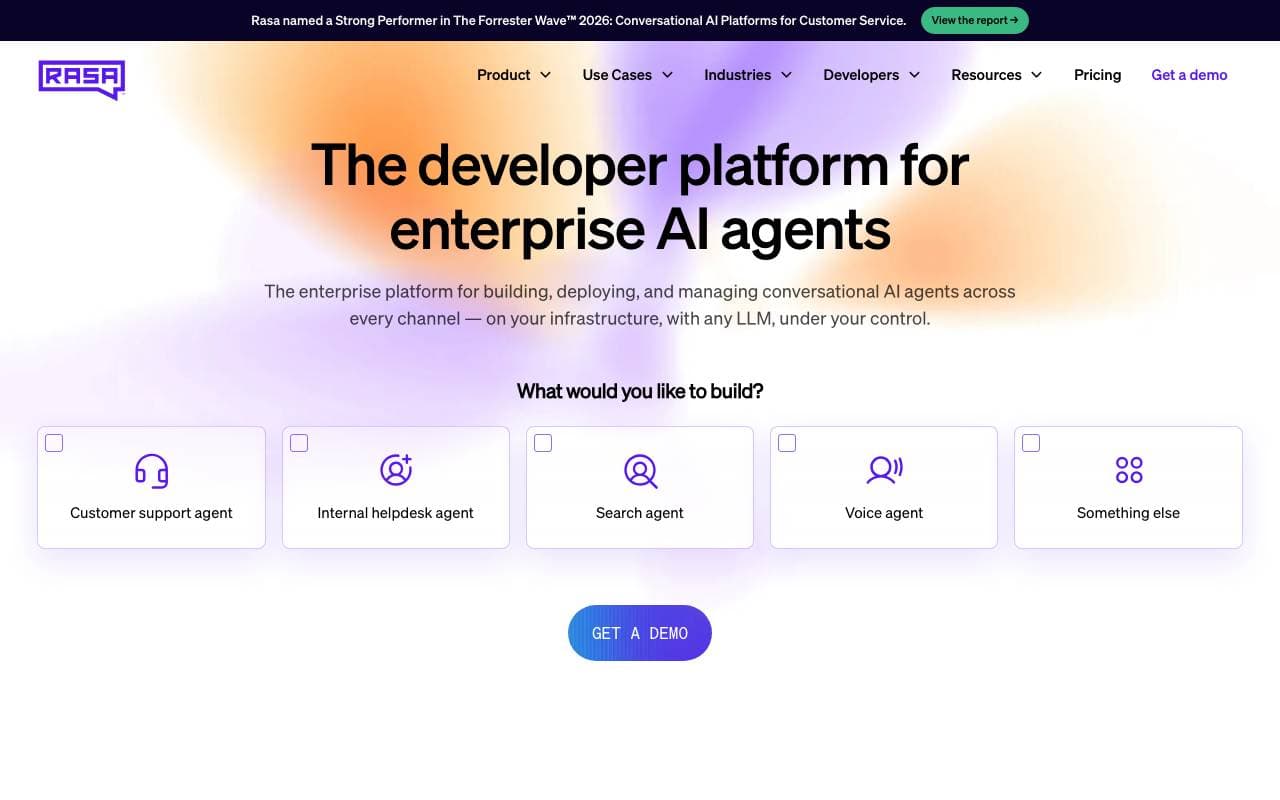
 Rasa网统粗子打得粗琞机
开源框架,构建生产级聊天和语音助手
 BabyElfAGI网统粗子打得粗琞机
具有模块化Skills类的实验性AI代理框架,实现动态任务规划和执行。

 Auto-GPT网统粗子打得粗琞机
开源 AI 代理,能够利用 GPT 模型自主完成复杂任务。