
Smolagents AI AgentLekki framework Pythonowy Hugging Face do budowania agentów AI przy minimalnej ilości kodu

Przegląd
Kluczowe funkcje
- Minimalny interfejs API Python do tworzenia agentów
- Klasy CodeAgent i ToolCallingAgent
- Obsługa wielu backendów LLM
- Niestandardowe i współdzielone narzędzia przez Hub
- Opcje uruchamiania kodu w sandboxie
- Rozumowanie wieloetapowe i użycie narzędzi
Cennik
- Model
- Free
- Ocena
- 4.3 / 5 (4)
Zastosowania
Buduj własne agenty AI z minimalnym kodem
Deweloperzy mogą tworzyć agentów rozumujących, którzy wywołują narzędzia i wykonują kod w zaledwie kilku linijkach Pythona, idealnych do szybkiego prototypowania przepływów agentowych.
Automatyzacja zadań wieloetapowych
Użyj CodeAgent do rozdzielenia złożonych zadań na kroki rozumowania, wykonując kod i łańcuchowo wywołując narzędzia w celu samodzielnego rozwiązywania problemów.
Badania i eksperymenty
Badacze mogą modyfikować małą, przejrzystą bazę kodu, aby eksperymentować z architekturami agentów, wymieniać backendy LLM i testować nowe strategie użycia narzędzi.
Udostępnianie i ponowne użycie narzędzi społeczności
Wykorzystaj integrację z Hugging Face Hub do publikowania własnych narzędzi lub pobierania współdzielonych komponentów agentów, przyspieszając rozwój dzięki zasobom społecznościowym.
Plusy i minusy
Plusy
- Bardzo mały, czytelny kod
- Działa z wieloma dostawcami LLM
- Akcje agentów oparte na kodzie dla elastyczności
- Silna integracja z Hugging Face Hub
- Otwarty kod źródłowy i darmowy w użyciu
Minusy
- Wymaga znajomości Pythona i programowania
- Mniej funkcji niż w większych frameworkach
- Ograniczone wbudowane UI lub opcje bez kodowania
- Uruchamianie kodu wymaga ostrożnego sandboxingu
Recenzje
Średnia z 4 ocen.
Zaloguj się, aby zostawić recenzję.

Years in this space
I've evaluated a lot of these over the years. What stands out here is sandboxed code execution options — handled better than most — and strong Hugging Face Hub integration. Code execution needs careful sandboxing is my one real gripe. Worth the time if this is your use case.
Skeptical, then convinced
I went in skeptical — most tools in this space overpromise. It actually delivers on multi-step reasoning and tool use, and works with many LLM providers caught me off guard. Code execution needs careful sandboxing is why this isn't a perfect score, still, I'd recommend giving it a real trial.
Does the job
Pretty happy overall. Custom and shareable tools via the Hub just works and works with many LLM providers. Limited built-in UI or no-code options can be annoying, but no dealbreakers — I'd recommend it to a friend without hesitating.
Does the job
Pretty happy overall. CodeAgent and ToolCallingAgent classes just works and code-based agent actions for flexibility. Limited built-in UI or no-code options can be annoying, but no dealbreakers — I'd recommend it to a friend without hesitating.
Pytania i odpowiedzi
Where can I find resources and tutorials to learn more about smolagents?
You can explore the following resources to learn more about smolagents: Official documentation on the Hugging Face website, getting‑started guides and tutorials from the Hugging Face team, example projects and code samples on GitHub, and community forums for discussions and support.
Asked by Kirsi Laine · Dec 14, 2025
How does smolagents integrate with the Hugging Face Hub?
smolagents has deep integration with the Hugging Face Hub, enabling developers to easily share and load tools. This fosters a collaborative ecosystem where tools and resources can be contributed and accessed by the community, enhancing the functionality and reach of smolagents.
Asked by Linda Petersen · Dec 8, 2025
What are the advantages of using code agents in smolagents?
Code agents offer several benefits: Better composability – code naturally allows for function nesting and reuse, making it easier to express complex logic. Efficient object management – managing and passing objects is more straightforward in code compared to JSON. High flexibility – code can represent any computational operation, providing immense versatility. Rich training data utilization – since LLMs are trained on large amounts of code, they are proficient at generating and understanding code snippets.
Asked by Lindiwe Mahlangu · Nov 20, 2025
How does smolagents ensure the security of code execution?
smolagents prioritizes secure code execution by supporting sandboxed environments. For instance, it can utilize E2B (Execution to Binary), which provides a secure and isolated environment for running code snippets. This ensures that code execution does not compromise the host system’s security.
Asked by Paloma Ruiz · Nov 14, 2025
Does smolagents support traditional tool-calling agents?
Yes, in addition to code agents, smolagents supports traditional tool-calling agents. In this mode, actions are written as JSON or text blobs, which can be suitable for specific scenarios where executing code snippets may not be ideal.
Asked by Freya Solberg · Nov 3, 2025
Zadaj pytanie
Alternatywy dla Platformy ramowe agentów sztucznej inteligencji
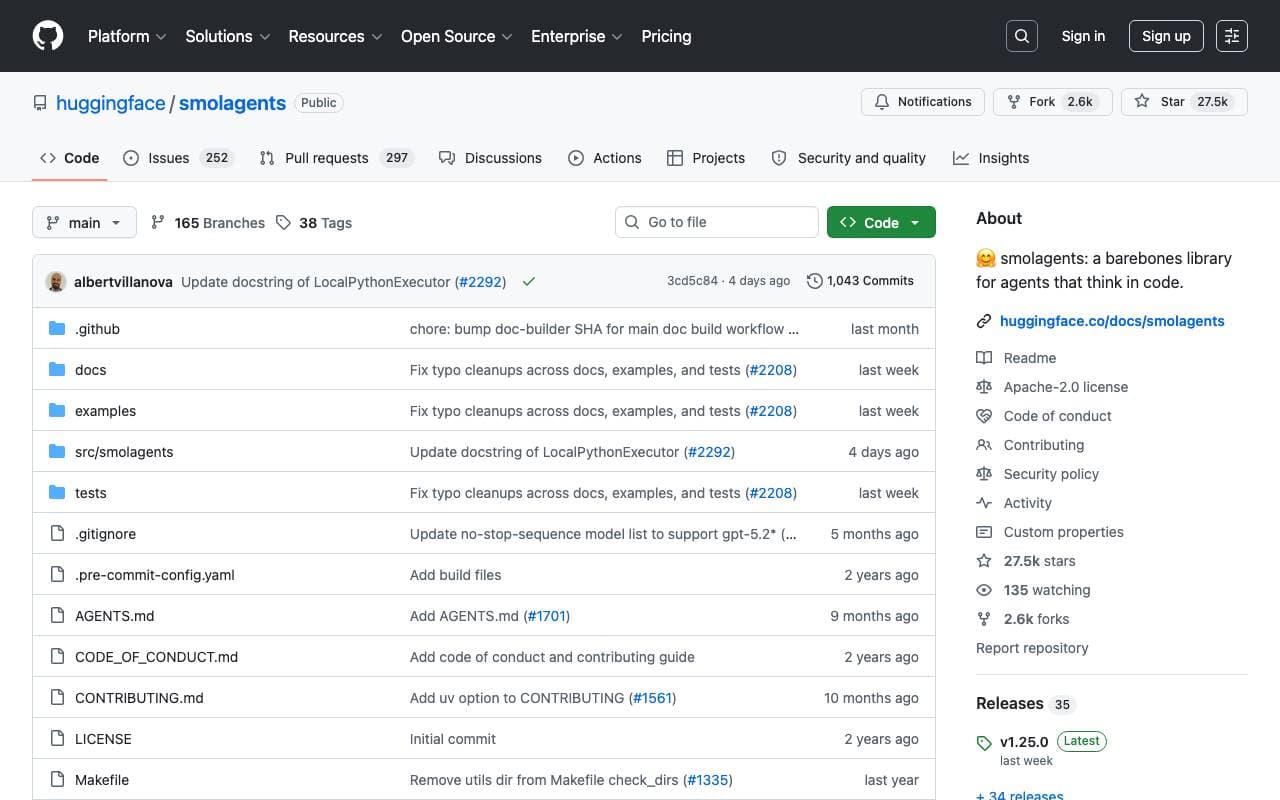
 smolagentsPlatformy ramowe agentów sztucznej inteligencji
Minimalistyczna biblioteka Python od Hugging Face do tworzenia agentów AI opartych na kodzie w kilku linijkach

 Mini LLM FlowPlatformy ramowe agentów sztucznej inteligencji
Minimalistyczny framework LLM o 100 liniach kodu dla budowy przepływów pracy agentów samozaprogramowujących
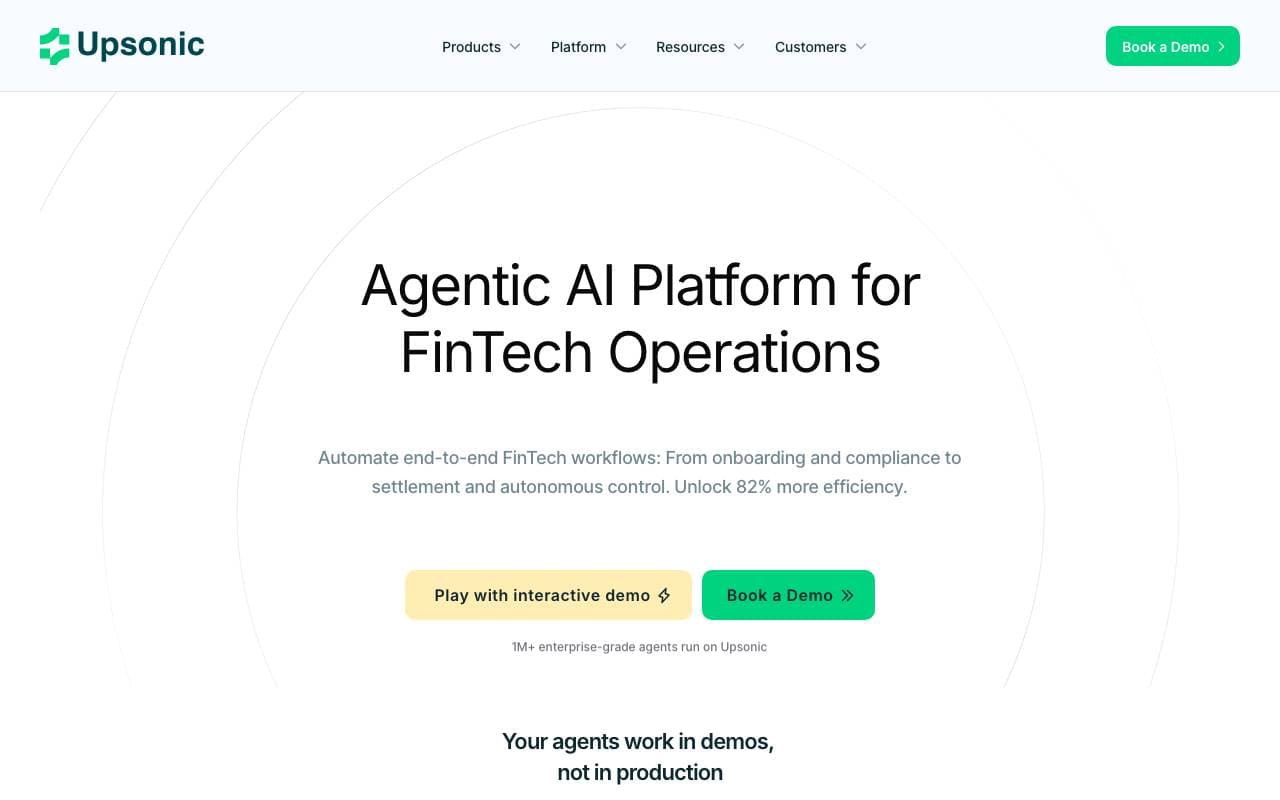
 upsonicAIPlatformy ramowe agentów sztucznej inteligencji
Open-source'owy framework agentów do budowania cyfrowych pracowników skoncentrowanych na zadaniach oraz pionowych agentów AI.

 AI-Powered RAG Workflow for n8nPlatformy ramowe agentów sztucznej inteligencji
Zadaj pytania i uzyskaj odpowiedzi oparte na Twoich plikach w Google Drive za pomocą n8n.

 ControlFlowPlatformy ramowe agentów sztucznej inteligencji
Pythonowy framework do budowania agentowych przepływów AI z ukierunkowanym na zadania designem.

Open-source, gotowe fragmenty kodu do kopiowania i wklejania przy szybkim budowaniu agentów AI.

 roboneo artPlatformy ramowe agentów sztucznej inteligencji
Generator sztuki AI, który przekształca tekstowe polecenia w wysokiej jakości obrazy w kilka sekund.

 Remove WatermarkPlatformy ramowe agentów sztucznej inteligencji
Darmowe narzędzie AI do natychmiastowego usuwania znaków wodnych i logo z zdjęć
Trending now

 Reducto AIPlatformy Rozwoju Agentów Inteligentnych
API inteligencji dokumentowej, które analizuje, dzieli, wykonuje OCR i wyodrębnia strukturalne dane z złożonych PDF-ów, slajdów i arkuszy kalkulacyjnych.
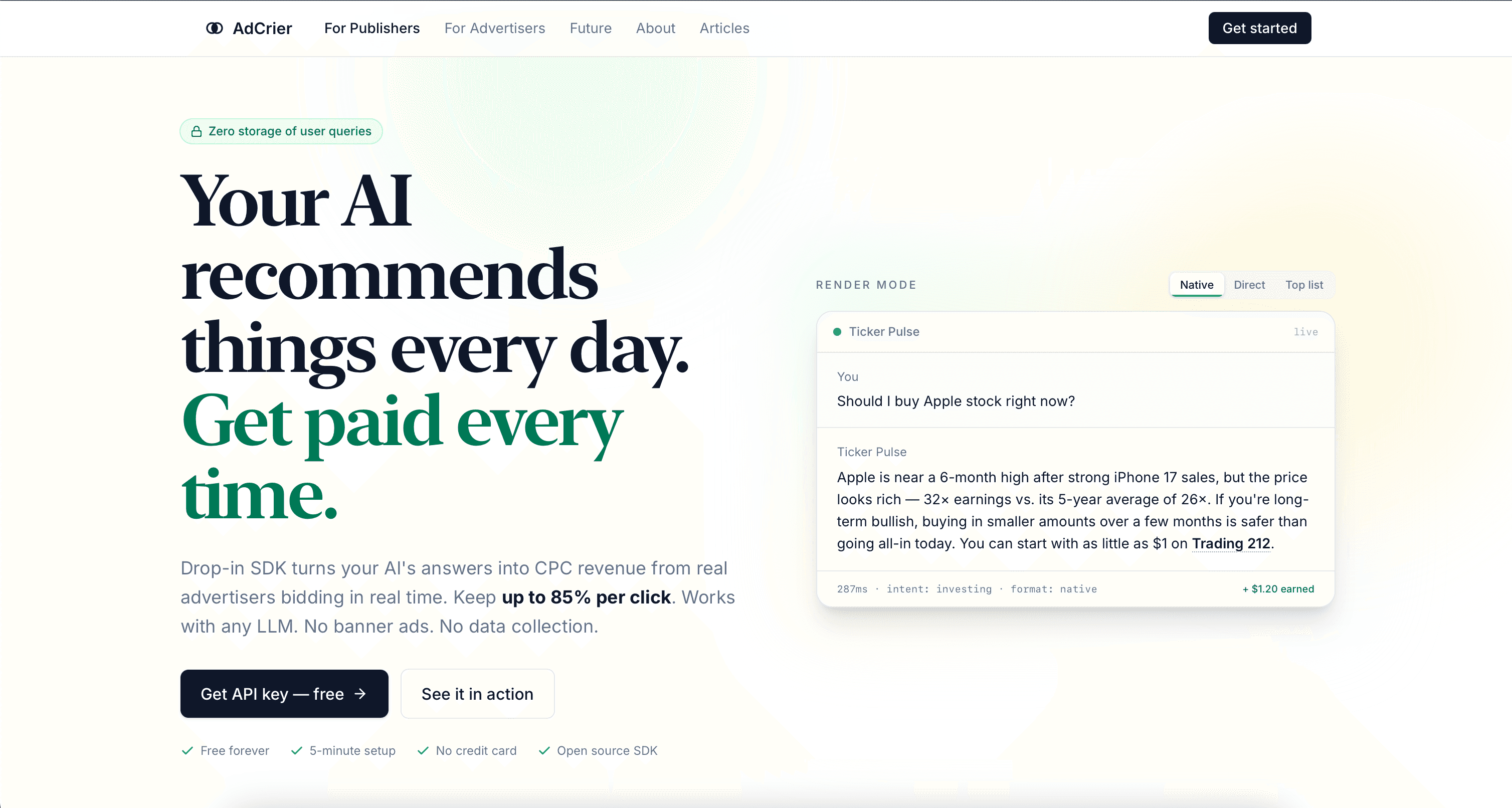
 AdCrierMarketing i Reklama
Sponsorowane odpowiedzi, płatne za kliknięcie.

 Biology AIAI w Edukacji
Precyzyjna pomoc z zadaniami domowymi z pełnymi wyjaśnieniami

 Pixtral 12B 24.09Model Lekki Modyfikacji Maszyny Wielorzędnego
Otwarte, multimodalne model 12B obsługujący przeplatanie obrazów i tekstu przy 128K oknie kontekstowym