
SedaiAutonom skyadministrasjon som kontinuerlig optimaliserer kostnad, ytelse og tilgjengelighet.

Oversikt
Nøkkelfunksjoner
- Autonom justering av ressursstørrelse og skaleringsnivå
- Kontinuerlig kostnadsoptimalisering
- Overvåking av ytelse og tilgjengelighet
- Støtte for compute, Kubernetes og serverless
- Integrasjoner med Datadog, Prometheus og CloudWatch
- Policy-baserte guardrails og godkjenninger
Priser
- Modell
- Freemium
- Vurdering
- 4.8 / 5 (5)
Brukstilfeller
Autonom Skykostnadsreduksjon
Justerer kontinuerlig ressursbruk for compute, containere og serverless-arbeidsbelastninger på tvers av AWS, Azure og GCP for å redusere skytjenestekostnader uten manuell finjustering av SRE eller DevOps-team.
Proaktiv ytelsesoptimalisering
Handler på produksjonstelemetri fra Datadog, Prometheus og CloudWatch for å løse ytelsesproblemer før de utløser hendelser, og går utover advarselsbasert overvåking.
Kubernetes Skalering Automatisering
Justerer automatisk ressursforespørsler, grenser og skaleringinnstillinger for Kubernetes-arbeidsbelastninger med policy-baserte guardrails og rollback-sikkerhet.
Multi-Cloud Tilgjengelighetsstyring
Opprettholder tilgjengelighet SLOs på tvers av flere skyleverandører og tjenester ved å la Sedai ta closed-loop konfigurasjonsbeslutninger basert på arbeidsbelastningsmønstre.
Fordeler og ulemper
Fordeler
- Closed-loop automatisering reduserer manuell finjustering
- Multi-cloud og multi-tjenestetilbud
- Optimaliserer både kostnad og ytelse samtidig
- Integrerer med vanlige observabilitet-verktøy
- Sikkerhets-guardrails og rollback-alternativer
Ulemper
- Enterprise-prising kan være upassende for små team
- Autonome handlinger krever tillit og onboarding-tid
- Beste verdi avhenger av arbeidsbelastningsstørrelse og variasjon
Anmeldelser
Gjennomsnitt fra 5 vurderinger.
Logg inn for å legge igjen en anmeldelse.
Solid for our team
We rolled this out across the team last quarter and integrates with common observability tools. Continuous cost optimization fits neatly into how we already work, and support for compute, Kubernetes, and serverless removed a step we used to do by hand. Best value depends on workload scale and variability, which is the main caveat, but it has held up under daily use.
Does the job
Pretty happy overall. Autonomous rightsizing and scaling just works and integrates with common observability tools. but no dealbreakers — I'd recommend it to a friend without hesitating.
Compared a few options
Evaluated this against two competitors. Where it wins: policy-based guardrails and approvals and closed-loop automation reduces manual tuning. On balance the feature set — especially integrations with Datadog, Prometheus, and CloudWatch — justifies the 5 stars for our use case.
Solid for our team
We rolled this out across the team last quarter and closed-loop automation reduces manual tuning. Autonomous rightsizing and scaling fits neatly into how we already work, and autonomous rightsizing and scaling removed a step we used to do by hand. Best value depends on workload scale and variability, which is the main caveat, but it has held up under daily use.
Solid for our team
We rolled this out across the team last quarter and closed-loop automation reduces manual tuning. Performance and availability monitoring fits neatly into how we already work, and performance and availability monitoring removed a step we used to do by hand. but it has held up under daily use.
Spørsmål
How much does Sedai cost? How does pricing work?
Sedai uses a simple, volume-based pricing model, designed to ensure our customers achieve a positive ROI. For example, we charge 1 Sedai Billing Unit (SBU) for each vCPU that our platform manages. There are no overage penalties — if you exceed your monthly commitment, you simply pay the same rate for the extra usage. You can also adjust your commitment, as your needs change over time. Please book a demo to discuss our specific pricing options & discounts.
Asked by Noelia Campos · Mar 3, 2026
How does Sedai make sure that optimizations never cause availability issues or degrade performance?
Safe optimization is our secret sauce. When Sedai identifies a potential cost or performance improvement, our platform makes that optimization in gradual steps, while continuously validating the impact of the change on your environment. For example, if Sedai determines it can lower the memory limit of a container without impacting performance, it won’t make a big change all at once, from say 12 to 4 GB. Instead, Sedai will gradually lower the memory to achieve maximum cost savings, until the exact point where performance is impacted.
Asked by Otto Berg · Feb 9, 2026
Which cloud providers does Sedai support? And what specific services can Sedai optimize?
Sedai supports the widest range of cloud services & on-prem workloads in our industry. This includes all the major cloud providers: AWS, Microsoft Azure, Google Cloud Platform, & Oracle Cloud Infrastructure. We’re the experts at optimizing Kubernetes — think EKS, AKS, & GKE, as well as on-prem, self-managed clusters. But our platform is unique in going way beyond K8s. Sedai also optimizes storage, data platforms, and AI/ML workloads. Check out our integrations page for the full list.
Asked by Ethan Brooks · Jan 14, 2026
What makes Sedai different from competitors? Why choose Sedai?
Only Sedai deeply understands how your applications behave, which is why our platform can optimize safely without causing performance or availability issues. Most tools either stop at recommendations or make risky changes based on surface-level metrics like CPU and memory utilization. Sedai goes deeper. Our patented ML models learn what your applications actually need by analyzing traffic patterns, dependencies, and golden signals like latency, errors, traffic, and saturation. That application-aware approach is what makes Sedai safe in production. To date, Sedai has performed more than 25 million optimizations with zero incidents.
Asked by Oscar Lindqvist · Jan 3, 2026
Will I be able to control Sedai’s actions? What if we want to roll back a change?
Sedai offers three operating modes that give you full control. In Datapilot mode, Sedai provides read-only recommendations, for you to implement. In Copilot mode, Sedai lets your team approve optimizations with one click, which Sedai then safely executes. Once you trust the platform, you can turn on Autopilot mode for resources or environments that you select, which enables Sedai to make optimizations autonomously. Across the board, Sedai enables your team to instantly roll back a change, schedule maintenance windows, & pause optimizations for any reason.
Asked by Hasan Demir · Dec 3, 2025
Still et spørsmål
Alternativer til Kjerneverktøy for kunstig intelligens (AI)


Zapier's Agents
Kjerneverktøy for kunstig intelligens (AI)
KI-påførte agenter som automatiserer åpninger over 7 000 koblete appar
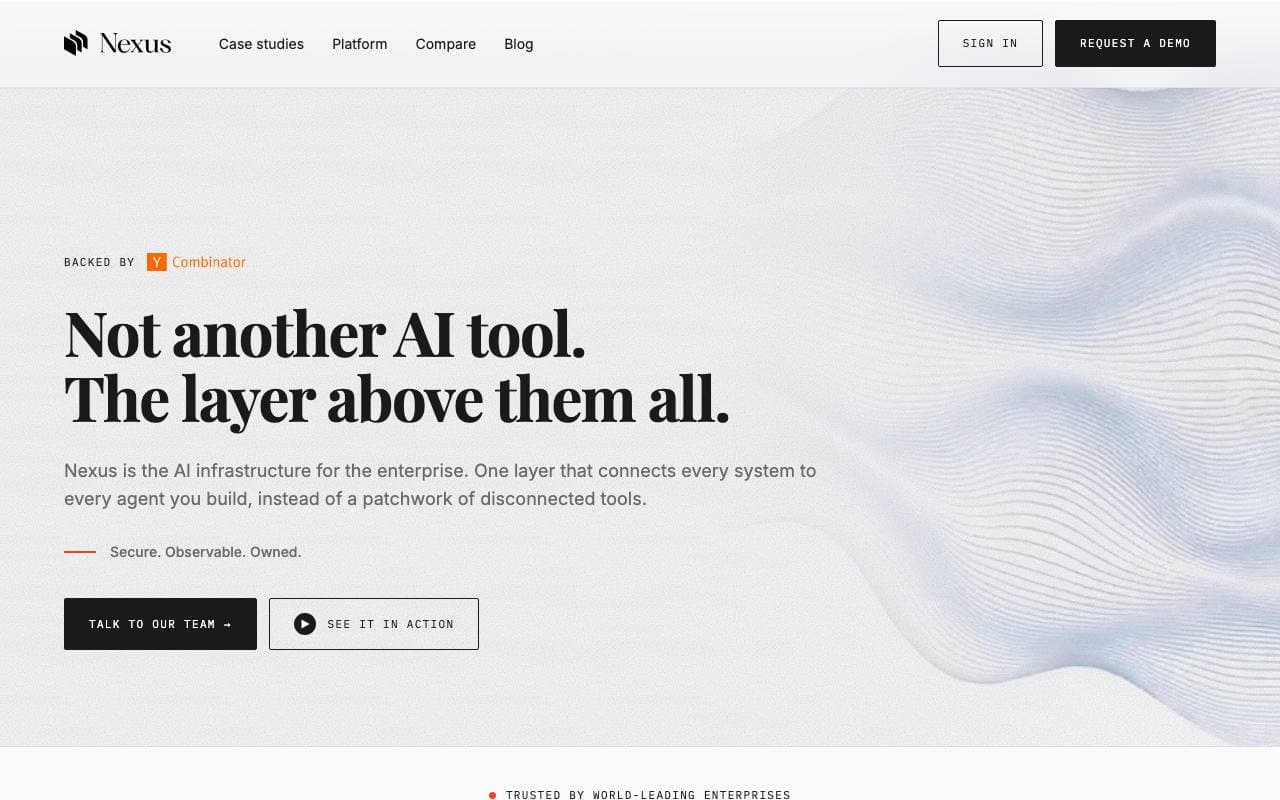

NexusGPT
Kjerneverktøy for kunstig intelligens (AI)
No-code-plattform for å bygge og distribuere tilpassede AI-agenter som automatiserer forretningsarbeidsflyt.
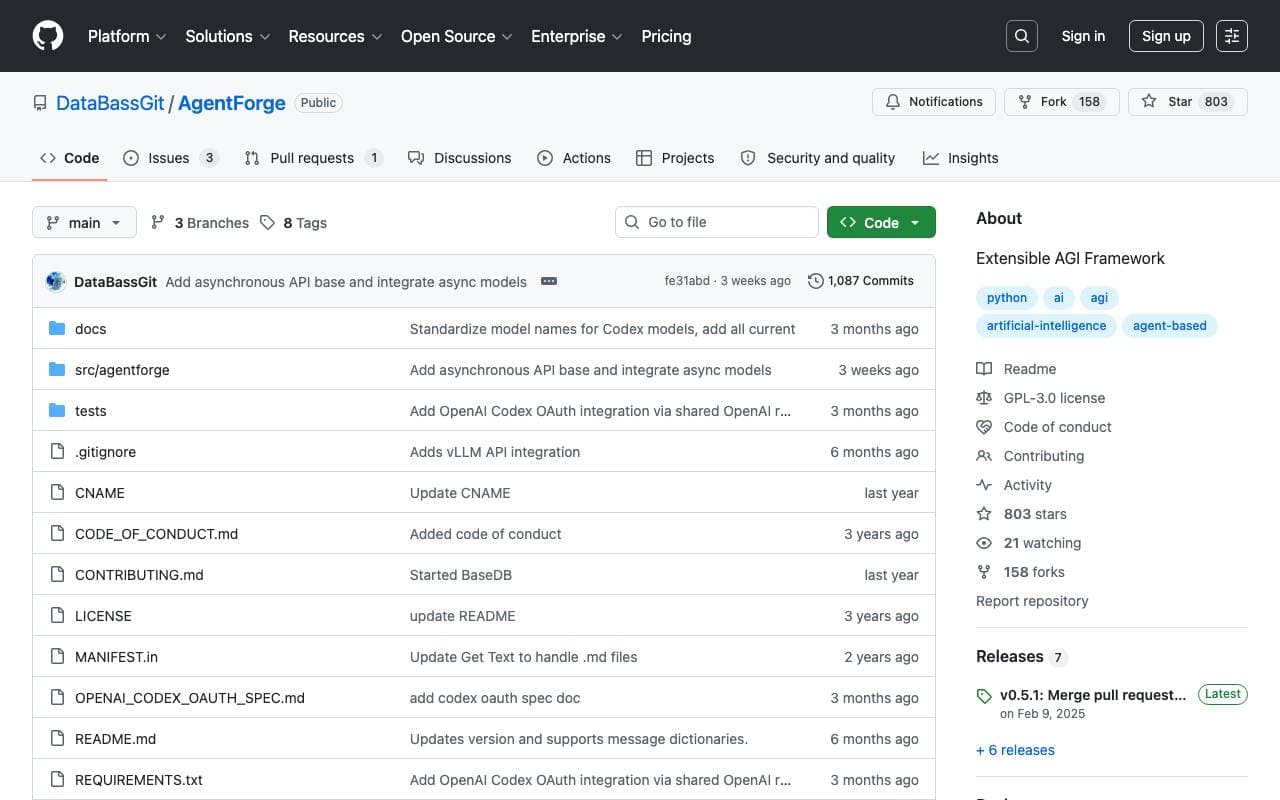

AgentForge
Kjerneverktøy for kunstig intelligens (AI)
Low-code rammeverk for å bygge autonome AI-agenter og kognitive arkitekturer


Maps Scraper AI
Kjerneverktøy for kunstig intelligens (AI)
Et AI-drevet verktøy som automatiserer utvinning av bedriftdata fra Google Maps, og forbedrer leadgenerering og markedsundersøkelse.

Momentic AI
Kjerneverktøy for kunstig intelligens (AI)
Skriv, rett og kjør programvaretester med enkle engelske prompts.

Micro Agent
Kjerneverktøy for kunstig intelligens (AI)
AI-kodingsagent som itererer på kode til testene dine passer


Mogoj AI
Kjerneverktøy for kunstig intelligens (AI)
AI-drevet arbeidsflytsoptimisering og forretningsprosessautomatisering


Charisma.ai
Kjerneverktøy for kunstig intelligens (AI)
Immersiv samtalerbasert AI for interaktiv historiefortelling, opplæring og merkevarekampanjer.
Trending now


Reducto AI
Plattformer for utvikling av AI-agenter
Document intelligence API som analyserer, deler opp, OCR-erer og henter ut strukturert data fra komplekse PDF‑er, lysbilder og regneark.
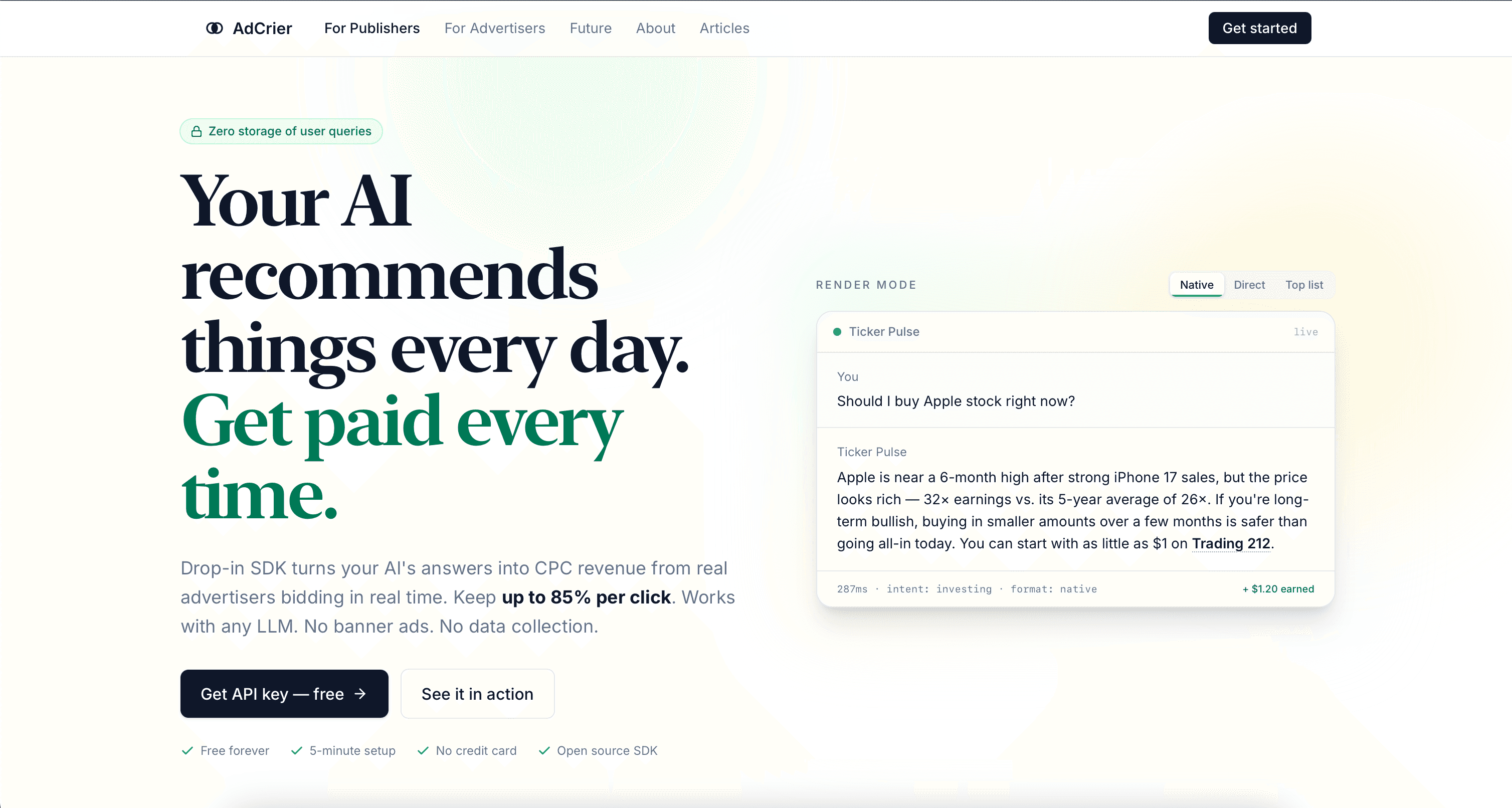

AdCrier
Markedsføring & Reklame
Sponsede svar, betalt per klikk.


Biology AI
Utdanning AI
Nøyaktig leksjonshjælp med fullstendige forklaringer
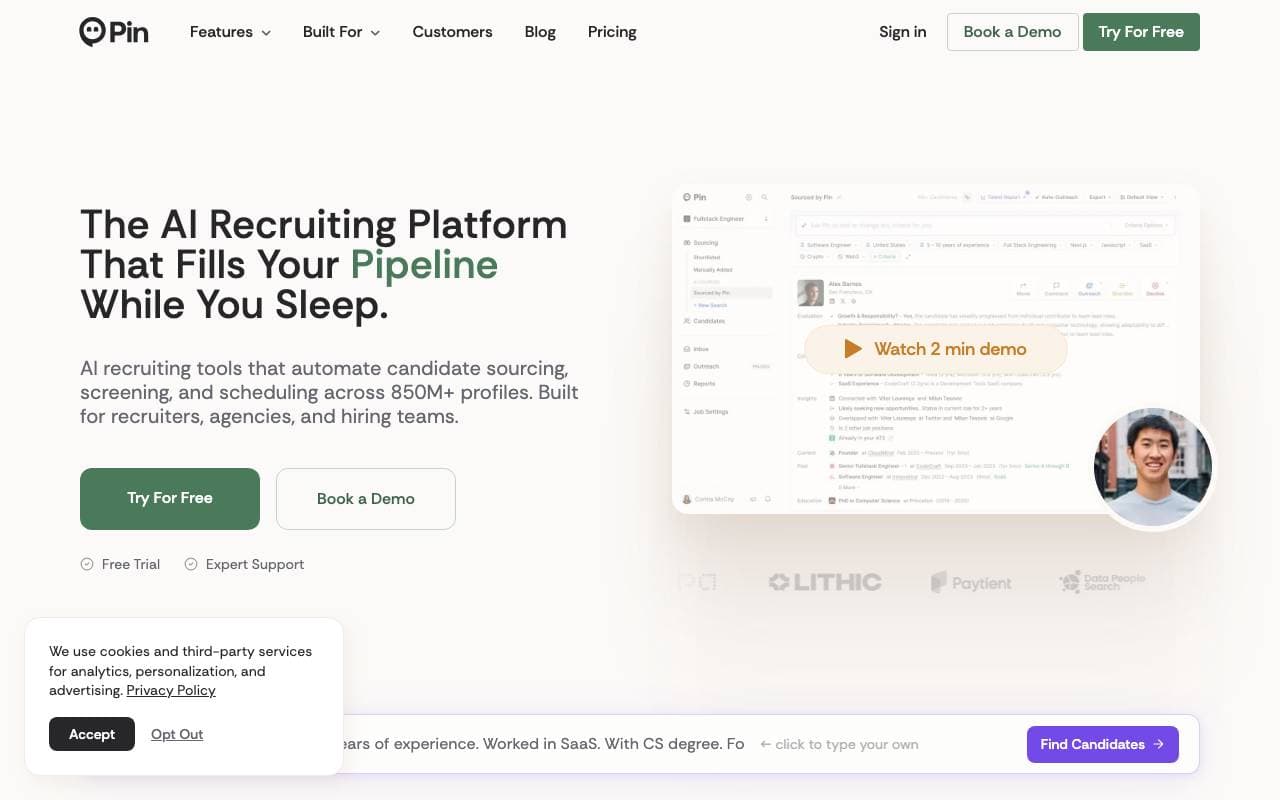

Pin AI
Fløyet automatisk arbeidsflyt
Agentisk AI-rekrutterer som automatiserer kildesøk, screening og outreach for å akselerere ansettelsesprosessen.