Past battle · 2023-12-27 UTC
Observability Showdown — December 27, 2023
From the Observability category. 30 marks placed across 8 fighters. Fiddler AI took the crown.
Final standings






The line-up
The fighters
Profiles of every tool that competed in this battle, ranked by their final score.

Fiddler AI
AI observability and security platform for monitoring, explaining, and governing ML and LLM applications.

Fiddler AI is an enterprise platform that helps teams monitor, analyze, and secure machine learning models and generative AI applications in production. It provides visibility into model performance, data drift, bias, and quality issues, while also offering safeguards against risks specific to LLMs such as hallucinations, prompt injection, and unsafe outputs. Designed for ML engineers, data scientists, and risk and compliance teams, Fiddler combines explainability, real-time monitoring, and guardrails in a single workflow. It integrates with common ML pipelines and cloud environments, helping organizations operationalize responsible AI practices at scale.
Criteria breakdown
- Model performance and drift monitoring
- LLM hallucination and safety detection
- Prompt injection and jailbreak protection
- Explainable AI and root cause analysis
- Bias and fairness assessments
- Dashboards and alerts for production AI


FoundryAI is a development platform focused on creating AI agents that handle real business workflows. It combines agent design, testing, and continuous improvement tools so teams can move from prototype to production without stitching together separate systems. The platform emphasizes evaluation, giving builders ways to measure agent performance against defined tasks and refine behavior over time. This makes it suited for organizations automating customer support, internal operations, or repetitive knowledge work where reliability matters. FoundryAI targets technical teams who need more control than no-code builders offer but want faster iteration than building agents entirely from scratch.
Criteria breakdown
- Agent building environment
- Evaluation and testing tools
- Performance monitoring
- Workflow automation support
- Iterative improvement loops
- Integration with business systems

Quotient AI
Real-time monitoring and evaluation platform for catching AI failures in search, RAG, and agents.
Quotient AI is an observability and evaluation platform built for teams shipping AI-powered features. It continuously monitors production AI systems—including search, retrieval-augmented generation (RAG), and autonomous agents—to surface hallucinations, retrieval errors, and other quality issues before end users encounter them. The platform combines automated evaluations with real-time alerts, helping engineering and ML teams diagnose root causes, track regressions across model or prompt changes, and maintain reliability at scale. By instrumenting AI pipelines, Quotient gives developers visibility into how their applications actually behave in the wild rather than relying solely on offline benchmarks.
Criteria breakdown
- Real-time AI monitoring and alerting
- Hallucination and retrieval error detection
- Evaluation tooling for RAG pipelines
- Agent behavior tracking and diagnostics
- Regression analysis across model and prompt changes
- Production observability for AI applications

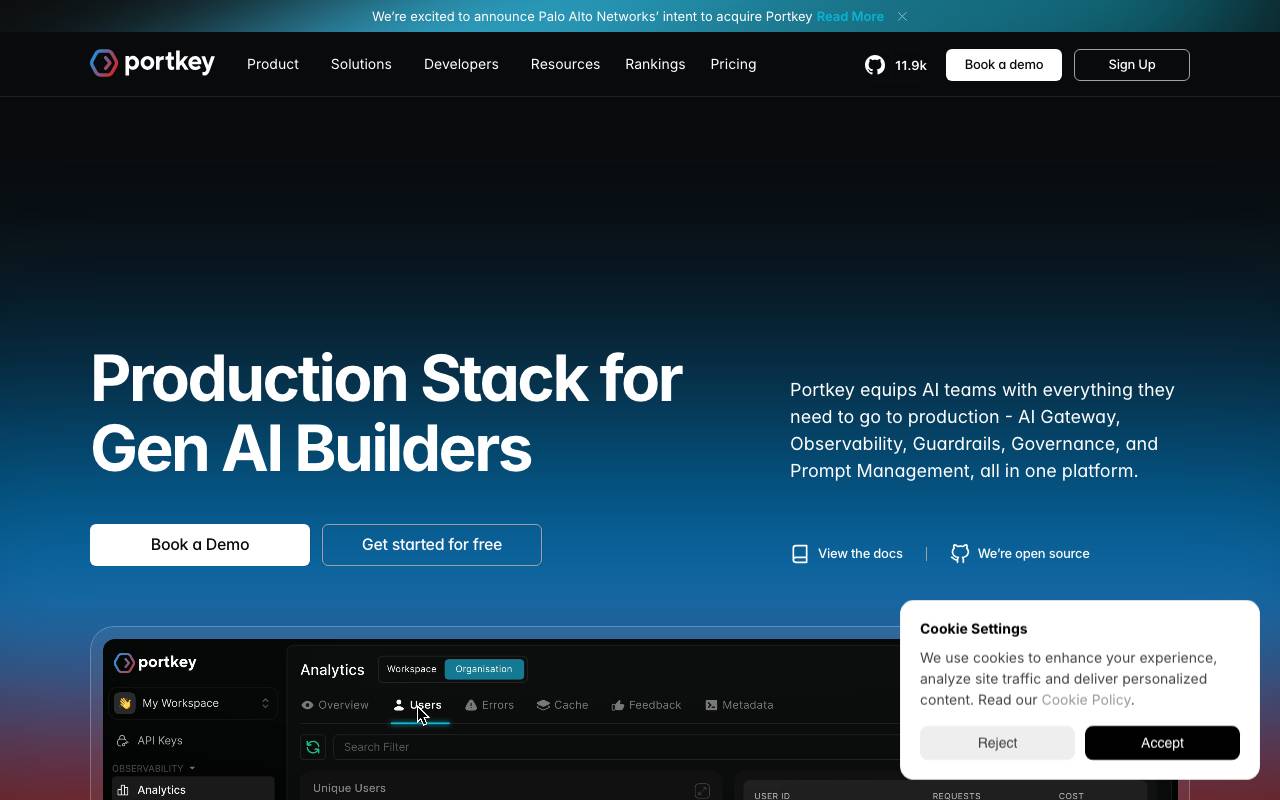
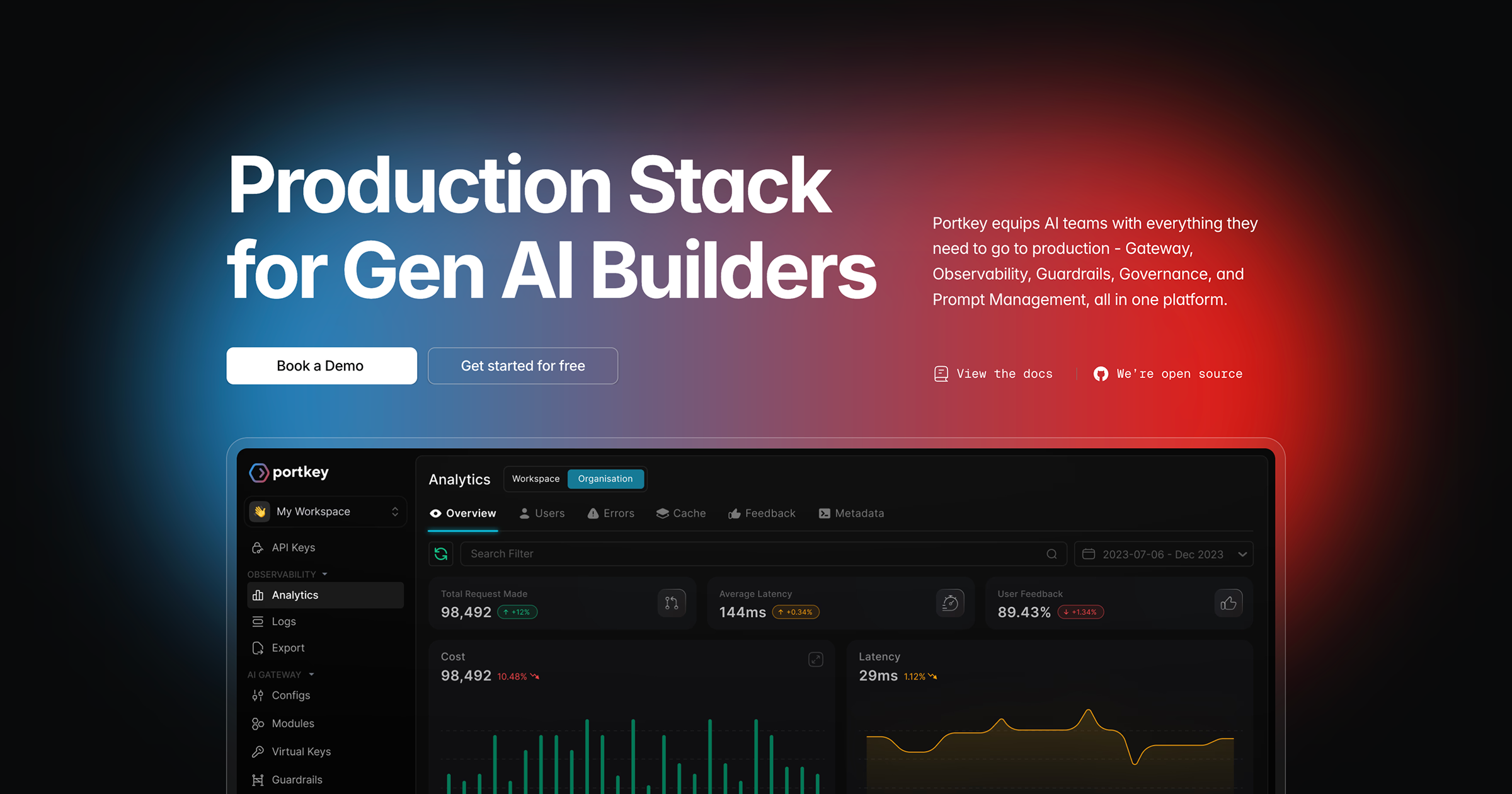
Portkey is a unified control plane for building, managing, and monitoring AI applications. It provides a comprehensive platform for AI teams to go to production, offering features such as AI Gateway, Observability, Guardrails, Governance, and Prompt Management. The platform allows users to access over 1,600 LLMs via a unified API, streamlining the process of integrating models and enabling teams to focus on building rather than managing. Portkey also offers real-time observability, allowing users to monitor LLM behavior, catch anomalies early, and manage usage proactively. Additionally, the platform provides caching capabilities, which have been shown to save users thousands of dollars by reducing redundant tests. Portkey is designed for AI teams and supports a wide range of LLMs, with over 3,000 GenAI teams and a large number of tokens processed daily.
Criteria breakdown
- AI gateway with multi-provider routing
- Prompt management and versioning
- Request logs, traces, and analytics
- Semantic caching and retries
- Guardrails for input and output validation
- Usage and cost monitoring dashboards

Helicone AI
All-in-one observability platform to monitor, debug, and improve production LLM apps.
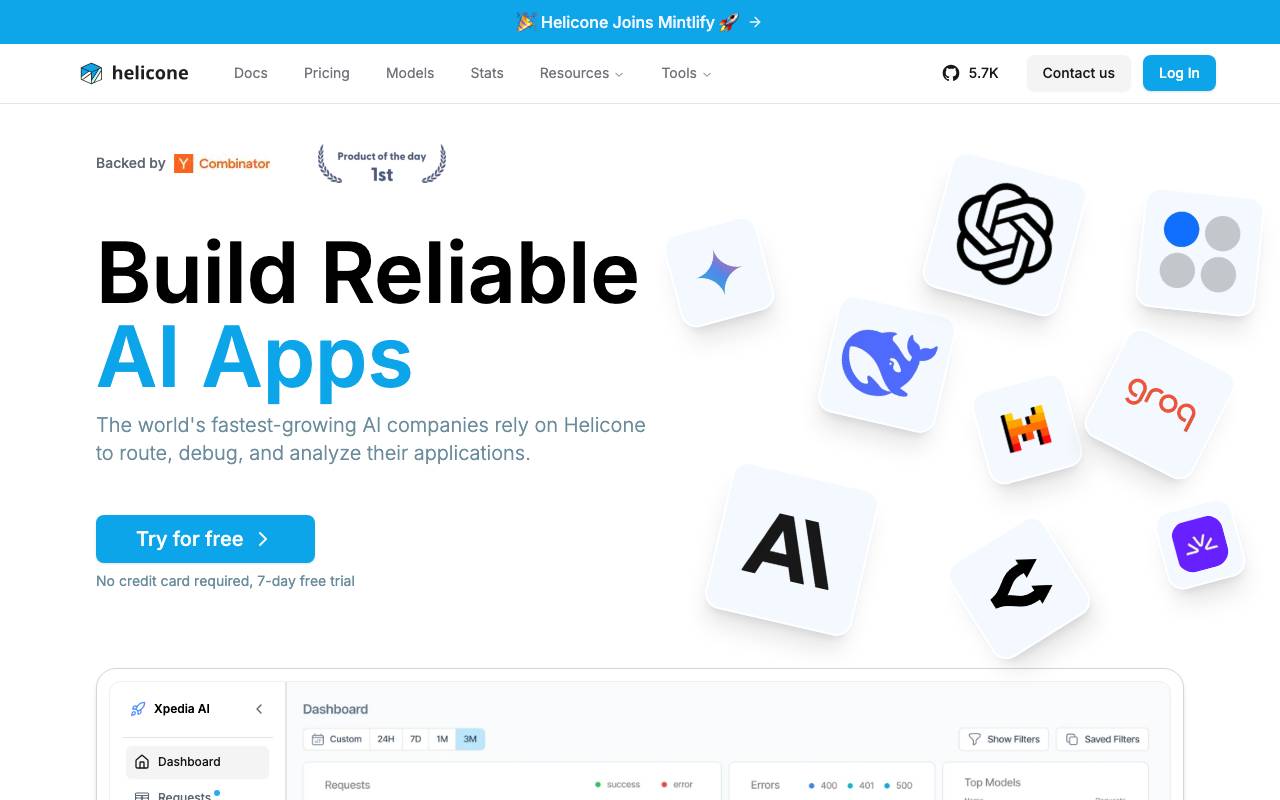
Helicone AI is a developer-focused observability platform built specifically for applications powered by large language models. It captures requests, responses, costs, and latency across providers, giving engineering teams a unified view of how their LLM features behave in production. Beyond logging, Helicone offers tools for debugging prompts, tracing multi-step agent workflows, running evaluations, and tracking user-level usage. Teams can identify regressions, control spend, and iterate on prompts with data rather than guesswork. It integrates with popular model providers and frameworks through a lightweight proxy or async logging, making it straightforward to add to existing stacks without major code changes.
Criteria breakdown
- Request and response logging
- Cost and token usage tracking
- Prompt management and versioning
- Agent and session tracing
- Custom evaluations and dashboards
- User and rate-limit analytics

KeywordsAI
Unified developer platform for building, monitoring, and scaling LLM applications.
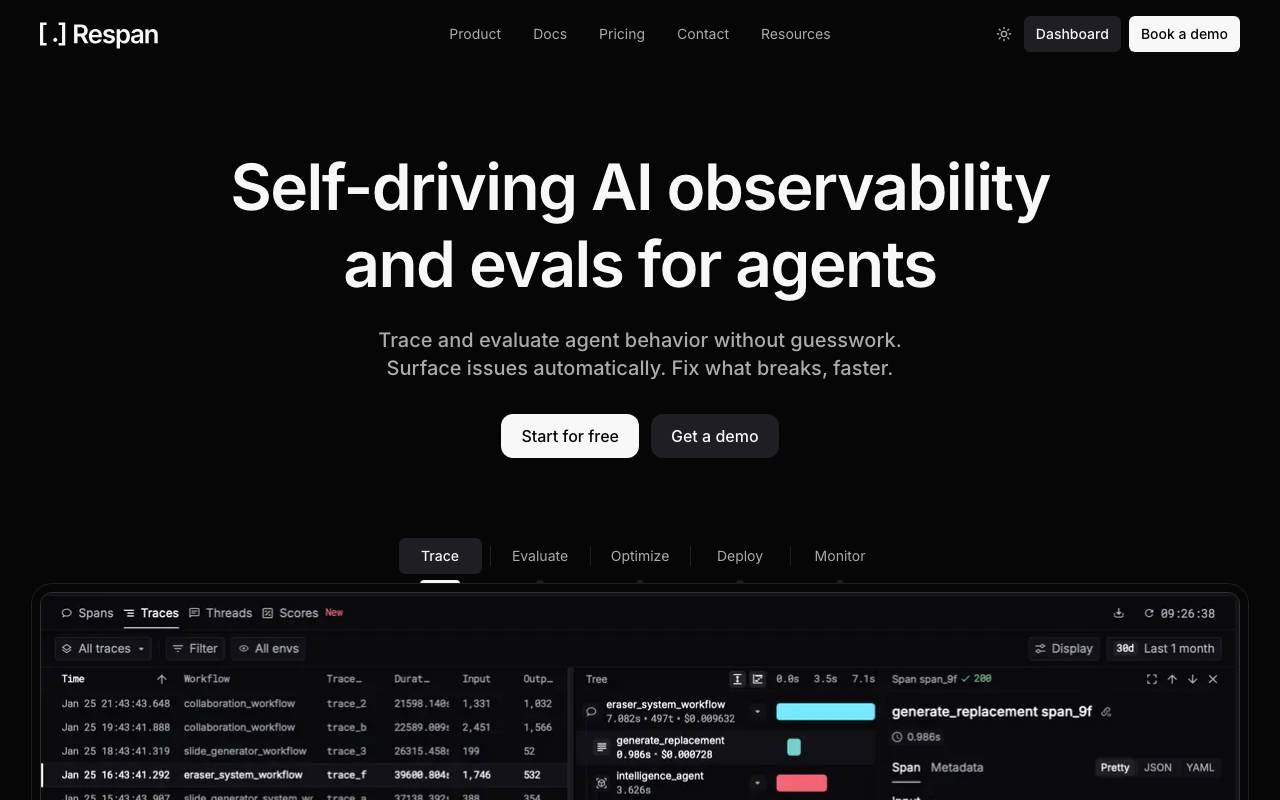
KeywordsAI is a developer-focused platform that consolidates the tools needed to ship production-grade LLM applications. It provides a single API gateway for accessing multiple model providers, along with built-in observability, logging, and evaluation features to help teams understand how their AI features perform in the real world. The platform is designed to reduce the operational overhead of running LLM-powered products. Developers can monitor latency and cost, debug prompts, run evaluations, and manage prompt versions without stitching together separate tools. This makes it easier for engineering teams to iterate on AI features and maintain reliability as usage scales.
Criteria breakdown
- Unified LLM gateway across providers
- Request logging and tracing
- Cost and latency monitoring
- Prompt experimentation and version control
- Evaluation and testing workflows
- SDKs and API integrations

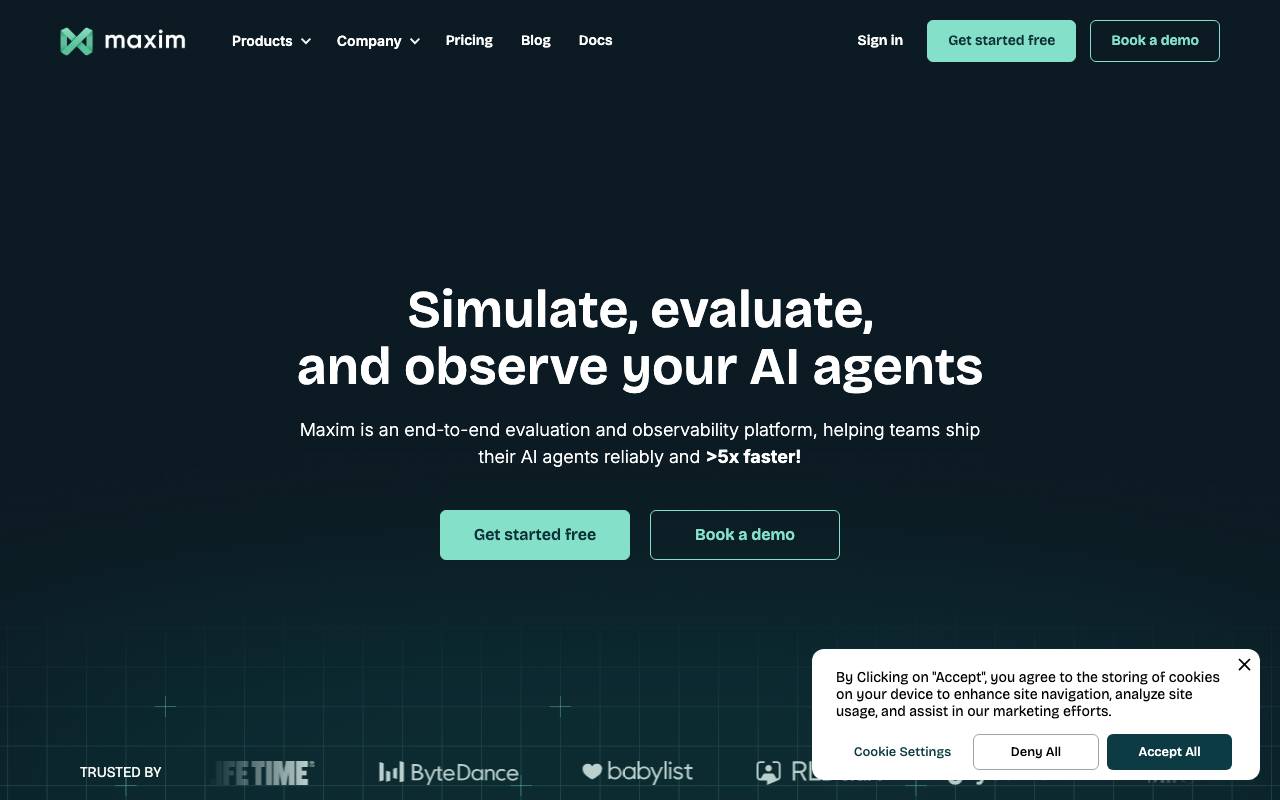
Maxim AI is a developer platform built to help teams ship reliable AI agents and LLM applications. It brings together prompt engineering, evaluation, observability, and dataset management so teams can iterate quickly while keeping quality measurable. The platform supports automated and human evaluations across multiple models and prompts, letting engineers compare outputs, detect regressions, and trace failures in production. It is designed for cross-functional collaboration, with workflows that allow both technical and non-technical stakeholders to contribute to testing and review. Maxim is typically used by teams building chatbots, copilots, voice agents, and multi-step agentic workflows that need consistent performance across changing prompts, models, and user inputs.
Criteria breakdown
- Prompt playground and versioning
- Automated agent and LLM evaluations
- Production observability and tracing
- Dataset curation and management
- Human review and annotation workflows
- Multi-model and multi-provider support
Relari (YC W24)
Testing, evaluation, and synthetic data generation platform for AI agents.
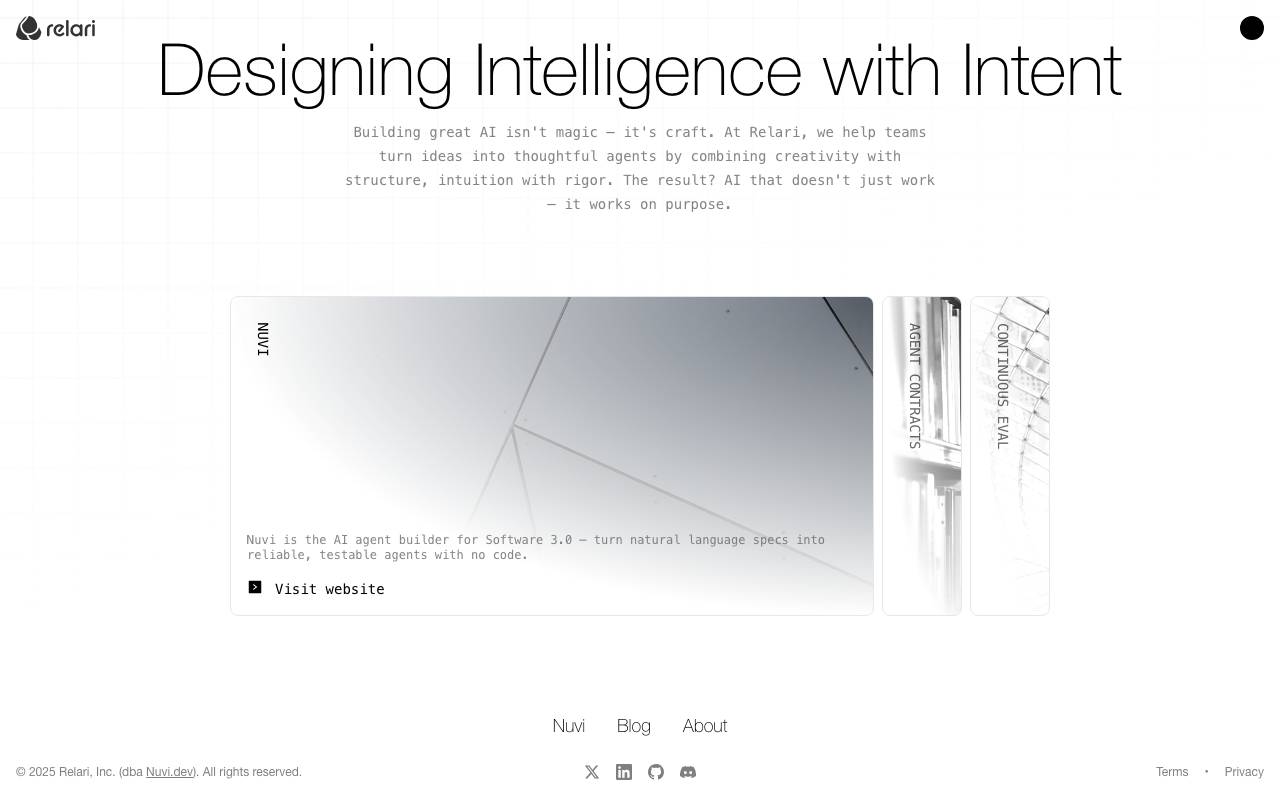
Relari is a developer platform focused on improving the reliability of AI agents through systematic testing and evaluation. It helps teams generate synthetic datasets, run automated evaluations, and benchmark agent performance across realistic scenarios before shipping to production. Backed by Y Combinator (W24), Relari targets engineering teams building complex LLM applications and multi-step agents where traditional QA falls short. Its tooling aims to bring software-engineering rigor—unit tests, regression checks, and measurable metrics—to non-deterministic AI systems. The platform supports custom evaluators, scenario simulation, and continuous monitoring, making it useful for both pre-launch validation and ongoing quality assurance of production agents.
Criteria breakdown
- Synthetic dataset generation
- Automated agent evaluation pipelines
- Scenario and conversation simulation
- Customizable evaluation metrics
- Regression testing for LLM apps
- Performance benchmarking and reporting