Past battle · 2024-01-02 UTC
Personal AI Assistants Showdown — January 2, 2024
From the Personal AI Assistants category. 35 marks placed across 8 fighters. Genspark Super Agent took the crown.
Final standings







The line-up
The fighters
Profiles of every tool that competed in this battle, ranked by their final score.

Genspark Super Agent
A general-purpose AI agent built to handle everyday tasks with speed and tool integrations.
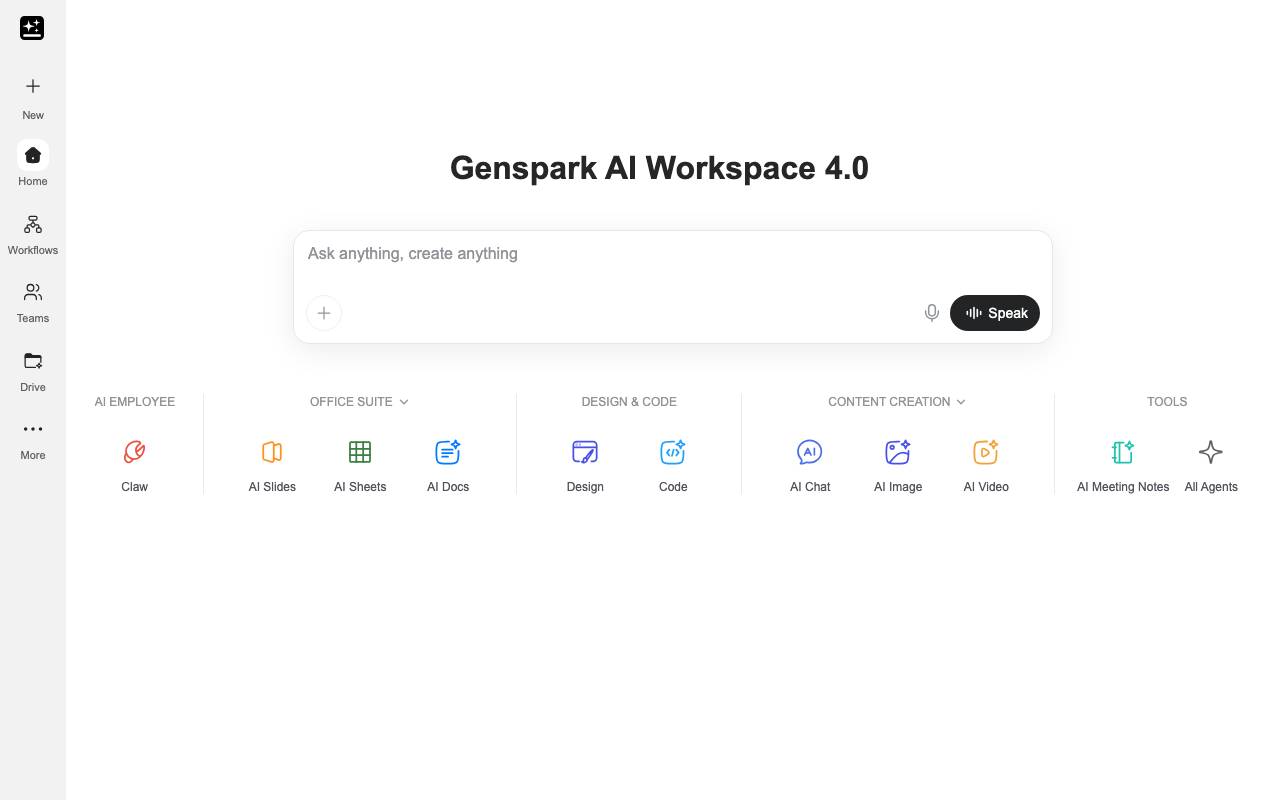
Genspark Super Agent is a general AI agent designed to take on a wide range of everyday tasks, from research and planning to content creation and workflow automation. It aims to combine fast response times with reliable execution, acting as a single assistant that can coordinate multiple tools on a user's behalf. The agent connects to a broad set of integrations, allowing it to pull data, interact with web services, and complete multi-step jobs without constant supervision. This makes it useful for users who want to offload routine work or chain together actions that would normally require several separate apps. It is positioned as an all-in-one assistant for individuals and small teams who need a practical agent for daily productivity rather than a specialized, single-purpose tool.
Criteria breakdown
- General-purpose AI agent
- Multi-step task automation
- Broad third-party tool integrations
- Fast task execution
- Research and content generation
- Workflow coordination across services

OpenClaw (Moltbot)
Open-source personal assistant you run on your own device to manage email, calendar, and tasks from chat apps like WhatsApp and Telegram.
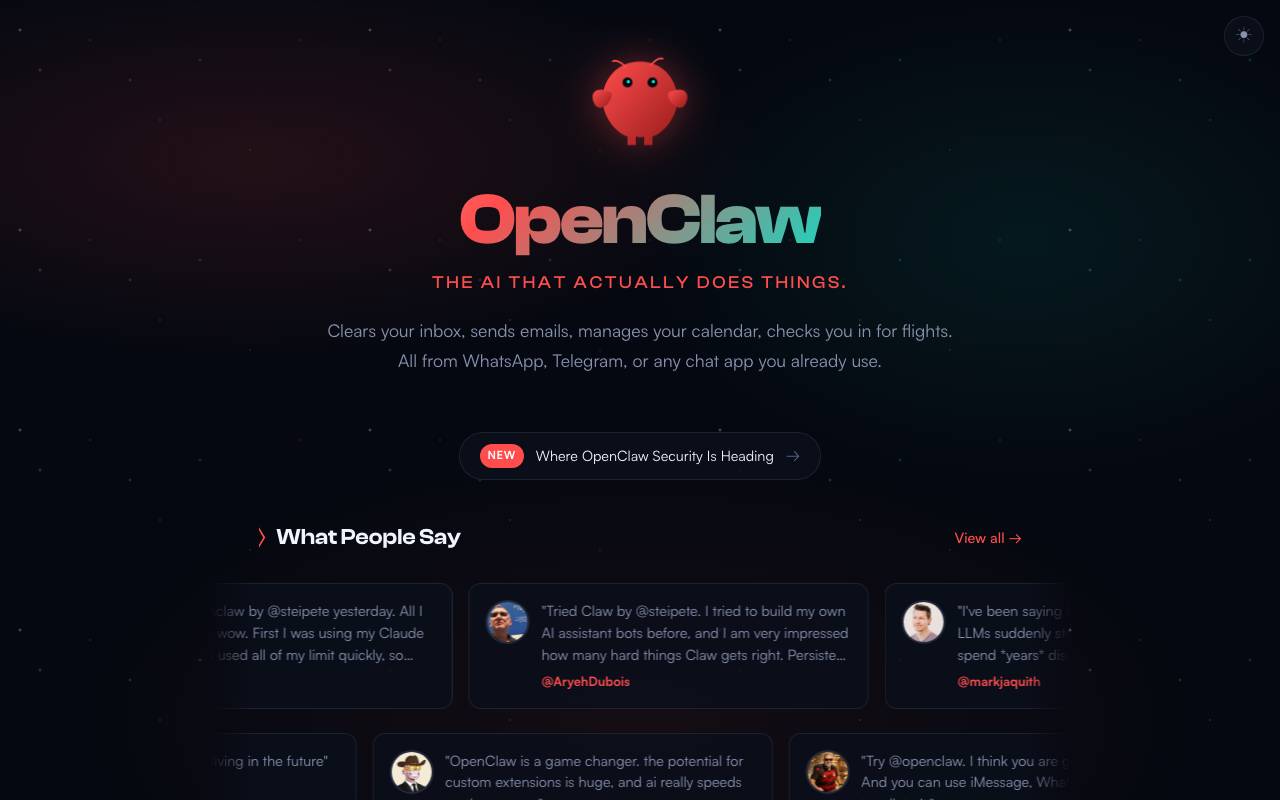
OpenClaw is an open-source personal assistant that runs on your own device, allowing you to manage email, calendar, and tasks from chat apps like WhatsApp and Telegram. It can be controlled through a gateway, chat, or native controls, and supports plugin features. OpenClaw provides a persistent memory and persona onboarding, as well as integrations for comms and heartbeats. It is built with Node.js and comes with a companion app for macOS, Linux, and Windows. The assistant is extensible, allowing users to add custom features and skills, and its memory persists 24/7. Users can install it from the command line or by downloading a bundle from the official website. OpenClaw is designed to be a personal AI assistant, but it can also be used as a company or team tool, and can be configured to run cron jobs, reminders, and background tasks. It is a constantly evolving project, with a growing community and frequent updates on GitHub. The project's community is enthusiastic about its potential and has shared various use cases, from automating company tasks to integrating with other AI models, and even running entire companies.
Criteria breakdown
- Support for multiple chat apps (WhatsApp, Telegram)
- Persistent memory and persona onboarding
- Comms and heartbeat integrations
- Ability to run cron jobs, reminders, and background tasks
- Extensible with custom plugins and skills
- Support for macOS, Linux, and Windows
NullClaw
Ultra-light OpenClaw-style assistant runtime in Zig: 678KB static binary, ~1MB RAM, <2ms boot, with tools, memory, channels, and providers.
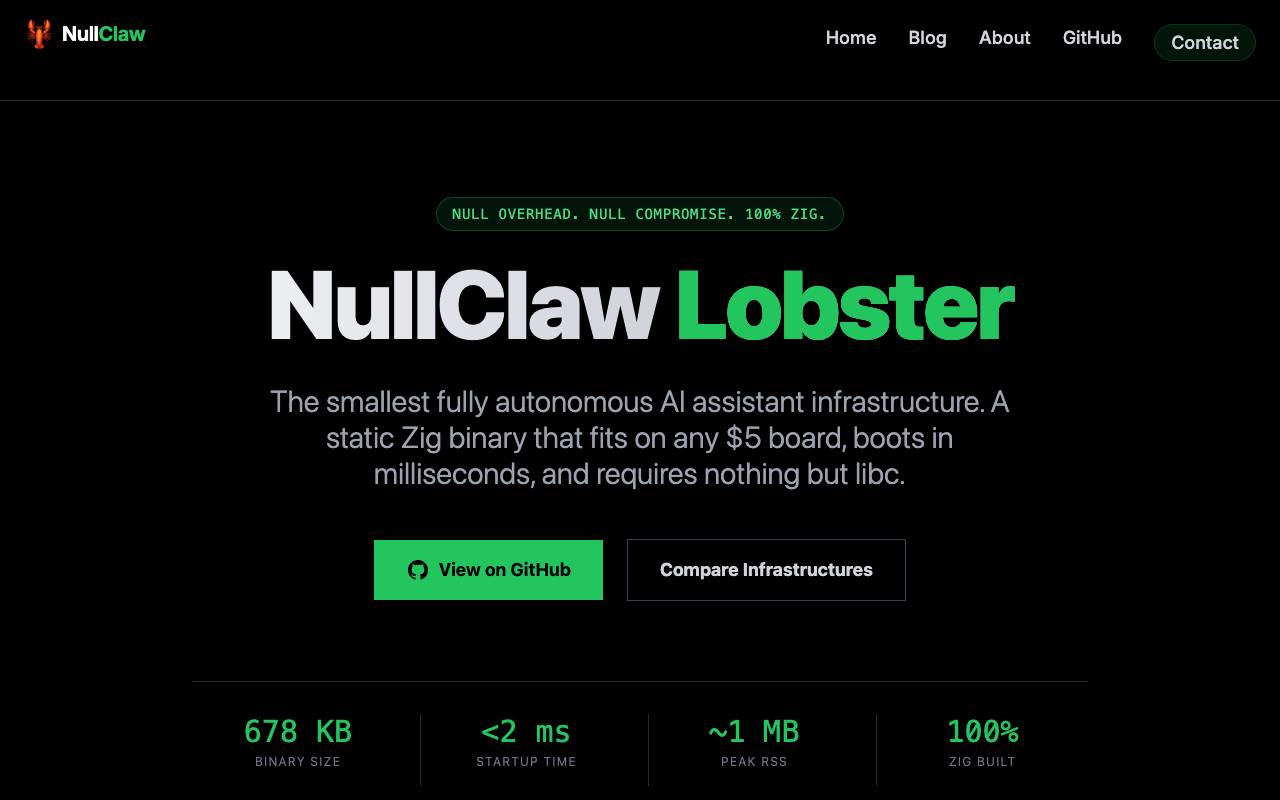
NullClaw is an ultra-lightweight AI assistant runtime built in Zig. It"s designed to be small, with a 678KB static binary, ~1MB RAM usage, and a boot time of under 2ms. The project emphasizes a "lean by default" approach, eliminating allocator overhead and runtime dependencies. This results in a high-performance runtime that can run on minimal hardware. NullClaw features a range of capabilities, including tools for file manipulation, shell command execution, and memory operations. It also supports hybrid memory engines, omnichannel routing, and is fully swappable. The project is designed to be extensible and customizable, with a focus on security and reliability. Key differentiators of NullClaw include its tiny footprint, fast startup times, and wide range of integrations, including support for 22 API providers. The project also includes a deep security engine and provides tools for working with hardware peripherals. Overall, NullClaw aims to provide a flexible and secure platform for building autonomous AI assistants, with a focus on performance and reliability. Some potential use cases for NullClaw include: * Edge AI applications, where minimal hardware requirements are essential * Deploying AI assistants in resource-constrained environments * Building customized AI workflows with a focus on performance and reliability
Criteria breakdown
- Tools for file manipulation, shell command execution, and memory operations
- Hybrid memory engines
- Omnichannel routing (CLI, Telegram, Discord, Slack, etc.)
- Fully swappable architecture
- Support for hardware peripherals (Serial connections, Arduino devices, etc.)
- Agnostic tunnels and runtimes (Docker, WASM, Native environments)

OpenLobster
An open-source self-hosted AI assistant with multi-user memory, secure tool use, scheduling, and multi-channel support.
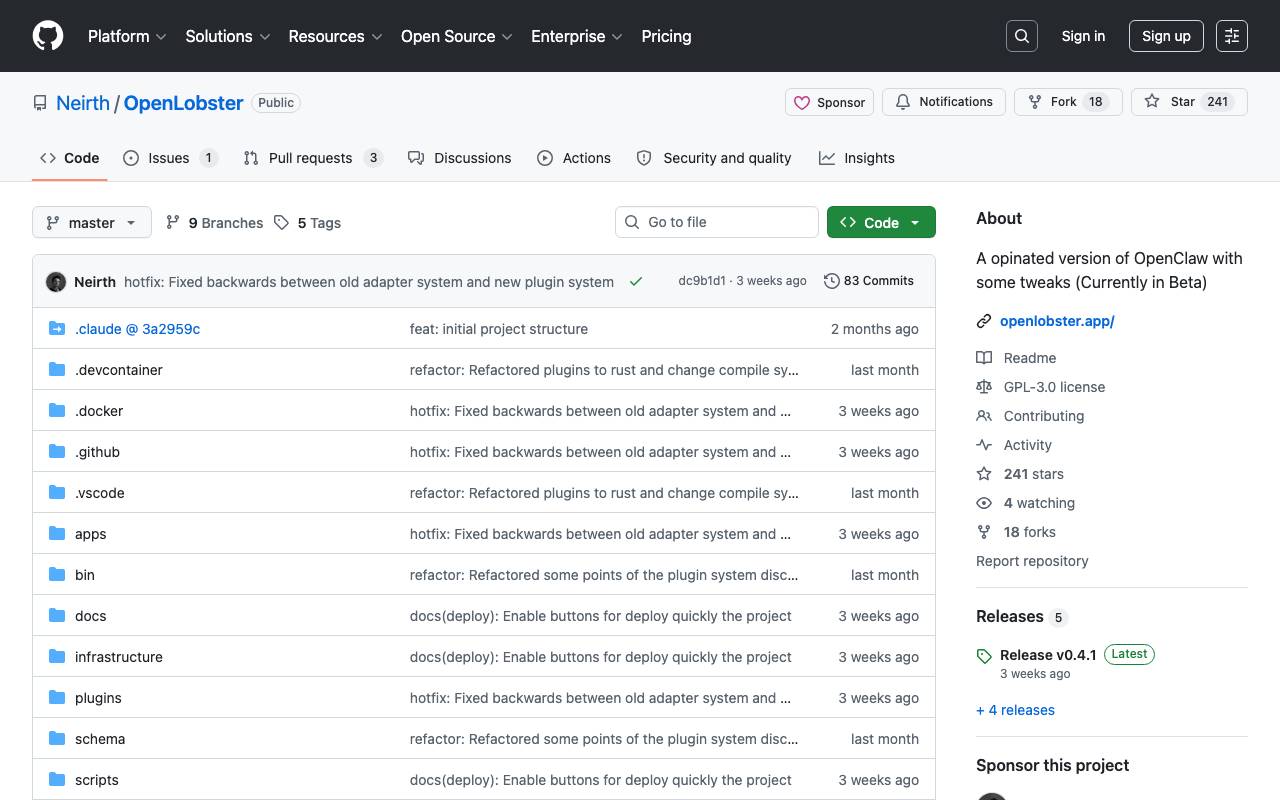
OpenLobster is an open-source, self-hosted AI assistant that addresses the security and functionality concerns of its predecessor, OpenClaw. It provides a personal AI assistant that runs on the user's preferred platform, connecting to various channels. OpenLobster is designed to be more secure, with features such as a proper graph database for memory storage, multi-user support, and a real task scheduler. The memory system in OpenLobster uses a graph database, allowing for more efficient and secure storage of user interactions. This database enables the agent to build nodes, edges, and typed relationships as it engages with users, providing a more robust memory system. OpenLobster's multi-user support allows each user to have their own conversation history, tool permissions, and pairing flow, ensuring that users can interact with the agent without conflicts. The task scheduler in OpenLobster uses cron expressions for recurring jobs and ISO 8601 datetimes for one-shot tasks, providing more flexibility and control over tasks. OpenLobster also prioritizes security, with features such as authentication and a permission matrix for controlling user access to tools. The agent connects to any Streamable HTTP MCP server, handling the full OAuth 2.1 flow and providing a marketplace for one-click integrations. Overall, OpenLobster aims to provide a more secure, functional, and user-friendly AI assistant experience. It is designed to be self-hosted, allowing users to run the agent on their preferred platform and connect to their preferred channels. The development of OpenLobster is driven by the need for a more secure and reliable AI assistant. The project's creators recognized the limitations and vulnerabilities of OpenClaw and set out to create a more robust and user-friendly alternative. As a result, OpenLobster offers a range of features and capabilities that make it a compelling option for users seeking a self-hosted AI assistant.
Criteria breakdown
- Graph database for memory storage
- Multi-user support
- Real task scheduler
- MCP integration with OAuth 2.1 flow
- Permission matrix for tool access control
- Self-hosted and channel-agnostic

Voyagier
An AI travel planning agent that builds personalized itineraries and helps users book flights, stays, and experiences.

Voyagier is a travel planning AI agent that rebuilds the traditional travel agency model. It connects users" travel habits with AI-generated itineraries that are then refined by human expert advisors. The platform allows group trips, business travel planning, and luxury getaways. It features a seamless booking experience with multiple options, real-time inventory of flights and hotels, and a system for trip planning and execution. The core of Voyagier"s functionality revolves around three steps: 1. Trip Sync: Users connect their inbox, and the platform learns their travel preferences. 2. The Plan: An AI generates a personalized itinerary, which is then polished by a human advisor. 3. Book It: Trips can be booked in one connected flow, with one platform and one point of contact. Key features include private, automatic, and always-in-control trip management, human-curated recommendations, and a real travel network with verified users. Voyagier offers bespoke itineraries, real-time bookings, and personalized itineraries built around users" interests and preferences. Voyagier claims to handle complex travel requirements with expertise, and its platform focuses on the seamless execution of travel plans. It is designed for users who value personalized travel planning and booking experience. Through its platform, users can also get inspiration for future trips based on shared experiences with other travelers.
Criteria breakdown
- Private and automatic trip management
- Human advisor collaboration
- Trip planning and execution
- Real travel network with verified users
- Live flight and hotel inventory

Yutori
AI-powered web agents that autonomously perform everyday digital tasks for users.

Yutori offers AI-powered web agents that autonomously perform everyday digital tasks for users. These agents can be used to automate browser tasks at scale through their APIs, allowing users to delegate work to personal agents. Additionally, Yutori provides features such as Scouts, which are always-on agents for research and monitoring, Local for secure login to any website, and a Blog for following their research. The company also shares its mission, team, and backers on their website.
Criteria breakdown
- Web Agents APIs
- Delegate tasks to personal agents
- Scouts for research and monitoring
- Local for secure website login

Hermes Agent
An open-source self-improving AI agent with memory, skills, tools, and multi-channel operation across local and cloud setups.
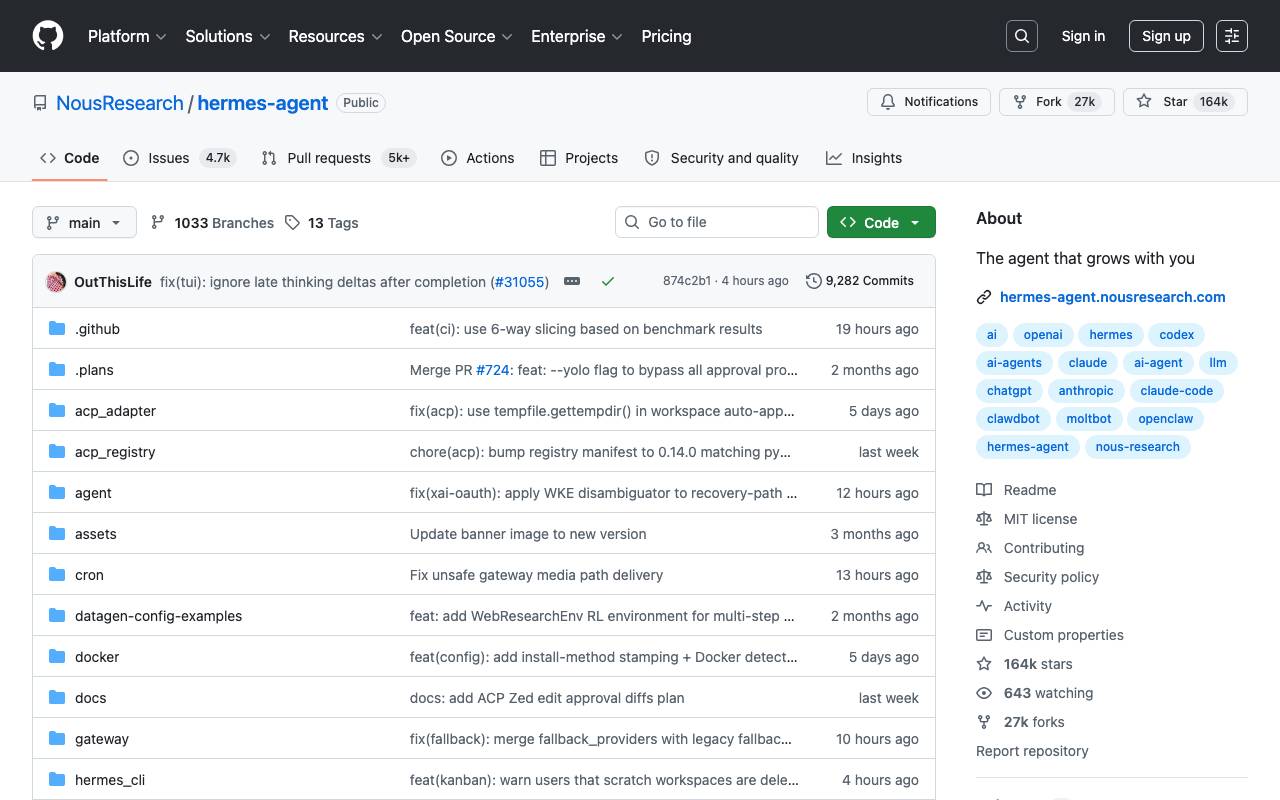
Hermes Agent is a self-improving AI agent developed by Nous Research. It is designed to learn from experience, create skills, and improve them over time. The agent has a built-in learning loop that enables it to persist knowledge and deepen its understanding of the user across sessions. Hermes Agent can be run on various infrastructure setups, including a $5 VPS, GPU cluster, or serverless infrastructure, and can be accessed through multiple channels such as Telegram, Discord, and CLI. The agent's architecture allows it to create skills from experience and improve them during use. It also has a closed learning loop, where it curates its own memory and receives periodic nudges to retain knowledge. Additionally, Hermes Agent has autonomous skill creation capabilities, allowing it to generate new skills after completing complex tasks. One of the key features of Hermes Agent is its flexibility and customizability. Users can choose from various models, including Nous Portal, OpenRouter, and OpenAI, and switch between them without requiring code changes. The agent also has a real terminal interface with features like multiline editing, slash-command autocomplete, and conversation history. Hermes Agent is designed to be accessible and user-friendly, with support for voice memo transcription, cross-platform conversation continuity, and streaming tool output. The agent's ability to learn and improve over time makes it a powerful tool for users looking to automate tasks and streamline their workflow. Overall, Hermes Agent is a unique and innovative AI solution that offers a range of benefits and capabilities. Its self-improving nature, flexibility, and customizability make it an attractive option for users looking for a powerful and adaptable AI agent. Hermes Agent's development is open-source, and its repository is available on GitHub, where users can access the code, contribute to the project, and stay up-to-date with the latest developments. The agent's open-source nature ensures that it is transparent, community-driven, and constantly evolving to meet the needs of its users. In terms of its technical capabilities, Hermes Agent is built using a range of technologies, including Python, Docker, and Nix. The agent's architecture is designed to be modular and scalable, allowing it to be easily integrated with other tools and systems. Overall, Hermes Agent is a powerful and innovative AI solution that offers a range of benefits and capabilities for users looking to automate tasks and streamline their workflow. The agent's multi-channel operation allows users to interact with it seamlessly across different platforms, including Telegram, Discord, Slack, WhatsApp, Signal, and CLI. This flexibility, combined with its self-improving nature and customizability, makes Hermes Agent a unique and valuable tool for users looking to leverage the power of AI to improve their productivity and workflow.
Criteria breakdown
- Built-in learning loop for self-improvement
- Autonomous skill creation and improvement
- Multi-channel operation across Telegram, Discord, Slack, WhatsApp, Signal, and CLI
- Real terminal interface with multiline editing and conversation history
- Support for multiple models, including Nous Portal, OpenRouter, and OpenAI
- Closed learning loop with periodic nudges for knowledge retention

PicoClaw
Ultra-lightweight OpenClaw-style personal assistant that runs on embedded Linux boards (<10MB RAM) with Telegram/Discord gateways.
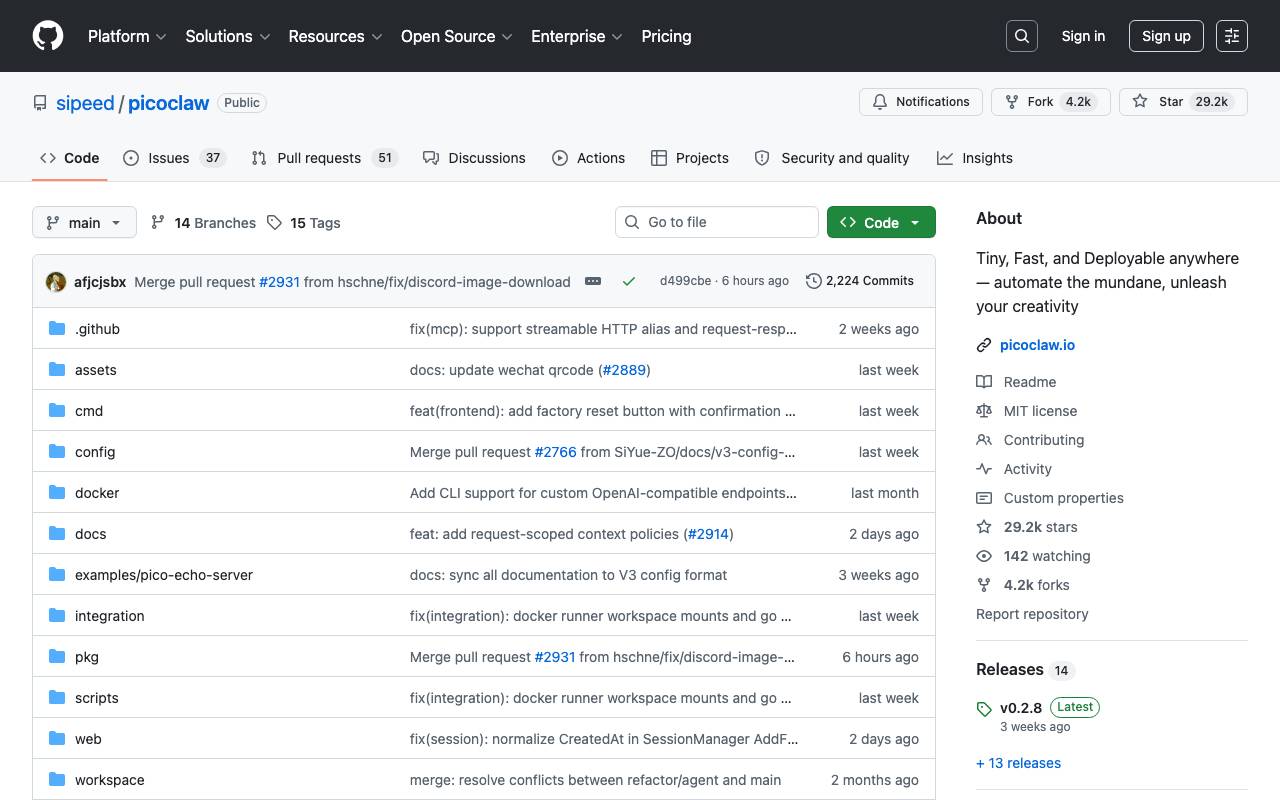
PicoClaw is an ultra-lightweight, open-source personal AI assistant designed to run on embedded Linux boards with less than 10MB of RAM. It was built from scratch in Go and is inspired by NanoBot. The assistant is capable of operating on very low-resource hardware, with compatibility for $10 devices, which is significantly cheaper and more memory-efficient than alternatives like OpenClaw. PicoClaw features gateways for integration with popular platforms such as Telegram and Discord. The project is actively developed, with recent updates including support for Android, various provider integrations, and improvements to security and performance. However, it's noted that the project is in early development, and users are cautioned about potential security issues until it reaches version 1.0. A related service, PicoPaw AI, allows users to create and share AI companions within the PicoClaw ecosystem.
Criteria breakdown
- Runs on embedded Linux boards
- Telegram and Discord gateways
- Android support
- Configurable web search
- MCP server management
- Tool feedback animation