Past battle · 2024-09-15 UTC
Information Agents Showdown — September 15, 2024
From the Information Agents category. 28 marks placed across 7 fighters. babywhatnow took the crown.
Final standings





The line-up
The fighters
Profiles of every tool that competed in this battle, ranked by their final score.

babywhatnow
AI-generated weekly family meal plans with built-in food safety checks for babies and kids.

babywhatnow is an AI meal planning tool designed for families with infants and young children. It generates weekly meal plans tailored to a household's dietary needs, preferences, and the developmental stage of each child, helping parents move past the daily question of what to cook. The service centers on a proprietary safety layer that automatically flags ingredients, textures, or preparations that may be inappropriate for babies and toddlers, such as common choking hazards or allergens. This is paired with age-aware suggestions so meals can often be adapted for the whole family from a single recipe. It is aimed at busy parents who want structured guidance without spending hours researching baby-led weaning charts, allergen introduction schedules, or balanced toddler nutrition.
Criteria breakdown
- Weekly AI-generated meal plans
- Proprietary child food safety system
- Age-appropriate ingredient and texture guidance
- Customization for dietary needs and preferences
- Whole-family recipes adaptable for babies
- Allergen awareness support

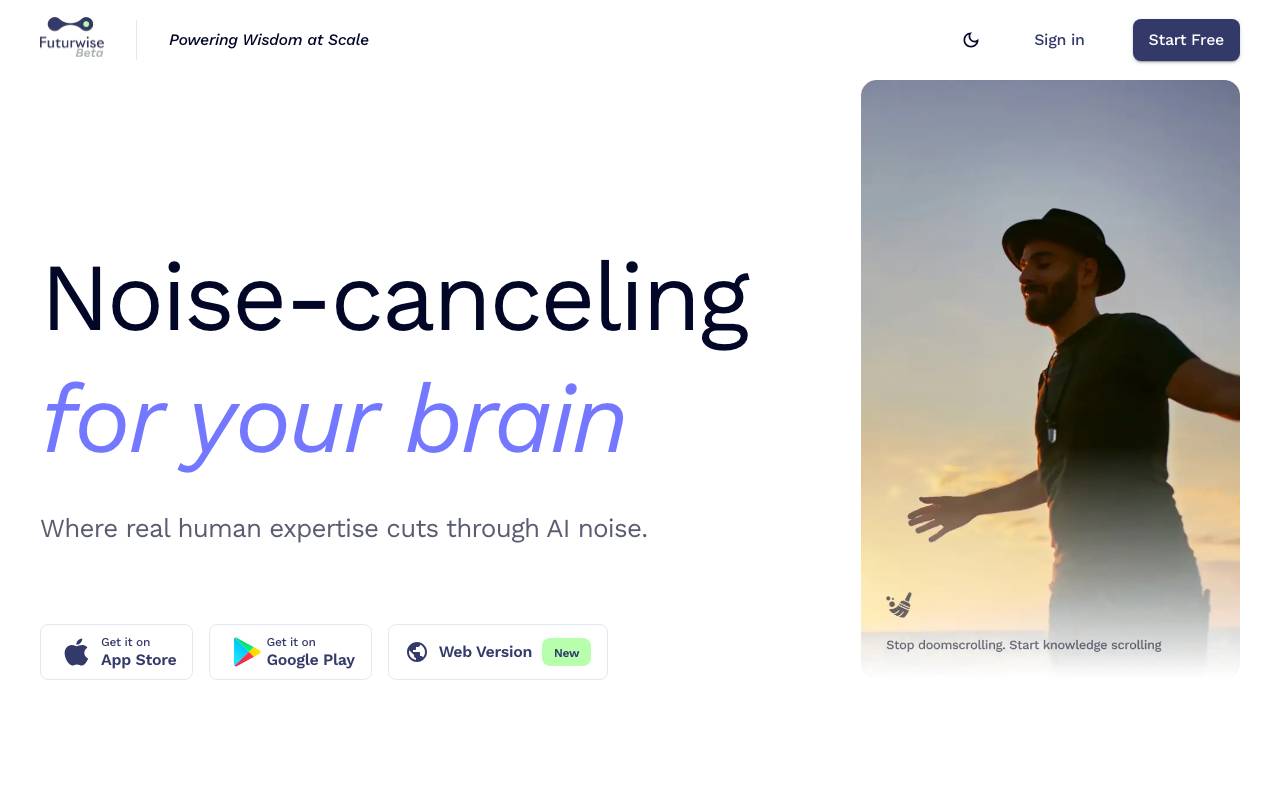
Futurwise is a knowledge management tool that helps users capture, organize, and resurface information from articles, videos, and other online content. It aims to shorten the gap between discovering something interesting and being able to act on it later. Using AI, the platform summarizes saved items, tags them automatically, and lets users search across their personal library in natural language. It positions itself as a faster alternative to traditional bookmarking and note-taking apps for people who consume a lot of content. The tool is geared toward researchers, analysts, students, and knowledge workers who want a low-friction way to build a personal second brain without manual filing.
Criteria breakdown
- AI-generated summaries of saved items
- Automatic tagging and categorization
- Semantic search across personal library
- Web and content capture tools
- Personal knowledge base organization

Andi AI
Conversational AI search engine that delivers direct, chat-style answers instead of link lists.
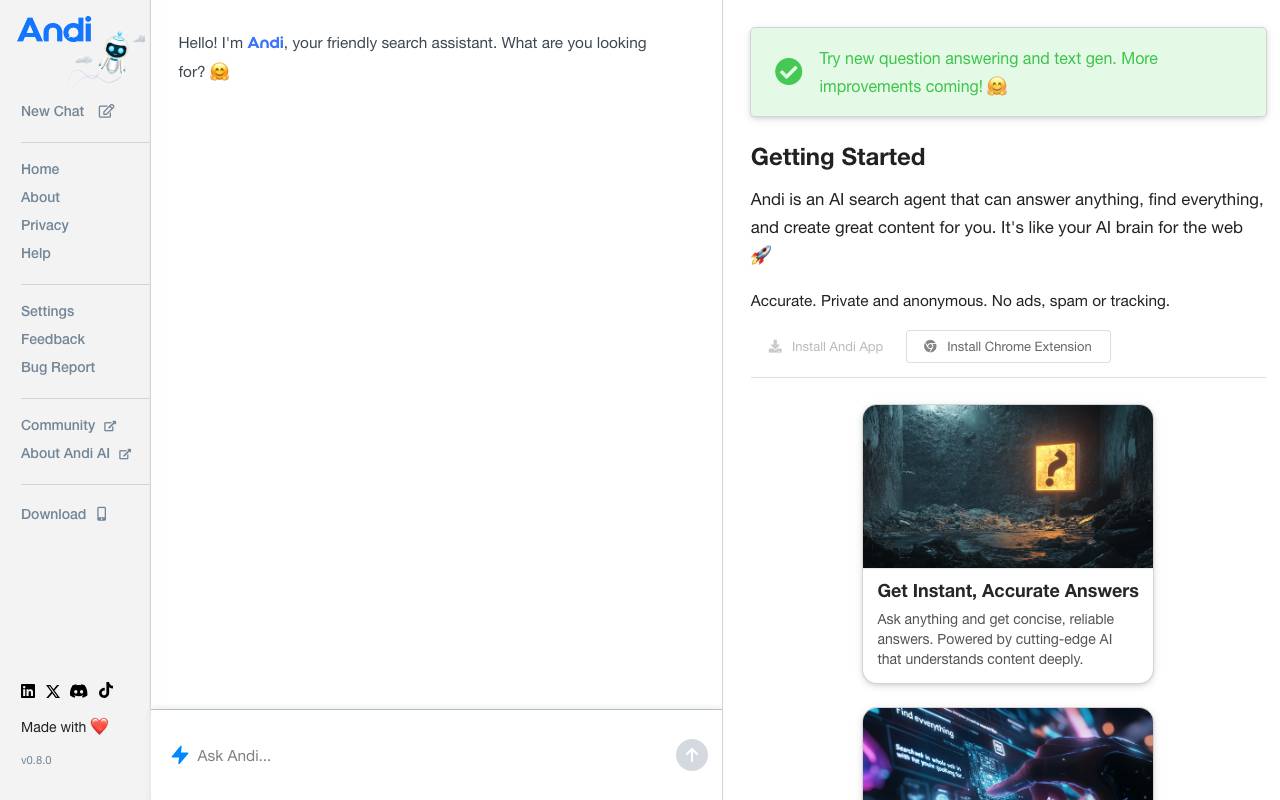
Andi AI is a search engine that uses generative AI and language models to answer questions in a conversational format. Rather than returning a page of blue links, it summarizes information from across the web and presents it as a chat-style response, with cited sources users can click through for verification. The tool is designed to feel more like talking with a knowledgeable friend than querying a traditional search index. It emphasizes a clean, ad-free interface, visual previews of source pages, and follow-up prompts that let users refine or expand on a topic. Andi is positioned as an alternative for people seeking quick, readable answers to factual or research-style queries.
Criteria breakdown
- Chat-style AI answer generation
- Source citations and link previews
- Follow-up and refinement prompts
- Summarization of web results
- Minimalist, distraction-free UI
- Mobile and desktop access

ChatGPT Search
Conversational AI search with live web access for current answers and cited sources.
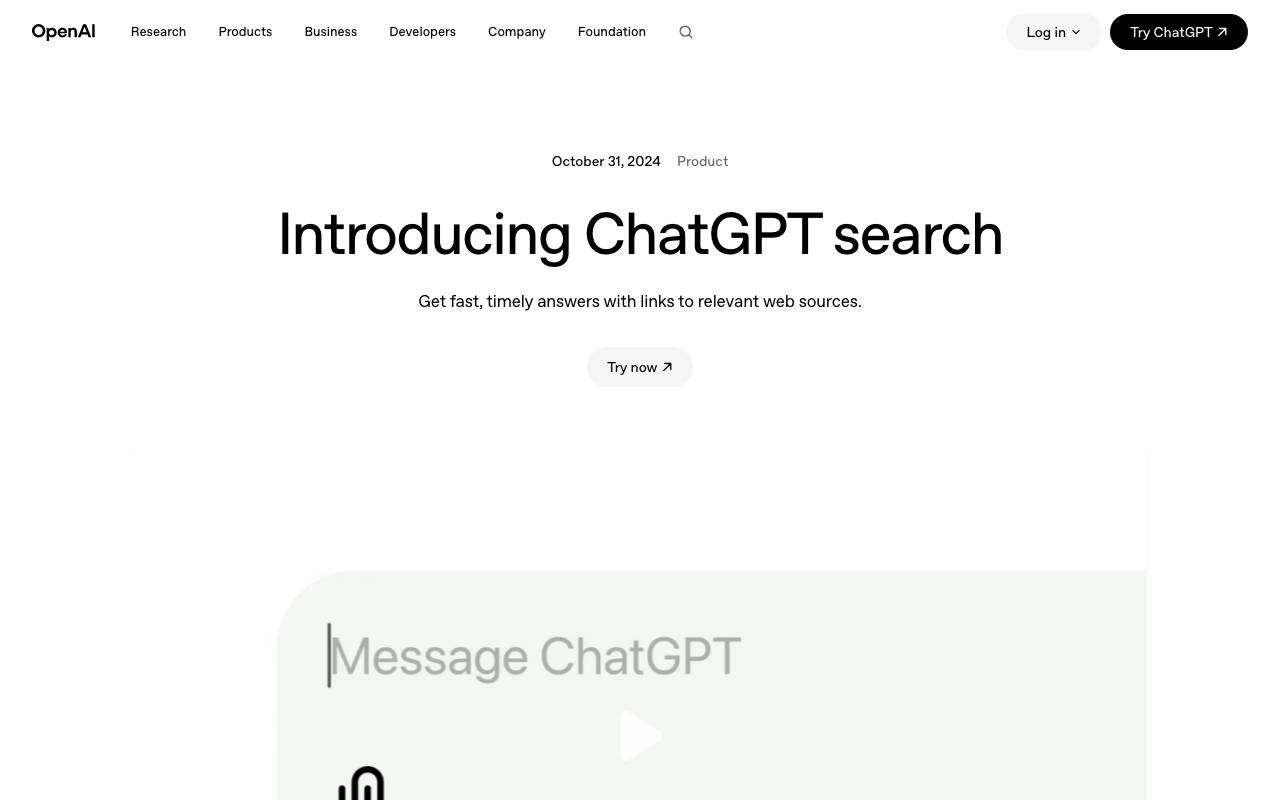
ChatGPT Search combines OpenAI's conversational model with real-time web browsing, letting users ask questions in natural language and receive synthesized answers backed by live sources. Unlike traditional search engines that return lists of links, it produces direct responses with inline citations users can click to verify. It's useful for research, current events, product comparisons, and any query where freshness matters. The tool can follow up on previous questions in context, refine results conversationally, and surface information from across the open web rather than relying solely on training data.
Criteria breakdown
- Live web browsing for up-to-date results
- Inline source citations and links
- Natural language, multi-turn queries
- Synthesized answers across multiple sources
- Integrated within the ChatGPT interface
- Works alongside other ChatGPT tools and modes

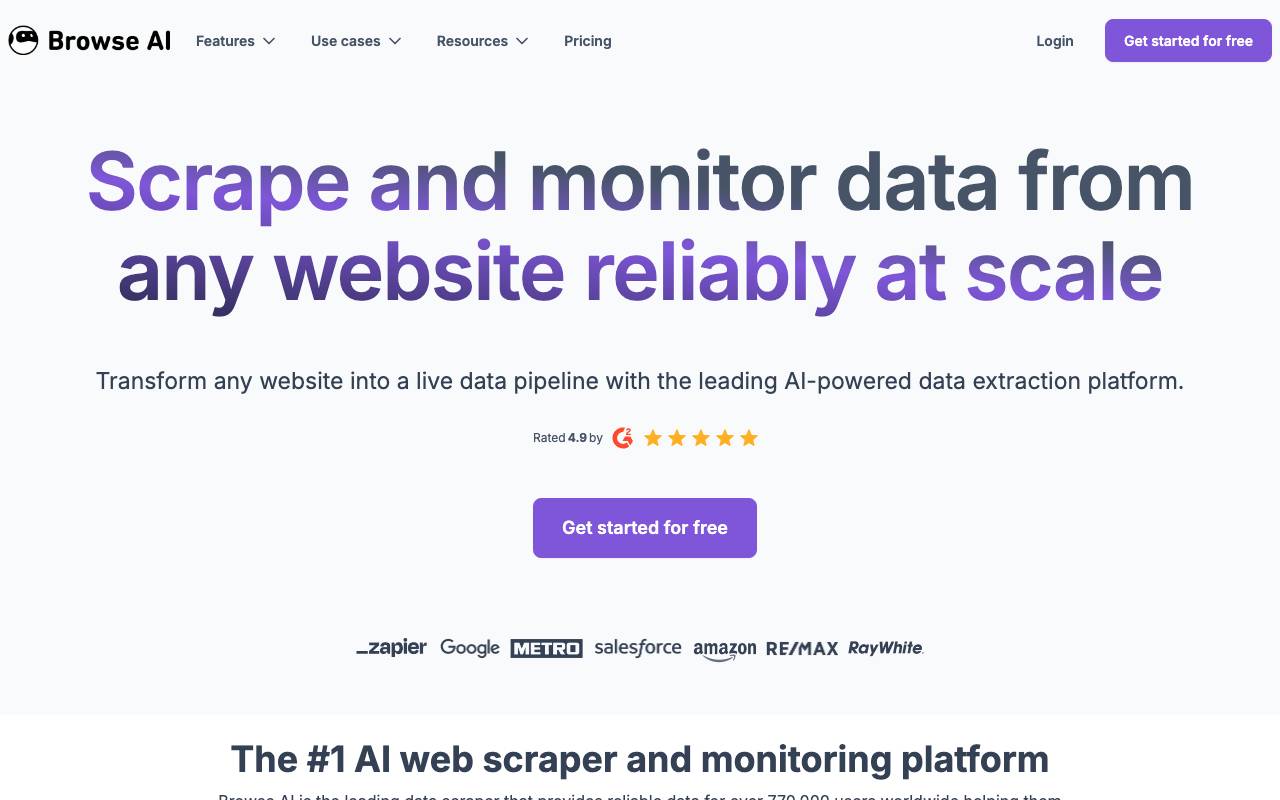
Browse AI is a no-code web scraping and monitoring platform that allows users to extract, scrape, and monitor data from almost any website. It provides a point-and-click interface to build AI web scrapers or monitors without requiring coding knowledge. The platform offers features such as dynamic content capture, built-in bot evasion, proxy management, automatic retries, and rate limiting. It also allows users to export, integrate, or connect scraped data with over 7,000 tools and apps to build automated workflows. Additionally, Browse AI provides enterprise-grade security and compliance standards, including SOC 2 Type II certification, GDPR compliance, and encrypted data transfer. The platform is designed for limitless scale and reliability, making it suitable for businesses and individuals who need to extract data from thousands of web pages.
Criteria breakdown
- Visual robot training in the browser
- Scheduled and on-demand data extraction
- Website change detection and alerts
- Bulk run with input lists
- Webhook and API access
- Library of prebuilt scraping templates

Mem is an AI-powered note-taking tool designed to automatically organize and prioritize notes, making it easier for users to find the information they need. It is suitable for individuals looking for a more efficient way to manage their notes and thoughts. Mem uses artificial intelligence to analyze and categorize notes, potentially surfacing relevant information at the right time. Its standout capability lies in its ability to learn and adapt to a user's preferences and working style, aiming to integrate seamlessly into their workflow. However, specific details about its workflow, integrations, and how it compares to traditional note-taking methods or other AI-powered tools are not well-defined. The tool's strengths include its potential to save time and reduce the effort required to keep notes organized, but its limitations and effectiveness in real-world scenarios are areas that would require further exploration.
Criteria breakdown
- AI-assisted search and chat with your notes
- Automatic tagging and note linking
- Cross-platform sync across devices
- Quick capture and templates
- Summarization and writing assistance
- Collaboration and shared collections

Ainee
AI notetaking companion that turns lectures, audio, and documents into organized study materials.
Ainee is an AI-powered notetaking companion designed to help students and learners organize their study materials. It can process lectures, audio recordings, and documents, and turn them into structured notes. The tool aims to simplify the process of reviewing and studying by providing a clear and organized format for notes. Ainee is suitable for students, researchers, and professionals who need to process large amounts of information and want to streamline their workflow. Its capabilities include converting unstructured data into organized notes, but specific details on how it works, integrations, and limitations are not available.
Criteria breakdown
- Live audio and lecture transcription
- AI-generated summaries and mind maps
- Automatic flashcard and quiz creation
- Document and media upload support
- Organized note library with sharing options
- Multi-language content processing