Past battle · 2024-05-07 UTC
Data Analysis Showdown — May 7, 2024
From the Data Analysis category. 24 marks placed across 6 fighters. Business Pulse took the crown.
Final standings




The line-up
The fighters
Profiles of every tool that competed in this battle, ranked by their final score.

Business Pulse is a chat-based business intelligence solution that uses NLP to provide real-time insights. It appears to empower users by offering an intuitive interface for data analysis, potentially making complex information more accessible and actionable. However, details about its capabilities and limitations are not yet known. Business Pulse might cater to businesses looking to streamline their data analysis, but the extent of its features and how it compares to existing tools is uncertain.
Criteria breakdown
- Chat-based data querying
- Real-time business metrics
- Natural language processing engine
- Automated insight summaries
- Data source integrations
- Trend and performance tracking
TextQL
Ask your data questions in plain English and get instant answers from your warehouse.
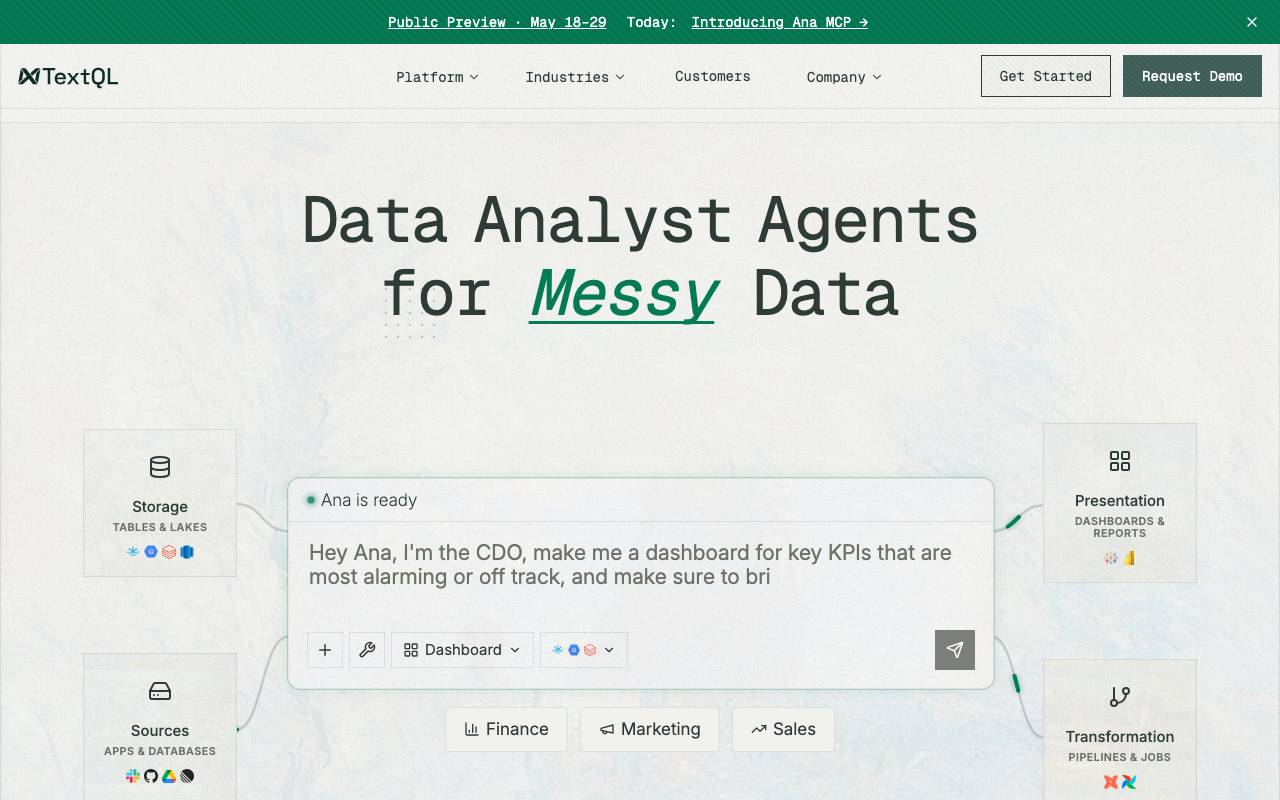
TextQL is a natural language analytics platform that lets business users query enterprise data warehouses without writing SQL. Users type questions in plain English and receive charts, tables, and explanations powered by an AI agent that understands the underlying data model. Designed for mid-to-large organizations, TextQL connects to common data warehouses and BI tools, mapping schemas and metrics so answers stay consistent with how the company defines its KPIs. It aims to reduce the analyst backlog by letting non-technical teams self-serve on routine data questions while keeping governance and accuracy under IT control.
Criteria breakdown
- Natural language to SQL translation
- AI agent (Ana) for data exploration
- Integration with warehouses like Snowflake and BigQuery
- Semantic layer and metrics governance
- Charts, dashboards, and shareable reports
- Enterprise security and access controls

Wellows
Track how AI engines mention your brand and uncover missed citation opportunities.
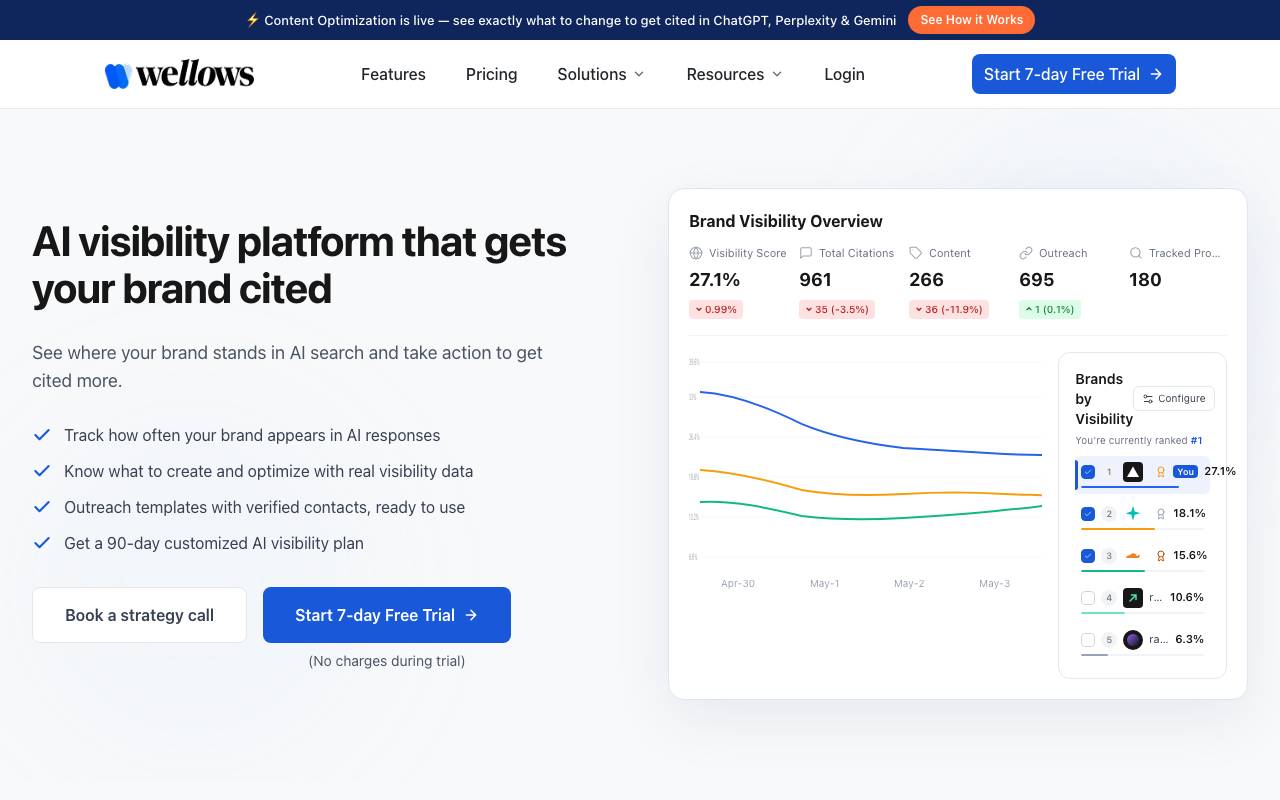
Wellows is an AI visibility platform that helps brands track and improve their citations in AI search results. It allows businesses to monitor how often their brand appears in AI responses, identify missed citation opportunities, and create a plan to increase visibility. The platform provides features such as visibility tracking, outreach opportunities, content generation, and AI content optimization. Wellows is designed for business owners, CMOs, and agencies. Business owners and CMOs can use Wellows to understand how AI platforms represent their brand, fix issues hurting their visibility, and turn AI visibility data into a marketing plan. Agencies can use Wellows to manage client accounts, track AI visibility, and build strategies to close gaps with competitors. The platform supports tracking citations and visibility across multiple AI platforms, including ChatGPT, Gemini, Perplexity, AI Overviews, and AI Mode. It also offers prompt-level competitive monitoring, which allows users to see which prompts mention competitors and where their brand can gain ground. Wellows offers a 7-day free trial with no charges. The platform is built to help users understand, track, and grow their brand's presence across AI, tailored to their role, team, and clients.
Criteria breakdown
- AI citation tracking across engines
- Missed mention detection
- Competitive visibility benchmarking
- Topic and query-level analytics
- Brand perception insights
- Recommendations to improve AI rankings

Aeroview
Enterprise geospatial data platform for postal boundaries, addresses, and location intelligence.
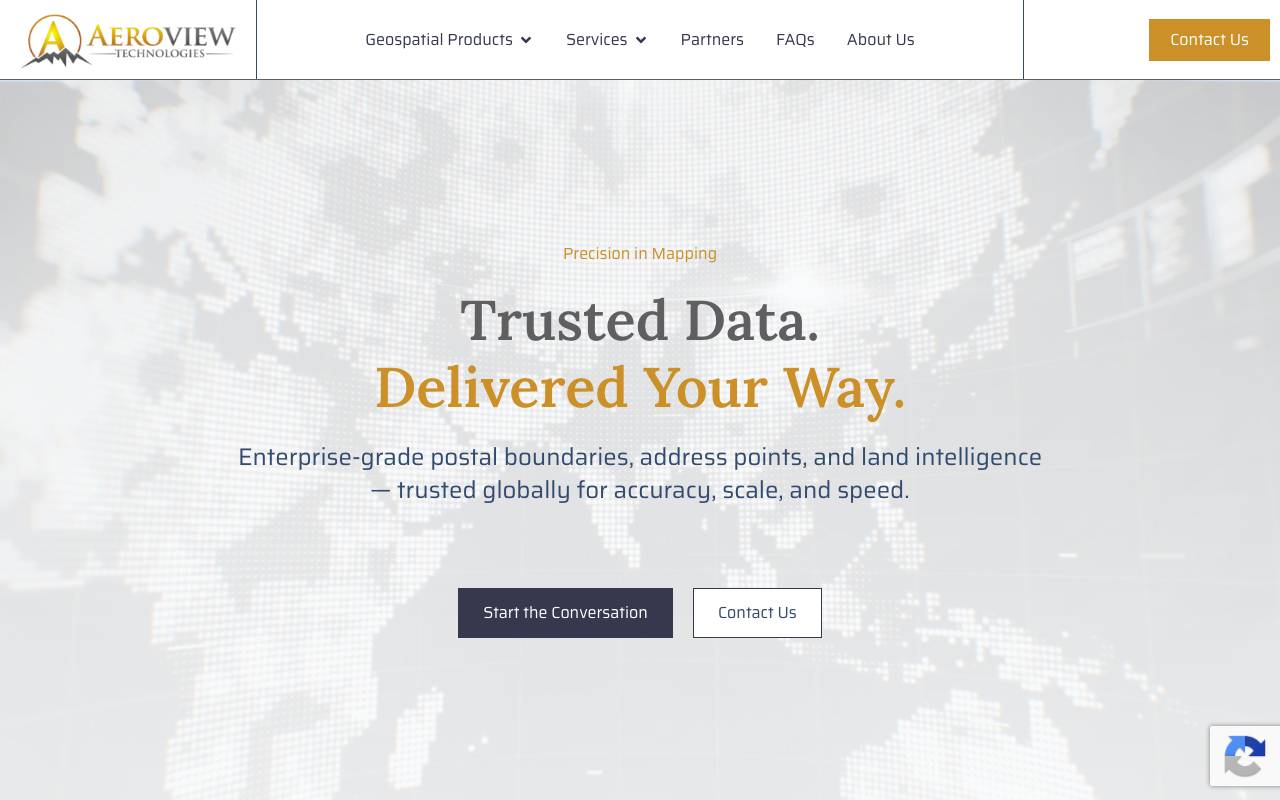
Aeroview is a geospatial data service from Aeroview Technologies that supplies enterprise customers with high-resolution location datasets, including postal boundaries, address points, and administrative geographies. The platform is designed to help businesses enrich their applications with reliable spatial context for logistics, marketing, analytics, and territory planning. Beyond raw data, Aeroview offers tooling to query, visualize, and integrate geospatial layers into existing systems through APIs and standard GIS formats. This makes it suitable for teams building delivery networks, insurance risk models, real estate platforms, or any product that depends on accurate boundary and address intelligence.
Criteria breakdown
- Postal boundary datasets
- Address point data
- Administrative geography layers
- API access for integration
- Support for standard GIS formats
- Location intelligence for enterprise workflows


CollabFeed is a tool for discovering real paid brand partnerships on Instagram and TikTok. It provides a live feed of influencer partnerships, allowing users to browse and engage with brand-sponsored content. This feed gives insight into the types of collaborations brands are undertaking, making it a resource for those looking to leverage influencer marketing in their own campaigns. CollabFeed's service caters to marketing professionals, brands, and agencies seeking to navigate the influencer marketing space effectively. Information on the platform may be valuable for learning about emerging trends, popular brands, and successful partnership strategies in the realm of social media influencer marketing.
Criteria breakdown
- Live feed of sponsored posts
- Brand and creator tracking
- Instagram and TikTok coverage
- Sponsorship lead discovery
- Competitor campaign monitoring

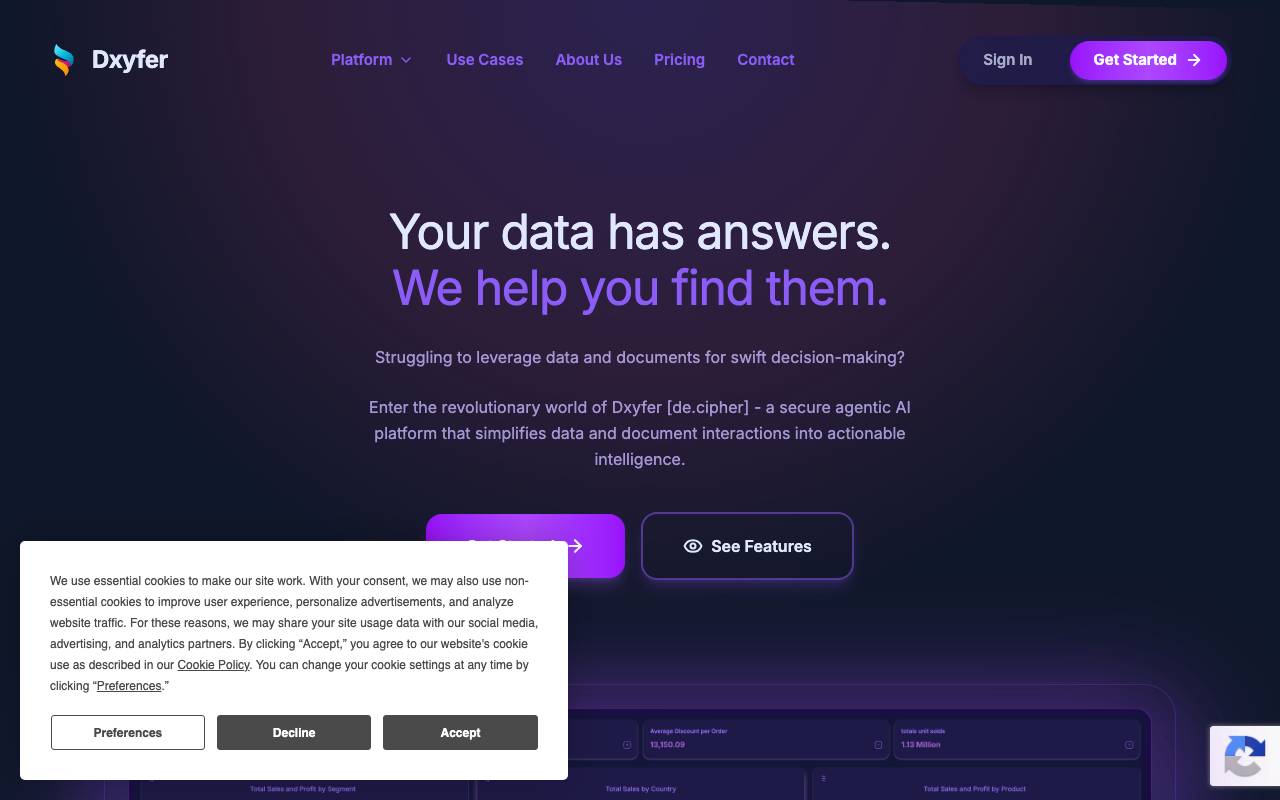
Dxyfer is a conversational interface that allows users to query business data using plain language. It enables non-technical users to access and analyze data without needing to know complex query languages or database structures. Dxyfer likely uses natural language processing (NLP) to understand user queries and return relevant data insights. The tool seems to be designed for business users who need to make data-driven decisions but may not have the technical expertise to navigate traditional data analysis tools. Dxyfer's interface appears to be user-friendly, allowing users to ask questions in a natural way and receive accurate answers.
Criteria breakdown
- Natural language data querying
- Automated chart and summary generation
- Database and data source integrations
- Self-serve analytics workflow
- Conversational follow-up questions