Past battle · 2023-12-10 UTC
Software Testing (QA) Agents Showdown — December 10, 2023
From the Software Testing (QA) Agents category. 6 marks placed across 2 fighters. Diffblue Cover took the crown.
Final standings
 Skill Scanner
 Diffblue Cover
The line-up
The fighters
Profiles of every tool that competed in this battle, ranked by their final score.

Diffblue Cover
An autonomous AI agent that generates and maintains Java unit tests at scale with guaranteed accuracy.
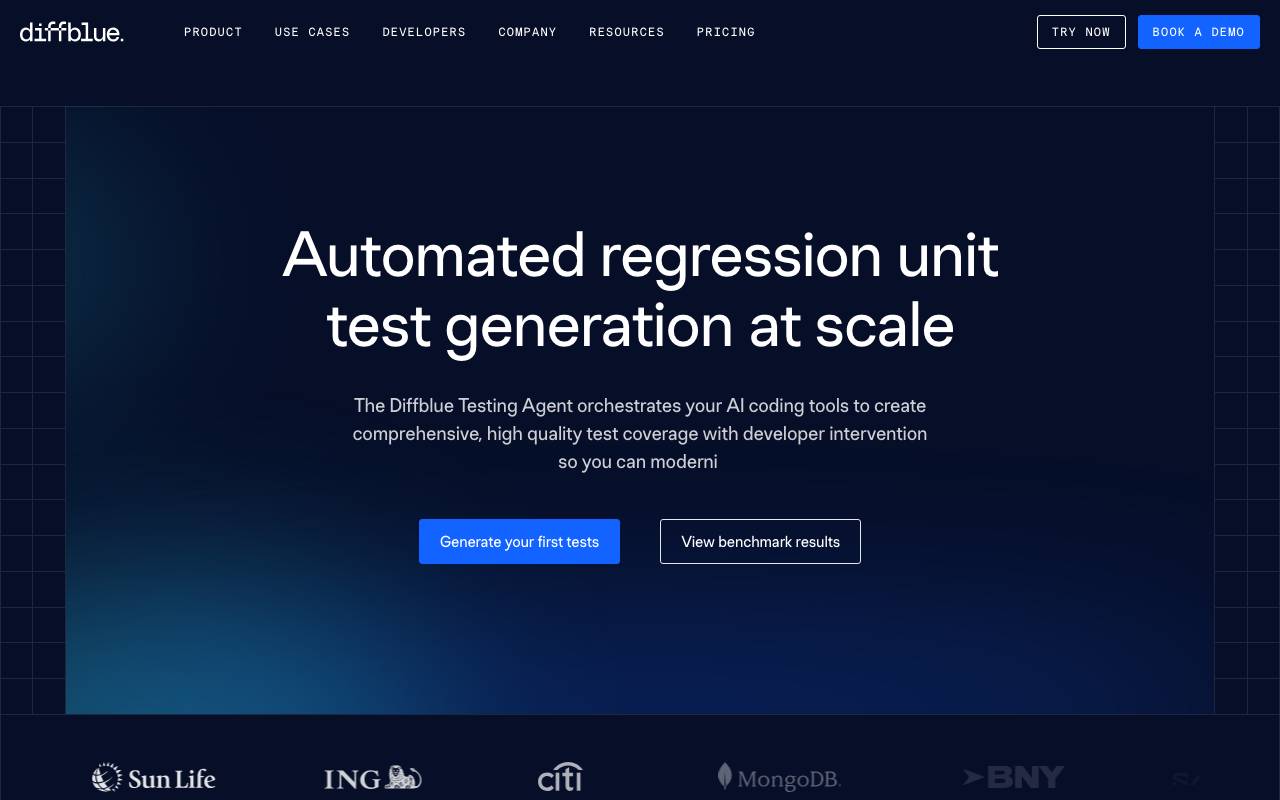
Diffblue Cover is an autonomous AI agent that generates and maintains Java unit tests at scale with guaranteed accuracy. It orchestrates AI coding tools to create comprehensive high-quality test coverage, reducing the need for developer intervention and manual test creation. The agent processes the entire codebase autonomously, including legacy codebases, to produce reliable tests without the need for continuous prompting or context switching. It offers outcome-based pricing that scales with the value generated, making it an attractive solution for enterprises looking to modernize legacy code with confidence.
Criteria breakdown
- Autonomous test generation
- Comprehensive test coverage
- Legacy codebase support
- Outcome-based pricing
- Platform compatibility with AI coding tools

Skill Scanner
Open-source security scanner that audits AI agent skills for prompt injection and malicious patterns.
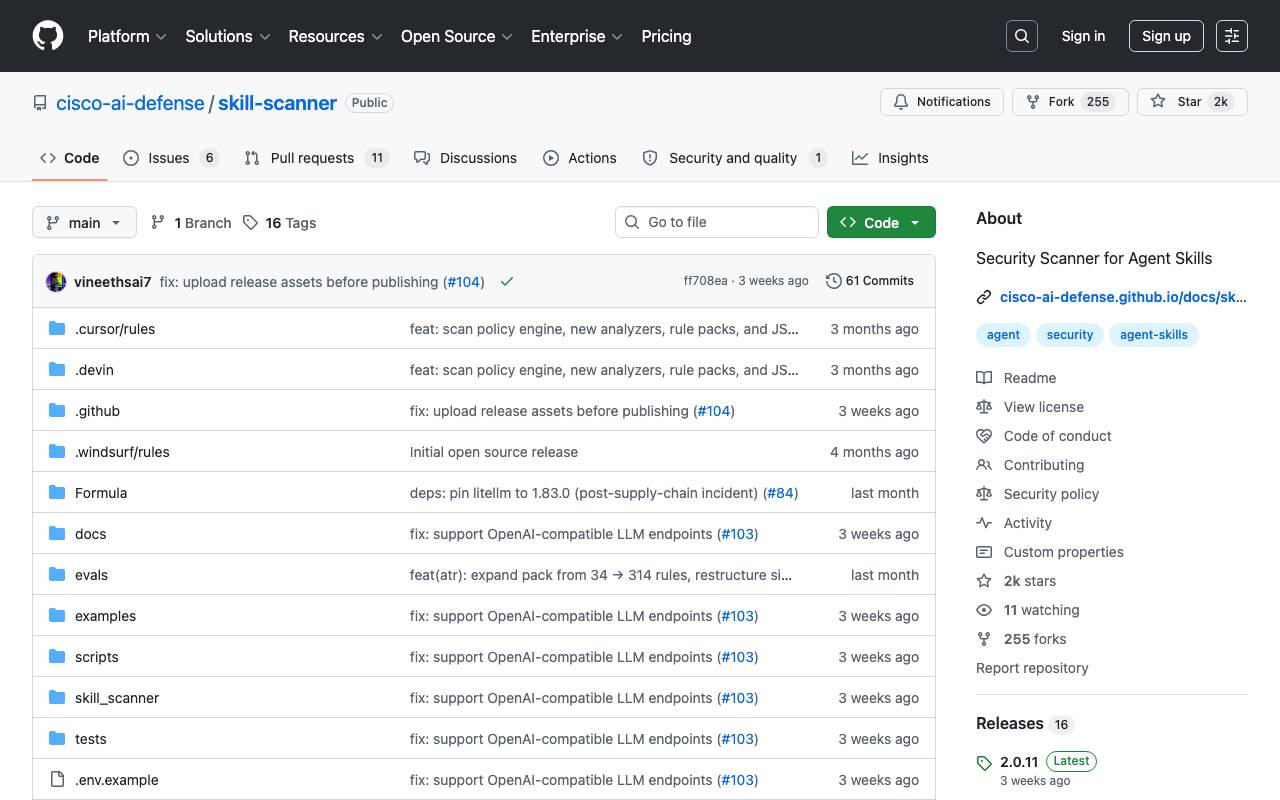
Skill Scanner is an open-source static analysis tool built to inspect AI agent skills and plugins for security risks before they are deployed. It scans skill manifests, instructions, and bundled code for signs of prompt injection, hidden data exfiltration attempts, and suspicious code patterns that could compromise an agent or its users. Results are emitted in SARIF format, making it straightforward to integrate findings into CI pipelines, code review workflows, or security dashboards like GitHub code scanning. Developers and security teams can use it to vet third-party skills, harden their own, and enforce baseline checks across an agent ecosystem. Because the project is open source, rules and detectors can be extended or customized to fit organization-specific threat models and policies.
Criteria breakdown
- Prompt injection pattern detection
- Data exfiltration heuristics
- Malicious code pattern scanning
- SARIF report output
- CI/CD pipeline integration
- Extensible rule set