Past battle · 2025-09-27 UTC
AI Agents Showdown — September 27, 2025
From the AI Agents category. 22 marks placed across 6 fighters. Avidnote took the crown.
Final standings





The line-up
The fighters
Profiles of every tool that competed in this battle, ranked by their final score.

Avidnote
AI workspace for researchers to write, read, and analyze academic papers faster.
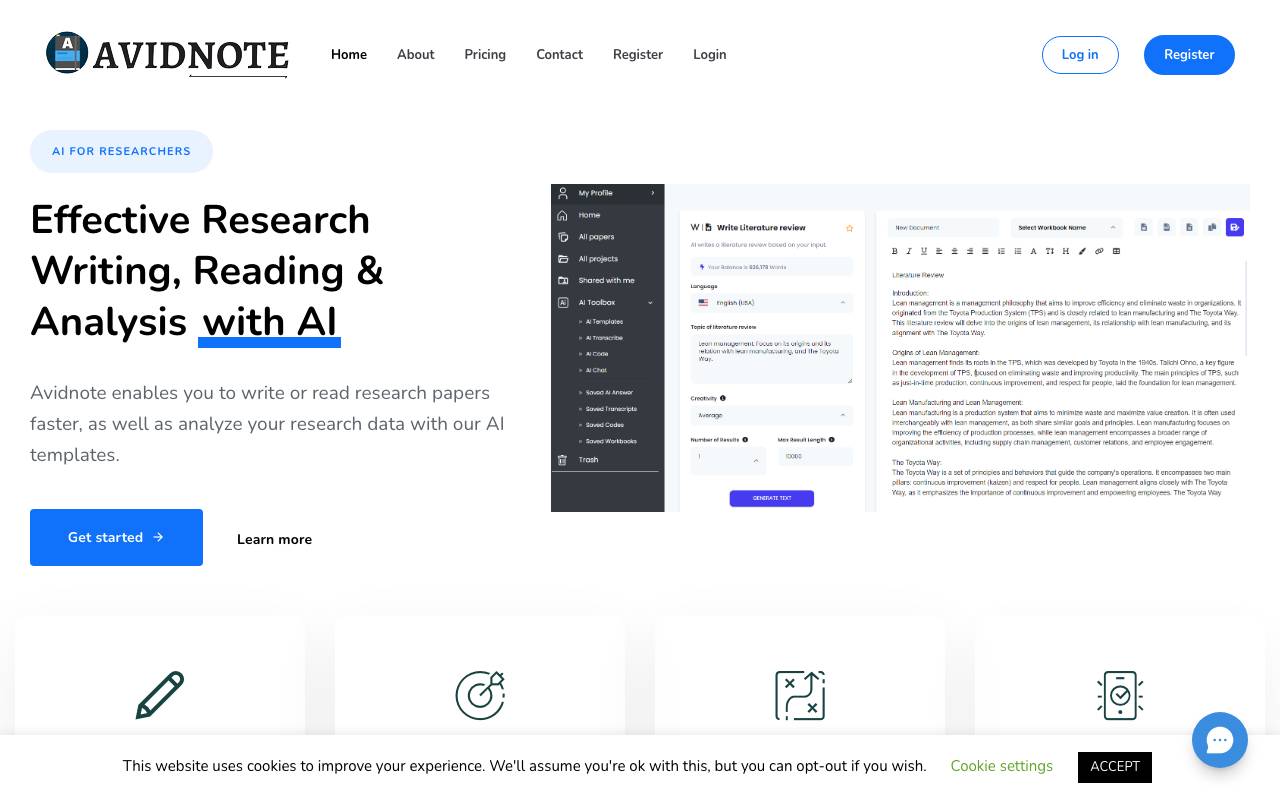
Avidnote is an AI-assisted platform built specifically for academic and scientific work. It helps researchers draft papers, summarize literature, take structured notes, and analyze data without leaving a single workspace, while keeping references and source material close at hand. The tool offers prebuilt AI prompts tuned for research tasks such as paraphrasing, proofreading, identifying gaps in literature, and explaining complex passages. Users can upload PDFs to chat with their documents, generate summaries, and extract key arguments, making it useful across the full research workflow from reading to publication. Avidnote positions itself as a privacy-conscious alternative to general-purpose chatbots, with options aimed at universities and research teams that need secure handling of unpublished work.
Criteria breakdown
- AI-assisted academic writing and proofreading
- PDF reading, summarization, and Q&A
- Note-taking linked to source documents
- Data analysis support for research projects
- Prebuilt prompts for literature review and paraphrasing
- Reference and citation management

Latta is an AI-powered content automation tool designed for businesses and creators. It aims to streamline and automate content creation processes. Using AI, Latta can generate content, though specific types and capabilities are not detailed. The tool is intended to save time and resources for its users by automating tasks that typically require human effort. While Latta's exact features and integrations are not specified, it likely competes with other AI content generation tools in the market. Without more information, the full scope of Latta's capabilities and limitations remains unclear.
Criteria breakdown
- AI-driven content generation
- Customizable automation workflows
- Support for multiple content formats
- Designed for business and creator use cases
- Streamlined drafting-to-output pipeline

Ai Agent Layer is a platform for creating and deploying AI agents that double as tradeable on-chain assets. Users can spin up a custom agent in one click, with the agent's token made available for trading immediately after launch. The service blends agent tooling with token-launch infrastructure, aiming to lower the barrier for creators, communities, and speculators who want exposure to AI agent projects. By combining deployment and market access in a single flow, it positions itself between no-code agent builders and crypto launchpads.
Criteria breakdown
- One-click AI agent launch
- Built-in tokenization of agents
- Immediate market/trading availability
- Creator-focused deployment dashboard
- On-chain integration for agent assets

Navan AI
AI automation for e-commerce operations, from product tagging to inventory control.
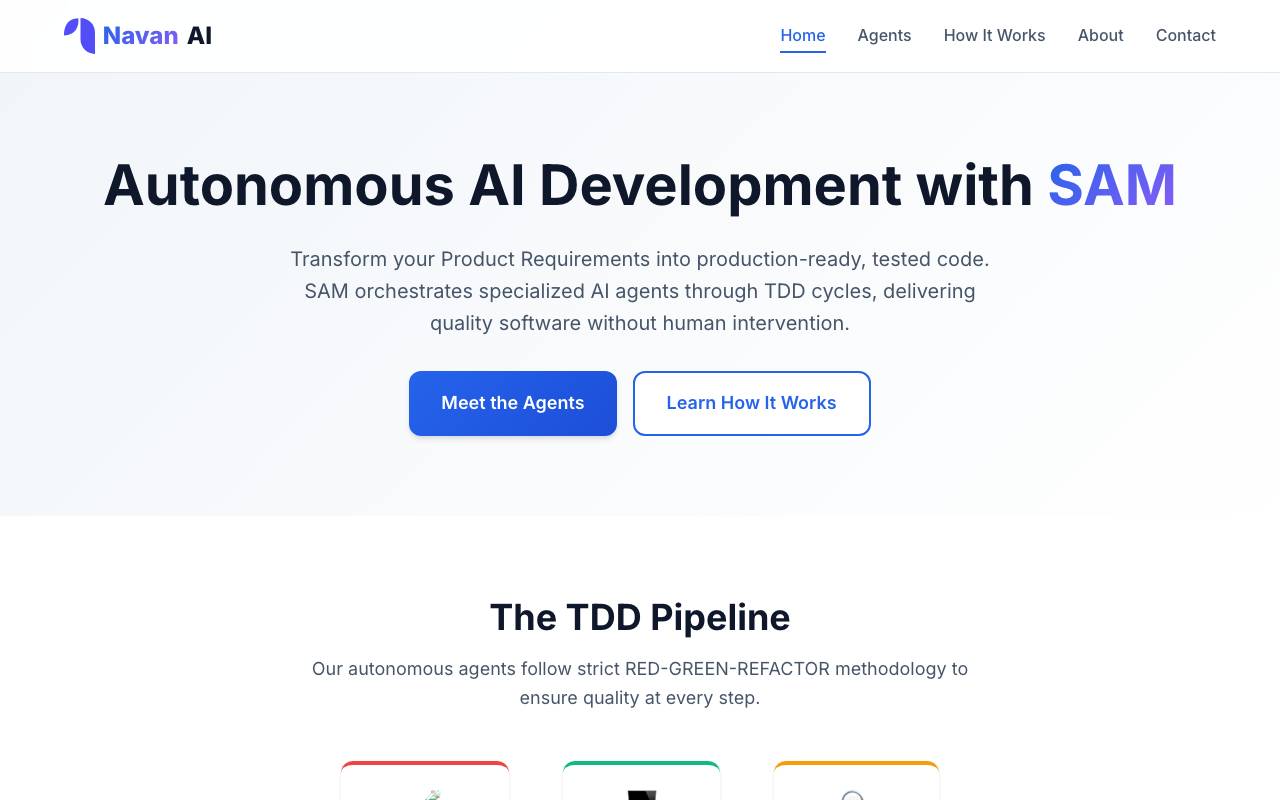
Navan AI is an artificial intelligence platform built for e-commerce and retail businesses looking to streamline repetitive backend operations. It applies machine learning to tasks such as product categorization, attribute tagging, and inventory tracking, helping merchants maintain cleaner catalogs and more accurate stock data with less manual effort. The tool is designed to integrate into existing retail workflows, supporting teams that manage large product catalogs across multiple channels. By automating data-heavy processes, Navan AI aims to reduce listing errors, improve search and discovery on storefronts, and free staff to focus on merchandising and growth.
Criteria breakdown
- AI-driven product categorization
- Automated attribute and metadata tagging
- Inventory management automation
- Catalog data cleanup
- Workflow integration for e-commerce platforms

RPA.ai
AI-powered RPA agents that automate repetitive business workflows across apps and systems.
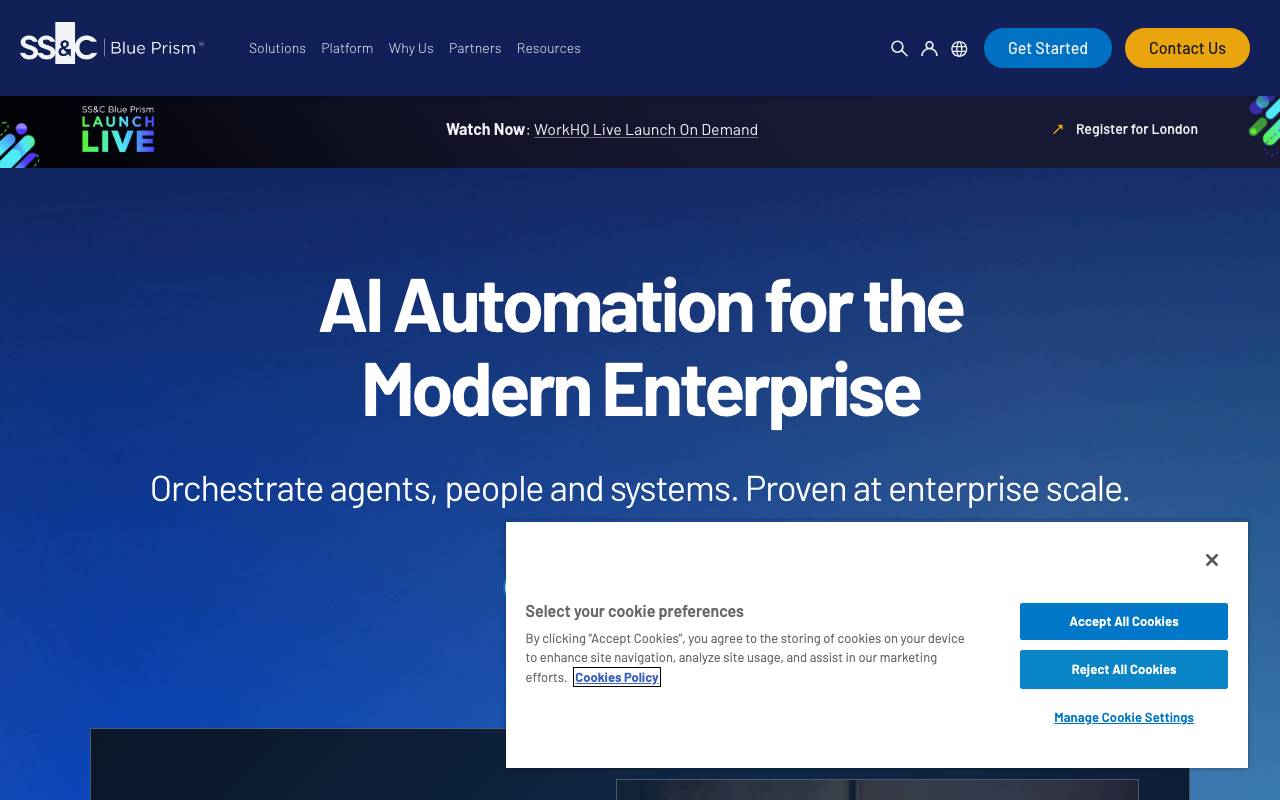
RPA.ai builds intelligent software agents that handle routine business processes, from data entry and document handling to multi-step workflows spanning several applications. By combining traditional robotic process automation with AI models, the platform aims to reduce manual effort on tasks that were previously too unstructured for classic RPA tools. The service targets operations, finance, HR, and back-office teams looking to offload repetitive work without heavy custom development. Agents can be configured to interpret documents, make context-based decisions, and integrate with existing business software, allowing organizations to scale automation beyond simple rule-based bots.
Criteria breakdown
- AI-driven RPA agents
- Cross-application workflow automation
- Document understanding and data extraction
- Integration with common business tools
- Configurable, task-specific bots
- Scalable automation for back-office processes
localGPT is an open-source project that lets you ask questions about your own documents using large language models, with all processing happening on your local machine. By keeping embeddings, vector storage, and inference offline, it eliminates the need to send sensitive files to third-party cloud services. The tool ingests common document formats, splits and embeds the content into a local vector database, and then uses a chosen LLM to generate grounded answers based on retrieved passages. It supports GPU acceleration on NVIDIA, Apple Silicon, and CPU-only setups, making it adaptable to a range of hardware. It is best suited for developers, researchers, and privacy-conscious users who want a self-hosted alternative to cloud-based document Q&A tools and are comfortable working with Python and command-line environments.
Criteria breakdown
- Retrieval-augmented generation on local files
- Local vector database for embeddings
- Support for PDFs, text, and office documents
- Configurable LLM and embedding model choices
- Optional GPU acceleration
- Command-line and basic web interface