Past battle · 2025-11-25 UTC
Workflow Showdown — November 25, 2025
From the Workflow category. 15 marks placed across 6 fighters. Bit Flows took the crown.
Final standings




The line-up
The fighters
Profiles of every tool that competed in this battle, ranked by their final score.

Bit Flows
Advanced workflow automation plugin for WordPress with a visual drag-and-drop builder.
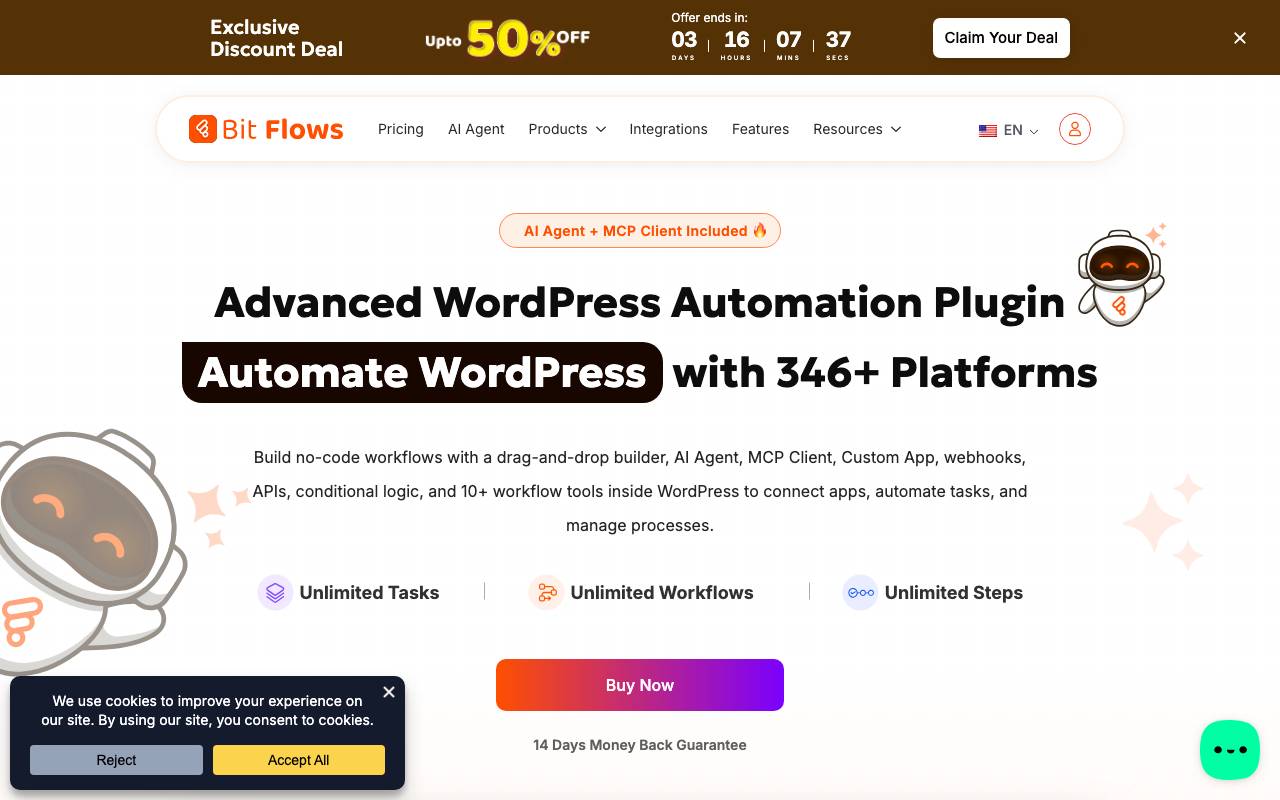
Bit Flows is a WordPress plugin that lets site owners automate repetitive tasks by connecting plugins, forms, and third-party apps through a visual workflow editor. Triggers and actions can be chained together to move data between tools, send notifications, sync contacts, or trigger custom logic without writing code. It is aimed at agencies, freelancers, and site owners who want a self-hosted alternative to cloud automation services. Workflows run inside WordPress, so data stays on the user's own server and there are no per-task fees from external platforms. Typical use cases include syncing form submissions to a CRM, automating email and SMS follow-ups, updating spreadsheets, and orchestrating actions across WooCommerce, LearnDash, and other popular plugins.
Criteria breakdown
- Drag-and-drop workflow builder
- Triggers and actions for popular WordPress plugins
- Conditional logic and data formatting steps
- Integrations with external apps via API and webhooks
- Logs and history for debugging workflows
- Scheduled and event-based automations

Kuberns
One-click AI-powered cloud deployment platform for shipping apps without DevOps overhead.
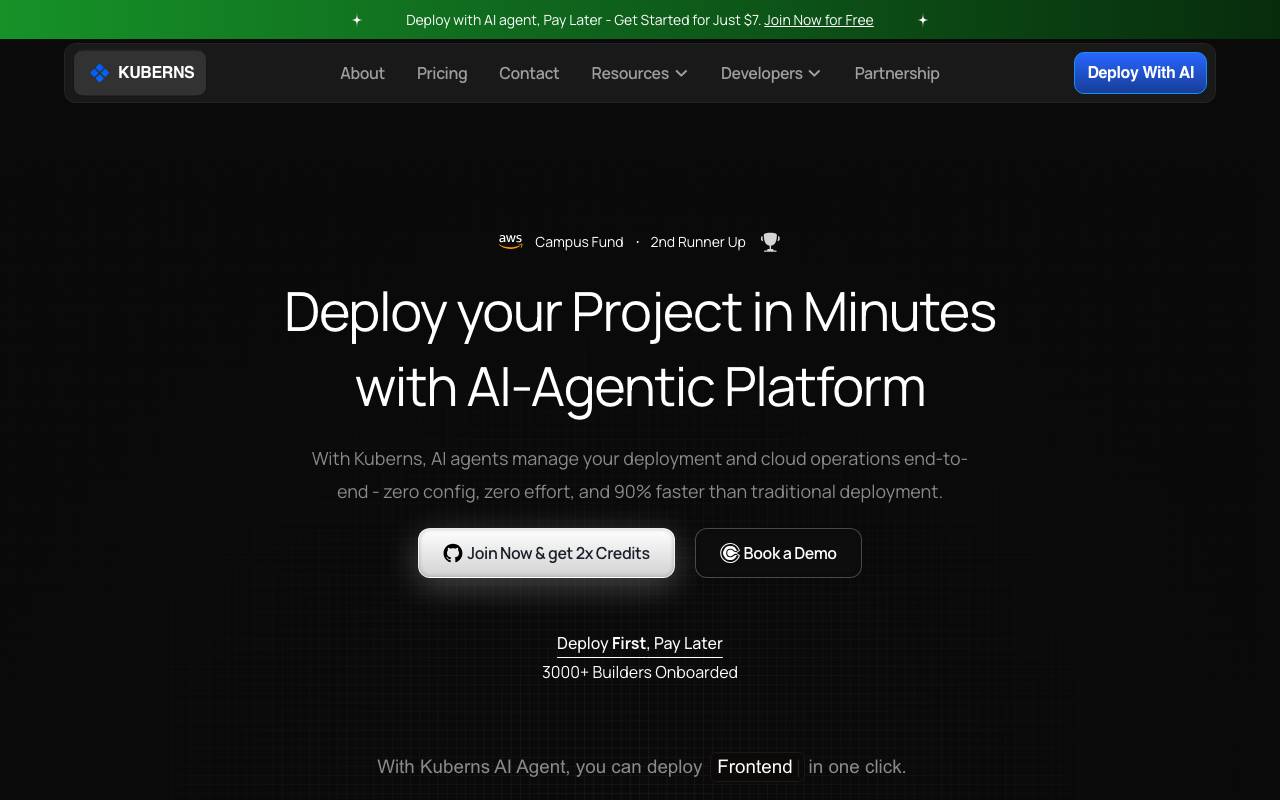
Kuberns is a cloud deployment platform that uses AI to automate the setup, configuration, and scaling of applications across cloud infrastructure. Developers connect a repository and Kuberns handles provisioning, container orchestration, and environment configuration, letting teams move from code to production in a single click. Designed for startups and engineering teams that want to avoid the complexity of managing Kubernetes or building custom CI/CD pipelines, the platform aims to reduce deployment time and infrastructure costs. It supports a range of stacks and frameworks, with built-in monitoring and auto-scaling so applications can grow with demand.
Criteria breakdown
- One-click app deployment
- AI-driven resource configuration
- Automatic scaling and load handling
- Git repository integration
- Built-in monitoring and logs
- Multi-framework support

Teams Reminder Flow Agent
AI-powered task reminder bot for Microsoft Teams that helps teams hit deadlines.
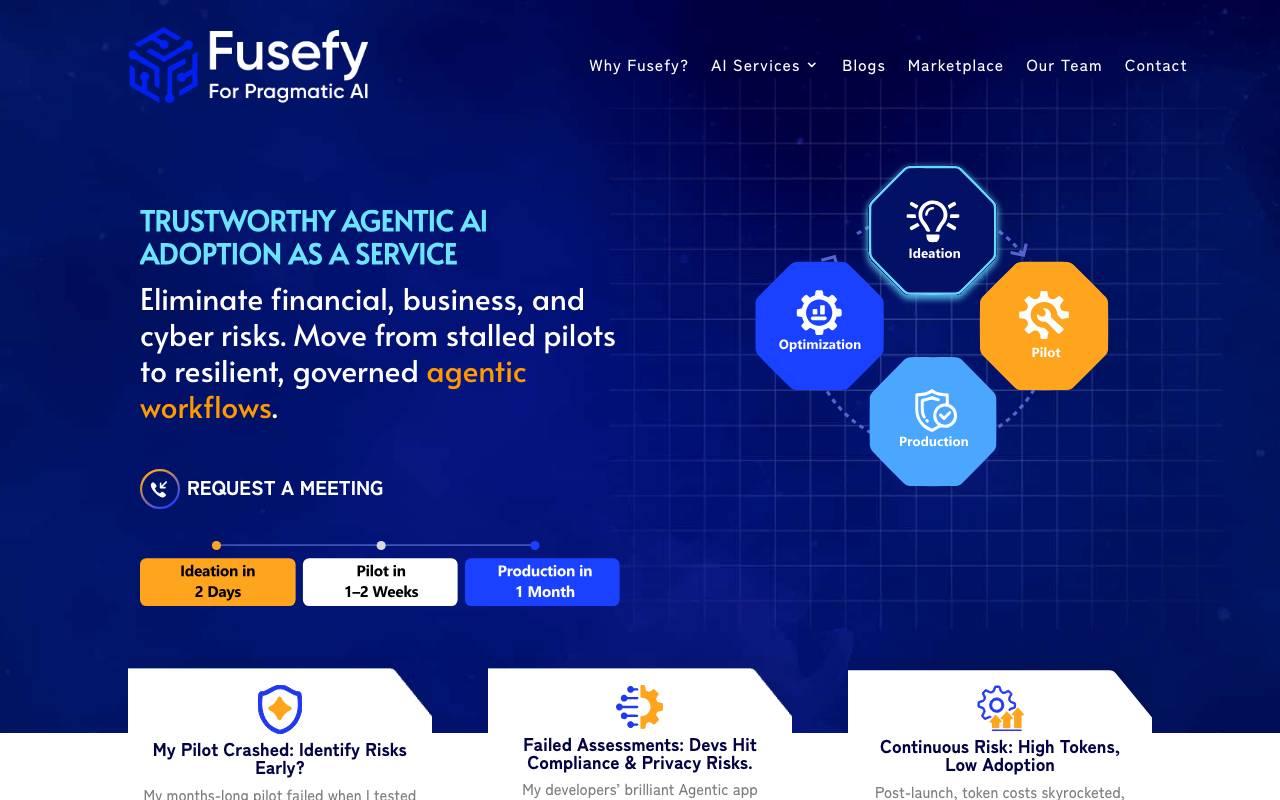
Teams Reminder Flow Agent is an AI assistant built into Microsoft Teams that helps users create, track, and follow up on tasks without leaving their chat workspace. It interprets natural language requests to schedule reminders, assign owners, and surface upcoming or overdue work at the right moment. The agent integrates with existing Teams channels and direct messages, sending contextual nudges and summaries so deadlines stay visible across busy conversations. It is aimed at managers, project leads, and distributed teams that rely on Teams as their primary collaboration hub. By combining conversational input with automated follow-ups, the tool reduces the need for separate task trackers and helps cut down on missed commitments during fast-moving projects.
Criteria breakdown
- Natural language task creation
- Scheduled and recurring reminders
- Overdue task escalation
- Channel and direct message notifications
- Task assignment to team members
- Daily and weekly task summaries

Project Alice
An open-source virtual assistant designed to operate entirely offline, ensuring user privacy while providing customizable voice interactions.
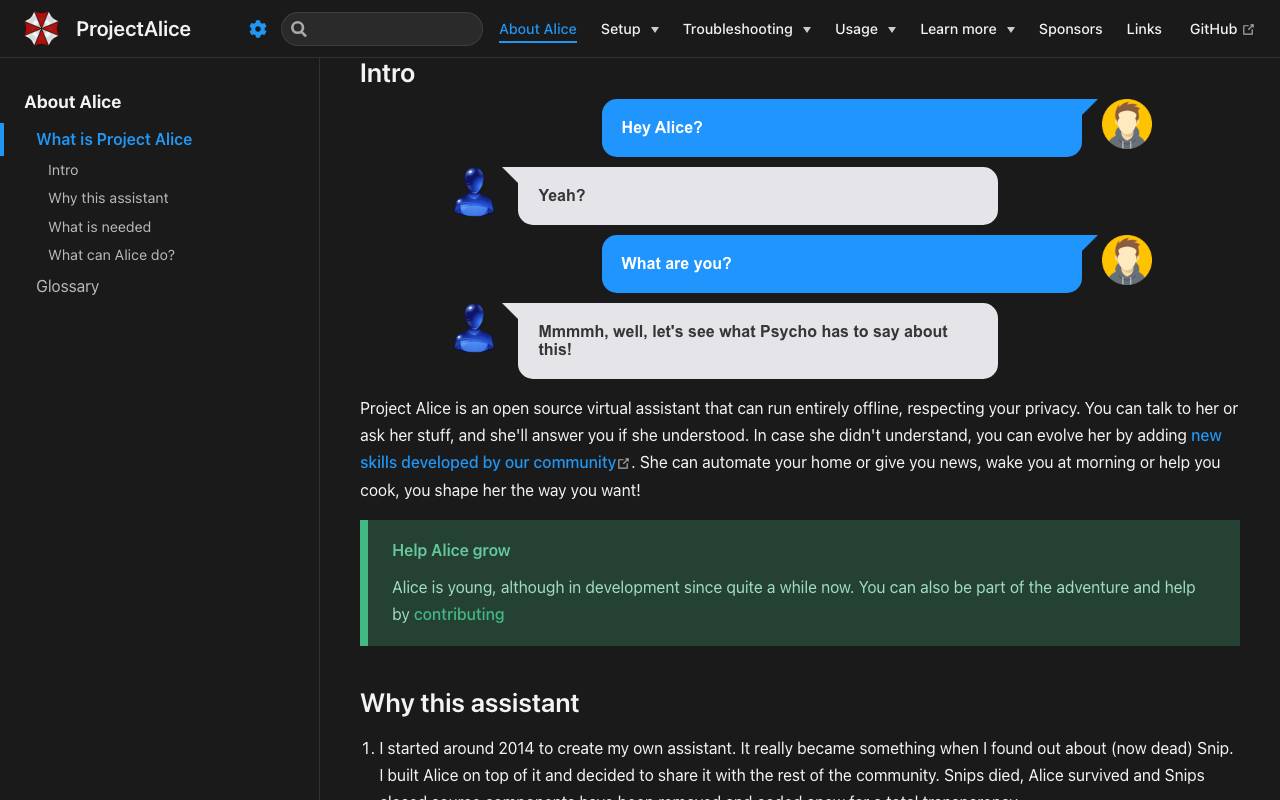
Project Alice is an open-source, offline virtual assistant designed for customizable voice interactions. The agentic workflow framework integrates task execution and intelligent chat capabilities, leveraging a microservices architecture with MongoDB for data persistence. It provides a flexible environment for creating, managing, and deploying AI agents for various purposes. User privacy is ensured since the assistant operates entirely offline. Developers can integrate task execution and intelligent chat capabilities into various projects. They can create, manage, and deploy AI agents for different purposes, such as customer support, language translation, or personal assistants. Project Alice is built using a microservices architecture, which allows for greater scalability and flexibility. It uses MongoDB for data persistence and allows developers to manage tasks and chats through a user-friendly interface. Project Alice is still in its alpha stage, and the development team regularly updates the framework with new features and improvements. Some of these features include support for retrieval, human-in-the-loop mechanics, and chain-of-thought implementation. These updates have transformed Project Alice into a more comprehensive AI assistant. One note of caution: Project Alice requires a significant amount of computational power, especially for tasks that involve complex calculations or natural language processing. Additionally, users will need to reinitialize their database after each update. Project Alice's offline architecture also presents an opportunity for users to implement more creative and complex projects, such as building virtual companions or assistants for specific domains, like healthcare or finance.
Criteria breakdown
- Retrieval tasks
- Human-in-the-loop mechanics
- Chain-of-thought implementation
- Task execution and chat integration
- Microservices architecture
- MongoDB data persistence

DeepFlows AI
AI-powered assistants designed to enhance productivity for financial advisors and investors by automating complex document drafting and information analysis.

DeepFlows AI is an AI-powered platform designed to assist financial advisors and investors in enhancing their productivity. The platform aims to streamline tasks such as document drafting and information analysis, which are typically complex and time-consuming. By automating these tasks, DeepFlows AI helps professionals in the financial sector save time and focus on high-value activities. Although the specifics of its functionality are unclear, DeepFlows AI likely uses natural language processing and machine learning algorithms to analyze and draft documents. However, the extent to which DeepFlows AI integrates with existing financial software or tools is uncertain. Ultimately, the effectiveness of DeepFlows AI in improving productivity depends on its ability to accurately and efficiently automate complex tasks. Its potential impact on the financial sector could be significant, but further evaluation is necessary to fully understand its capabilities and limitations. DeepFlows AI may be a valuable resource for financial advisors and investors looking to gain a competitive edge through automation, yet its potential drawbacks and limitations are yet to be fully understood. The actual benefits and drawbacks of DeepFlows AI may differ from the theoretical potential outlined here. As with any emerging technology, it is essential to approach DeepFlows AI with a critical and nuanced perspective. It is clear that DeepFlows AI is designed to help financial professionals, but its actual impact is still to be determined. Its success will depend on how well it can be integrated into existing workflows and how accurately it can automate complex tasks. It is uncertain whether DeepFlows AI will revolutionize the financial sector or merely incrementally improve existing processes. Its actual capabilities and limitations remain to be seen. DeepFlows AI may be able to provide valuable insights, but the extent to which it can accurately analyze complex data is unclear. It is also uncertain whether DeepFlows AI can effectively communicate its findings in a clear and actionable manner. The potential of DeepFlows AI is intriguing, yet its actual impact on the financial sector is still uncertain. Further evaluation is necessary to determine its value and limitations. Ultimately, DeepFlows AI's success will depend on its ability to provide accurate and actionable insights. As AI technology continues to evolve, DeepFlows AI may become an increasingly valuable resource for financial professionals. However, its potential drawbacks and limitations are yet to be fully understood. It remains to be seen how well DeepFlows AI will be able to integrate with existing software and systems. If successful, DeepFlows AI could revolutionize the financial sector, but if it fails to deliver on its promises, it may become yet another example of oversold AI hype.
Criteria breakdown
- AI-powered document drafting and analysis
- Automated information extraction and analysis
- Natural language processing and machine learning algorithms
- Integration with existing financial software and systems (uncertain)
- Actionable insights and data-driven decision making

Respell AI
A no-code platform enabling users to create AI-powered workflows and agents, integrating seamlessly with existing tools to automate complex tasks.
Respell AI is a no-code platform that enables users to create AI-powered workflows and agents. It integrates with existing tools to automate complex tasks. The platform was designed to be user-friendly and allow professionals to focus on high-value tasks by automating tedious work such as writing documents, reviewing memos, and updating spreadsheets. Respell AI uses large language models (LLMs) and allows users to chain prompts together without needing to write code. The platform has powered millions of workflows for various companies, saving them time and reducing frustration. However, as of March 1st, Respell will be shutting down as a standalone product as the team joins Salesforce to build agents for all companies.
Criteria breakdown
- Contacts Integration
- Document Read & Analysis
- Rule-based Learning