Past battle · 2026-08-14 UTC
AI Detection Showdown — August 14, 2026
From the AI Detection category. 13 marks placed across 4 fighters. lupa ai took the crown.
Final standings




The line-up
The fighters
Profiles of every tool that competed in this battle, ranked by their final score.


Lupa AI is a web-based image upscaling tool that uses machine learning to enlarge photos while preserving detail and reducing common artifacts like blur and pixelation. It runs in the browser, so users can upload an image, process it, and download the enhanced result without installing software. The tool is aimed at casual users who need quick fixes for low-resolution images, such as old photos, social media graphics, product shots, or AI-generated art that needs additional clarity. Its free tier makes it accessible for one-off tasks, while the simple interface keeps the workflow approachable for non-technical users.
Criteria breakdown
- AI-powered image upscaling
- Browser-based processing
- Detail and sharpness enhancement
- Support for common image formats
- Free online access
- One-click download of results

Image Location finder
AI-powered image locator that identifies the real-world place behind any photo.
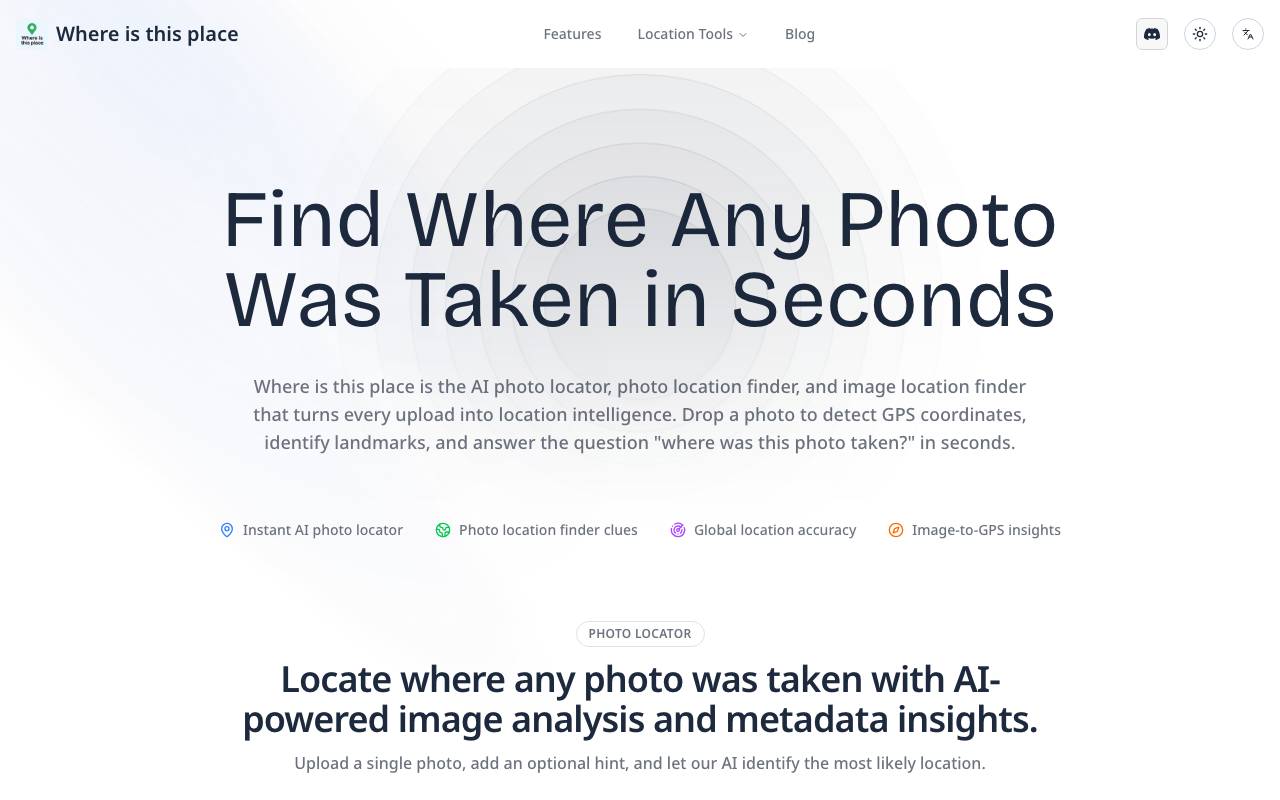
Image Location finder is an AI tool that analyzes photos to identify where they were taken. By examining visual cues such as architecture, landscapes, signage, vegetation, and lighting, it estimates the most likely location and surfaces a verified destination for the user. The tool is useful for travelers trying to recall a spot, researchers verifying image sources, journalists checking content authenticity, or anyone curious about a scene in a photo. Users upload an image and receive location suggestions along with supporting context. It works without relying on embedded GPS metadata, making it helpful for screenshots, social media images, or older photos where EXIF data has been stripped.
Criteria breakdown
- AI-based visual scene analysis
- Landmark and architecture recognition
- Landscape and environment matching
- Works on images without metadata
- Location suggestions with confidence context
- Browser-based image upload

AltxtAI
AI alt text generator that writes SEO-aware, accessible image descriptions in seconds with no signup
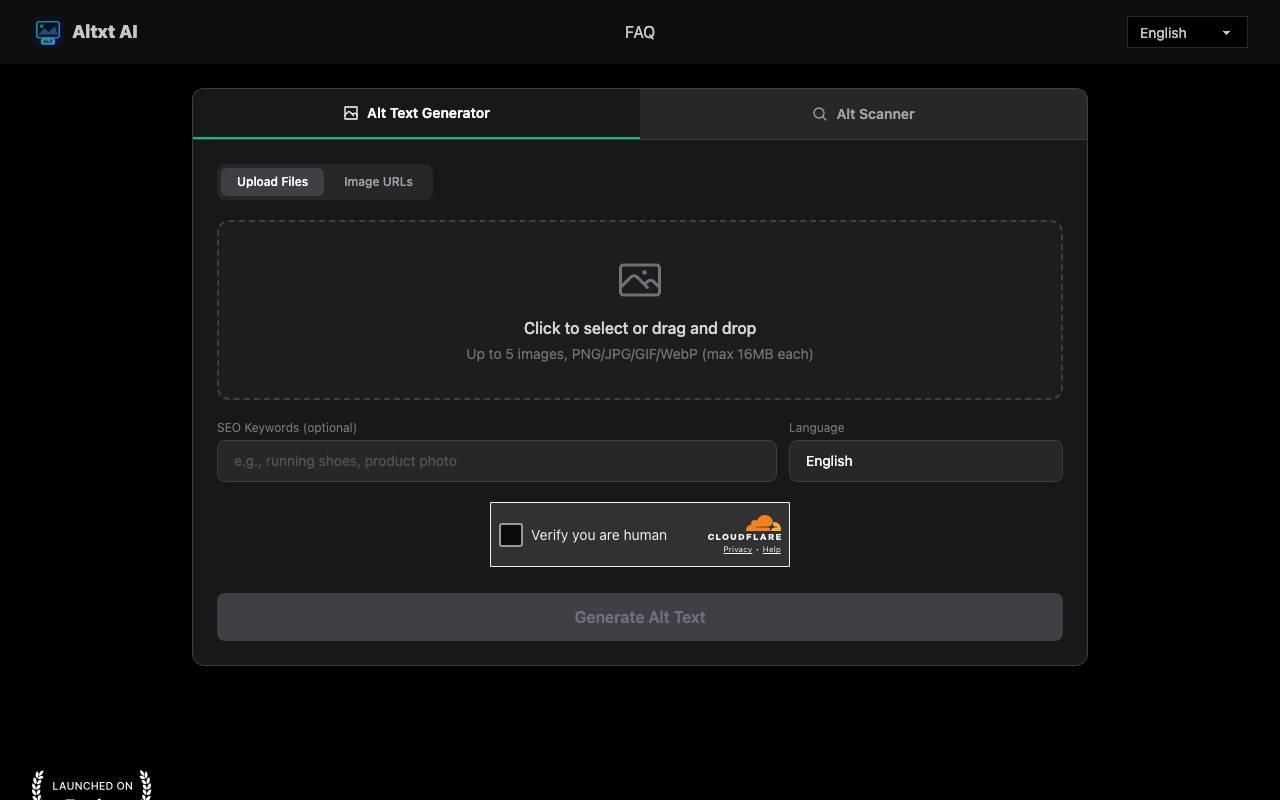
Altxt AI is a web-based tool that automatically generates alt text — the descriptive text attached to images for accessibility and search engine indexing. It targets a common but tedious problem: websites with large image libraries that lack proper descriptions, which hurts both screen-reader accessibility and visibility in Google Images. Rather than writing each description by hand, users upload images or paste image URLs and receive ready-to-paste alt text in seconds. The tool is aimed at bloggers, e-commerce store owners, developers, real estate agents, and anyone managing image-heavy pages. It uses vision models to identify objects, people, actions, colors, text, and scene context within an image, then produces concise natural-language descriptions. A distinguishing feature is its SEO orientation: users can supply optional keywords so the generated text is keyword-aware and tied to page content, rather than just a generic caption. Altxt AI emphasizes a low-friction workflow. There is no signup, login, email, or credit card required to use the basic generator — you open it in a browser, upload up to several images (PNG, JPG, GIF, or WebP, up to 16MB each), optionally add SEO keywords and select an output language, and generate. The output can be copied directly into an image's alt attribute. The site also references an "Alt Scanner" alongside the generator and offers output in many languages. For teams with backlogs, batch upload lets users process multiple images at once, which is positioned as a way to clear accessibility gaps and resolve SEO audit warnings quickly. The vendor claims multi-layer validation for accuracy and readability, WCAG-oriented output, and that descriptions avoid hallucinated details — though as with any AI vision tool, output quality should be verified, especially for nuanced or domain-specific imagery. Compared to manual alt-text writing or built-in CMS accessibility checkers, Altxt AI's value is speed and convenience for bulk work. Its trade-offs are typical of automated description tools: generated text can still require human review for correctness and tone, it operates as a standalone web tool rather than a native CMS integration, and SEO benefit depends on appropriate keyword input and accurate image recognition.
Criteria breakdown
- Vision-model image analysis for objects, scenes, and context
- Optional SEO keyword input for keyword-aware alt text
- Batch upload of multiple images (PNG/JPG/GIF/WebP)
- Image URL input as well as direct upload
- Multi-language description output
- Alt Scanner alongside the generator

Where Is This Place
AI tool that identifies where a photo was taken using visual analysis and GPS EXIF data
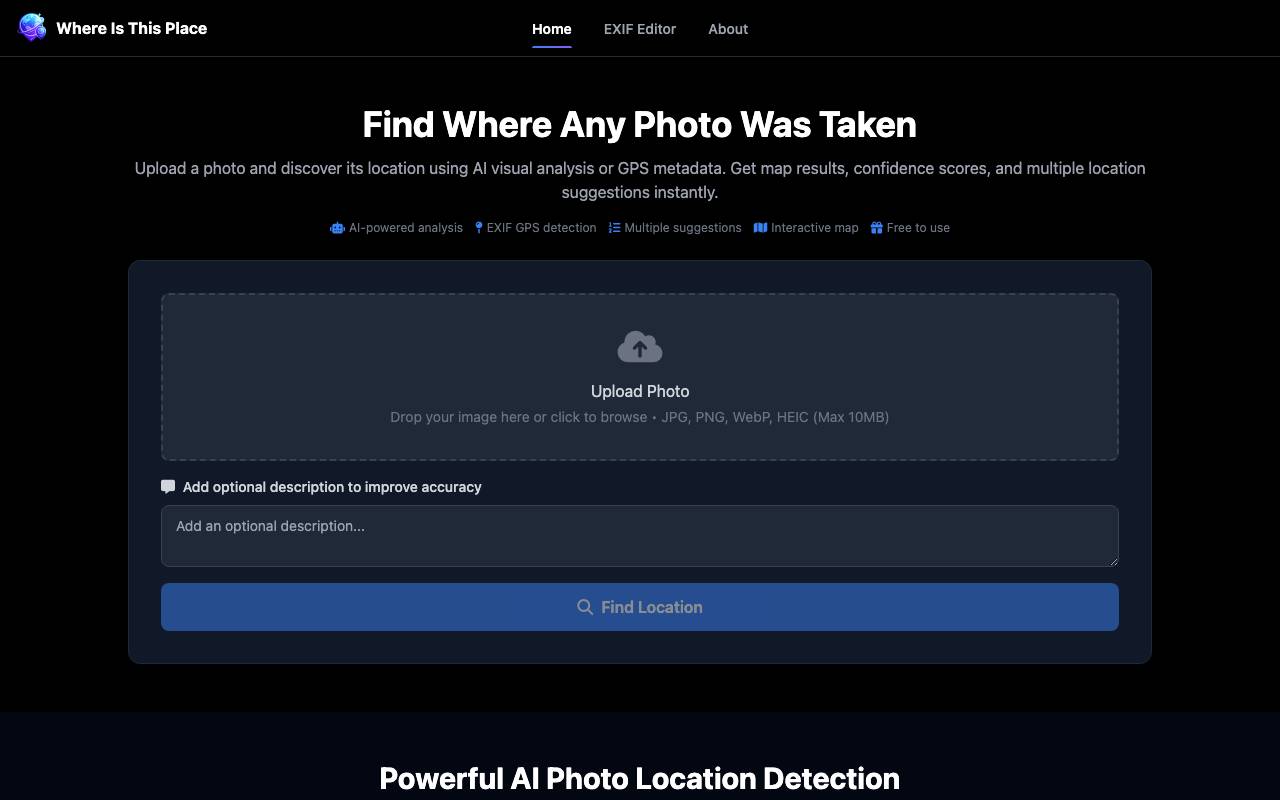
Where Is This Place is a web-based tool that attempts to identify the geographic location where a photograph was taken. Users upload an image and the system returns map results, confidence scores, and several candidate locations along with reasoning for each. It addresses a common problem in photo geolocation: figuring out where an unlabeled or screenshot image was captured when no obvious caption or coordinates are available. The tool combines two approaches. First, it reads EXIF metadata embedded in image files to extract GPS coordinates directly when that information is present. Second, when GPS data is missing, it falls back on AI visual analysis to interpret landmarks, architecture, street features, signage, and natural landscapes in order to estimate possible locations. This dual approach lets it handle both phone photos that retain location tags and images stripped of metadata, such as screenshots or downloaded pictures. Results are presented as three to five suggested locations, each with a confidence score and an explanation of the visual clues used. Outputs are displayed on interactive maps with street and satellite views, and users can add an optional text description to help refine accuracy. Supported formats include JPG, PNG, WebP, and HEIC, with a 10MB file size limit, and the site reports an average processing time of roughly 5–15 seconds per image. Likely users include researchers, journalists, OSINT enthusiasts, travelers trying to recall where a photo was taken, and people curious about images they encounter online. The tool is positioned as free to use, with images stated to be processed securely and automatically deleted after analysis rather than stored permanently. As with any AI geolocation tool, accuracy depends heavily on the presence of distinctive, recognizable features. Photos of generic interiors, plain landscapes, or ambiguous scenes will yield less reliable guesses, and the confidence scores should be treated as estimates rather than verified facts. It competes with dedicated OSINT geolocation services and broader image-recognition models, and is best understood as a quick first-pass aid rather than an authoritative source.
Criteria breakdown
- AI visual analysis of landmarks and scenery
- EXIF GPS coordinate extraction
- Three to five ranked location suggestions
- Confidence scores with explanatory reasoning
- Interactive street and satellite maps
- Optional description input to improve accuracy