Past battle · 2026-04-05 UTC
Content Creation Showdown — April 5, 2026
From the Content Creation category. 15 marks placed across 5 fighters. Story Generator took the crown.
Final standings





The line-up
The fighters
Profiles of every tool that competed in this battle, ranked by their final score.

Story Generator
Turn quick prompts into customizable AI-generated short stories in seconds.

Story Generator appears to be a web-based tool that utilizes AI technology to quickly produce customizable short stories from user-generated prompts. It's likely designed to help authors, writers, and creatives rapidly generate ideas, develop plot outlines, or even create content for various media formats. However, the tool's limitations and specific features remain unclear at this time. Typically, users may input their desired genre, style, and prompts, which the system will then process to generate a short story. The extent to which users can customize the output and the tool's ability to adapt to specific writing styles or genres are unknown. Story Generator may be particularly useful for those seeking a source of inspiration, looking to experiment with different writing styles, or needing assistance in brainstorming ideas. Nevertheless, the tool's overall effectiveness and the quality of its generated content are uncertain. Given the lack of information about Story Generator's capabilities and limitations, it's difficult to make specific comparisons to alternative storytelling tools. Further testing and exploration would be necessary to gain a deeper understanding of the tool's capabilities and potential applications.
Criteria breakdown
- Prompt-based story generation
- Genre and tone selection
- Character and setting customization
- Adjustable story length
- Instant text output
- Reusable prompts for iteration

Hardware design doc is an AI assistant that turns a rough hardware concept into a structured first-draft design document. You describe what you want to build, and it generates the scaffolding engineers expect to see: goals, requirements, architecture notes, components, and open questions. It is aimed at makers, hardware startups, and engineering teams who want to skip the blank-page problem and start iterating on a real document. The output is meant as a starting point that you refine with domain expertise rather than a finished spec.
Criteria breakdown
- AI-generated first-draft design docs
- Structured sections for goals and requirements
- Component and architecture outlines
- Captures open questions and assumptions
- Editable starting point for engineers


Video To Blog is an AI-powered tool that transforms YouTube videos into structured, readable blog articles. By analyzing the video's transcript and content, it generates a draft that captures the key points, supporting details, and flow of the original material, saving creators hours of manual writing. The tool is designed for content marketers, bloggers, educators, and YouTubers who want to repurpose video content into written form. Users can edit the generated drafts, adjust tone or structure, and publish the results on their preferred platform. It is particularly useful for expanding reach across search engines and audiences who prefer reading over watching.
Criteria breakdown
- YouTube URL to blog post conversion
- AI-generated structured drafts
- Editable output for customization
- Supports content repurposing workflows
- Helps create SEO-friendly articles

CudekAI
Free AI humanizer that rewrites machine-generated text into natural, human-sounding content.
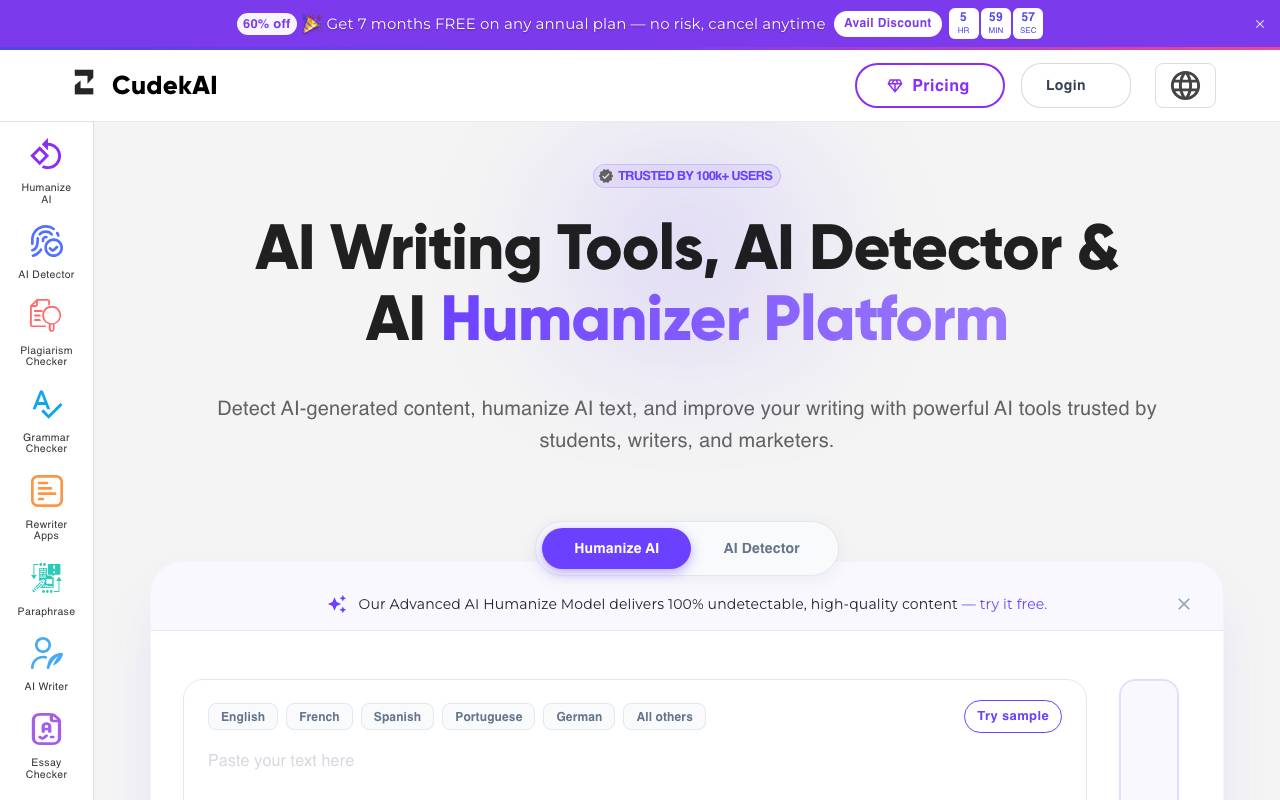
CudekAI is an online tool designed to transform AI-generated writing into text that reads more like it was written by a person. It targets common giveaways of machine output—repetitive phrasing, stiff sentence structure, and predictable word choices—and rewrites passages to feel more natural and conversational. The service is positioned as free and instant, with an emphasis on privacy so submitted text is not exposed or stored unnecessarily. It can be used for blog drafts, essays, marketing copy, emails, and other writing tasks where a more human tone is desired. Writers, students, marketers, and content teams typically use it as a polishing step after generating a first draft with an AI assistant, helping the final output flow better and sound less templated.
Criteria breakdown
- AI-to-human text rewriting
- Instant output generation
- Privacy-focused processing
- Works across multiple content types
- Web-based, no install required
- Free access tier

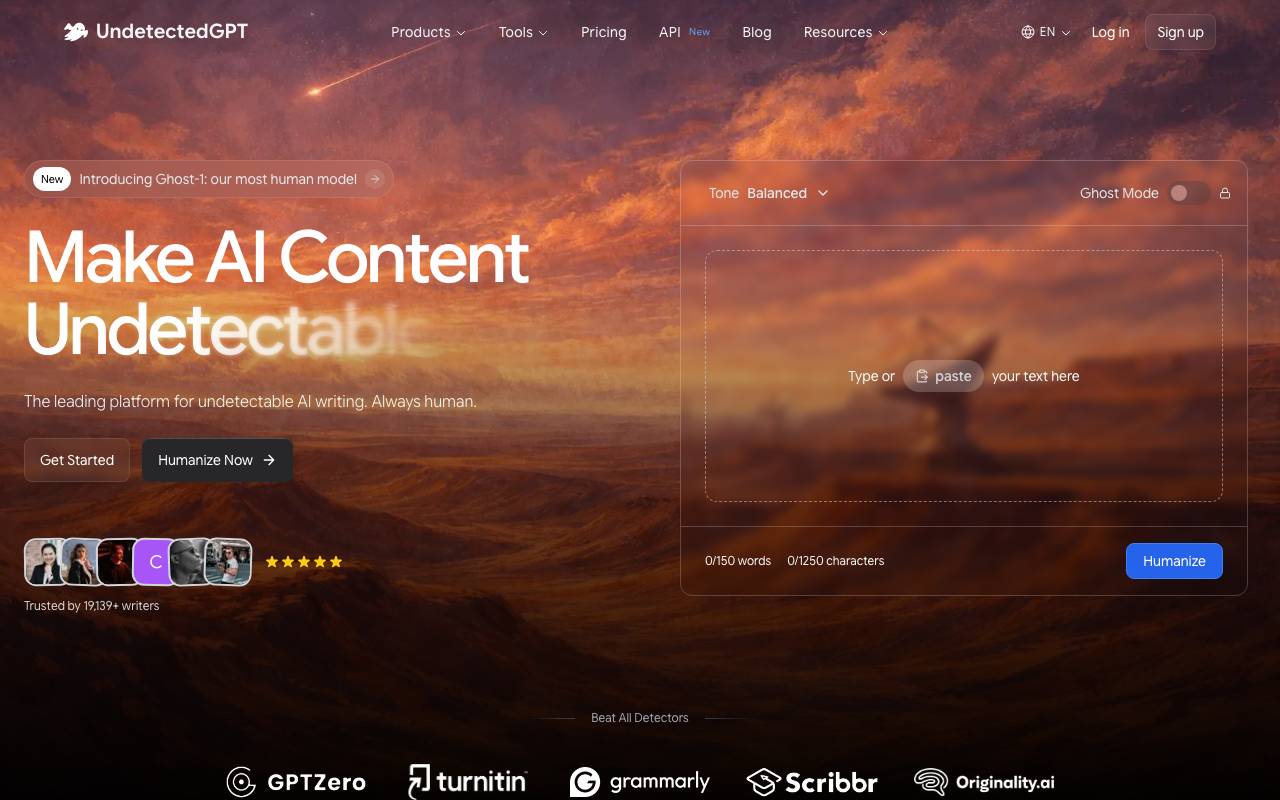
UndetectedGPT is a platform that rewrites AI-generated text to sound more natural and human. It does this by adding small details, tone changes, and natural flow that AI usually misses. This helps the text feel like it was written by a person, rather than a computer. The platform's humanizer uses a combination of techniques to achieve this goal. It can add better rhythm, smoother pauses, and words that connect naturally. This makes the text easier to read and more engaging for the audience. One of the key benefits of UndetectedGPT is its ability to make AI-generated text completely undetectable. This can be especially useful for writers and students who need to produce high-quality content but don't have the time or skill to write it from scratch. The platform offers a range of features, including tone selection, which allows users to choose a writing style to match their audience. It also offers integration with various tools, although the specific details of these integrations are not mentioned on the website. Despite its benefits, UndetectedGPT has some limitations. While it can produce high-quality content, it may not be able to match the nuance and complexity of human writing. Additionally, some users may find the platform's tone options to be limited. In comparison to other tools on the market, UndetectedGPT stands out for its ability to produce 100% original content that passes any plagiarism checker. It supports over 100 languages and offers instant results.
Criteria breakdown
- AI-to-human text rewriting
- Tone and style adjustments
- Sentence structure variation
- Vocabulary diversification
- Web-based input interface
- Support for longer-form content