Past battle · 2024-12-22 UTC
Agent Development Showdown — December 22, 2024
From the Agent Development category. 15 marks placed across 4 fighters. Vocode took the crown.
Final standings




The line-up
The fighters
Profiles of every tool that competed in this battle, ranked by their final score.

Vocode
Open-source framework for building real-time voice AI agents from speech-to-text, LLM, and text-to-speech components
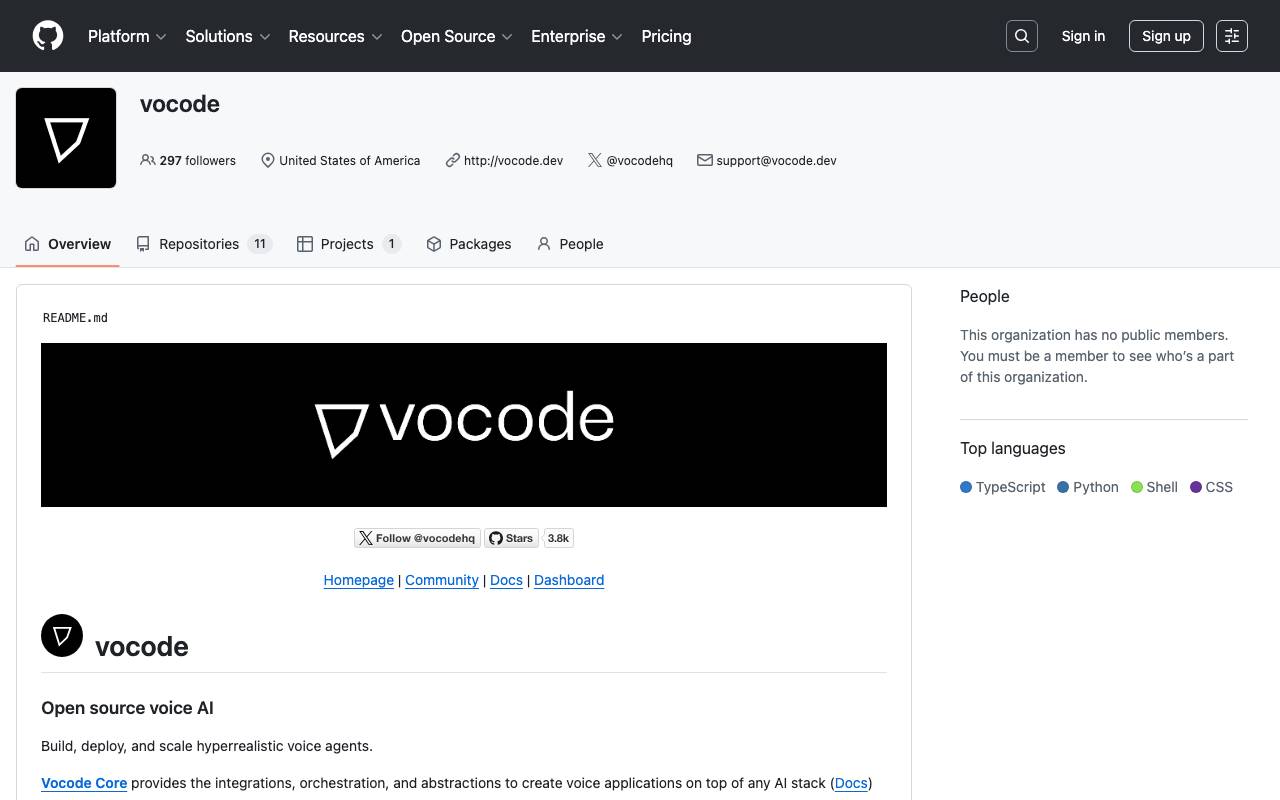
Vocode is an open-source library for building voice-based conversational AI applications. It provides the plumbing needed to connect speech recognition, large language models, and speech synthesis into a single real-time pipeline, allowing developers to create agents that can listen, reason, and speak over phone calls, web sockets, or local audio. The framework is primarily distributed as a Python SDK, with a focus on streaming audio so that conversations feel responsive rather than turn-based with long delays. It handles the orchestration concerns that make voice agents difficult to build from scratch, such as managing interruptions (barge-in), buffering and streaming transcription, and coordinating the back-and-forth between transcriber, agent logic, and synthesizer. Vocode is designed to be modular and provider-agnostic. It integrates with a range of third-party services for each stage of the pipeline — for example transcription providers like Deepgram and AssemblyAI, language models such as those from OpenAI, and text-to-speech engines including ElevenLabs, Azure, and others. Developers can swap components in and out depending on cost, latency, and voice quality requirements. A common use case is telephony: Vocode supports placing and receiving phone calls through providers like Twilio, which makes it suitable for building automated outbound and inbound call agents, voice assistants, and customer-facing phone bots. It also supports browser-based and local-microphone conversations for in-app voice experiences. Because it is open source and self-hostable, Vocode appeals to teams that want control over their stack and the ability to customize agent behavior, rather than relying on a fully managed closed platform. The trade-off is that building production-grade voice agents still requires wiring together and paying for external transcription, LLM, and TTS services, and tuning latency and conversational behavior. It sits in a growing space of voice-agent tooling alongside managed platforms and other frameworks; its main differentiator is the open-source, composable approach that gives developers direct access to the pipeline internals.
Criteria breakdown
- Real-time streaming voice agent pipeline
- Integrations with multiple STT, LLM, and TTS providers
- Phone call support via Twilio and similar telephony services
- Interruption (barge-in) handling
- Python SDK for building custom agents
- Support for browser and local-microphone conversations

MemGPT
Framework giving LLMs long-term memory and self-managed context beyond fixed token limits
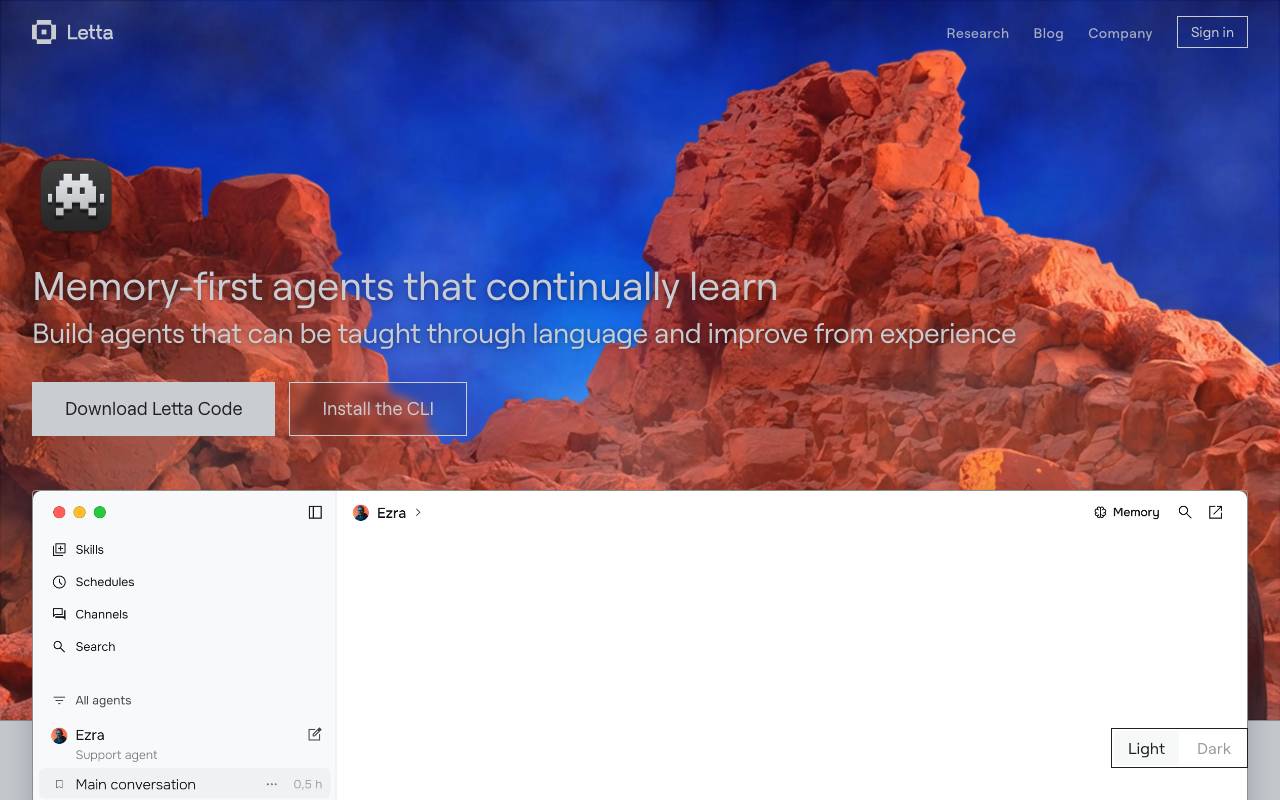
MemGPT is an open-source framework designed to address one of the fundamental constraints of large language models: their fixed context window. Originating from research at UC Berkeley, the project introduced the idea of treating an LLM's limited context like an operating system manages limited physical memory, using paging and hierarchical memory tiers to give models the appearance of a much larger, persistent memory. The core approach borrows directly from operating system design. MemGPT distinguishes between in-context memory (the tokens currently in the model's prompt window) and external storage held outside the context. The LLM itself is given function-calling tools that let it decide when to move information between these tiers — for example, saving important facts to long-term storage, retrieving relevant past information, or editing its own core memory. This self-editing behavior is what allows agents to maintain coherent, evolving state across long conversations or documents that far exceed a single context window. The framework is aimed at developers building conversational agents that need persistent memory of users and prior interactions, as well as those working on document analysis over corpora too large to fit in context. By managing recall memory, archival storage, and a working context, MemGPT enables agents that can reference details from much earlier in an interaction without the developer manually engineering retrieval pipelines for every case. MemGPT works with both proprietary models such as those from OpenAI and locally hosted open models, and it integrates with vector databases and other storage backends to persist memory between sessions. The project later evolved and is closely associated with Letta, a company and platform that continues development of the underlying stateful-agent concepts, offering a server and tooling around the original ideas. Its main strengths are conceptual clarity and a concrete, reusable pattern for long-term memory that goes beyond naive retrieval-augmented generation. The trade-offs are typical of agent frameworks: the self-editing memory loop relies heavily on the model's function-calling reliability, which can vary with smaller or local models, and the additional memory-management steps add latency and token overhead. As an evolving open-source project, its naming, APIs, and surrounding ecosystem have shifted over time, which can make documentation and versioning a moving target.
Criteria breakdown
- Tiered context and external memory management
- Self-editing core memory via function calls
- Archival and recall memory storage
- Vector database integration for retrieval
- Support for multiple LLM backends
- Stateful conversational agents

Letta AI
An open-source platform for building stateful AI agents with long-term memory and advanced reasoning.
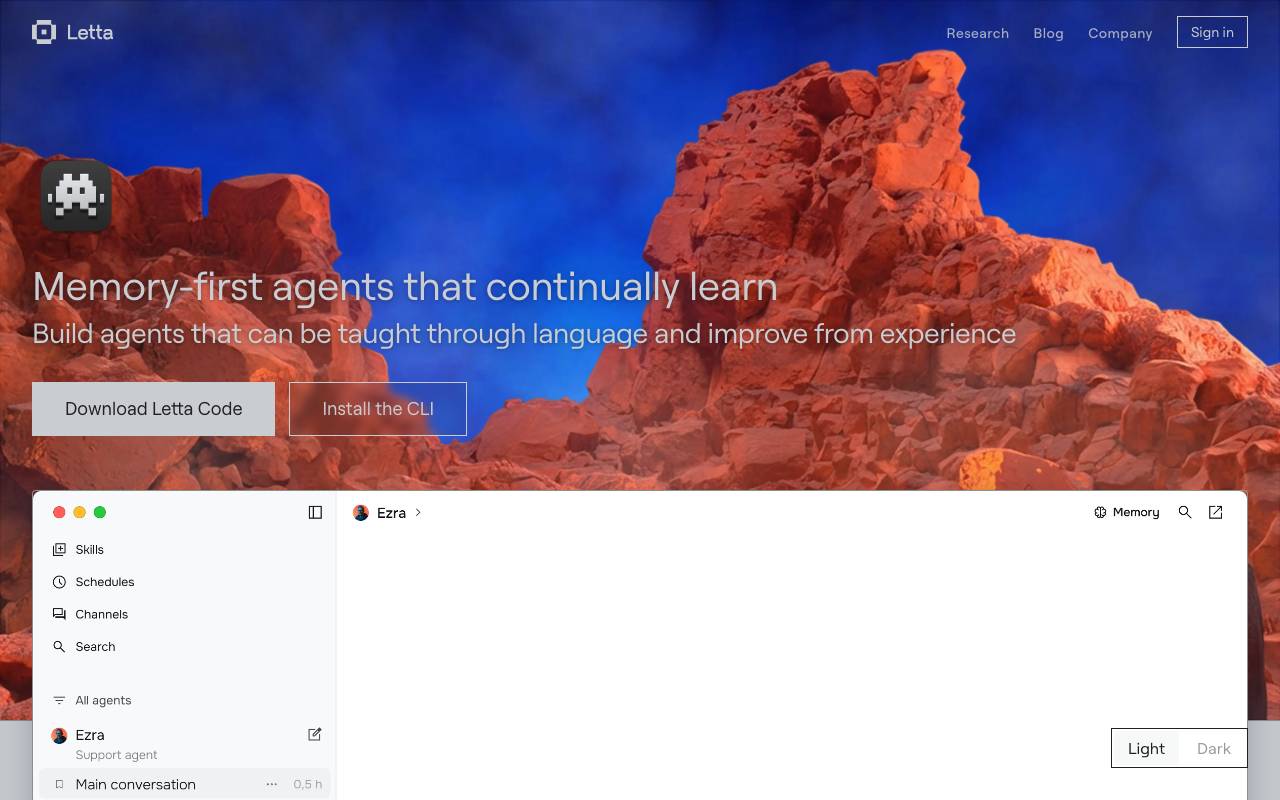
Letta AI is an open-source platform designed for creating stateful AI agents. These agents are equipped with long-term memory and advanced reasoning capabilities. The platform allows developers to build AI agents that can maintain a memory of past interactions, enabling more complex and context-aware decision-making processes. This is particularly useful for applications requiring agents to learn from experiences over time and adapt their responses accordingly. Letta AI targets developers and researchers interested in creating sophisticated AI agents for various applications, from customer service to more intricate problem-solving tasks. By providing long-term memory and advanced reasoning, Letta AI enables the development of AI agents that can handle a wide range of tasks with a higher degree of autonomy and intelligence.
Criteria breakdown
- Stateful AI agents
- Long-term memory
- Advanced reasoning

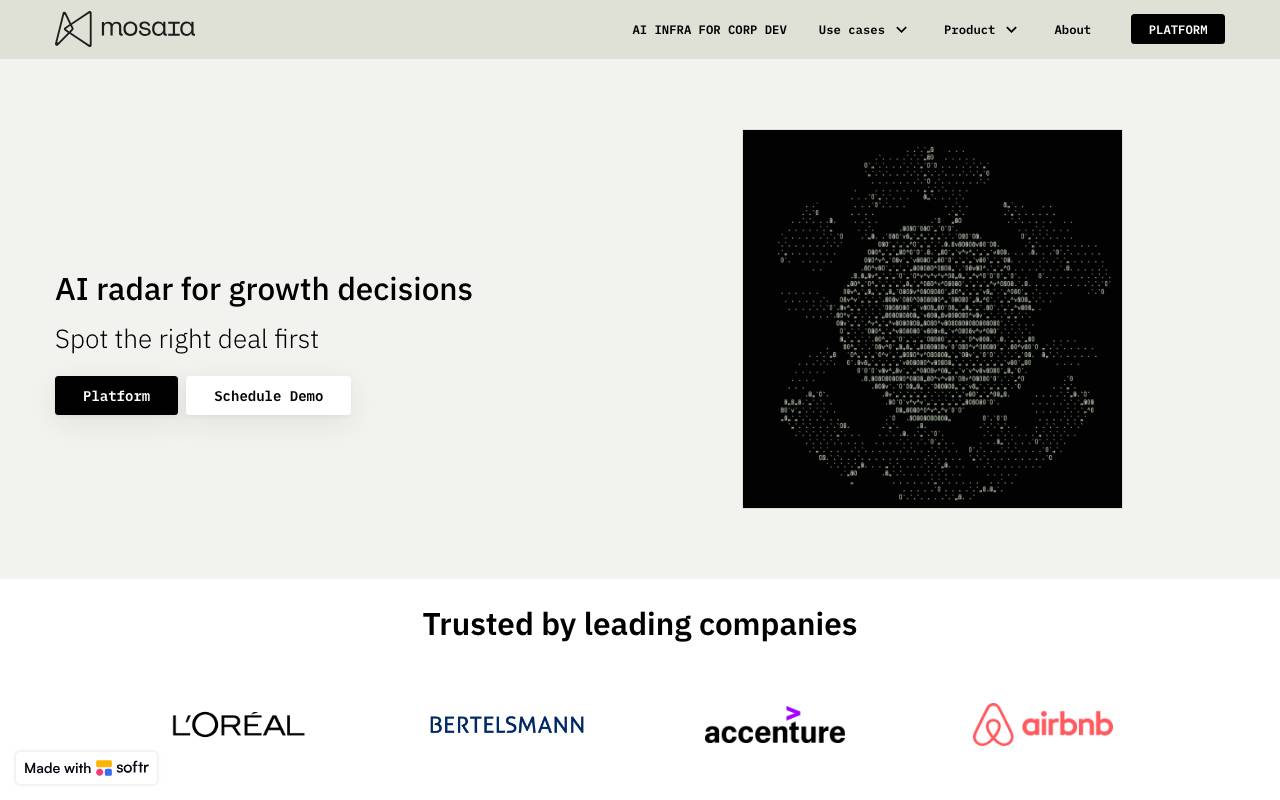
Mosaia is a community-driven platform designed for building AI agents and applications in the open. It provides developers with tools to create, customize, and deploy AI solutions while fostering collaboration and transparency across projects. The platform emphasizes openness, letting users share their work, remix others' agents, and contribute to a growing ecosystem of AI components. This approach aims to lower the barrier to entry for AI development while encouraging knowledge sharing among builders. Whether you're prototyping a single agent or assembling a more complex AI workflow, Mosaia offers the infrastructure and community to support iterative, open development.
Criteria breakdown
- AI agent building tools
- Open sharing and collaboration
- Community-driven marketplace
- Customizable agent workflows
- Developer-focused platform
- Deployment infrastructure