Past battle · 2026-01-14 UTC
AI security Showdown — January 14, 2026
From the AI security category. 17 marks placed across 6 fighters. Harvest IQ took the crown.
Final standings



The line-up
The fighters
Profiles of every tool that competed in this battle, ranked by their final score.

Harvest IQ provides AI-powered assistants designed to support cybersecurity teams across detection, investigation, and response tasks. The platform aims to reduce manual workload by handling routine analysis, correlating signals, and surfacing relevant context for human analysts. The assistants can be applied to areas like threat intelligence triage, alert investigation, and security operations support. By offloading repetitive work to AI agents, security teams can focus on higher-priority incidents and strategic decisions.
Criteria breakdown
- AI assistants for security operations
- Automated alert triage
- Threat intelligence analysis
- Investigation support workflows
- Integration with security tooling
- Context-aware recommendations

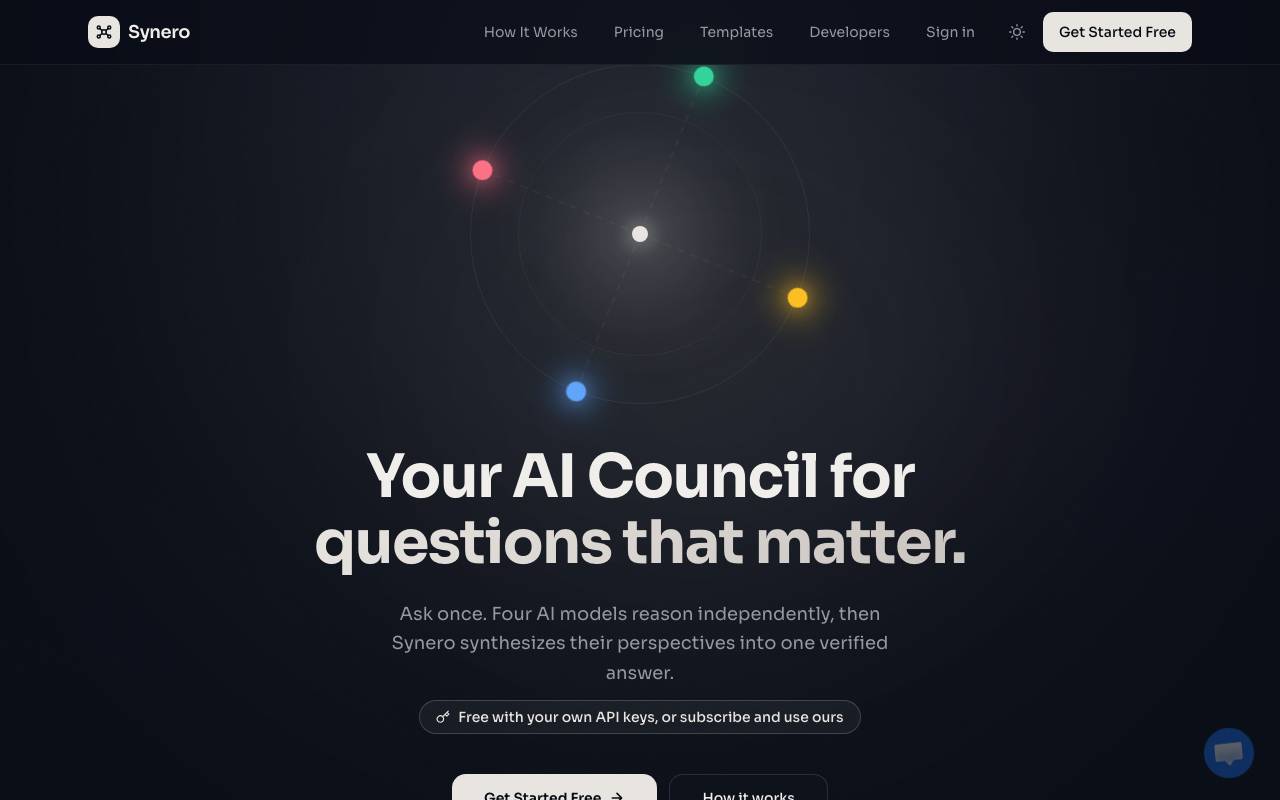
Synero AI is a multi-model query platform that sends a single prompt to several leading AI systems simultaneously. Instead of switching between tools or second-guessing a single response, users receive parallel answers that can be compared side by side. The service then consolidates these outputs into one verified response, highlighting agreement, flagging discrepancies, and reducing the risk of hallucinations. This makes it useful for research, fact-checking, content drafting, and any task where accuracy matters more than speed. Synero AI is aimed at professionals, students, and teams who want broader coverage and higher confidence from generative AI without managing multiple subscriptions or interfaces.
Criteria breakdown
- Parallel querying across four AI models
- Unified verified answer output
- Side-by-side response comparison
- Discrepancy and consensus highlighting
- Single prompt, multi-perspective workflow

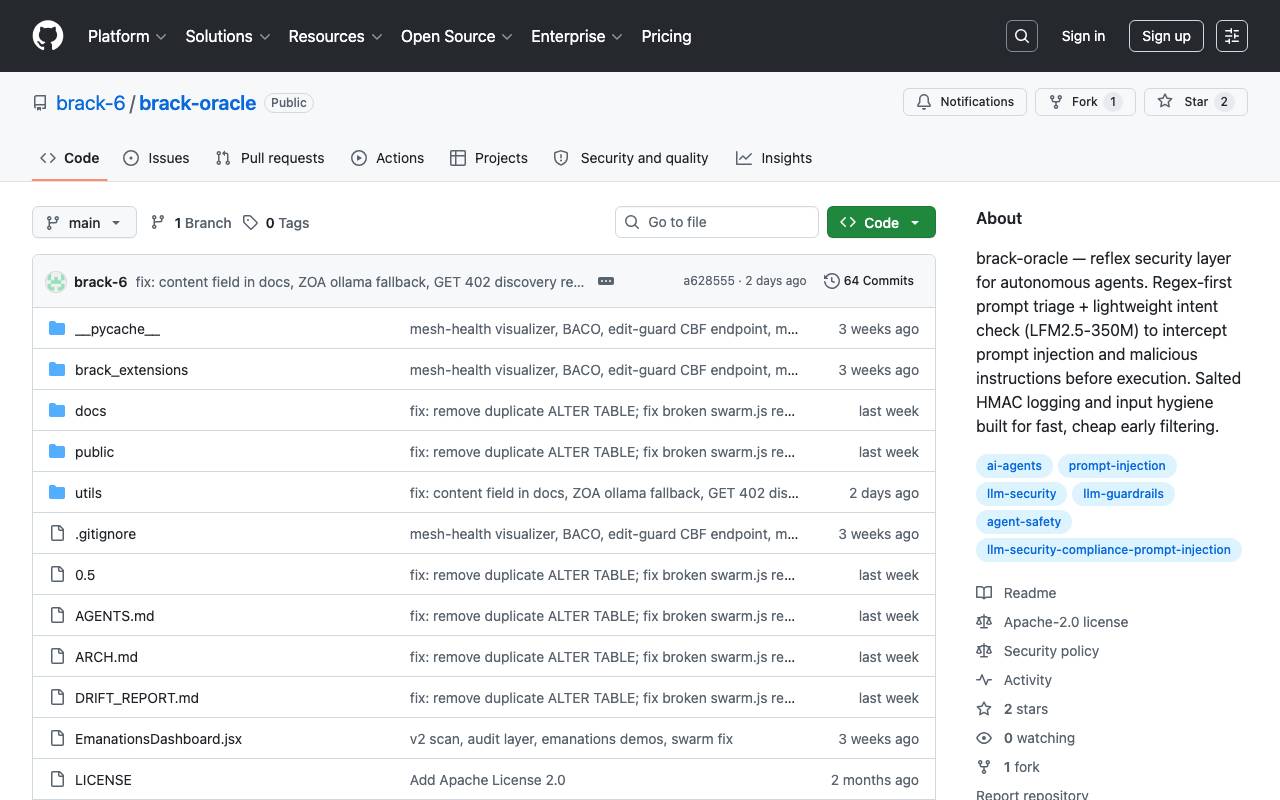
Brack is a runtime safety layer designed to sit between autonomous AI agents and the systems they act on. It monitors agent behavior as it happens, intercepting risky actions, tool calls, and outputs before they can cause harm, leak data, or violate policy. Rather than relying solely on prompt-level guardrails, Brack functions like a reflex: fast, deterministic checks that run alongside model reasoning. Teams can define policies, allow and deny rules, and escalation paths, giving security and platform owners control over what agents are permitted to do across tools, APIs, and environments. It is aimed at developers and security teams shipping agentic systems to production who need observability, containment, and auditability without slowing their agents down.
Criteria breakdown
- Reflex-style runtime action filtering
- Custom policy and rule definitions
- Audit logs of agent decisions and tool calls
- Escalation and human-in-the-loop hooks
- Coverage for multi-agent and tool-using workflows
- Integration with common agent frameworks

Rivalz
Decentralized AI intelligence layer for secure data access and on-chain AI infrastructure.
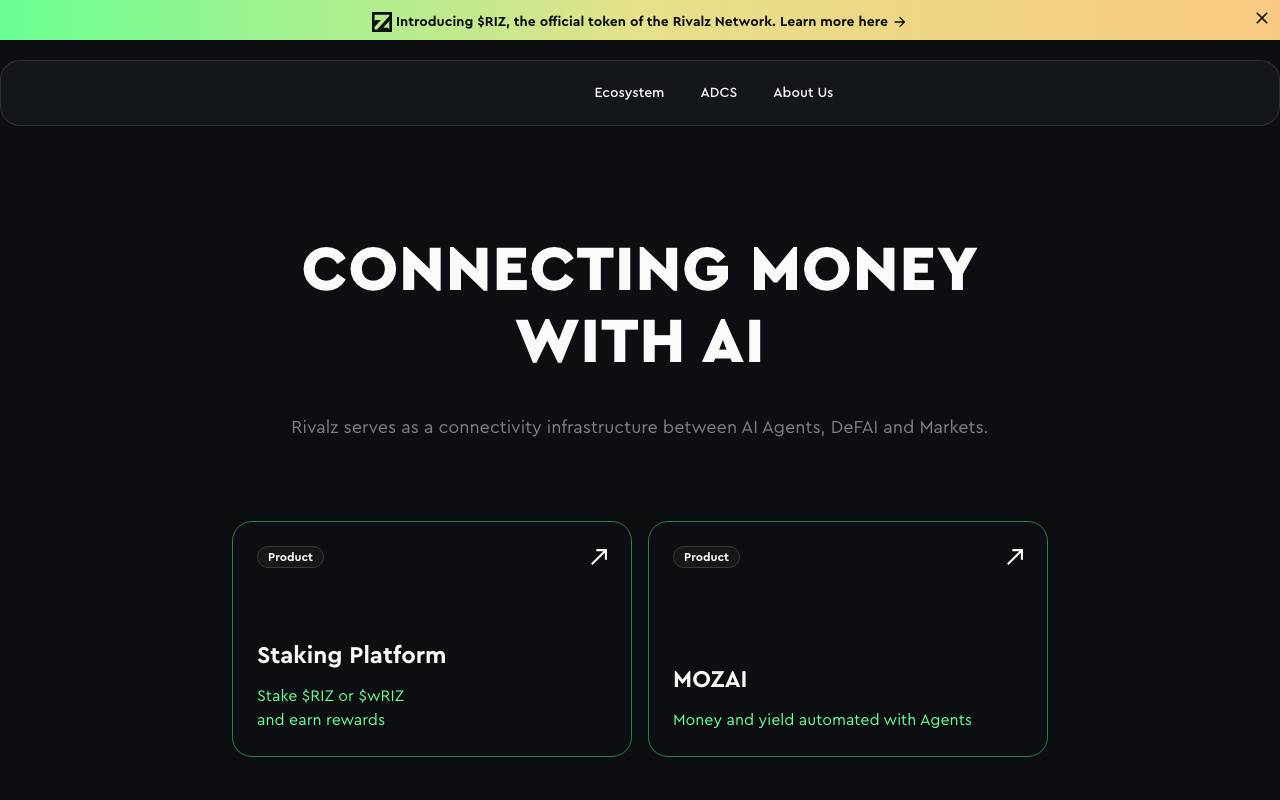
Rivalz is a decentralized AI infrastructure project that aims to connect AI agents and applications with verifiable data sources. It provides tooling for developers to build, deploy, and coordinate autonomous AI agents that can read, reason over, and act on both Web2 and Web3 data without relying on a single centralized provider. The platform combines decentralized compute, storage, and oracle-style data feeds into what it calls an AI Intel layer. This is designed to give agents secure, auditable access to information while keeping ownership of data and models distributed across the network. Typical use cases include trading agents, research copilots, and on-chain automation.
Criteria breakdown
- AI Intel layer for data access
- Agent orchestration framework
- Decentralized compute and storage integration
- Support for on-chain and off-chain data sources
- Tooling for autonomous AI agent deployment
- Verifiable data pipelines for AI workflows


7AI is a swarming agentic AI platform for autonomous security operations. It enables organizations to shift their security teams from routine tasks to strategic work by leveraging AI agents to handle mundane alert triage. This results in a significant reduction in analyst time, allowing them to focus on creative and strategic security work. 7AI's platform capabilities include unified incident management, case management, investigation, and detection. AI agents automatically process alerts, enrich data, access tools, perform investigations, and form conclusions. The platform also provides autonomous enrichment, correlation, and conclusions with full evidence, freeing analysts from burnout and allowing them to focus on high-level tasks. The platform has proven to be successful, with a notable 80% reduction in tier 1 analyst time and a 95-99% reduction in tickets requiring human analysis. This vision is not just incremental improvement but a reinvention of how security operations are conducted, making it the future of cybersecurity. Some of its key benefits include: 1. Reducing analyst time by 80% 2. Freeing analysts from routine tasks to focus on strategic work 3. Automating repetitive tasks with AI agents 4. Reducing tickets requiring human analysis by 95-99% 5. Reclaiming SOC productivity worth $59.9M in 6 months Overall, 7AI is a robust platform for security teams looking to adopt a more autonomous and efficient approach to security operations.
Criteria breakdown
- Multi-agent swarm architecture
- Automated alert triage and investigation
- Evidence collection and correlation
- Integrations with SIEM and EDR platforms
- Human-in-the-loop review workflows
- Prioritized findings with recommended actions

AI Detector Writer
AI content detector that flags text likely generated by GPT and other language models.
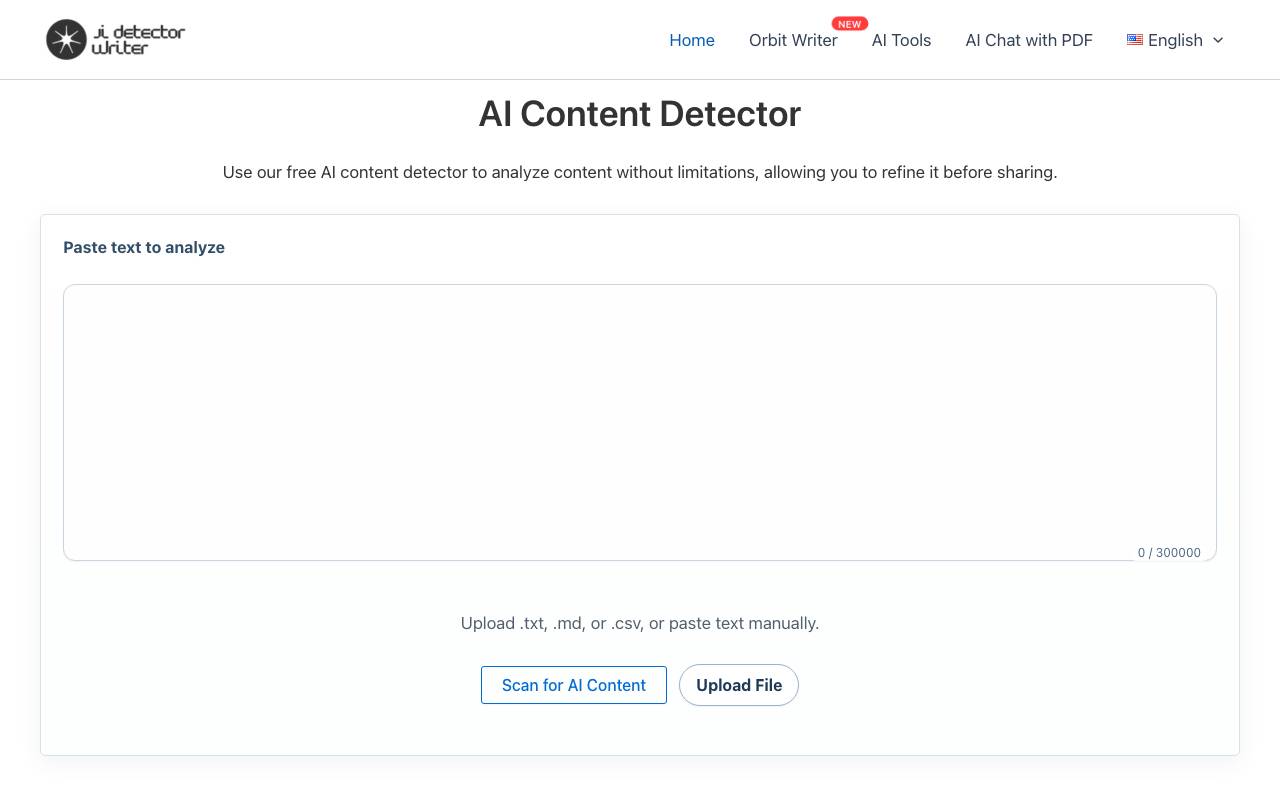
AI Detector Writer analyzes written content to estimate whether it was produced by an AI model or a human author. It scans for patterns common in machine-generated text, such as predictable phrasing, uniform sentence structures, and statistical fingerprints associated with large language models. The tool is aimed at educators, editors, publishers, and businesses that need a quick way to vet submitted writing. Users paste in a passage and receive a probability score indicating how likely the text was AI-generated, along with highlighted sections that influenced the result. While no detector is perfect, AI Detector Writer can serve as one signal in a broader content review workflow, helping teams maintain originality standards and verify authorship claims.
Criteria breakdown
- GPT and AI text detection
- Probability or confidence scoring
- Passage-level highlighting
- Browser-based access
- Supports long-form content
- Quick paste-and-check workflow