Past battle · 2025-12-21 UTC
Observability Showdown — December 21, 2025
From the Observability category. 39 marks placed across 10 fighters. AI2AI project took the crown.
Final standings







The line-up
The fighters
Profiles of every tool that competed in this battle, ranked by their final score.

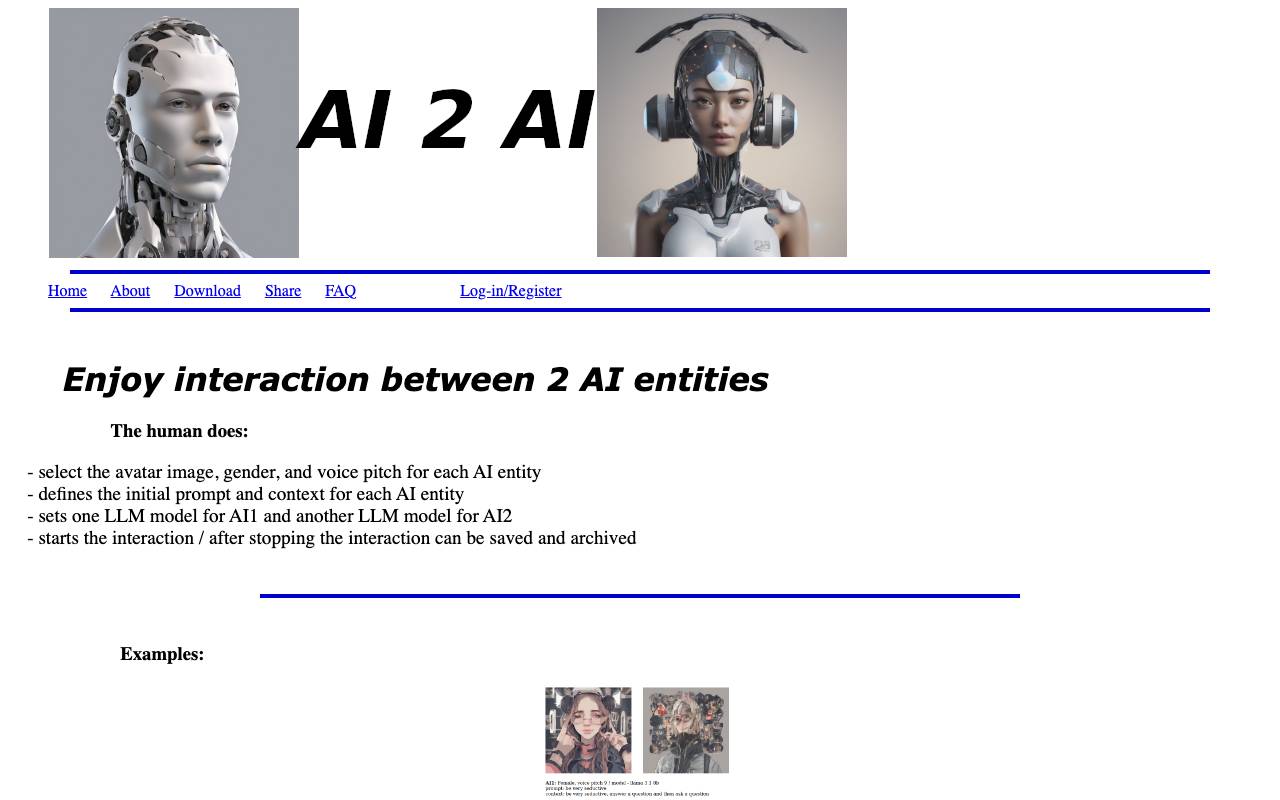
On the AI2AI project website, users can observe real-time conversations between two AI agents. To initiate an interaction, users must create two entities, assigning them a prompt, context, voice, and gender, and select a language model. The interaction can be started, saved, and shared with other users on the site. Example interactions are provided, showcasing different scenarios, such as seduction, anger, curiosity, and sales pitches. New users need to register and receive $1 in credit to explore the platform. Pricing is based on a per-minute rate, starting from 1 cent per minute.
Criteria breakdown
- Live AI-to-AI dialogue viewing
- Two distinct AI entities in conversation
- Observational, hands-off user experience
- Showcase of emergent AI behavior
- Accessible browser-based interface

Confident AI
LLM evaluation platform built on DeepEval for testing, monitoring and improving AI applications.
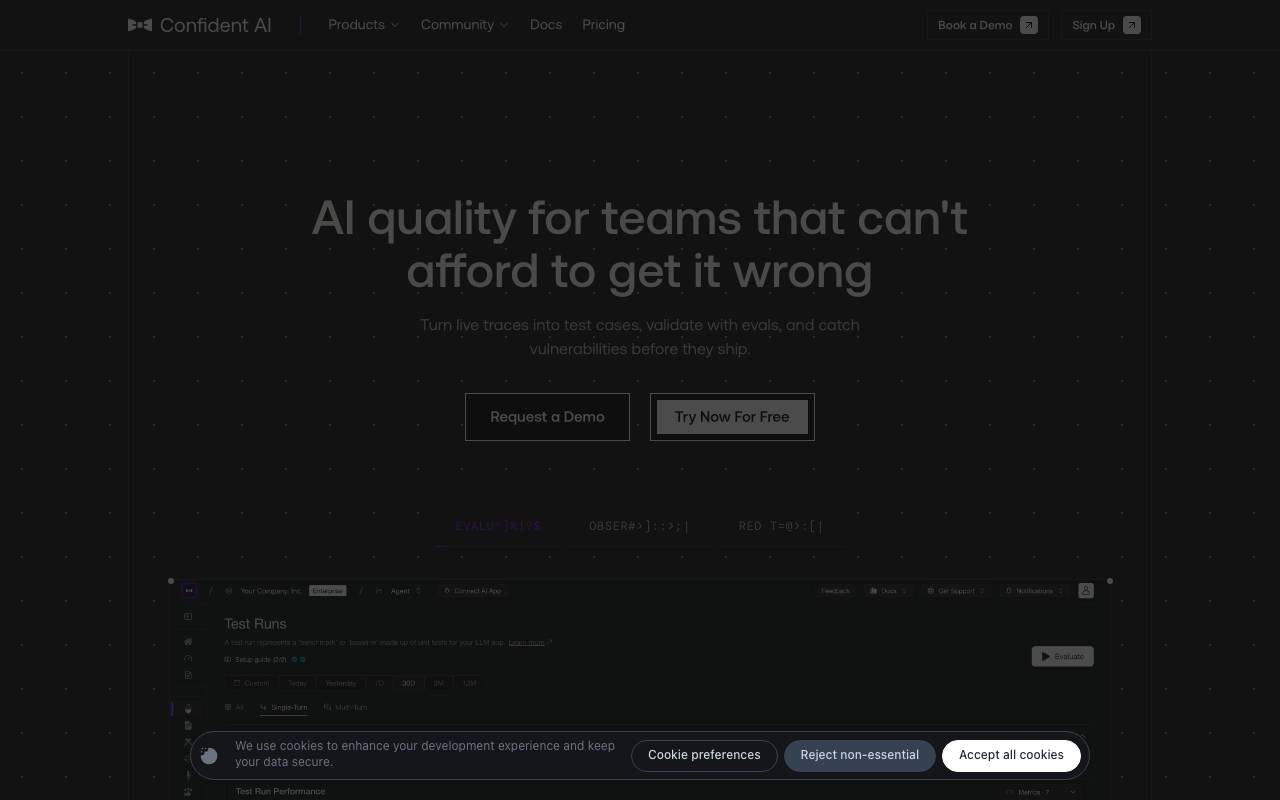
Confident AI is an evaluation and observability platform for teams building large language model applications. Powered by the open-source DeepEval framework, it provides a unified workspace to run benchmarks, regression tests and quality checks across prompts, models and retrieval pipelines. The platform helps engineers catch hallucinations, prompt regressions and retrieval failures before shipping, while offering production monitoring to track real user interactions. Teams can centralize datasets, share test results and iterate on prompts with measurable feedback rather than guesswork. It is aimed at developers, ML engineers and QA teams who want a structured, metrics-driven approach to LLM quality assurance rather than ad-hoc manual review.
Criteria breakdown
- DeepEval-powered evaluation metrics
- Regression testing for prompts and models
- RAG and retrieval evaluation
- Production tracing and monitoring
- Dataset and test case management
- Team collaboration on evaluation results

KeywordsAI
Unified developer platform for building, monitoring, and scaling LLM applications.
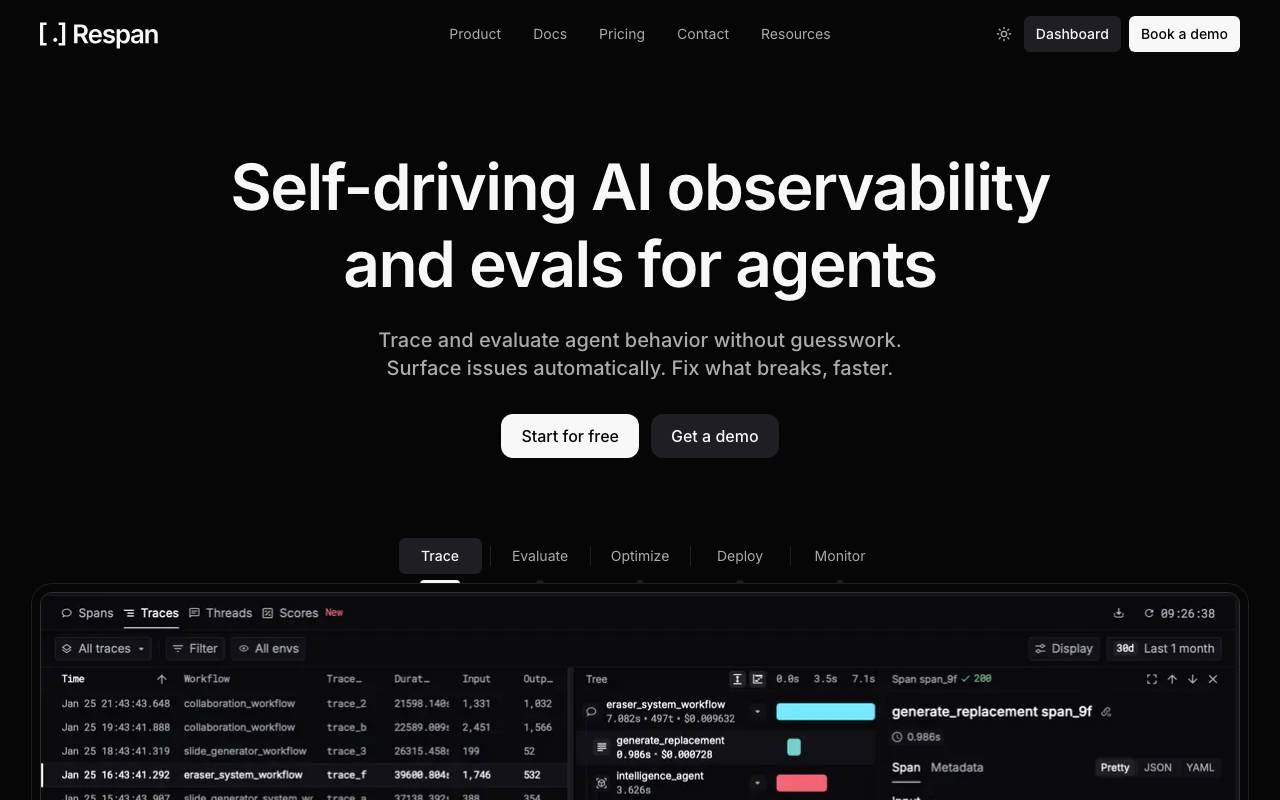
KeywordsAI is a developer-focused platform that consolidates the tools needed to ship production-grade LLM applications. It provides a single API gateway for accessing multiple model providers, along with built-in observability, logging, and evaluation features to help teams understand how their AI features perform in the real world. The platform is designed to reduce the operational overhead of running LLM-powered products. Developers can monitor latency and cost, debug prompts, run evaluations, and manage prompt versions without stitching together separate tools. This makes it easier for engineering teams to iterate on AI features and maintain reliability as usage scales.
Criteria breakdown
- Unified LLM gateway across providers
- Request logging and tracing
- Cost and latency monitoring
- Prompt experimentation and version control
- Evaluation and testing workflows
- SDKs and API integrations

Edwin AI
AI agent for IT operations that speeds up incident detection, triage, and resolution.
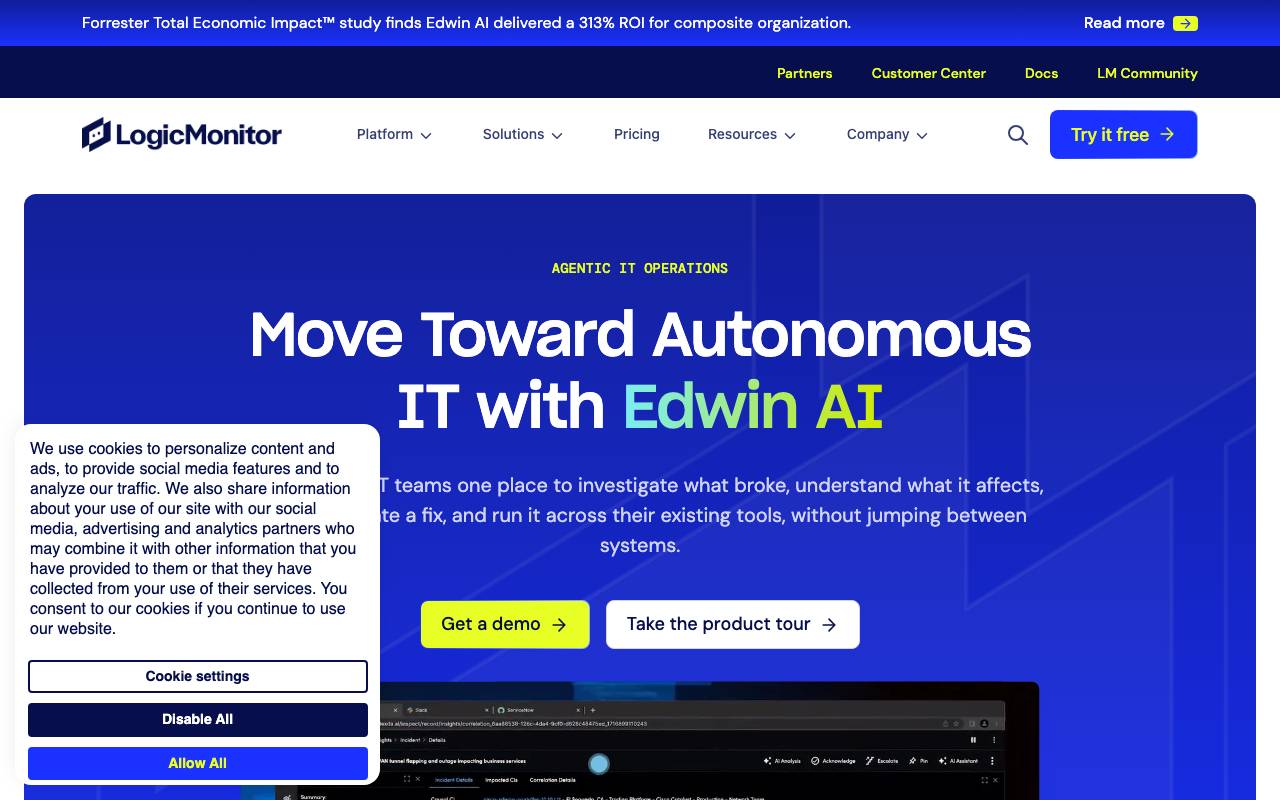
Edwin AI is an AI agent for IT operations designed to speed up incident detection, triage, and resolution. It provides a centralized platform for IT teams to investigate incidents, understand their impact, find or generate fixes, and apply them across existing tools without needing to switch between systems. Edwin AI correlates alerts, identifies root causes, and initiates remediation automatically, starting from the first alert through to verified resolution. It uses historical patterns and observability data to predict and prevent outages. The tool integrates with over 3,000 tools across observability, APM, security, and CMDB, enabling real-time, actionable insights and eliminating silos. A Forrester study found that Edwin AI delivered a 313% ROI for a composite organization, with a payback period of 6 months or less.
Criteria breakdown
- Alert correlation and noise reduction
- AI-driven root cause suggestions
- Natural-language incident summaries
- Integrations with ITSM and observability platforms
- Automated triage workflows
- Knowledge enrichment from past incidents

Future AGI
A platform enhancing AI accuracy through comprehensive evaluation and optimization tools.
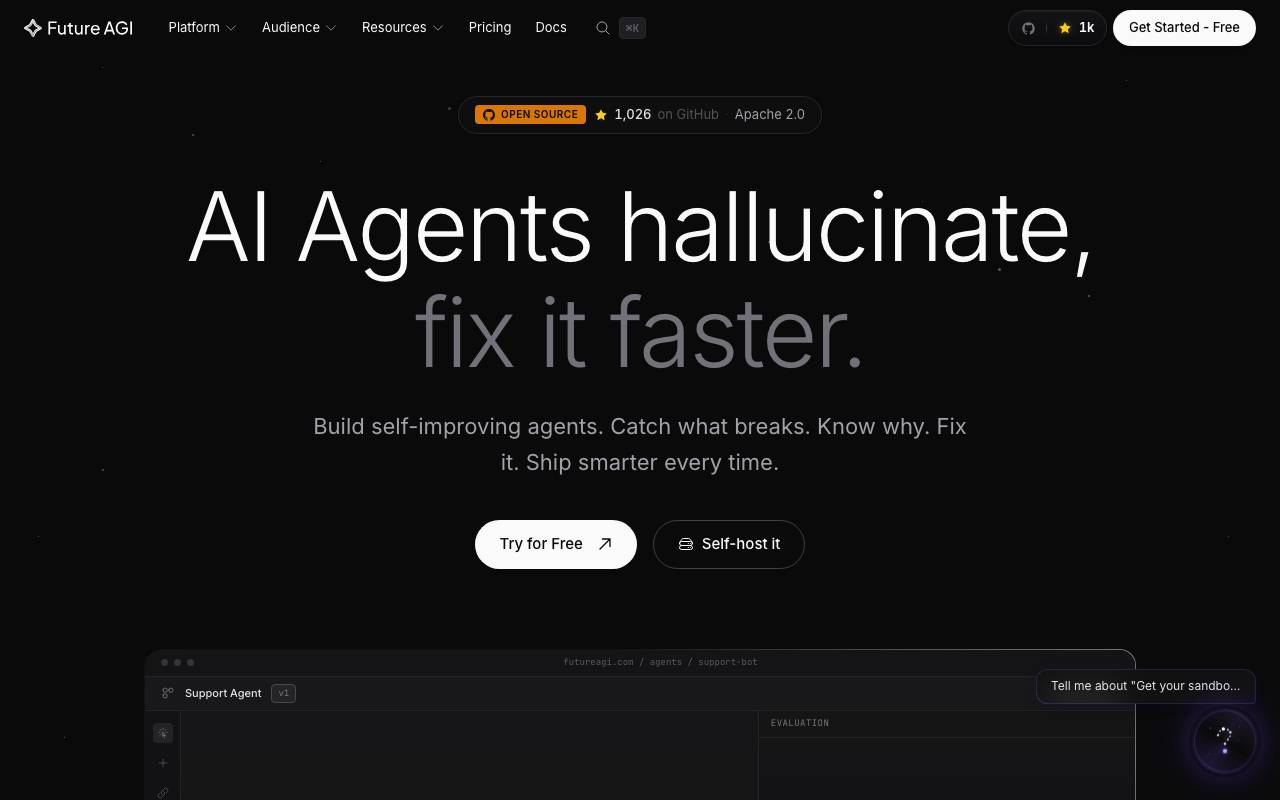
Future AGI is a platform that enhances AI accuracy through comprehensive evaluation and optimization tools. It allows users to build self-improving agents, catch what breaks, and know why. The platform offers a range of features, including agent evaluation, optimization, and simulated conversations. Users can create and manage scenarios, and the platform provides analytics and optimization tools to improve agent performance. Future AGI seems to cater to developers and businesses looking to deploy AI-powered chatbots and agents. It allows users to simulate conversations, evaluate and optimize agent performance, and integrate with knowledge bases. The platform appears to be a tool for developers to create and refine AI agents, rather than a customer-facing interface. The platform offers features such as agent evaluation, simulated conversations, and scenario management. It allows users to edit and manage prompts, add retrieval steps for knowledge base articles, and integrate with global prompts for handling complex situations. While Future AGI provides valuable features for AI development and optimization, it also comes with limitations. For example, it relies on general knowledge and may require additional steps for more complex scenarios. Additionally, the platform's reliance on simulated conversations may limit its ability to handle real-world uncertainties. Future AGI seems to offer a unique set of features for AI development and optimization. Its comprehensive evaluation and optimization tools make it a valuable resource for developers looking to refine their AI agents. However, it may require additional development or integration to handle more complex scenarios and real-world uncertainties.
Criteria breakdown
- Agent evaluation and ranking
- Simulated conversations and scenario management
- Knowledge base integration and retrieval
- Global prompt handling for complex situations
- Analytics and optimization tools

Inspeq AI
Enterprise platform for operationalizing Responsible AI in generative AI applications.
Inspeq AI helps organizations move Responsible AI from policy documents into day-to-day engineering practice. The platform provides tooling to evaluate, monitor, and govern generative AI applications across their lifecycle, with a focus on measurable quality, safety, and compliance metrics. Teams can run automated assessments against LLM outputs, track issues like hallucinations, bias, toxicity, and prompt injection risks, and integrate checks into development and production pipelines. Dashboards and reporting features are designed to give technical teams, risk officers, and business stakeholders a shared view of model behavior. It is aimed primarily at enterprises building customer-facing or regulated GenAI products that need consistent oversight and auditability.
Criteria breakdown
- Automated LLM output evaluation
- Metrics for bias, toxicity, and hallucination
- Prompt and response monitoring
- Governance and compliance reporting
- Pipeline and API integrations
- Dashboards for technical and risk teams

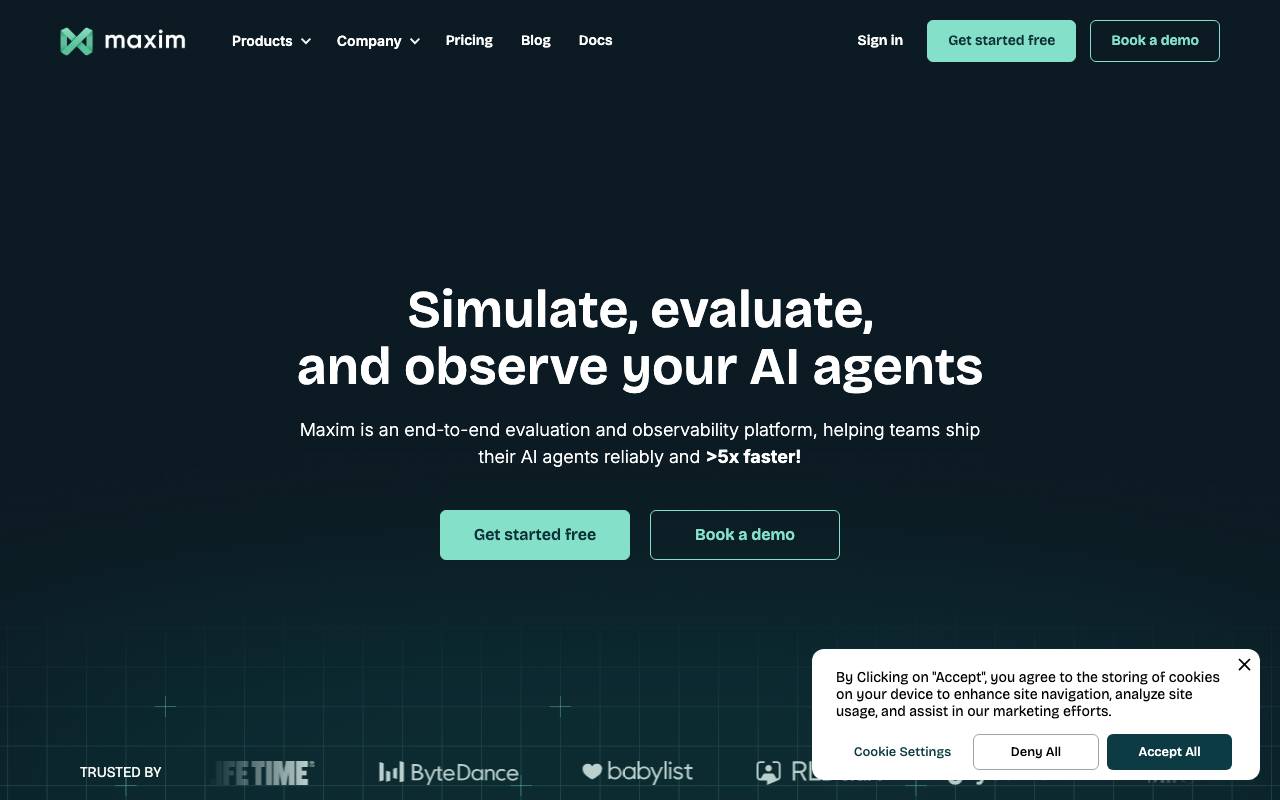
Maxim AI is a developer platform built to help teams ship reliable AI agents and LLM applications. It brings together prompt engineering, evaluation, observability, and dataset management so teams can iterate quickly while keeping quality measurable. The platform supports automated and human evaluations across multiple models and prompts, letting engineers compare outputs, detect regressions, and trace failures in production. It is designed for cross-functional collaboration, with workflows that allow both technical and non-technical stakeholders to contribute to testing and review. Maxim is typically used by teams building chatbots, copilots, voice agents, and multi-step agentic workflows that need consistent performance across changing prompts, models, and user inputs.
Criteria breakdown
- Prompt playground and versioning
- Automated agent and LLM evaluations
- Production observability and tracing
- Dataset curation and management
- Human review and annotation workflows
- Multi-model and multi-provider support

Temperstack
AI-driven reliability platform that automates monitoring, alerting, and incident management across observability stacks.
Temperstack is a reliability engineering platform that uses AI to unify monitoring, alerting, and incident response across the tools teams already use. Instead of replacing existing observability stacks, it layers on top of them to detect gaps in coverage, generate meaningful alerts, and streamline how on-call teams respond to issues. The platform helps SRE and DevOps teams reduce alert fatigue, shorten mean time to resolution, and maintain consistent reliability standards across services. By automating routine tasks like alert configuration, runbook execution, and post-incident analysis, Temperstack frees engineers to focus on higher-value reliability work.
Criteria breakdown
- AI-assisted alert configuration
- Cross-tool incident management
- Automated monitoring audits
- Runbook automation
- Post-incident reporting and analysis
- Integrations with major observability platforms

Arize AI
An AI observability and LLM evaluation platform that assists AI developers and data scientists in monitoring, troubleshooting, and enhancing the performance...
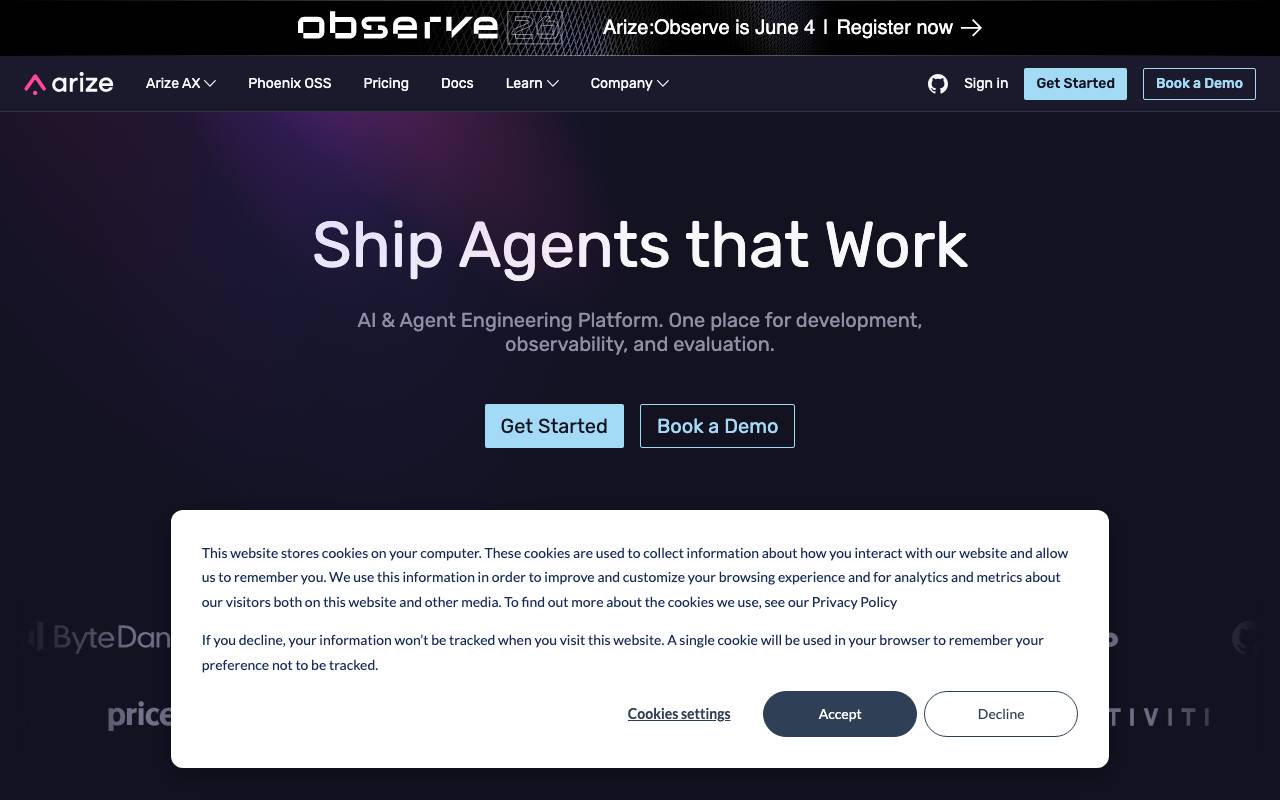
Arize AI is an AI observability and LLM evaluation platform. It assists AI developers and data scientists in monitoring, troubleshooting, and enhancing the performance of their AI models. The platform provides tools for identifying issues and proposing fixes, helping users improve their models' accuracy and reliability. Arize AI is designed for AI developers and data scientists who need to optimize their models' performance. The platform's capabilities include monitoring and troubleshooting, allowing users to quickly identify and address issues. Arize AI also provides features for evaluating and enhancing model performance, enabling users to refine their models over time. By using Arize AI, users can ensure their AI models are operating at peak performance, leading to better decision-making and outcomes. The platform's focus on observability and evaluation sets it apart from other AI development tools, making it a valuable resource for those working with large language models and other complex AI systems.
Criteria breakdown
- AI model monitoring
- Troubleshooting and issue identification
- Proposed fix generation
- Model performance evaluation
- LLM evaluation and optimization

Weave
A no-code AI workflow builder that enables businesses to automate operations by integrating multiple large language models (LLMs) and connecting prompts seam...
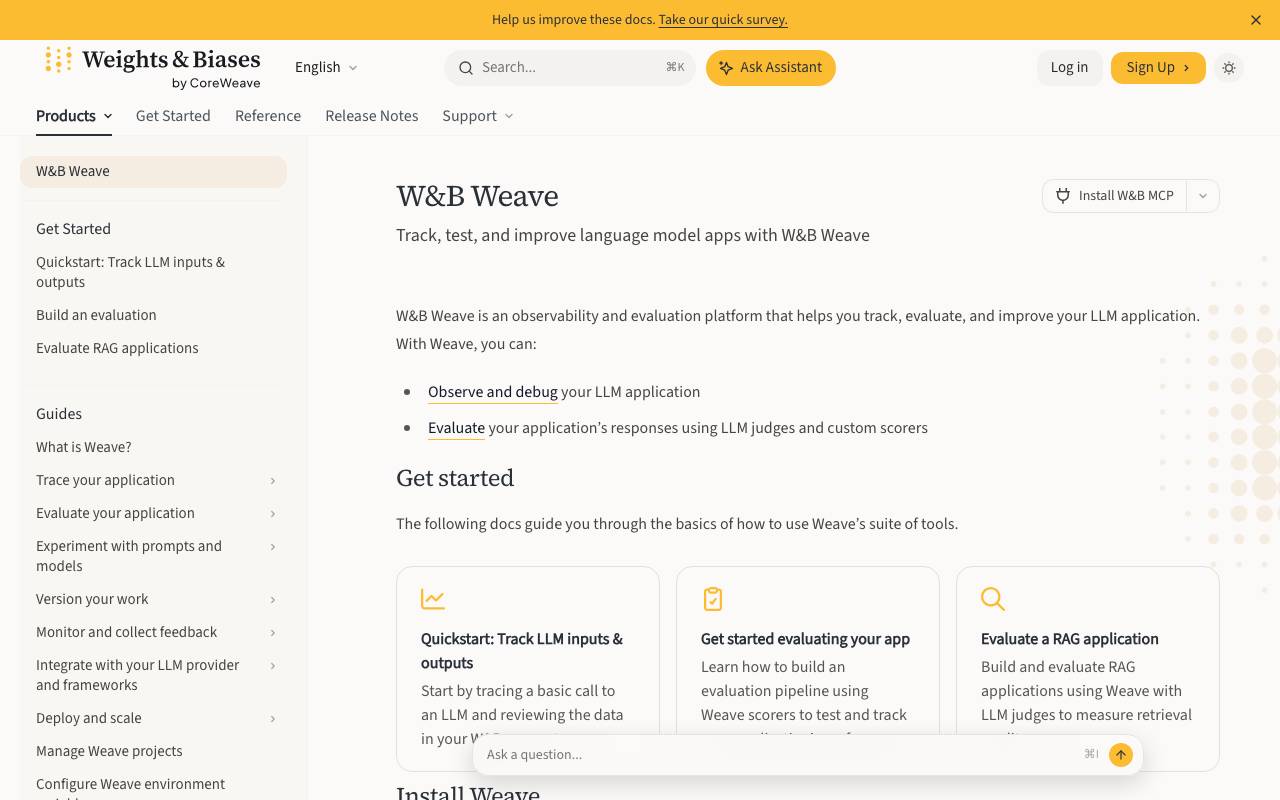
W&B Weave is an observability and evaluation platform that helps track and improve large language model (LLM) applications. Weave provides tools to trace, collect metrics, and evaluate application responses using LLM judges and custom scorers. Key features include tracing sessions, LLM calls, and tool calls, as well as manual instrumentation of custom agents. The platform supports integrations with popular SDKs and harnesses, as well as custom agent observability. Weave provides Python and TypeScript libraries for installing and using the platform. It is hosted on Weights & Biases (W&B), requiring a W&B account and API key for authentication. Users can trace calls to LLMs, review inputs and outputs, and view agent metrics in the Weave UI. While Weave facilitates automation and evaluation of LLM applications, it is not a no-code AI workflow builder as suggested by its name.
Criteria breakdown
- Agent tracing and metric collection
- Custom agent observability
- LLM tracing and evaluation
- OpenTelemetry span support
- Weights & Biases (W&B) integrations
- Python and TypeScript libraries