Past battle · 2024-02-05 UTC
Computer Vision Showdown — February 5, 2024
From the Computer Vision category. 27 marks placed across 8 fighters. Trickle took the crown.
Final standings





The line-up
The fighters
Profiles of every tool that competed in this battle, ranked by their final score.

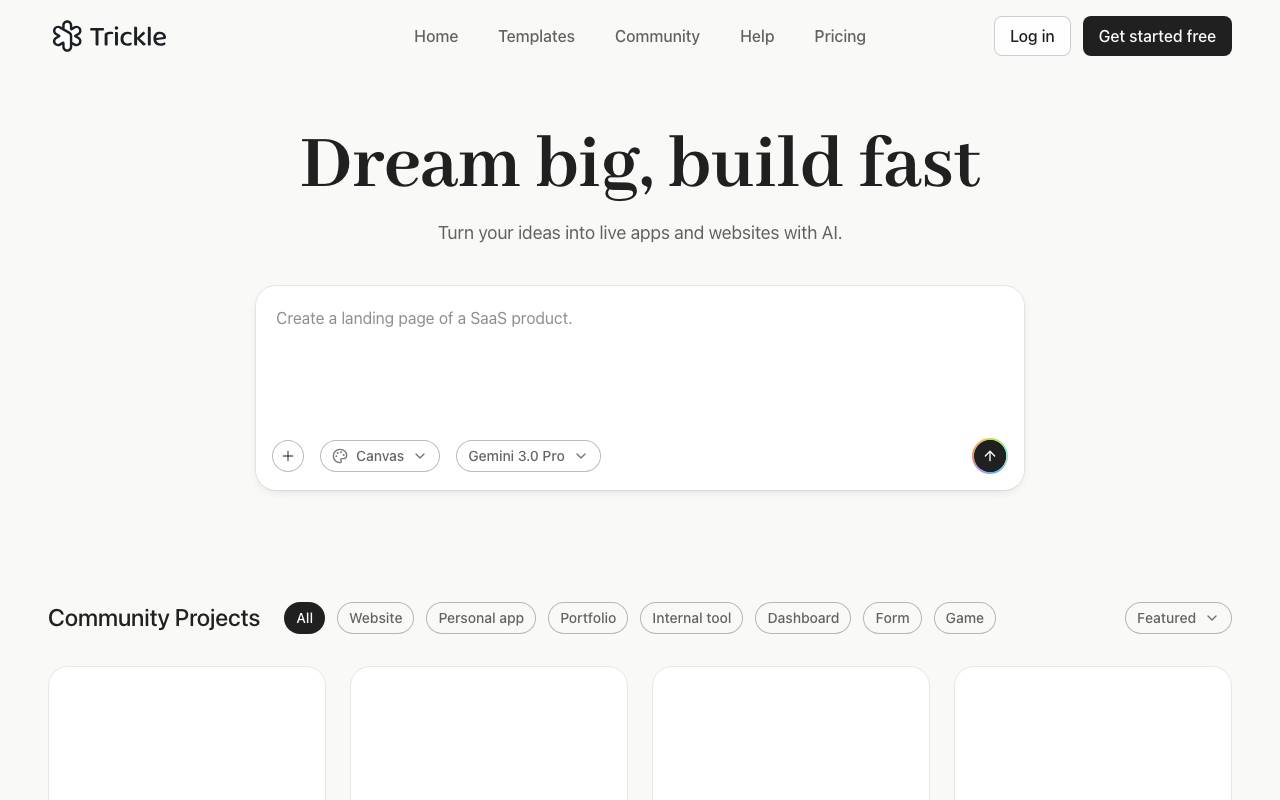
Trickle is a platform that enables users to build web apps, sites, and AI agents from plain-language prompts. It allows users to turn their ideas into live apps and websites using AI. The platform seems to cater to individuals who want to create web applications without extensive coding knowledge. Trickle's interface appears to be user-friendly, allowing users to input natural language to generate web apps. The platform also features a community section for projects and provides various resources such as templates, a blog, and a changelog. However, specific details about its workflow, integrations, and limitations are not readily available.
Criteria breakdown
- Natural language app generation
- AI agent builder
- Visual editor for refinements
- One-click publishing and hosting
- Templates for common use cases
- Integrations with external data and APIs

DeepFace AI
A Python framework for facial recognition and attribute analysis, supporting multiple state-of-the-art models.
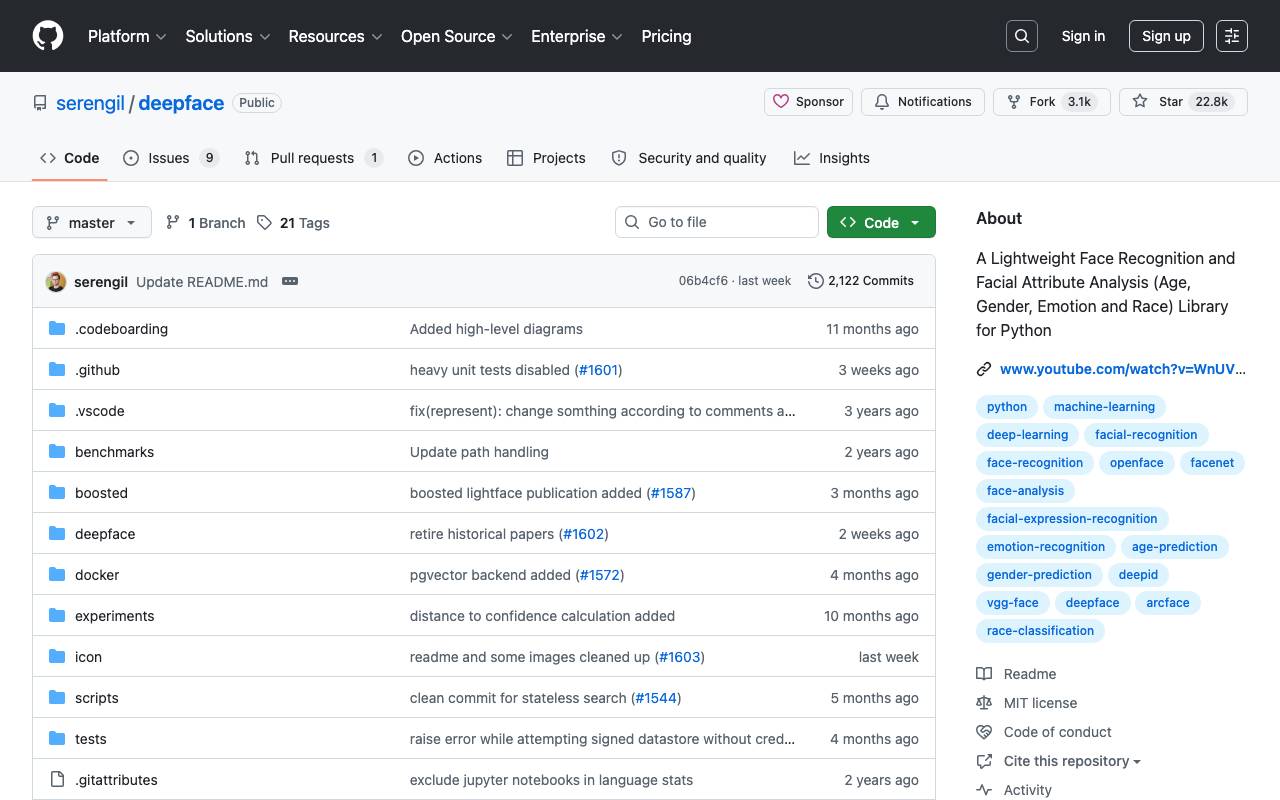
DeepFace AI is a Python framework designed for facial recognition and attribute analysis. It supports multiple state-of-the-art models, allowing developers to leverage the strengths of various architectures for their specific use cases. The framework is intended for developers and researchers who need to analyze facial attributes, such as age, gender, and emotions, or perform face verification and identification tasks. By providing a unified interface to multiple models, DeepFace AI simplifies the process of integrating facial analysis capabilities into applications. DeepFace AI's capabilities include face detection, alignment, and representation, as well as attribute analysis and face recognition. It can be used in a variety of applications, including security, surveillance, and social media analysis. The framework's support for multiple models allows developers to choose the best model for their specific task, considering factors such as accuracy, speed, and computational resources. One of the standout capabilities of DeepFace AI is its ability to support a wide range of models, including convolutional neural networks (CNNs) and other deep learning architectures. This allows developers to experiment with different models and choose the one that best suits their needs. Additionally, the framework provides a simple and intuitive API, making it easy to integrate facial analysis capabilities into applications. Overall, DeepFace AI is a powerful tool for facial recognition and attribute analysis, offering a flexible and scalable solution for developers and researchers. However, its effectiveness depends on the quality of the input data and the chosen model, and it may require significant computational resources for large-scale applications.
Criteria breakdown
- Facial attribute analysis
- Multi-model support
- Real-time facial recognition
- Pythonic API for easier integration
- Cross-platform compatibility

Segment Anything Model (SAM)
Meta AI's foundation model for promptable image segmentation across any object or scene.
Segment Anything Model (SAM) is an open image segmentation system developed by Meta AI Research. Given an image and a simple prompt such as a point, box, or rough mask, it produces high-quality segmentation masks for virtually any object, without needing task-specific training. SAM was trained on the SA-1B dataset, which contains over a billion masks across 11 million images, giving it strong zero-shot generalization. It can be integrated into computer vision pipelines for tasks like annotation, image editing, medical imaging, robotics, AR/VR, and scientific analysis. The model and dataset are released under permissive terms, making SAM a common building block for researchers and developers who need flexible segmentation without training a custom model from scratch.
Criteria breakdown
- Promptable segmentation with points and boxes
- Automatic mask generation for entire images
- Pretrained ViT-based image encoder
- Zero-shot transfer to new domains
- Open-source code and SA-1B dataset
- Integrates with PyTorch and common CV stacks

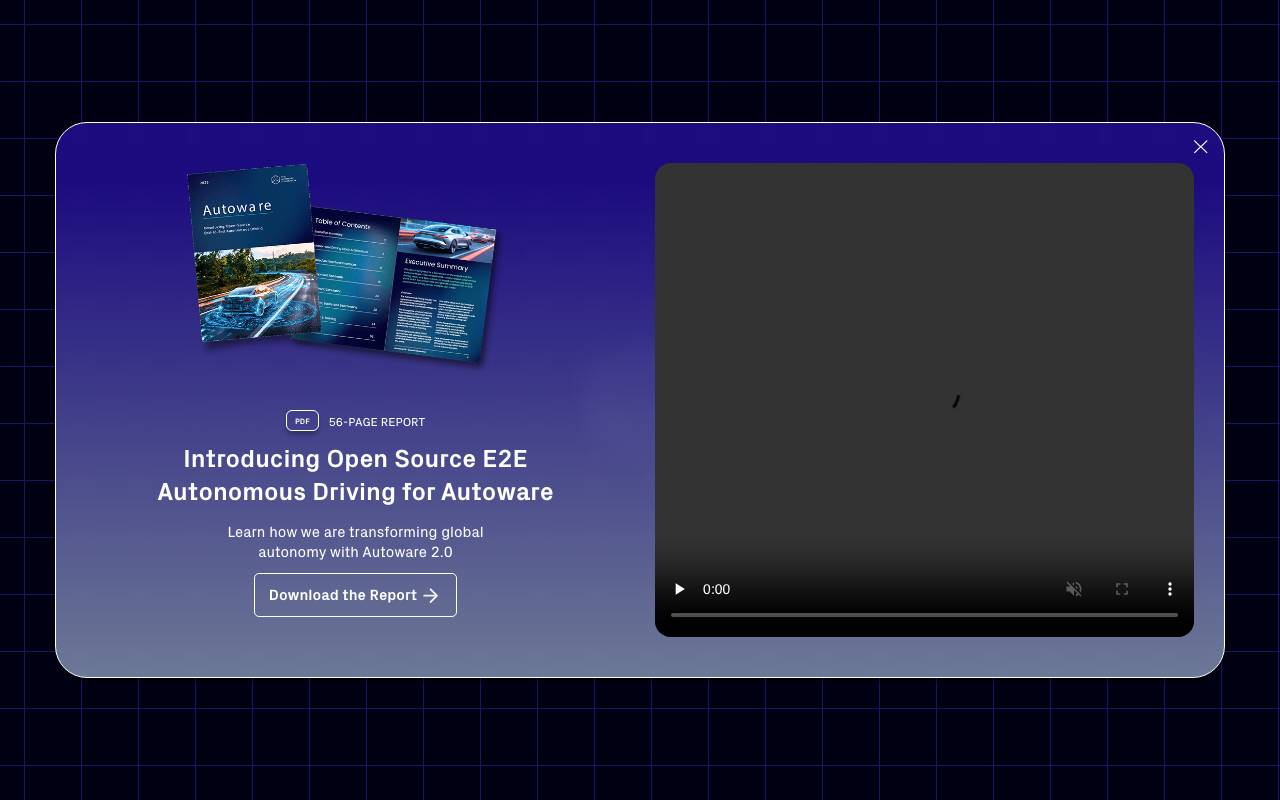
Autoware is an open-source autonomous driving software stack designed to power self-driving vehicles across a wide range of applications, from passenger cars to shuttles and industrial vehicles. Built on ROS, it provides modules for perception, localization, planning, and control, giving developers a complete foundation for autonomy research and deployment. Maintained by the Autoware Foundation and supported by a global community of contributors, the platform is used by universities, startups, and established automotive companies. Its modular architecture allows teams to swap components, integrate custom sensors, and adapt the stack to specific operational design domains. Because it is fully open-source, Autoware lowers the barrier to entry for autonomous vehicle development and encourages transparent collaboration on safety-critical software.
Criteria breakdown
- Perception with lidar, camera, and radar fusion
- Localization and HD map support
- Mission and motion planning modules
- Vehicle control interfaces
- Simulation and testing tools
- ROS 2 compatibility

YOLO (You Only Look Once)
Real-time object detection that identifies multiple objects in a single image pass.
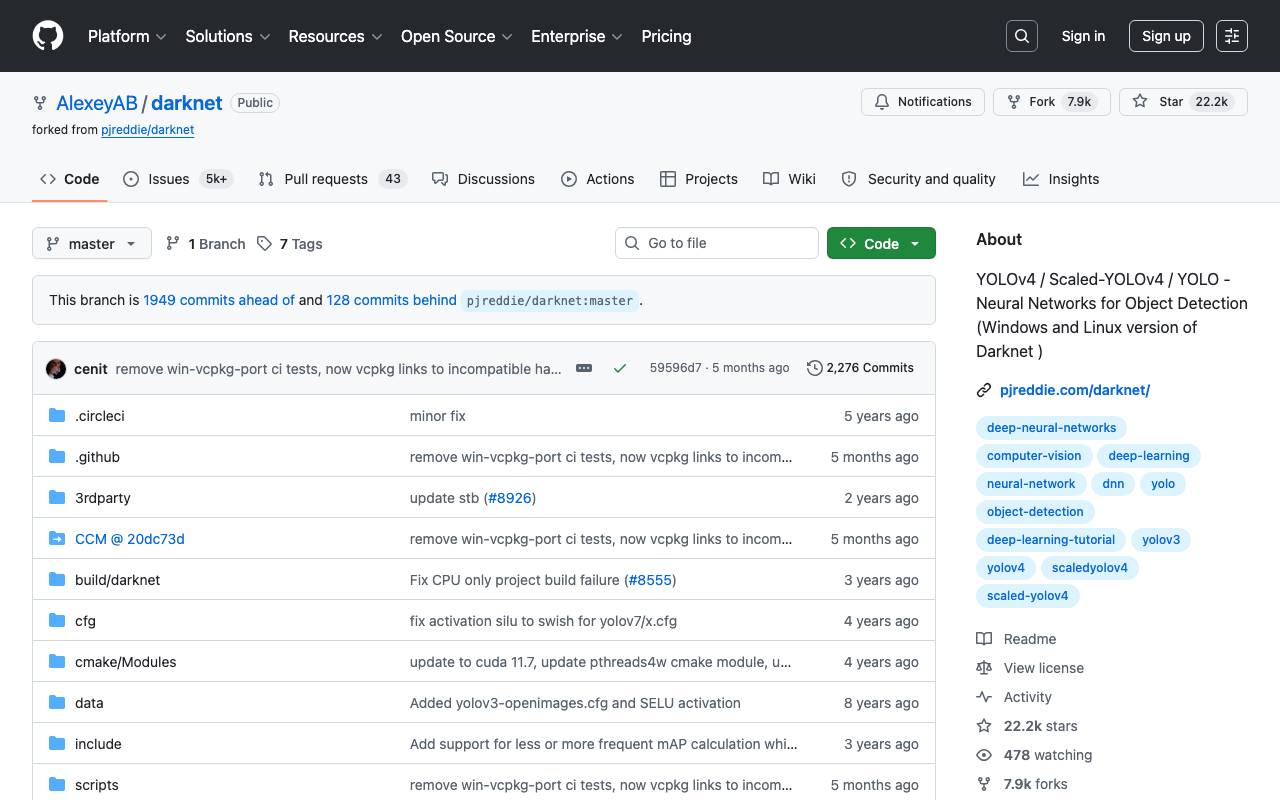
YOLO (You Only Look Once) is a family of object detection algorithms designed for speed and efficiency. Unlike traditional detection systems that apply a model to an image at multiple locations and scales, YOLO frames detection as a single regression problem, predicting bounding boxes and class probabilities in one forward pass through a neural network. This architecture makes YOLO especially well-suited for real-time applications such as video analysis, autonomous vehicles, robotics, surveillance, and augmented reality. Successive versions (YOLOv3, v5, v7, v8, and beyond) have improved accuracy, expanded task support to segmentation and pose estimation, and maintained the framework's reputation for fast inference. YOLO is widely adopted by researchers and developers due to its open-source implementations, active community, and balance between detection accuracy and processing speed on both GPUs and edge devices.
Criteria breakdown
- Single-pass real-time object detection
- Bounding box and class probability prediction
- Support for detection, segmentation, and pose tasks
- Pretrained models on common datasets like COCO
- Deployable on GPU, CPU, and edge devices
- Customizable training on user datasets

EtechStars
AI-driven autonomous vehicle company reimagining the future of transportation.

EtechStars is an AI-powered self-driving car company focused on developing autonomous vehicles that aim to make transportation safer, more efficient, and more accessible. The company combines machine learning, computer vision, and sensor fusion technologies to enable vehicles to perceive their surroundings and make real-time driving decisions. By targeting both personal mobility and commercial transport applications, EtechStars positions itself within the broader push to reduce human-caused accidents, ease traffic congestion, and lower transportation costs. Its work spans autonomous driving software, vehicle integration, and the data infrastructure needed to train and validate self-driving systems.
Criteria breakdown
- AI-powered self-driving systems
- Computer vision and sensor fusion
- Real-time decision-making algorithms
- Autonomous vehicle hardware integration
- Focus on safer, efficient transportation

PrompTale AI
AI storytelling platform that turns narratives into commercial content with blockchain-backed ownership.
PrompTale AI is a content creation platform that helps writers, marketers, and creators transform raw story ideas into polished, commercially viable works. It combines generative AI for drafting and refining narratives with blockchain infrastructure to record authorship and protect intellectual property. The platform is aimed at users who want to monetize creative output, offering tools for collaborative writing, content packaging, and rights management. By anchoring stories on-chain, contributors can verify provenance and explore new distribution and revenue models tied to their work.
Criteria breakdown
- AI-assisted story generation and editing
- Blockchain-based content registration
- Tools for packaging content for commercial use
- Authorship and IP verification
- Creator-focused workflow and collaboration
- Options for tokenized distribution

AI Robotics Drones
AI-powered autonomous drones for surveillance, inspection, and real-time monitoring.
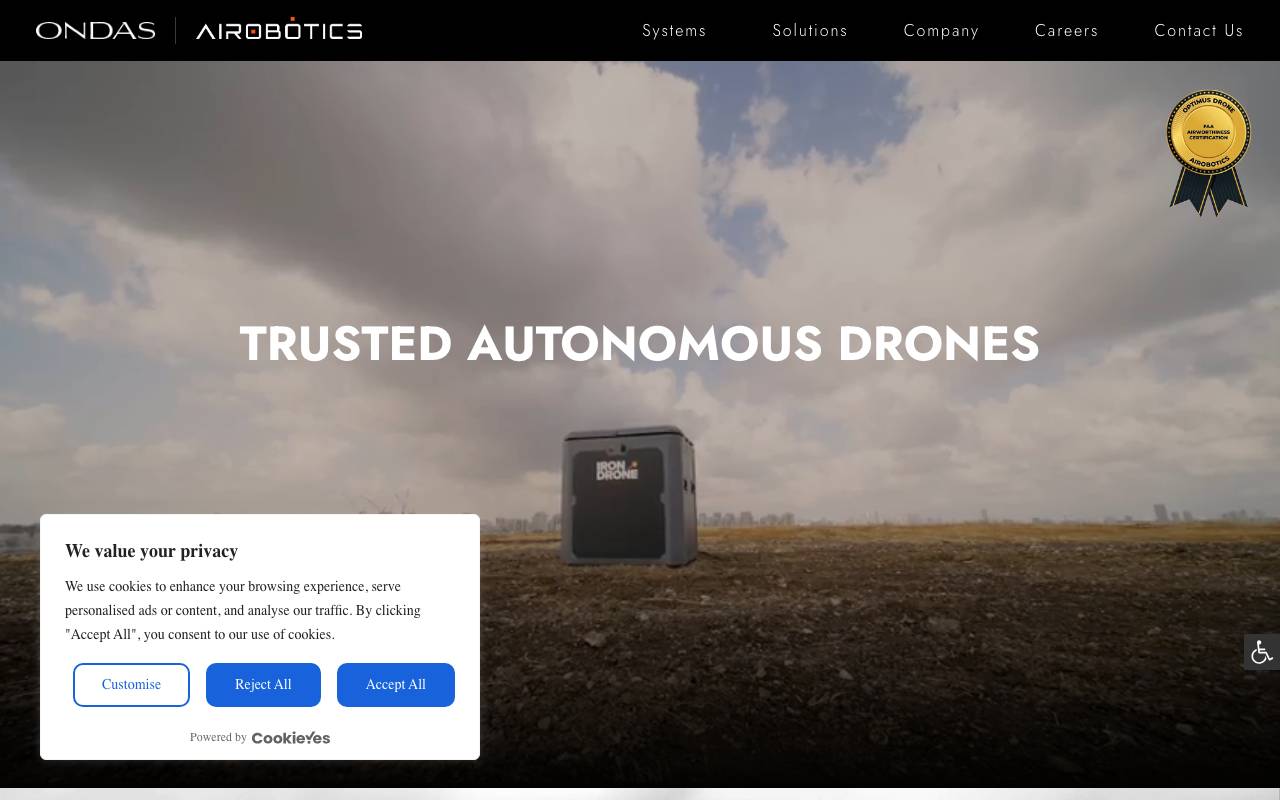
AI Robotics Drones combines computer vision, machine learning, and autonomous flight systems to deliver intelligent aerial platforms for commercial and industrial use. The drones can navigate complex environments, identify objects of interest, and stream actionable insights without constant human piloting. Typical applications include perimeter security, infrastructure inspection, agricultural monitoring, and search-and-rescue operations. Onboard AI processes imagery in real time, flagging anomalies, tracking targets, and generating reports that integrate with existing operations dashboards. Designed for teams that need scalable aerial intelligence, the platform supports mission planning, automated patrols, and remote oversight across multiple units.
Criteria breakdown
- Autonomous navigation and obstacle avoidance
- Computer vision object detection
- Automated patrol and inspection routes
- Real-time video streaming and analytics
- Multi-drone fleet management
- Anomaly detection and alerting