
Test Data Factory (Grade A)Security-tested development skill for Claude AI. Grade A. Generate type-safe test data factories and fixtures for unit and integration tests. Use when the user asks to create mock data, test fixtures,

Overview
Key features
- Type-safe factory functions
- Sensible defaults
- Easy overrides
- Reusable factories
- Relationship handling
- Database fixture creation
Pricing
- Model
- Free
- Category
- Skills
- Rating
- No reviews yet
Use cases
Unit Testing
Use the Test Data Factory to generate mock data for unit tests, ensuring isolated and reliable testing of individual components.
Integration Testing
Create database fixtures with the Test Data Factory to test how different components interact with each other and the database.
Pros & Cons
Pros
- Generates type-safe test data factories
- Provides sensible defaults and easy overrides
- Supports unit and integration tests
- Reusable factory functions
- Handles relationships between entities
Cons
- Requires knowledge of TypeScript and testing frameworks
- May require additional setup for specific databases or frameworks
Reviews
Sign in to leave a review.
No reviews yet. Be the first!
Q&A
Why You Should Use This?
| Audience | Key Benefits | | -------------------- | ------------------------------------------------------------------------------------------------- | | Individual | 30%+ token savings, stop repeating standards, security guardrails, instant scaffolding | | Teams | Consistent AI behavior, day-one onboarding, codified patterns, compounding cost savings | | Organizations | Always-on compliance, same standards across 1,000 projects, central governance, measurable ROI |
Asked by Greta Nowak · May 15, 2026
What You Can Customize?
| Section | What It Controls | Example | | ------------- | -------------------------- | ---------------------------------------------- | | project | Project identity | Name, description, repo URL | | techStack | Language, framework, tools | TypeScript + Express or Python + FastAPI | | paths | Directory structure | Where handlers, services, and common code live | | domain | Business entities | Order, Product, Customer + lifecycle states | | patterns | Code patterns | 7-step handler flow, error handling strategy | | testing | Quality gates | 90% coverage, test/lint/type-check commands | | database | DB conventions | Soft delete field, timestamp columns, naming | | packages | Internal packages | @your-org scope, registry URL | | conventions | Git and workflow | Branch prefixes, commit format, PR templates |
Asked by Daniel Schmidt · May 3, 2026
What it detects?
| Category | Signals | | ------------------ | ------------------------------------------------------------------------------------------ | | Language | tsconfig.json, go.mod, Cargo.toml, requirements.txt, pom.xml, file extensions | | Framework | Dependencies in package.json / requirements.txt (React, Express, Django, Spring, etc.) | | Database | ORM configs (prisma/, sequelize, typeorm), .sql files, migration folders | | Testing | jest.config., vitest, pytest, cypress/, playwright.config. | | Infrastructure | Dockerfile, terraform/, cdk.json, serverless.yml, cloud SDK deps | | CI/CD | .github/workflows/, .gitlab-ci.yml, Jenkinsfile |
Asked by Victor Nguyen · May 3, 2026
What's Inside?
| Layer | Count | What It Does | How It's Triggered | | ------------- | ----- | ------------------------------------------------- | ----------------------------------- | | Rules | 47 | Enforces coding standards on every AI interaction | Automatically — always on | | Agents | 62 | Specialized assistants for complex tasks | On demand — /agent-name | | Skills | 50 | Step-by-step guided workflows with checklists | Contextually — when patterns match | | Commands | 37 | Lightweight, token-efficient quick actions | On demand — /command | | Hooks | 12 | Automation scripts in the AI loop | Event-driven — before/after actions | | Templates | 9 | Scaffolding for handlers, components, tests, etc. | Referenced by skills and agents | ---
Asked by Qiu Yan · Apr 10, 2026
How It Works?
Layer 1 — Pre-Processing: Hooks inject project context and block dangerous commands before your prompt reaches the AI. Layer 2 — Rules Engine: 47 always-on rules enforce token efficiency, security, architecture, code standards, database conventions, and testing thresholds. Layer 3 — Specialized Processing: The right component activates — an agent, skill, or command — based on your prompt. Layer 4 — Post-Processing: Hooks validate output, auto-format, scan for secrets, and verify coverage.
Asked by Sanjay Gupta · Apr 7, 2026
Ask a question
Skills alternatives

 Manage Headers (Grade A)Skills
Security-tested development skill for Claude AI. Grade A. Inspects and configures the security headers a Power Pages site sends to browsers — Content Security Policy, frame and clickjacking protection

 Using Git Worktrees (Grade A)Skills
Security-tested data-ai skill for Claude AI. Grade A. Use when starting feature work that needs isolation from current workspace or before executing implementation plans - creates isolated git worktre

 Ga4 Bigquery Schema (Grade A)Skills
Security-tested data-ai skill for Claude AI. Grade A. GA4 BigQuery Export Schema Reference — complete field reference, nested structures, query patterns, and performance tips

 Meta Capi (Grade A)Skills
Security-tested data-ai skill for Claude AI. Grade A. Meta Conversions API (CAPI) Setup Reference — architecture, event types, customer information hashing, deduplication, implementation examples, AEM

 Callees (Grade A)Skills
Security-tested development skill for Claude AI. Grade A. Lista o que uma funcao/metodo chama (call graph direto)

 Test Module Name (Grade A)Skills
Security-tested data-ai skill for Claude AI. Grade A. Name Haskell test modules after the module under test with a Spec suffix in the same namespace. Use when writing or reviewing Haskell test module

 Board Of Directors (Grade A)Skills
Security-tested data-ai skill for Claude AI. Grade A. Simulate a 5-member expert board deliberation for major decisions. Use when evaluating plans, architecture choices, feature designs, or any decisi

 Advpl Mvc Avancado (Grade A)Skills
Security-tested development skill for Claude AI. Grade A. MVC avançado via PE (Pontos de Entrada) — adicionar grids customizadas em telas MVC padrão (CNTA300/MATA070/MATA440/MATA460/FINA040 via *STRU)
Trending now

 Biology AIEducation AI
Accurate Homework Help with Full Explanations

 Reducto AIAI Agent Development Platforms
Document intelligence API that parses, splits, OCRs, and extracts structured data from complex PDFs, slides, and spreadsheets.
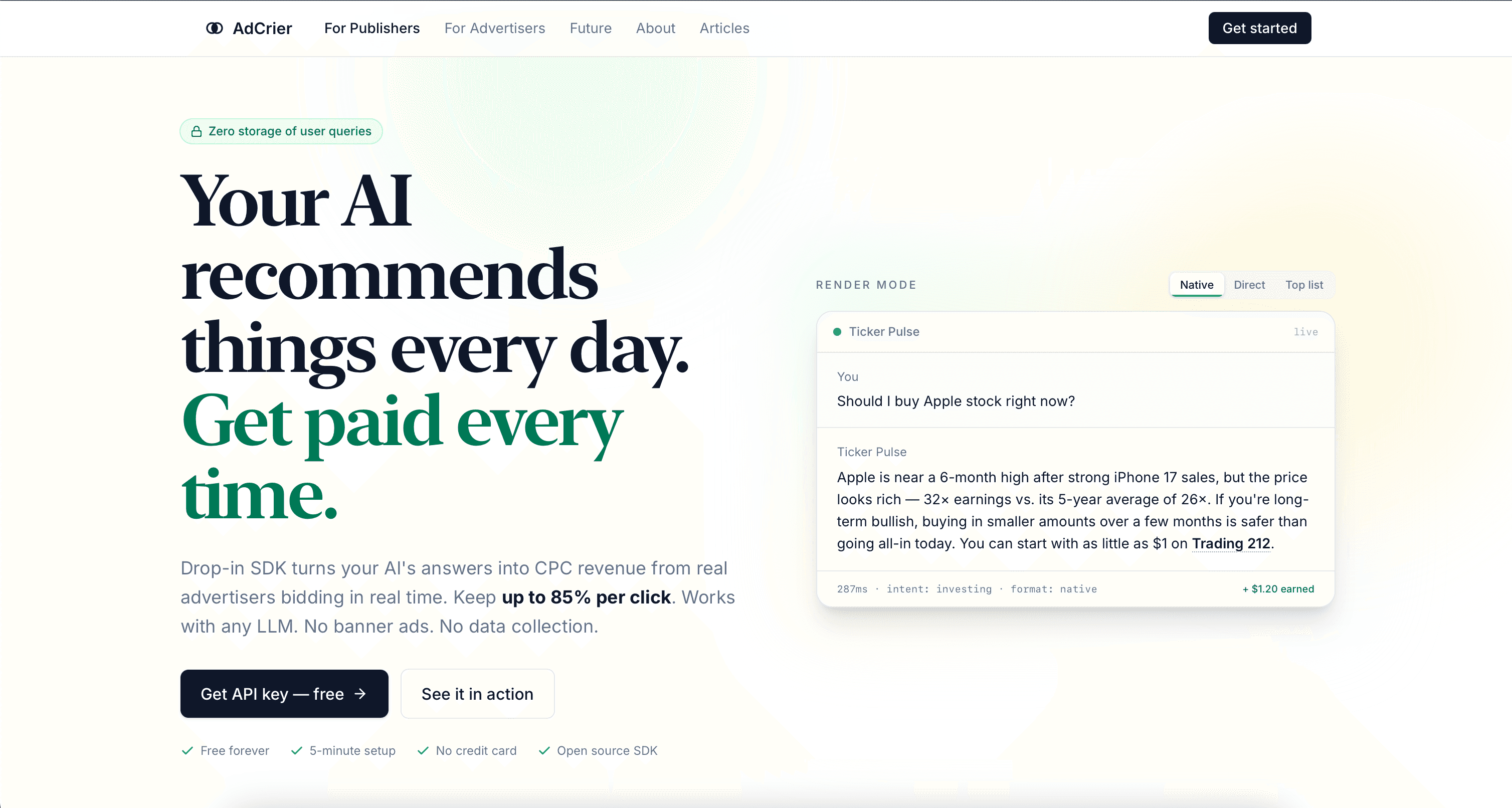
 AdCrierMarketing & Advertising
Sponsored answers, paid per click.

 Pixtral 12B 24.09LLM
Open multimodal 12B model handling interleaved images and text with a 128K context window.