
React Use Ref (Grade A)Security-tested data-ai skill for Claude AI. Grade A. Avoid unnecessary useRef in React. Prefer HTML standard features, declarative libraries, state, or custom hooks. Use when writing or reviewing Rea

Overview
Key features
- Guidance on avoiding unnecessary useRef calls
- Strategies for using HTML standard features
- Recommendations for declarative libraries
- Best practices for state management with useState
- Tips for extracting custom hooks
Pricing
- Model
- Free
- Category
- Skills
- Rating
- No reviews yet
Use cases
Optimizing React Component Code
Use this tool when writing or reviewing React components to ensure they follow best practices regarding the use of useRef.
Code Review for Imperative Code
This tool is useful during code reviews to identify and refactor imperative code that could be replaced with declarative practices.
Pros & Cons
Pros
- Encourages declarative coding practices
- Helps avoid common pitfalls with useRef such as mutable state and unsynchronized rendering
- Provides strategies for better code organization and testability
Cons
- May require additional learning and adaptation to new coding practices
- Not a direct code optimization tool but rather a best practices guide
Reviews
Sign in to leave a review.
No reviews yet. Be the first!
Q&A
Can this tool help refactor existing code that heavily relies on useRef?
Yes, it provides concrete strategies for replacing unnecessary useRef calls, such as extracting custom hooks or switching to stateful solutions, enabling a systematic refactor toward more declarative React code.
Asked by Ekaterina Orlova · Sep 3, 2025
What learning effort is required to adopt the best‑practice strategies suggested?
You’ll need to familiarize yourself with HTML standard attributes, declarative DOM libraries, and how to replace imperative ref logic with useState, useEffect closures, or custom hooks. While not a steep learning curve, it does require adapting existing patterns.
Asked by Henrik Dahl · Aug 10, 2025
How does the guidance improve testability of my React components?
By reducing reliance on mutable refs, the tool helps keep component state in sync with the rendering cycle, making outputs predictable. Declarative approaches and state management are easier to mock and assert in tests, leading to more reliable test suites.
Asked by Constantin Ionescu · Aug 8, 2025
When should I use React's useRef versus the alternatives recommended by this tool?
Use useRef only for cases where you need a mutable reference that persists across renders and isn't tied to the UI, such as tracking timers. The tool advises preferring HTML standard features, state with useState, declarative libraries, or custom hooks for most DOM interactions to keep code declarative.
Asked by Yara Mansour · Jul 18, 2025
Ask a question
Skills alternatives

Manage Headers (Grade A)
Skills
Security-tested development skill for Claude AI. Grade A. Inspects and configures the security headers a Power Pages site sends to browsers — Content Security Policy, frame and clickjacking protection

Using Git Worktrees (Grade A)
Skills
Security-tested data-ai skill for Claude AI. Grade A. Use when starting feature work that needs isolation from current workspace or before executing implementation plans - creates isolated git worktre

Ga4 Bigquery Schema (Grade A)
Skills
Security-tested data-ai skill for Claude AI. Grade A. GA4 BigQuery Export Schema Reference — complete field reference, nested structures, query patterns, and performance tips

Meta Capi (Grade A)
Skills
Security-tested data-ai skill for Claude AI. Grade A. Meta Conversions API (CAPI) Setup Reference — architecture, event types, customer information hashing, deduplication, implementation examples, AEM

Callees (Grade A)
Skills
Security-tested development skill for Claude AI. Grade A. Lista o que uma funcao/metodo chama (call graph direto)

Test Module Name (Grade A)
Skills
Security-tested data-ai skill for Claude AI. Grade A. Name Haskell test modules after the module under test with a Spec suffix in the same namespace. Use when writing or reviewing Haskell test module

Board Of Directors (Grade A)
Skills
Security-tested data-ai skill for Claude AI. Grade A. Simulate a 5-member expert board deliberation for major decisions. Use when evaluating plans, architecture choices, feature designs, or any decisi

Advpl Mvc Avancado (Grade A)
Skills
Security-tested development skill for Claude AI. Grade A. MVC avançado via PE (Pontos de Entrada) — adicionar grids customizadas em telas MVC padrão (CNTA300/MATA070/MATA440/MATA460/FINA040 via *STRU)
Trending now


Reducto AI
AI Agent Development Platforms
Document intelligence API that parses, splits, OCRs, and extracts structured data from complex PDFs, slides, and spreadsheets.
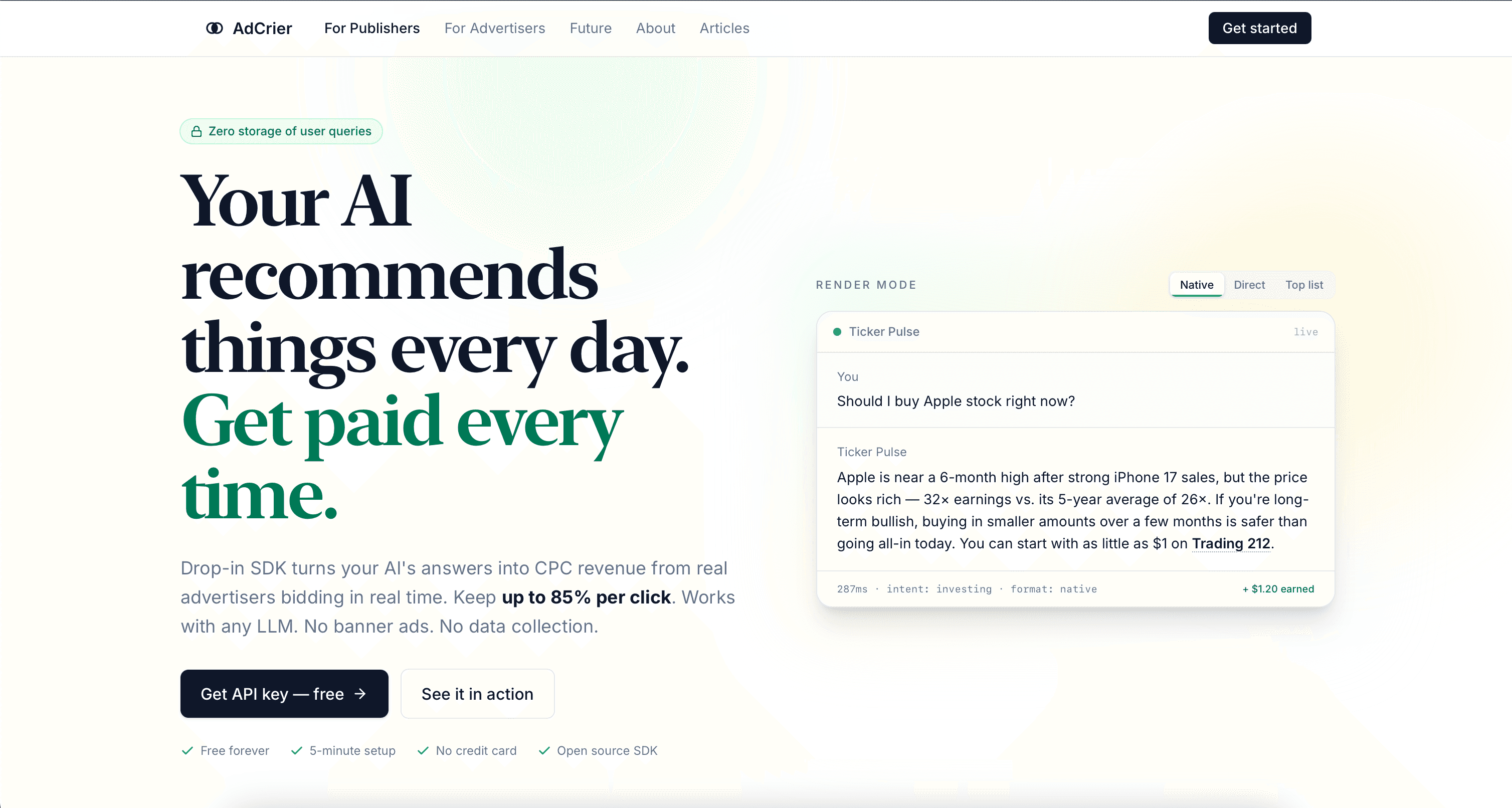

AdCrier
Marketing & Advertising
Sponsored answers, paid per click.


Biology AI
Education AI
Accurate Homework Help with Full Explanations


Pin AI
Workflow automation
Agentic AI recruiter that automates sourcing, screening, and outreach to accelerate hiring.