
Neon AIServerless Postgres built for AI agents and developers who ship fast

Overview
Key features
- Serverless Postgres with autoscaling compute
- Git-style database branching and point-in-time restore
- pgvector extension for embeddings and similarity search
- Separation of storage and compute
- Developer API for programmatic database management
- Preview environments and CI/CD integration
Pricing
- Model
- Freemium
- Category
- Agent Memory
- Rating
- 4.5 / 5 (4)
Use cases
Vector Storage for RAG Applications
Use the pgvector extension to store and query embeddings for retrieval-augmented generation, powering AI applications with similarity search on a familiar Postgres backend.
Agent-Managed Databases
Let AI agents provision, configure, and tear down their own Postgres databases via the developer API, enabling autonomous workflows and per-agent data isolation.
Preview Environments in CI/CD
Create Git-style database branches for every pull request to test schema changes and migrations against production-like data, then discard them after merge.
Cost-Efficient Dev and Staging
Leverage scale-to-zero pricing and separation of storage and compute to keep many non-production databases running cheaply, spinning up only when needed.
Pros & Cons
Pros
- Full Postgres compatibility with no vendor lock-in
- Database branching speeds up testing and CI workflows
- Scale-to-zero pricing reduces idle costs
- Native pgvector support for AI and RAG use cases
- API-first design works well with AI agents
Cons
- Cold starts can add latency after idle periods
- Advanced features require learning Neon-specific concepts
- Free tier limits may be tight for larger workloads
Battle record
Across 6 battles in the Pantheon.
Last 5 battles
- #1
Agent Memory Showdown — June 6, 2026
Jun 6, 2026 · #1 of 2
- #2
Agent Memory Showdown — June 27, 2025
Jun 27, 2025 · #2 of 2
- #1
Agent Memory Showdown — February 16, 2025
Feb 16, 2025 · #1 of 2
- #1
Agent Memory Showdown — October 17, 2024
Oct 17, 2024 · #1 of 2
- #2
Agent Memory Showdown — August 29, 2024
Aug 29, 2024 · #2 of 2
Reviews
Average from 4 ratings.
Sign in to leave a review.

Years in this space
I've evaluated a lot of these over the years. What stands out here is pgvector extension for embeddings and similarity search — handled better than most — and scale-to-zero pricing reduces idle costs. Advanced features require learning Neon-specific concepts is my one real gripe. Worth the time if this is your use case.
Use it every day
Honestly didn't expect to like it this much. Separation of storage and compute is exactly what I needed, and aPI-first design works well with AI agents. I do wish free tier limits may be tight for larger workloads, but I reach for it almost every day now and it just clicks.
Does the job
Pretty happy overall. Developer API for programmatic database management just works and aPI-first design works well with AI agents. Free tier limits may be tight for larger workloads can be annoying, but no dealbreakers — I'd recommend it to a friend without hesitating.
Skeptical, then convinced
I went in skeptical — most tools in this space overpromise. It actually delivers on preview environments and CI/CD integration, and database branching speeds up testing and CI workflows caught me off guard. Advanced features require learning Neon-specific concepts is why this isn't a perfect score, still, I'd recommend giving it a real trial.
Q&A
Are there limitations on the free tier that could affect larger AI projects?
The free tier imposes tight limits on compute and storage, which may constrain larger workloads; for heavier use, upgrading to a paid plan is recommended to avoid throttling or capacity issues.
Asked by Ahmed Saleh · Jun 1, 2026
Can developers create databases automatically within their AI agents?
Yes, Neon provides an API that lets agents programmatically create, manage, and branch databases, enabling dynamic provisioning in agent‑driven workflows.
Asked by Anders Lindgren · Apr 23, 2026
How does Neon’s scale‑to‑zero pricing work for idle workloads?
Neon separates storage from compute, allowing compute to scale to zero when no queries run. This means you only pay for active compute resources, reducing idle cost to near zero, though a small storage fee remains.
Asked by Yaw Owusu · Mar 28, 2026
What makes Neon suitable for AI applications compared to standard Postgres?
Neon includes native pgvector support for embeddings and similarity search, and offers Git‑style branching and point‑in‑time restore, which streamline experimentation and CI/CD for AI models and RAG workflows.
Asked by Julia Steiner · Mar 28, 2026
Ask a question
Agent Memory alternatives

Trending now

 Biology AIEducation AI
Accurate Homework Help with Full Explanations

 Reducto AIAI Agent Development Platforms
Document intelligence API that parses, splits, OCRs, and extracts structured data from complex PDFs, slides, and spreadsheets.

 Pixtral 12B 24.09LLM
Open multimodal 12B model handling interleaved images and text with a 128K context window.
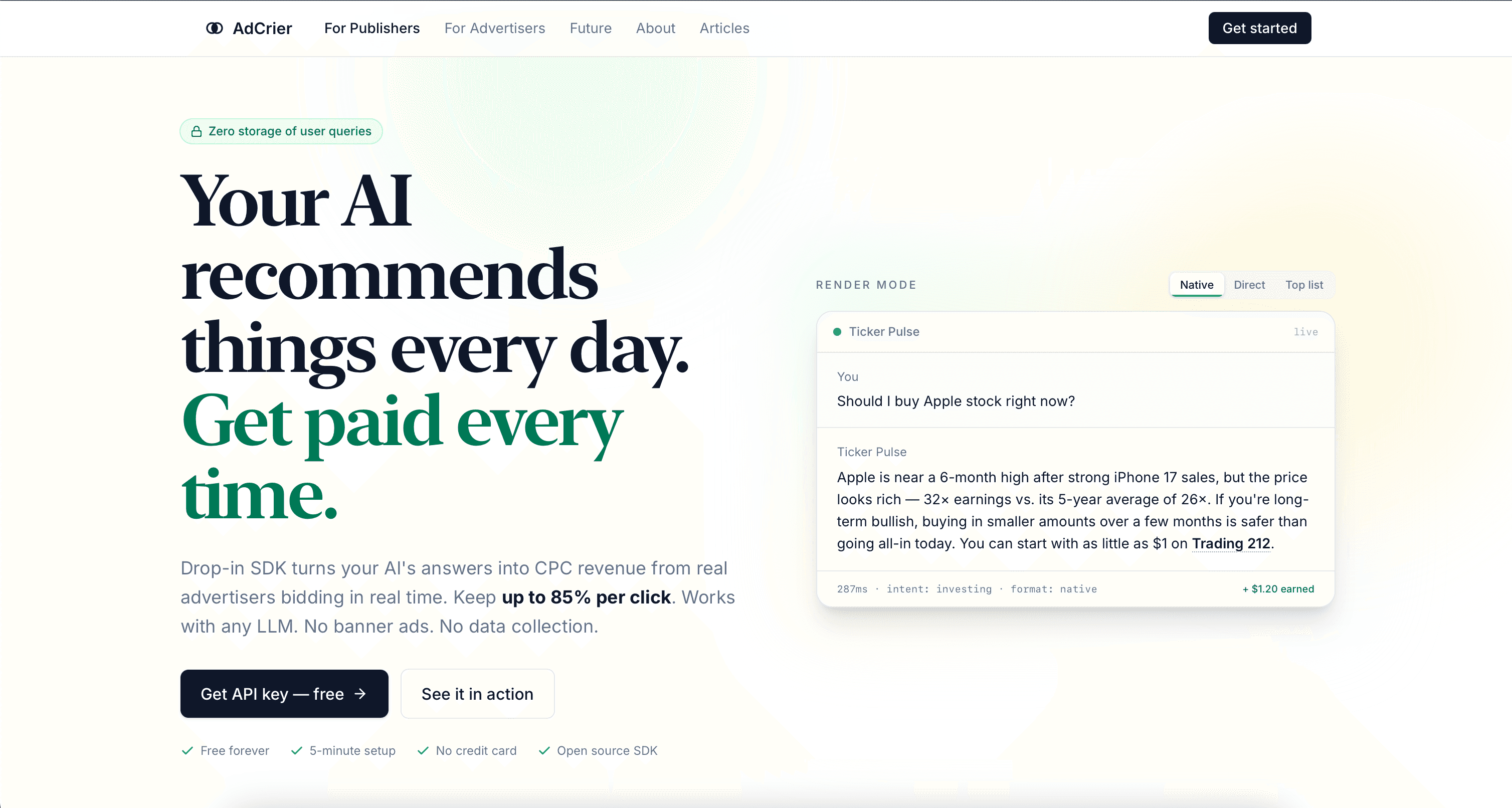
 AdCrierMarketing & Advertising
Sponsored answers, paid per click.