
developer-performance-instincts (Grade A)Security-tested data-ai skill for Claude AI. Grade A. PERFORMANCE INSTINCTS — extracted from roles.json deepPrompt for developer

Overview
Key features
- Performance measurement guidelines
- Big-O awareness
- Database performance optimization
- Caching strategies
- Frontend performance metrics and optimization
Pricing
- Model
- Free
- Category
- Skills
- Rating
- No reviews yet
Use cases
Improving Application Performance
Use this skill to identify and address performance bottlenecks in an application, ensuring a better user experience.
Optimizing Database Queries
Apply the skill's guidelines on database performance, including indexing and query planning, to improve database efficiency.
Enhancing Frontend User Experience
Utilize the skill's advice on frontend performance metrics, such as Largest Contentful Paint and Time to Interactive, to optimize the user interface.
Pros & Cons
Pros
- Provides actionable performance guidelines for developers
- Emphasizes the importance of data structure complexity awareness
- Covers a range of performance topics from measurement to frontend optimization
Cons
- May be too verbose or overwhelming for some developers
- Does not provide specific implementation details or examples
Reviews
Sign in to leave a review.
No reviews yet. Be the first!
Q&A
Which local models should I run, and how does hardware affect SecureContext?
SecureContext degrades gracefully by hardware tier — every LLM‑powered layer fails closed (the feature quietly contributes nothing) rather than breaking ingest or search. What changes with hardware is how much of the intelligence stack is active: | Tier | Hardware | Models that fit | What you get | |---|---|---|---| | Minimum | Any CPU, ~2 GB RAM free | nomic-embed-text (embeddings only) | Hybrid BM25+vector search, working memory, audit chain, skills gating — the core. LLM layers (event extraction, entity extraction, contradiction adjudication) stay dormant. | | Mid | 8–16 GB GPU (or Apple Silicon 16 GB+) | + qwen2.5-coder:14b or phi4:14b (one at a time) | + Event‑fact extraction at ingest (temporal reasoning), LLM contradiction adjudication, entity extraction, L0/L1 semantic file summaries. | | Full | 24 GB+ GPU (e.g. RTX 4090/5090) | + phi4:14b and gpt‑oss:20b resident together | Everything, concurrently, at interactive latency — plus a strong local generator for QA/benchmarks. This is the configuration our published benchmark deltas were measured on. Model‑choice guidance (all measured, see bench/): Embeddings: nomic-embed-text — required, tiny, runs anywhere. Event extraction (ZCEVENTEXTRACTMODEL, default phi4:14b): our bakeoff scored phi4:14b at 100% event recall / 100% date accuracy, tying gpt‑oss:20b at 2× the speed. On smaller GPUs qwen2.5-coder:14b is close behind (84.6% recall). Coder models ≠ better: qwen2.5-coder:32b scored worst (69.2%) despite being the large
Asked by Olamide Fashola · Jan 9, 2026
What do I need to run it?
Node 20+ and (recommended) Docker for the bundled PostgreSQL + Ollama stack. The one‑command installer does everything in about five minutes. A SQLite fallback runs with zero infrastructure.
Asked by Victor Nguyen · Jan 5, 2026
Can multiple Claude Code sessions work on the same project without conflicts?
Yes — parallel sessions atomically claim tasks from a work‑stealing queue (zero double‑claims at 50 agents × 100 tasks in testing), coordinate through typed broadcasts (ASSIGN/STATUS/MERGE/REJECT), and keep private per‑agent memory namespaces plus a shared pool. Department‑style hierarchies (heads + workers, N‑tier escalation) are supported for larger agent teams.
Asked by Mateusz Wozniak · Nov 19, 2025
Are Claude Code skills safe to install?
Filesystem skills bundle scripts that run with your permissions, and Claude Code's native loader does not scan them. SecureContext adds the missing gate: AST scan at admission, HMAC verification before every execution, automatic quarantine on failure or post‑admission change, and a verifiable chained log of every admission decision.
Asked by Gabriel Duarte · Nov 18, 2025
Does SecureContext send my code or data to the cloud?
No. Memory, embeddings (Ollama nomic-embed-text), search, summarization, and the audit chain all run locally. It works fully offline (search degrades gracefully to keyword‑only if Ollama is down) and costs $0 when idle.
Asked by Kwesi Boateng · Nov 16, 2025
Ask a question
Skills alternatives

Manage Headers (Grade A)
Skills
Security-tested development skill for Claude AI. Grade A. Inspects and configures the security headers a Power Pages site sends to browsers — Content Security Policy, frame and clickjacking protection

Using Git Worktrees (Grade A)
Skills
Security-tested data-ai skill for Claude AI. Grade A. Use when starting feature work that needs isolation from current workspace or before executing implementation plans - creates isolated git worktre

Ga4 Bigquery Schema (Grade A)
Skills
Security-tested data-ai skill for Claude AI. Grade A. GA4 BigQuery Export Schema Reference — complete field reference, nested structures, query patterns, and performance tips

Meta Capi (Grade A)
Skills
Security-tested data-ai skill for Claude AI. Grade A. Meta Conversions API (CAPI) Setup Reference — architecture, event types, customer information hashing, deduplication, implementation examples, AEM

Callees (Grade A)
Skills
Security-tested development skill for Claude AI. Grade A. Lista o que uma funcao/metodo chama (call graph direto)

Test Module Name (Grade A)
Skills
Security-tested data-ai skill for Claude AI. Grade A. Name Haskell test modules after the module under test with a Spec suffix in the same namespace. Use when writing or reviewing Haskell test module

Board Of Directors (Grade A)
Skills
Security-tested data-ai skill for Claude AI. Grade A. Simulate a 5-member expert board deliberation for major decisions. Use when evaluating plans, architecture choices, feature designs, or any decisi

Advpl Mvc Avancado (Grade A)
Skills
Security-tested development skill for Claude AI. Grade A. MVC avançado via PE (Pontos de Entrada) — adicionar grids customizadas em telas MVC padrão (CNTA300/MATA070/MATA440/MATA460/FINA040 via *STRU)
Trending now


AdCrier
Marketing & Advertising
Sponsored answers, paid per click.


Reducto AI
AI Agent Development Platforms
Document intelligence API that parses, splits, OCRs, and extracts structured data from complex PDFs, slides, and spreadsheets.


Biology AI
Education AI
Accurate Homework Help with Full Explanations
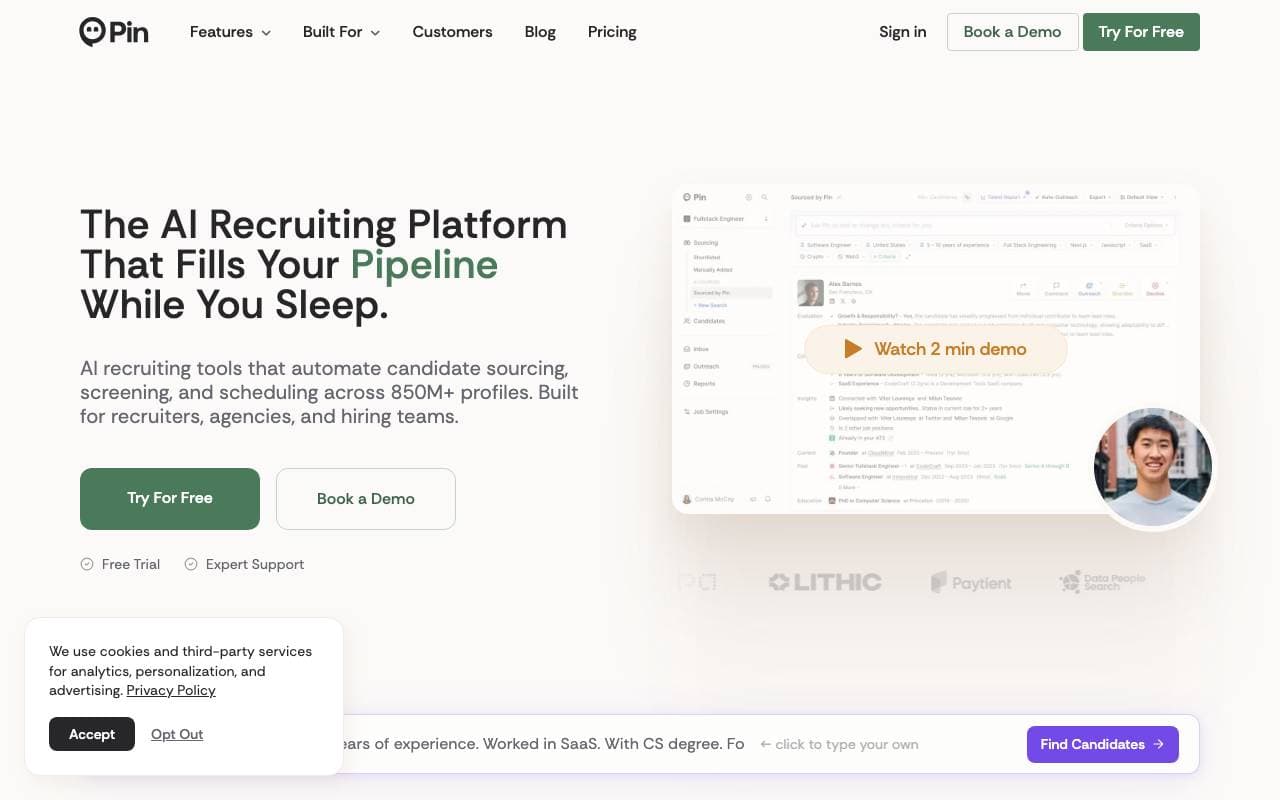

Pin AI
Workflow automation
Agentic AI recruiter that automates sourcing, screening, and outreach to accelerate hiring.