Decide (Grade A)Security-tested data-ai skill for Claude AI. Grade A. Record a decision: finalized → ADR (optionally rule + guide or spec + plan); open proposal → RFC. Use for 'we decided', 'record this decision', 'm

Overview
Key features
- Records decisions as finalized ADRs or open proposals as RFCs
- Transforms decisions into structured documentation
- Supports creation of rules, guides, specifications, and plans
- Security-tested for data-ai skills
Pricing
- Model
- Free
- Category
- Skills
- Rating
- No reviews yet
Use cases
Project Decision Documentation
Teams can use Decide (Grade A) to formally document project decisions, ensuring that all choices are recorded and justified, which helps in future reference and audit trails.
Proposal Management
Decide (Grade A) can be utilized to manage open proposals by converting them into RFCs, facilitating discussion and formalization of new ideas or changes within a project.
Pros & Cons
Pros
- Formalizes decision-making process
- Enhances project documentation and traceability
- Integrates with Claude AI for streamlined workflow
Cons
- Limited to use with Claude AI, which might restrict its versatility across different platforms
- May require familiarization with the specific commands and structures of ADR, RFC, and other documentation types
Reviews
Sign in to leave a review.
No reviews yet. Be the first!
Q&A
Is there a learning curve to using Decide?
Users may need to familiarize themselves with specific commands and structures of ADR, RFC, and other documentation types to effectively use Decide (Grade A).
Asked by Anders Lindgren · Mar 3, 2026
What are the key benefits of using Decide?
Decide enhances project documentation and traceability, and formalizes the decision-making process, making it more precise and transparent.
Asked by Mireille Dupont · Feb 3, 2026
Does it integrate with other AI tools?
Decide (Grade A) is specifically designed to integrate with Claude AI for a streamlined workflow, but its use is limited to this platform.
Asked by Boris Yankov · Jan 28, 2026
What is Decide Grade A used for?
Decide (Grade A) is used to record business decisions by transforming them into structured documentation, such as ADRs or RFCs.
Asked by Ines Zeković · Dec 3, 2025
Ask a question
Skills alternatives

 Manage Headers (Grade A)Skills
Security-tested development skill for Claude AI. Grade A. Inspects and configures the security headers a Power Pages site sends to browsers — Content Security Policy, frame and clickjacking protection

 Using Git Worktrees (Grade A)Skills
Security-tested data-ai skill for Claude AI. Grade A. Use when starting feature work that needs isolation from current workspace or before executing implementation plans - creates isolated git worktre

 Ga4 Bigquery Schema (Grade A)Skills
Security-tested data-ai skill for Claude AI. Grade A. GA4 BigQuery Export Schema Reference — complete field reference, nested structures, query patterns, and performance tips

 Meta Capi (Grade A)Skills
Security-tested data-ai skill for Claude AI. Grade A. Meta Conversions API (CAPI) Setup Reference — architecture, event types, customer information hashing, deduplication, implementation examples, AEM

 Callees (Grade A)Skills
Security-tested development skill for Claude AI. Grade A. Lista o que uma funcao/metodo chama (call graph direto)

 Test Module Name (Grade A)Skills
Security-tested data-ai skill for Claude AI. Grade A. Name Haskell test modules after the module under test with a Spec suffix in the same namespace. Use when writing or reviewing Haskell test module

 Board Of Directors (Grade A)Skills
Security-tested data-ai skill for Claude AI. Grade A. Simulate a 5-member expert board deliberation for major decisions. Use when evaluating plans, architecture choices, feature designs, or any decisi

 Advpl Mvc Avancado (Grade A)Skills
Security-tested development skill for Claude AI. Grade A. MVC avançado via PE (Pontos de Entrada) — adicionar grids customizadas em telas MVC padrão (CNTA300/MATA070/MATA440/MATA460/FINA040 via *STRU)
Trending now

 Reducto AIAI Agent Development Platforms
Document intelligence API that parses, splits, OCRs, and extracts structured data from complex PDFs, slides, and spreadsheets.
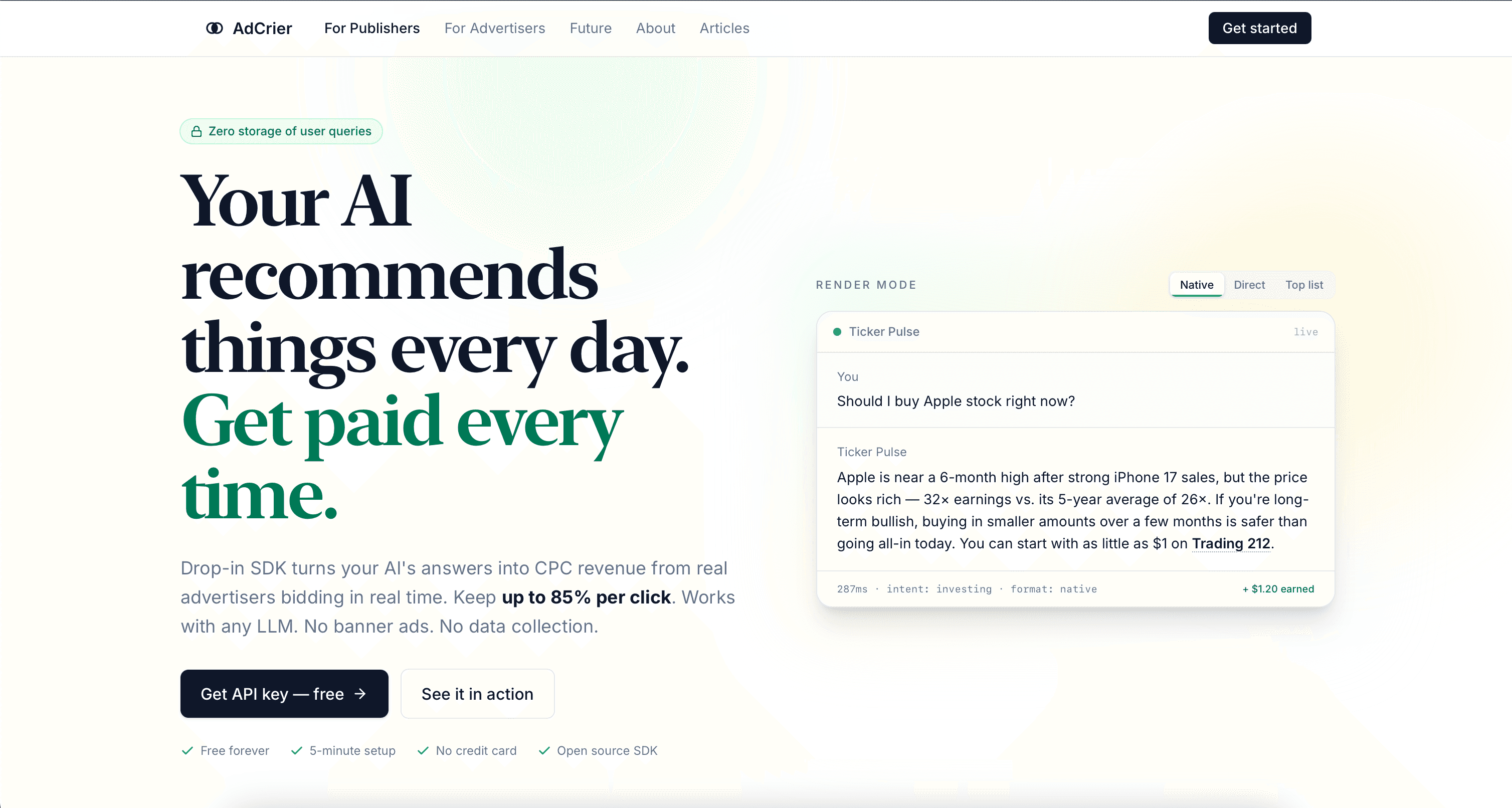
 AdCrierMarketing & Advertising
Sponsored answers, paid per click.

 Biology AIEducation AI
Accurate Homework Help with Full Explanations

 Pixtral 12B 24.09LLM
Open multimodal 12B model handling interleaved images and text with a 128K context window.