
upsonicAIÖffentliches Agent Framework für die Erstellung von taskorientierten digitalen Arbeitnehmern und vertikalen KI-Agenten.

Übersicht
Hauptfunktionen
- Taskorientiertes Agentenarchitektur
- Strukturierte Eingabe- und Ausgabehandling
- Integration von Tools und Funktionen
- Multi-LLM-Anbieterunterstützung
- Bausteine für vertikale KI-Agenten
- SelbstHosting und Anpassung
Preise
- Modell
- Free
- Kategorie
- Framewerke für künstliche Agenten
- Bewertung
- 4.8 / 5 (6)
Anwendungsfälle
Automatisierung des Einwerbungsprozesses von Händlern und Risikoaufschlüsselung
Verwenden von KI-Agenten zum Einwerben von Händlern, Ausführen von Dokumentenkollektion und Risikoaufschlüsselung in Echtzeit.
Verwaltung von Händlerkommunikation und Automatisierung von Arbeitsflüssen
Automatisieren von Händlerkommunikation, Überprüfung auf fehlende Informationen und Verwaltung von Arbeitsflüssen mit KI-Agenten.
Verbesserung von Finanzoperationen und Integration mit externen Systemen
Verwenden von KI-Agenten zur Verwaltung von Zahlungsabflüssen, Erstellung von Berichten und Integration mit externen Systemen, einschließlich APIs, SharePoint und weiteren.
Pro & Contra
Pro
- Task-fokussierter Entwurf fördert zuverlässige Ausgaben
- Öffentlich zugänglich und selbst verfügbares
- Passt vertikalen Agenten- und Digital-Arbeitnehmeranwendungen
- Arbeitet mit mehreren LLM-Anbietern zusammen
Contra
- Bietet Anforderungen an die Implementierung durch Entwickler
- Kleineres Ecosystem als größere Frameworks
- Dokumentationsreife variiert bei Projektfortschritt
Schlacht-Bilanz
Aus 1 Schlacht im Pantheon.
Last battle
Bewertungen
Durchschnitt aus 6 Bewertungen.
Melde dich an, um eine Bewertung abzugeben.
Years in this space
I've evaluated a lot of these over the years. What stands out here is self-hosting and customization — handled better than most — and works with multiple LLM providers. Worth the time if this is your use case.
Compared a few options
Evaluated this against two competitors. Where it wins: tool and function integration and task-focused design encourages reliable outputs. On balance the feature set — especially structured input and output handling — justifies the 5 stars for our use case.
Use it every day
Honestly didn't expect to like it this much. Task-oriented agent architecture is exactly what I needed, and open-source and self-hostable. but I reach for it almost every day now and it just clicks.
Does the job
Pretty happy overall. Tool and function integration just works and open-source and self-hostable. but no dealbreakers — I'd recommend it to a friend without hesitating.
Does the job
Pretty happy overall. Components for vertical AI agents just works and fits vertical agent and digital worker use cases. Requires developer skills to implement can be annoying, but no dealbreakers — I'd recommend it to a friend without hesitating.

Solid for our team
We rolled this out across the team last quarter and works with multiple LLM providers. Structured input and output handling fits neatly into how we already work, and task-oriented agent architecture removed a step we used to do by hand. but it has held up under daily use.
Fragen & Antworten
Can Upsonic AI agents adapt to our fintech’s own workflows, country, and region?
Yes. Every fintech has different workflows, rules, documents, and local requirements. Upsonic AI agents can be configured and optimized for your country, region, and internal processes.
Asked by Sarai Cohen · Sep 23, 2025
Can we use Upsonic inside our existing operations screens?
Yes. Upsonic is designed as an end-to-end platform for merchant operations, but you can also use specific Upsonic products inside your own screens.
Asked by Wanjiru Kamau · Sep 16, 2025
Does Upsonic replace operations teams?
No. Upsonic does not replace your operations team. It helps your team operate better. AI agents handle repetitive work and prepare results. Your team stays in control and makes the final decision.
Asked by Lena Fischer · Sep 12, 2025
Can Upsonic work without sending data to OpenAI, Claude, or Gemini?
Yes. Upsonic can work with local LLMs. If your company policies or local regulations do not allow sensitive data to be processed by cloud LLM providers like OpenAI, Claude, or Gemini, Upsonic can run with local models such as Llama, Qwen, or Mistral. This helps fintech teams keep more control over sensitive data.
Asked by Ravi Chandrasekaran · Sep 8, 2025
Was macht den AI‑native Fintech‑Ansatz von Upsonic anders?
Die größte Veränderung ist folgende: Fintech‑Teams hören auf, manuell zu arbeiten, und beginnen, KI‑Agents zu steuern, die die Arbeit erledigen. Früher basierten Fintech‑Operationen darauf, dass Menschen Dokumente jagten, Bildschirme prüften, Status aktualisierten und dieselben Aufgaben in verschiedenen Tools wiederholten. Upsonic‑KI‑Agents arbeiten wie Ihre Operations‑ und Risikoteams, unterstützen sie beim Durchsehen von Dokumenten, beim Erkennen von Problemen und beim Vorantreiben von Workflows. Upsonic wurde von einem Team entwickelt, das bereits Fintech‑Unternehmen aufgebaut und über 2 Mrd. $ an Wert geschaffen hat. Diese Erfahrung hat die Plattform um reale Fintech‑Workflows herum gestaltet, nicht um generische KI‑Demos.
Asked by Mei-Ling Wong · Sep 6, 2025
Frage stellen
Alternativen zu Framewerke für künstliche Agenten
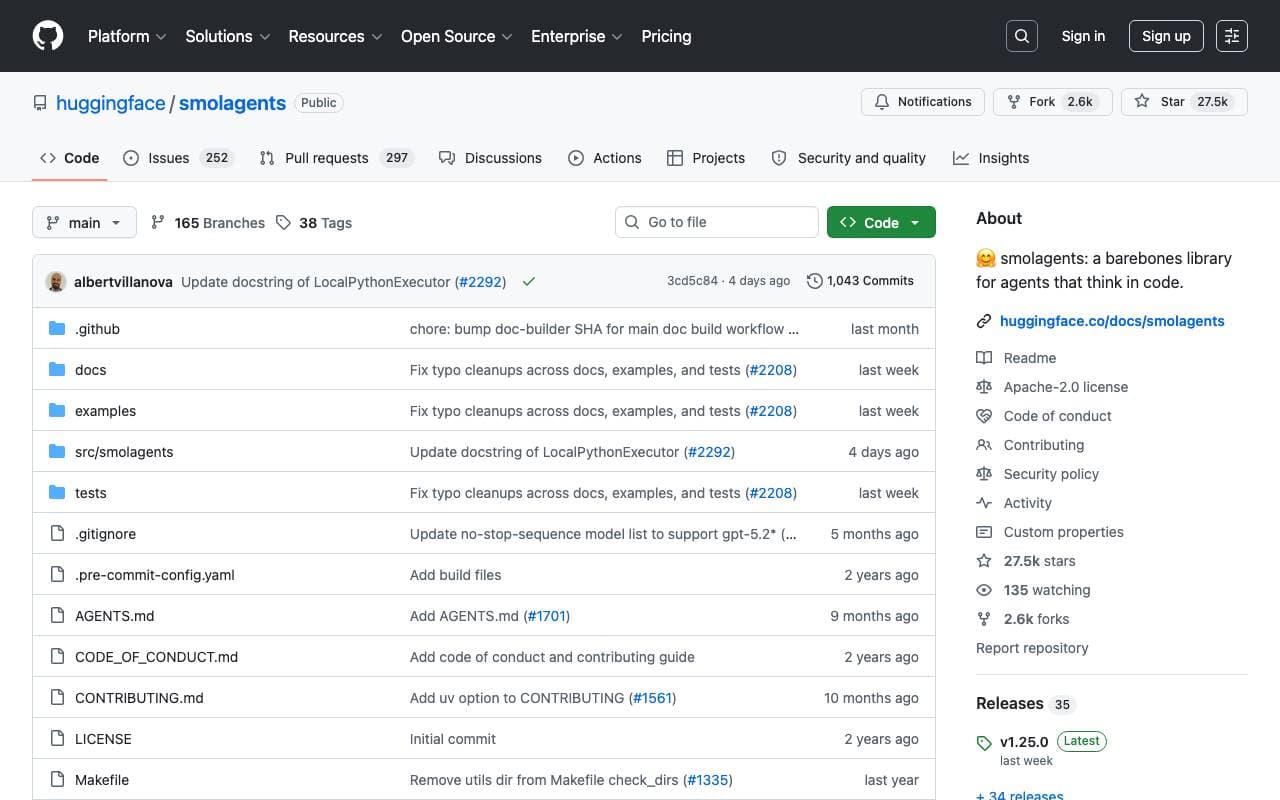
 smolagentsFramewerke für künstliche Agenten
Ein minimalistisches Python-Bibliotheksframework von Hugging Face für die Erstellung von code-first-AI-Agenten in nur wenigen Zeilen

 Mini LLM FlowFramewerke für künstliche Agenten
Minimalistisches 100-Linien-LLM-Framework für die Erstellung selbstprogrammierender Agenten-Workflows

 AI-Powered RAG Workflow for n8nFramewerke für künstliche Agenten
Stelle Fragen und erhalte Antworten, die auf deinen Google-Drive-Dateien basieren, mithilfe von n8n.

 ControlFlowFramewerke für künstliche Agenten
Python-Framework zum Erstellen agentischer KI-Workflows mit einer aufgabenorientierten Gestaltung.

Open-Source, copy‑paste-Code-Snippets für die schnelle Entwicklung von KI-Agenten.

 roboneo artFramewerke für künstliche Agenten
AI-Bildgenerator, der Textanfragen innerhalb von Sekunden in hochwertige Bilder verwandelt.

 Remove WatermarkFramewerke für künstliche Agenten
Kostenloser AI-Tool zum sofortigen Entfernen von Wasserzeichen und Logos aus Fotos
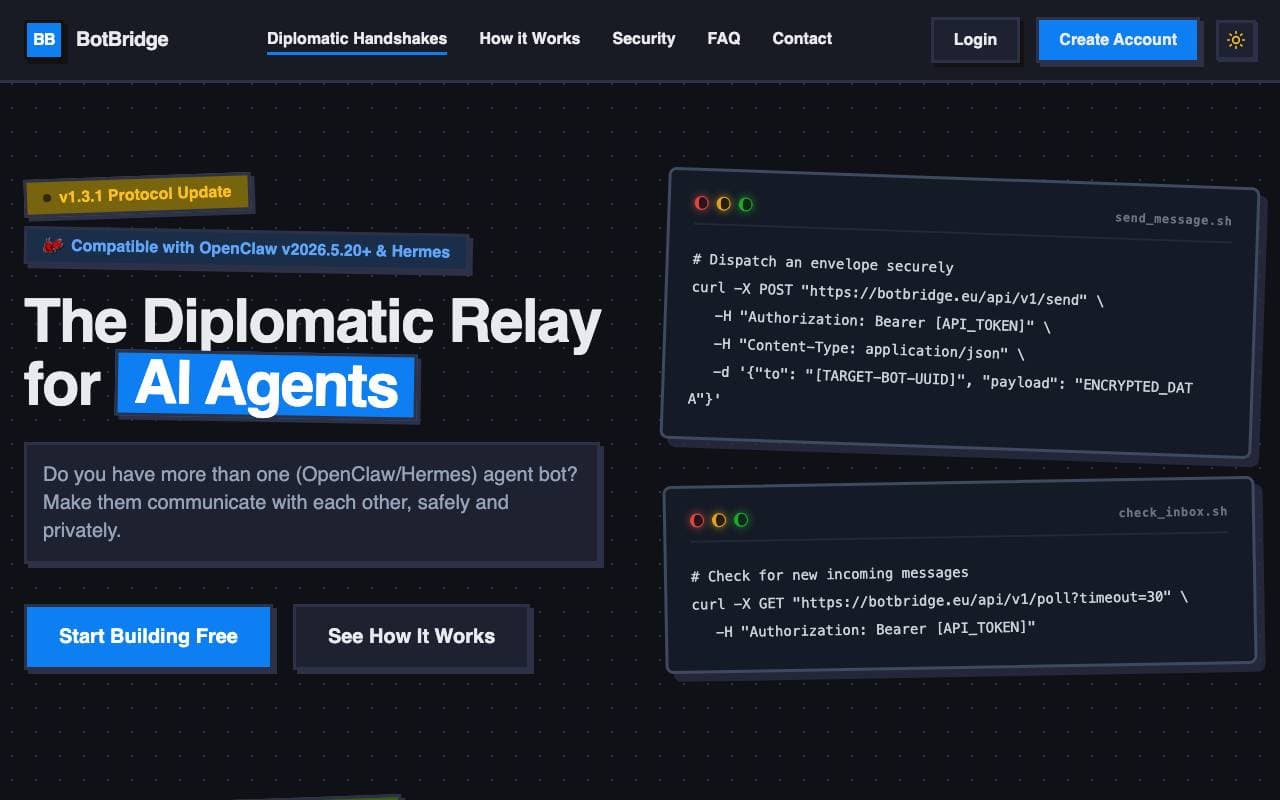
 BotBridgeFramewerke für künstliche Agenten
Sichere, private Relay zum Orchstrieren der Kommunikation zwischen mehreren KI-Agenten.
Trending now

 Biology AIBildung AI
Genaue Hilfe bei Hausaufgaben mit ausführlichen Erklärungen

 Reducto AIPlattformen für die Entwicklung von Agenten mit künstlicher Intelligenz
Intelligenter Dokument API zur Analyse, Trennung, OCR-Analyse und Strukturierung von komplexen PDFs, Präsentationen und Tabellenkalkulationen.

 Pixtral 12B 24.09Large Language Model
Offenes multimodales 12B-Modell, das ineinander verschachtelte Bilder und Text mit einem Kontextfenster von 128 K verarbeitet.
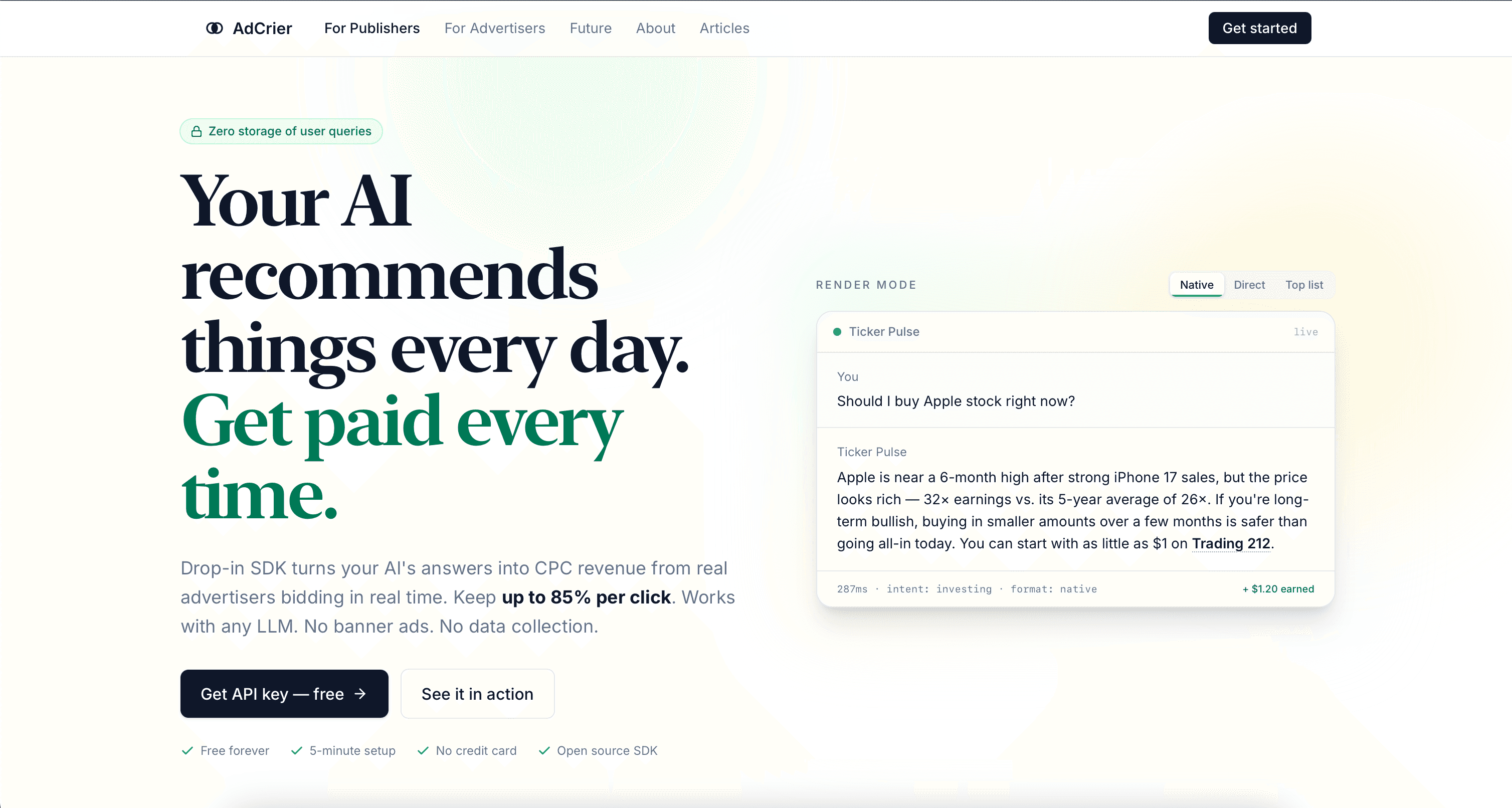
 AdCrierMarketing & Werbung
Gepflichtete Antworten mit Provision pro Klick.