PerplexityKonversations-AI-Suchmaschine, die Fragen mit zitierten, Echtzeit-Webquellen beantwortet.

Übersicht
Hauptfunktionen
- Echtzeit-Websuche mit KI-Zusammenfassungen
- Inline-Zitate zu jeder Antwort
- Pro Search für mehrstufige Recherche
- Auswahl an zugrunde liegenden LLMs (GPT, Claude, etc.)
- Datei- und Dokumenten-Upload zur Analyse
- Browser-Erweiterung und mobile Apps
Preise
- Modell
- Free
- Kategorie
- Forschung
- Bewertung
- 4.4 / 5 (5)
Anwendungsfälle
Schnellforschung mit Faktenprüfung
Stellen Sie Fragen in natürlicher Sprache und erhalten Sie direkte Antworten mit eingebetteten Zitaten, sodass Sie Aussagen leicht verifizieren und die Informationen zurückverfolgen können.
Mehrstufige Themenexploration
Nutzen Sie Pro Search und gefolgte Folgefragen, um komplexe Themen tiefergehend zu erforschen, Suchanfragen zu verfeinern und verwandte Perspektiven in einer einzigen Unterhaltung zu untersuchen.
Dokumenten-Analyse mit Webkontext
Laden Sie Dateien im Pro-Plan hoch, um Perplexity Inhalte zusammenfassen, analysieren oder Fragen dazu beantworten zu lassen, wobei Dokumentinhalte mit Live-Webinformationen kombiniert werden.
Antworten unterwegs via Mobile oder Browser
Nutzen Sie die mobile App oder die Browser-Erweiterung, um unterwegs schnell zitierte Antworten abzurufen, während Sie Artikel lesen, im Web surfen oder außerhalb Ihres Schreibtisches arbeiten.
Pro & Contra
Pro
- Quellen werden neben den Antworten zitiert
- Erfasst Echtzeitinformationen aus dem Web
- Saubere, konversationelle Oberfläche
- Kostenloses Paket ist wirklich nützlich
- Unterstützt Folgefragen und Threads
Contra
- Antworten können noch Ungenauigkeiten enthalten
- Qualität der Quellen variiert je nach Thema
- Fortgeschrittene Modelle erfordern ein kostenpflichtiges Paket
- Weniger anpassbar als ein selbstgebautes RAG-Pipeline
Bewertungen
Durchschnitt aus 5 Bewertungen.
Melde dich an, um eine Bewertung abzugeben.
Compared a few options
Evaluated this against two competitors. Where it wins: inline citations for every answer and pulls in real-time information from the web. On balance the feature set — especially inline citations for every answer — justifies the 5 stars for our use case.
Years in this space
I've evaluated a lot of these over the years. What stands out here is choice of underlying LLMs (GPT, Claude, etc.) — handled better than most — and free tier is genuinely useful. Worth the time if this is your use case.
Solid for our team
We rolled this out across the team last quarter and pulls in real-time information from the web. Real-time web search with AI summaries fits neatly into how we already work, and browser extension and mobile apps removed a step we used to do by hand. Less customizable than building your own RAG pipeline, which is the main caveat, but it has held up under daily use.
Solid for our team
We rolled this out across the team last quarter and supports follow-up and threaded queries. Choice of underlying LLMs (GPT, Claude, etc.) fits neatly into how we already work, and choice of underlying LLMs (GPT, Claude, etc.) removed a step we used to do by hand. Less customizable than building your own RAG pipeline, which is the main caveat, but it has held up under daily use.

Does the job
Pretty happy overall. Real-time web search with AI summaries just works and supports follow-up and threaded queries. Less customizable than building your own RAG pipeline can be annoying, but no dealbreakers — I'd recommend it to a friend without hesitating.
Fragen & Antworten
Is there a learning curve for new users, especially when using advanced models or file uploads?
The conversational UI is designed for quick adoption—just type a question and receive a cited answer. Switching to advanced models or uploading documents adds a few extra steps (selecting the model, choosing files), but overall the process remains intuitive for most users.
Asked by Greta Nowak · Oct 11, 2025
How does Perplexity ensure the answers are reliable, and what are its limitations?
Each answer includes inline citations linking to the original web sources, letting you verify the information yourself. However, the AI can still produce inaccuracies, source quality varies by topic, and the service is less customizable than a self‑hosted RAG pipeline.
Asked by Amos Fältskog · Oct 10, 2025
Which platforms can I use Perplexity on, and does it integrate with other tools?
Perplexity is accessible via its website, native mobile apps for iOS and Android, and a browser extension. While it doesn’t offer direct API integrations, you can use the extension to bring AI answers into any web workflow and upload files for on‑the‑fly analysis within the app.
Asked by Daniel Schmidt · Jul 29, 2025
What are the pricing tiers and what extra features does the Pro plan include?
Perplexity offers a free tier that provides basic AI answers with real‑time web citations. The paid Pro plan unlocks advanced language models (e.g., GPT, Claude), allows file and document uploads, and grants access to Pro Search for multi‑step research and deeper analysis.
Asked by Liam O’Connor · Jun 18, 2025
Frage stellen
Alternativen zu Forschung


Patsnap Eureka
Forschung
Domänenspezifische KI-Agenten, die R&D- und Innovationsabläufe beschleunigen


stockbuzz.ai
Forschung
Macht von künstlicher Intelligenz zur Suchmaschine für Aktienforschung und Marktanalyse


Stock Market Analysis
Forschung
Echte-Time-Stock-Bekundungen, Nachrichten und Markt-Daten in Ihrem Lieblingsformat übermittelt.

Lexicon
Forschung
Strukturierte Vergleichssuchmaschine, die analytische Urteile über acht Dimensionen liefert.

Extruct AI
Forschung
Echtzeit-Business-Intelligenz für präzise B2B Lead-Discovery
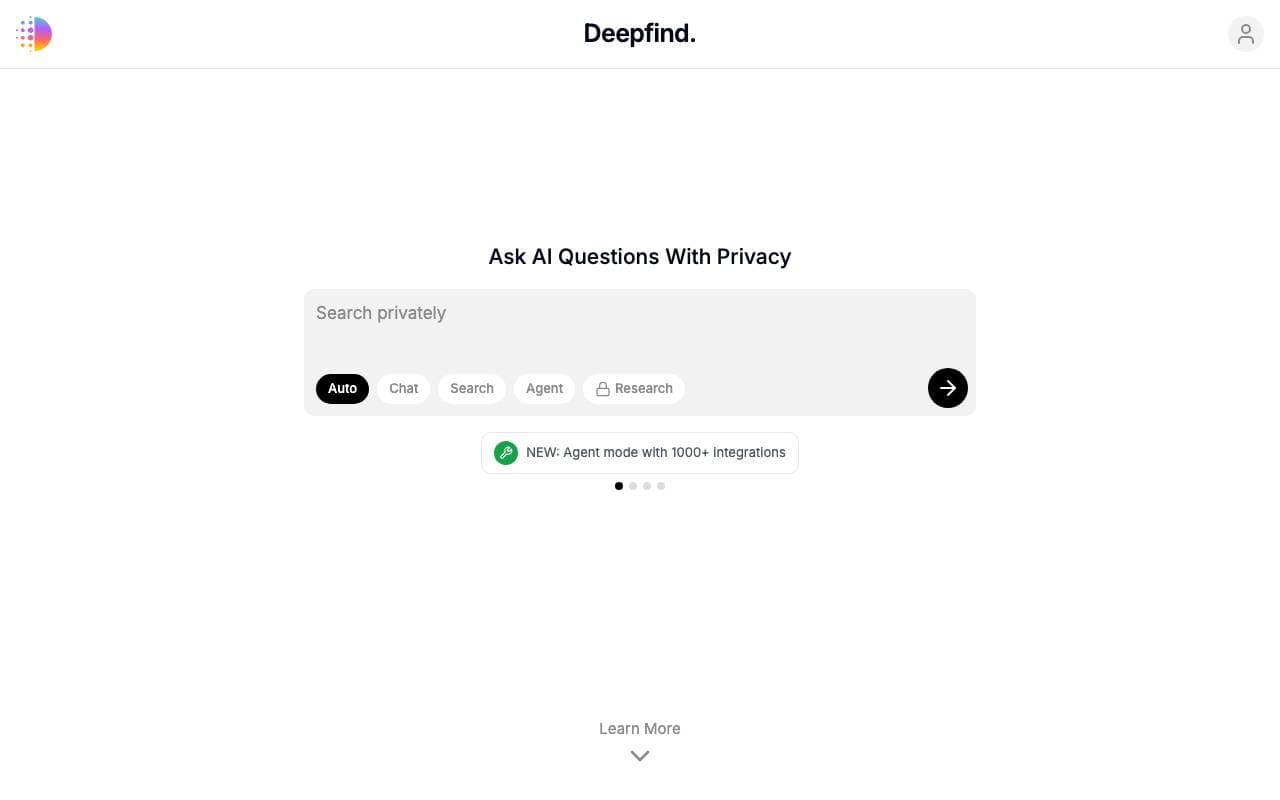

Deepfind
Forschung
Echtzeit-Webforschung, die die Top-Ergebnisse zu einer Antwort zusammenfügt
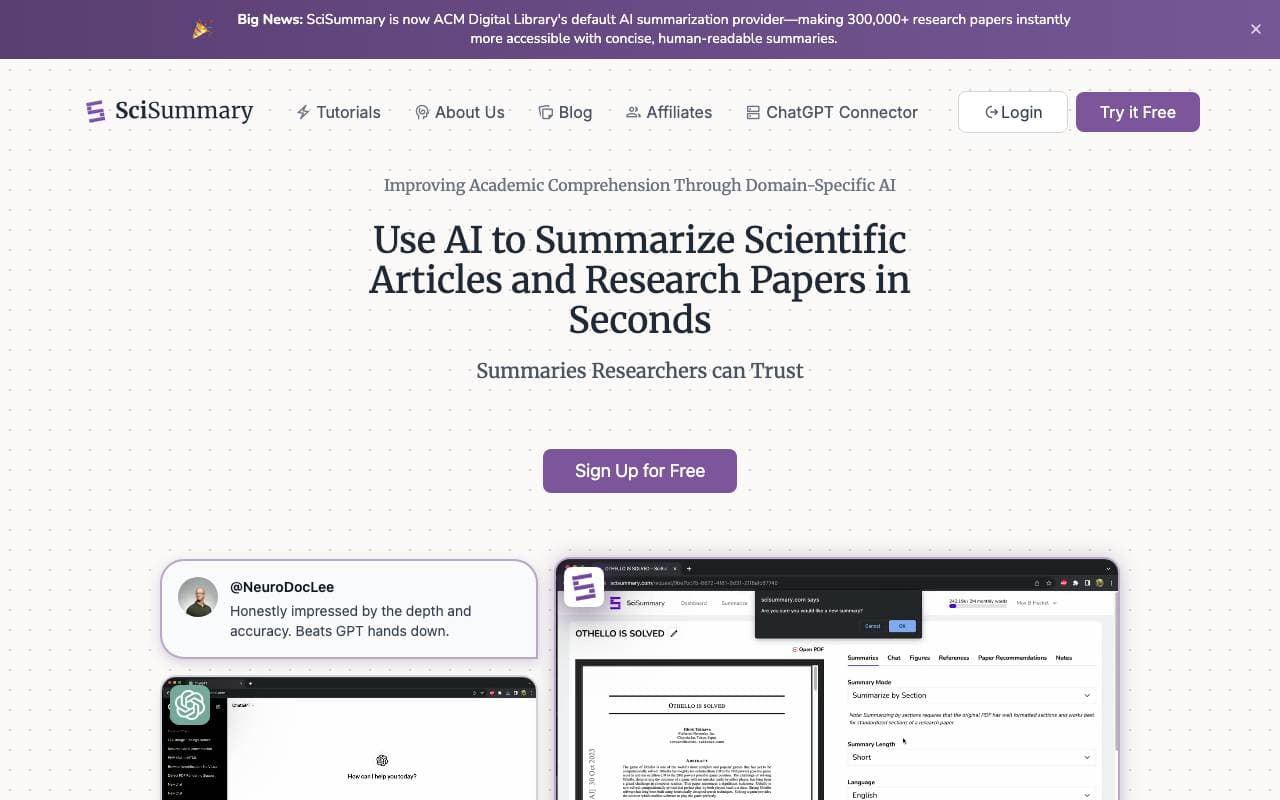

SciSummary
Forschung
KI-gestützte Zusammenfassungen für wissenschaftliche Artikel und Forschungspapiere

Infora AI
Forschung
Maschinelles Lernen-förderter Suchdienst für schnelleres, intelligenteres Erkennen von Informationen
Trending now


Reducto AI
Plattformen für die Entwicklung von Agenten mit künstlicher Intelligenz
Intelligenter Dokument API zur Analyse, Trennung, OCR-Analyse und Strukturierung von komplexen PDFs, Präsentationen und Tabellenkalkulationen.
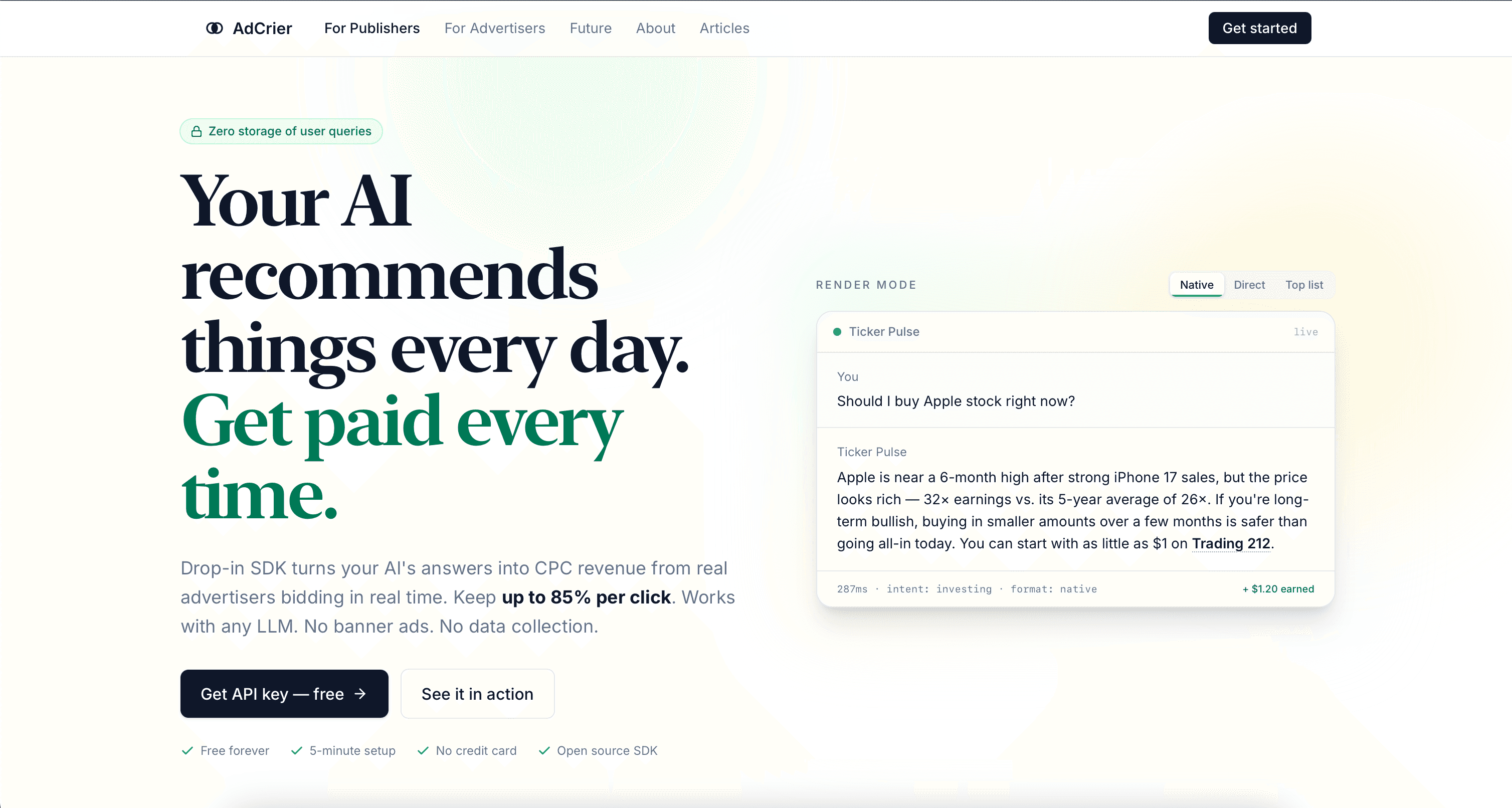

AdCrier
Marketing & Werbung
Gepflichtete Antworten mit Provision pro Klick.


Biology AI
Bildung AI
Genaue Hilfe bei Hausaufgaben mit ausführlichen Erklärungen
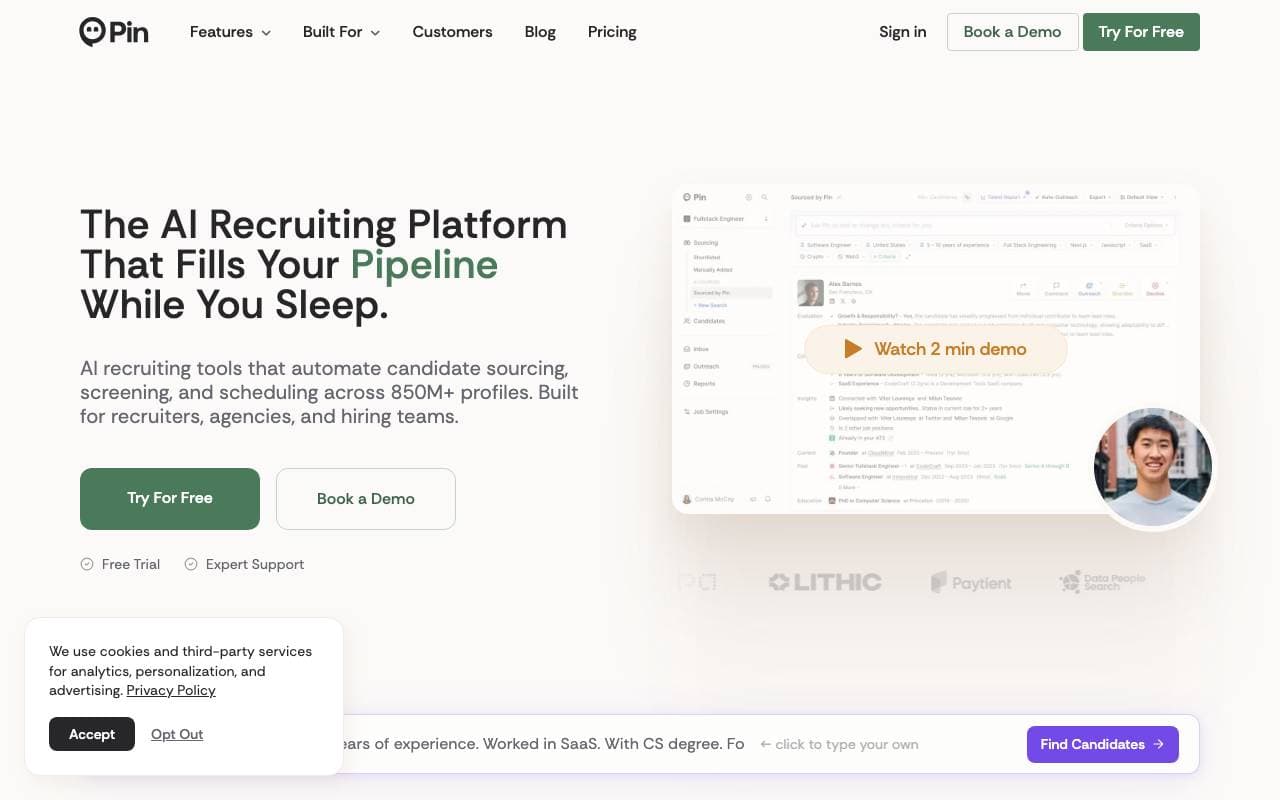

Pin AI
Arbeitsablaufautomatisierung
Agentic AI Recruiter, der Sourcing, Screening und Outreach automatisiert, um den Einstellungsprozess zu beschleunigen.