
Agent SOpen-Source-GUI-Agenten-Framework, das es einem LLM ermöglicht, Ihren Computer wie ein Mensch über eine Agent-Computer-Schnittstelle zu bedienen.

Übersicht
Hauptfunktionen
- Autonome Interaktion mit Computern
- Agent-Computer-Schnittstelle
- Unterstützt Linux, Mac und Windows
- Python-basierte Code-Steuerung
- Verhaltensoptimierung Best-of-N
- GUI-agents Bibliothek
Preise
- Modell
- Free
- Bewertung
- 4.6 / 5 (5)
Anwendungsfälle
Wiederkehrende Desktop-Workflows automatisieren
Einen LLM-gesteuerten Agenten nutzen, um GUIs zu navigieren, Schaltflächen zu klicken und Formulare in verschiedenen Anwendungen auszufüllen, um manuelle Wiederholungen für routinemäßige Computeraufgaben zu beseitigen.
Eigene Computer-Nutzung-Agenten erstellen
Entwickler können das Open-Source-Framework und die Agent-Computer-Schnittstelle nutzen, um Prototypen zu erstellen und LLM-Agenten bereitzustellen, die Betriebssysteme wie ein menschlicher Benutzer steuern.
Forschung zu GUI-Agenten-Fähigkeiten
Bietet ein reproduzierbares Framework für Akademiker und KI-Forscher, um die Leistung von Sprachmodellen bei realen Computerinteraktionsaufgaben zu benchmarken und zu untersuchen.
Qualitätssicherung (QA) von Desktop-Anwendungen
Ein Agent wird eingesetzt, um GUI-Workflows in Softwareprodukten zu testen, wobei das UI-Verhalten über verschiedene Szenarien hinweg validiert wird, ohne jeden Schritt manuell zu skripten.
Pro & Contra
Pro
- Erreicht menschliches Leistungsniveau bei OSWorld
- Starke Zero-Shot-Generalisierung
- Einfacher, schneller und flexibler als frühere Versionen
Contra
- Erfordert vorsichtigen Einsatz aufgrund seiner Fähigkeit, den Computer zu kontrollieren
- Unklare Grenzen bei der Nutzung auf Mehrmonitor-Screens
Schlacht-Bilanz
Aus 1 Schlacht im Pantheon.
Last battle
Bewertungen
Durchschnitt aus 5 Bewertungen.
Melde dich an, um eine Bewertung abzugeben.
Skeptical, then convinced
I went in skeptical — most tools in this space overpromise. It actually delivers on the API, and it is genuinely easy to set up caught me off guard. Pricing gets steep at scale is why this isn't a perfect score, still, I'd recommend giving it a real trial.
Compared a few options
Evaluated this against two competitors. Where it wins: the onboarding and it saves real time. Where it lags: a few rough edges remain. On balance the feature set — especially the dashboard — justifies the 5 stars for our use case.
Skeptical, then convinced
I went in skeptical — most tools in this space overpromise. It actually delivers on the onboarding, and the value for money is strong caught me off guard. The docs could be deeper is why this isn't a perfect score, still, I'd recommend giving it a real trial.
Years in this space
I've evaluated a lot of these over the years. What stands out here is the dashboard — handled better than most — and the value for money is strong. Pricing gets steep at scale is my one real gripe. Worth the time if this is your use case.

Years in this space
I've evaluated a lot of these over the years. What stands out here is the core workflow — handled better than most — and the value for money is strong. A few rough edges remain is my one real gripe. Worth the time if this is your use case.
Fragen & Antworten
What are common use cases for Agent S?
Agent S is designed for tasks where an LLM needs to operate desktop GUI applications autonomously, such as automating workflows, interacting with software that lacks APIs, or research into computer-using AI agents via its Agent-Computer Interface.
Asked by Grace Okafor · Apr 25, 2026
Is Agent S free to use, and can I self-host or modify it?
Yes. Agent S is open-source, so you can use, self-host, and modify it according to its license terms. This makes it suitable for developers and researchers who want full control over the agent's behavior and integrations.
Asked by Kwame Mensah · Apr 21, 2026
What is Agent S and how does it interact with my computer?
Agent S is an open-source GUI agent framework that enables a large language model to operate your computer like a human user. It does this through an Agent-Computer Interface (ACI), allowing the LLM to perceive and control graphical applications.
Asked by Diego Fernández · Jan 31, 2026
Frage stellen
Alternativen zu Entwicklungsrahmen für künstliche Intelligenz-Aggregate

Wildcard AI / agents.json
Entwicklungsrahmen für künstliche Intelligenz-Aggregate
Offene Spezifikation und Plattform, die es AI-Agenten ermöglicht, durch einen agents.json-File API-Workflows zu entdecken und aufzurufen.


Strands Agents
Entwicklungsrahmen für künstliche Intelligenz-Aggregate
Offene-Quellen-SDK für die Erstellung und -Orchestrierung von einzelnen oder mehreren Agentensystemen mit LLMs und Werkzeugintegration


BabyCatAGI
Entwicklungsrahmen für künstliche Intelligenz-Aggregate
Leichtbares autonomes Framework für die automatisierte Aufgabenverwaltung


Awesome MCP Servers
Entwicklungsrahmen für künstliche Intelligenz-Aggregate
Ein gefördertes Verzeichnis von Model Context Protocol-Servern zur Erweiterung von AI-Assistenten mit Werkzeugen und Daten.


Gemma 3
Entwicklungsrahmen für künstliche Intelligenz-Aggregate
Ein offenes AI-Modell für Single-GPU-Leistung optimiert, um multimodale Eingaben und über 140 Sprachen unterstützend.
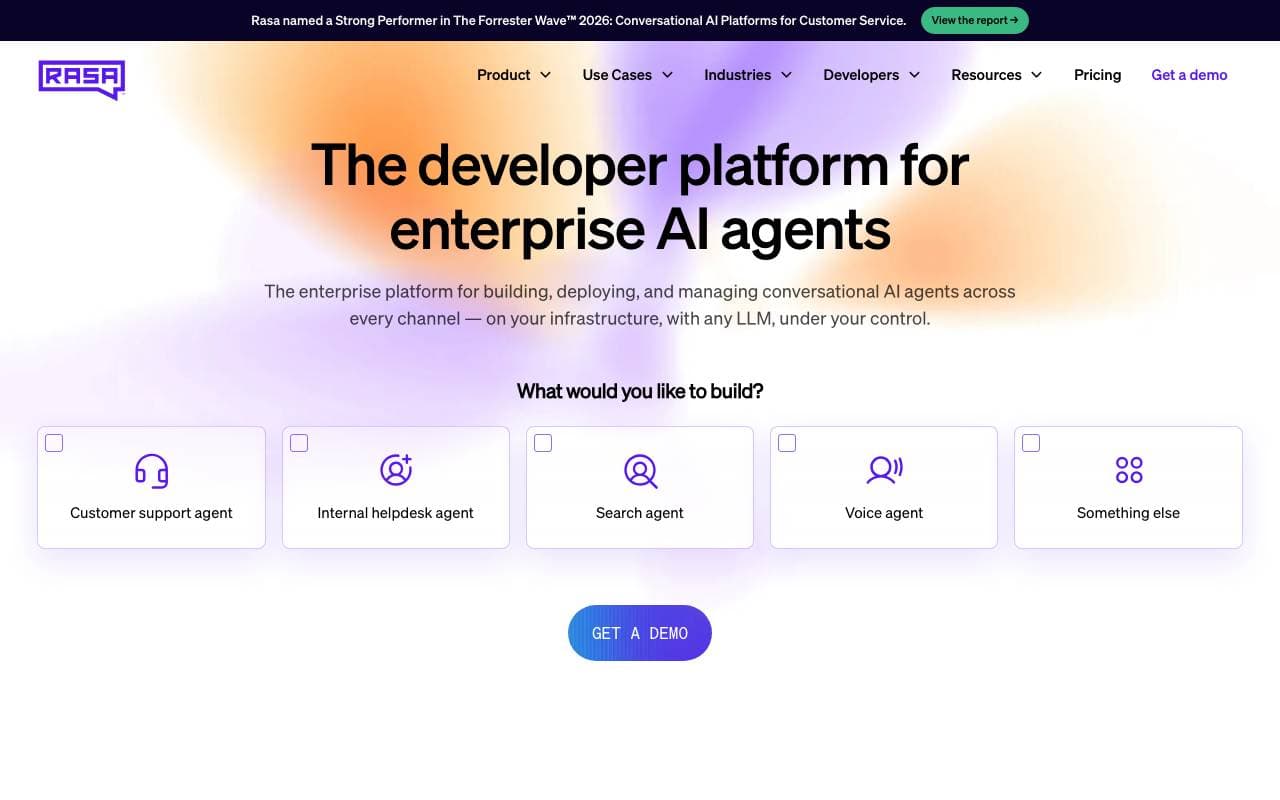

Rasa
Entwicklungsrahmen für künstliche Intelligenz-Aggregate
Offener Framework für die Herstellung von Produktionsreif-Chatt- und Sprachassistenten

BabyElfAGI
Entwicklungsrahmen für künstliche Intelligenz-Aggregate
Experimentelle AI-Agent-Framework mit einem modularen Skills-Klasse für dynamische Aufgabenermittlung und -ausführung.


Auto-GPT
Entwicklungsrahmen für künstliche Intelligenz-Aggregate
Eine open-Source-AI-Agent, die komplexen Aufgaben autonom mithilfe von GPT-Modellen abschließen kann.
Trending now


Reducto AI
Plattformen für die Entwicklung von Agenten mit künstlicher Intelligenz
Intelligenter Dokument API zur Analyse, Trennung, OCR-Analyse und Strukturierung von komplexen PDFs, Präsentationen und Tabellenkalkulationen.


Biology AI
Bildung AI
Genaue Hilfe bei Hausaufgaben mit ausführlichen Erklärungen
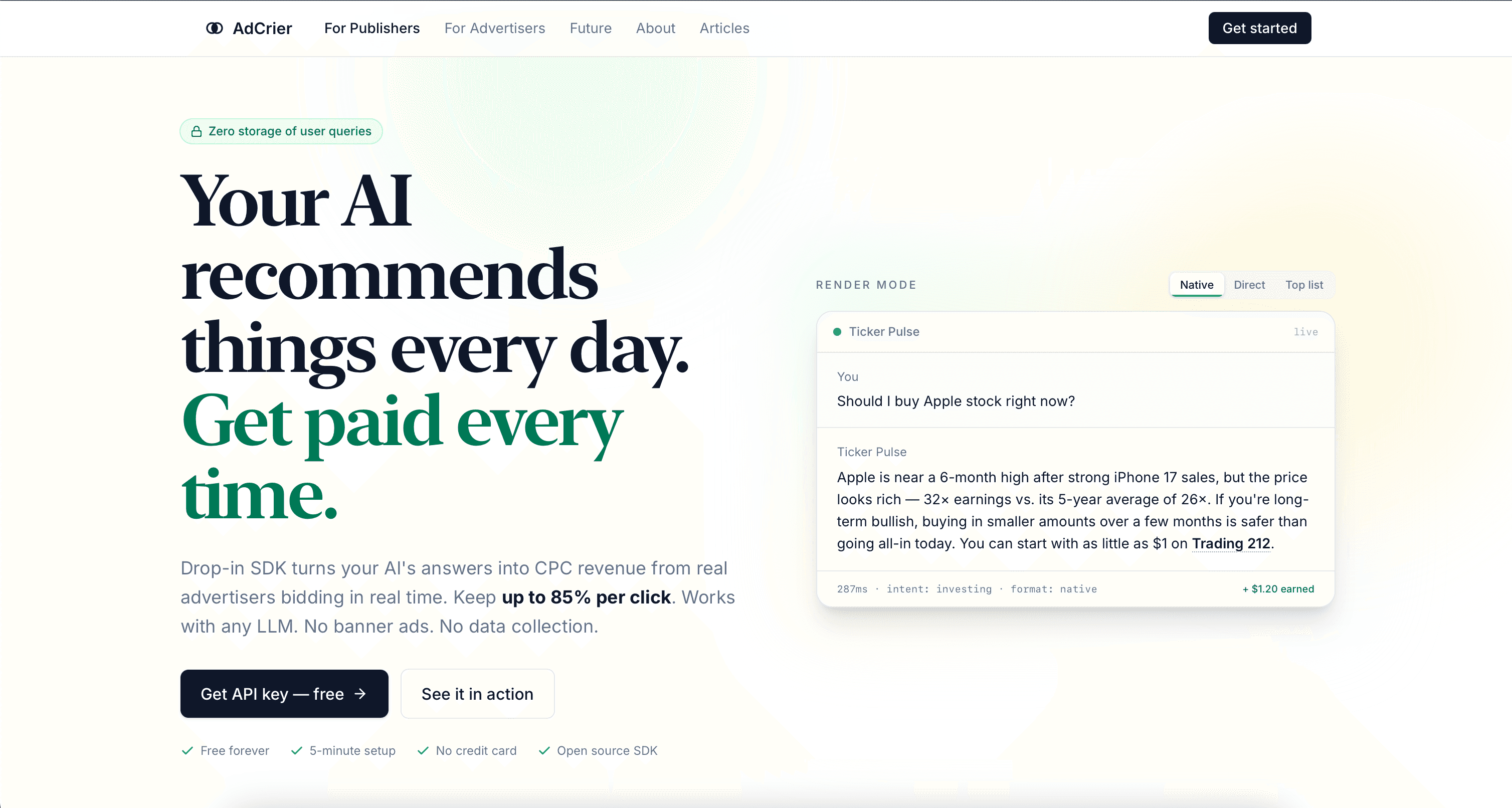

AdCrier
Marketing & Werbung
Gepflichtete Antworten mit Provision pro Klick.


Beam AI
KI-Agente
Führender Plattform für agente Prozessautomatisierung, die sich selbst lernende AI-Agenten verwendet, um Arbeitsabläufe über verschiedene Branchen hinweg zu entzerren.