
AI AgentCrie equipes personalizadas de agentes de IA que automatizam tarefas e executam trabalho real de forma autônoma.

Visão geral
Funcionalidades principais
- Construtor de equipe de agentes de IA personalizado
- Integrações com ferramentas e aplicativos
- Execução autônoma de tarefas
- Configuração de agentes baseada em funções
- Automação de fluxos de trabalho entre departamentos
- Monitoramento e supervisão de atividades
Preços
- Modelo
- Freemium
- Categoria
- Automação de Tarefas
- Avaliação
- 4.5 / 5 (4)
Casos de uso
Automatizar fluxos de trabalho de prospecção de vendas
Desenvolva uma equipe de agentes para pesquisar prospects, redigir abordagens personalizadas e atualizar registros de CRM, coordenando transições para mover leads pelo pipeline de forma autônoma.
Escalar operações de suporte ao cliente
Configure agentes especializados para triagem de tickets, extrair dados relevantes de ferramentas conectadas e resolver ou escalar problemas, reduzindo a carga manual da equipe de suporte.
Executar tarefas recorrentes de pesquisa
Atribua a agentes papéis de pesquisa distintos para coletar informações de múltiplas fontes, sintetizar descobertas e entregar relatórios em uma cadência regular sem supervisão constante.
Coordenar operações internas
Construa equipes de agentes interdepartamentais que automatizem fluxos de trabalho internos de múltiplas etapas, passando trabalho entre funções e atuando dentro de aplicativos empresariais existentes.
Prós e contras
Prós
- Coordenação multiagente para fluxos de trabalho complexos
- Funções e instruções personalizáveis por agente
- Integra com ferramentas de negócios existentes
- Executa tarefas de forma autônoma com menos supervisão
Contras
- Requer configuração e ajuste de prompt para funcionar bem
- Ações autônomas exigem monitoramento cuidadoso
- Qualidade depende da cobertura de integração
Avaliações
Média de 4 avaliações.
Entra para deixar uma avaliação.
Years in this space
I've evaluated a lot of these over the years. What stands out here is activity monitoring and oversight — handled better than most — and customizable roles and instructions per agent. Autonomous actions need careful monitoring is my one real gripe. Worth the time if this is your use case.
Compared a few options
Evaluated this against two competitors. Where it wins: tool and app integrations and multi-agent coordination for complex workflows. Where it lags: requires setup and prompt tuning to work well. On balance the feature set — especially autonomous task execution — justifies the 4 stars for our use case.
Use it every day
Honestly didn't expect to like it this much. Autonomous task execution is exactly what I needed, and runs tasks autonomously with less oversight. but I reach for it almost every day now and it just clicks.

Years in this space
I've evaluated a lot of these over the years. What stands out here is role-based agent configuration — handled better than most — and multi-agent coordination for complex workflows. Worth the time if this is your use case.
Perguntas e respostas
What can AI agents actually do?
AI agents on AI Agent can handle a wide range of tasks across every team function: - **Marketing:** Research competitors, draft campaign briefs, monitor brand mentions, generate SEO content - **Sales:** Qualify leads, enrich CRM records, draft personalised outreach, follow up on open deals - **Operations:** Triage support tickets, summarise meetings, route tasks, generate status reports - **Product:** Analyse user feedback, track feature requests, synthesise research from multiple sources - **Finance:** Pull data from dashboards, flag anomalies, draft expense summaries If it involves gathering information, making a decision, and taking an action — an AI agent can do it.
Asked by Boris Yankov · Jul 31, 2025
Does AI Agent train models on my data? Is my data safe?
No — AI Agent does not use your data to train AI models. Your workflows, documents, and any data your agents process remain private to your account. All data is encrypted in transit and at rest. Access controls mean only members of your organisation can see your agents and their outputs. We do not share your data with third parties or use it to improve AI models. For teams with stricter requirements, enterprise plans include additional controls such as audit logs and SSO.
Asked by Greta Nowak · Jul 17, 2025
How do AI agents connect to the tools I already use?
AI Agent connects to hundreds of tools through native integrations and the Model Context Protocol (MCP), an open standard for giving AI agents access to external systems. You authenticate once per tool (OAuth or API key), and your agents can then read and write to those systems as part of any workflow. Common integrations include Gmail, Google Calendar, Slack, Notion, HubSpot, GitHub, Stripe, PostHog, and many more. New integrations are added regularly.
Asked by Willa Thompson · Jul 17, 2025
AI Agent vs Zapier or Make — what's the difference?
Zapier and Make are trigger-action automation tools — they follow rigid if-this-then-that rules. They're great for simple, predictable workflows but break down when conditions are ambiguous or tasks require judgment. AI agents go further: they can reason about what to do next, handle unexpected situations, draft and review content, and make decisions mid-workflow without human intervention. Think of Zapier as a relay race with fixed handoffs, and an AI agent as a team member who can figure out what to do when something unexpected happens. AI Agent is best for workflows that require intelligence, not just routing.
Asked by Rasheed Osman · Jul 7, 2025
What's the difference between AI Agent and ChatGPT?
ChatGPT is a conversational large language model — you type a message, it replies. Interactions are one-shot; it cannot take actions in the world or run tasks on your behalf between conversations. AI Agent is an AI agent platform. You define goals and workflows, and agents execute them autonomously using tools, integrations, and live data — not just a static knowledge cutoff. Where ChatGPT answers questions, an AI Agent gets things done. Under the hood, AI Agent agents use frontier models (including GPT-4 class models) as their reasoning engine, so you get the language capability of ChatGPT plus the ability to actually act on the world.
Asked by Sanjay Gupta · Jul 10, 2025
Faz uma pergunta
Alternativas a Automação de Tarefas
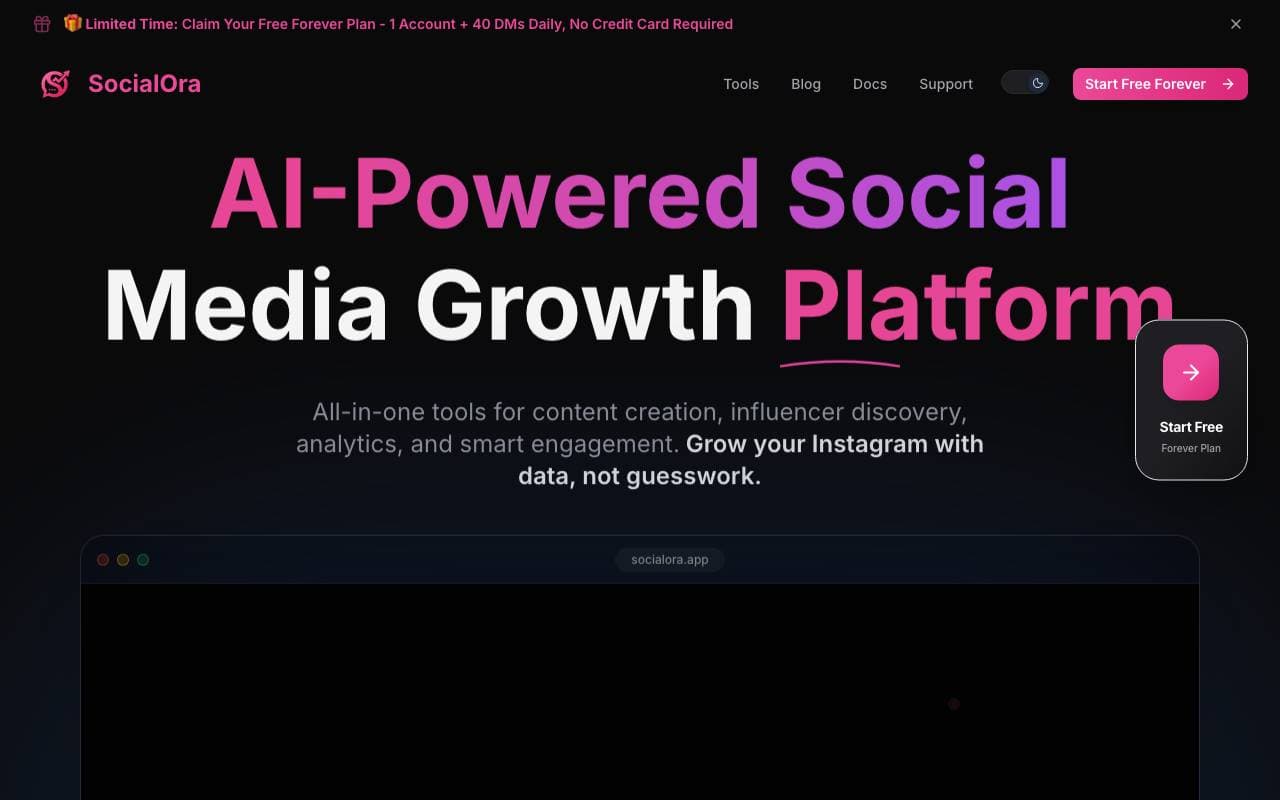

SocialOra
Automação de Tarefas
Transforme sua presença no Instagram em um canal de receita mensurável.


AutoClick Ace
Automação de Tarefas
Clique automático leve com teclas de atalho e intervalos de clique personalizáveis.

Otterly.AI
Automação de Tarefas
Monitore menções de marca e site em motores de busca de IA e chatbots.


Livex AI
Automação de Tarefas
Plataforma de retenção e engajamento de clientes implantada com uma única linha de código
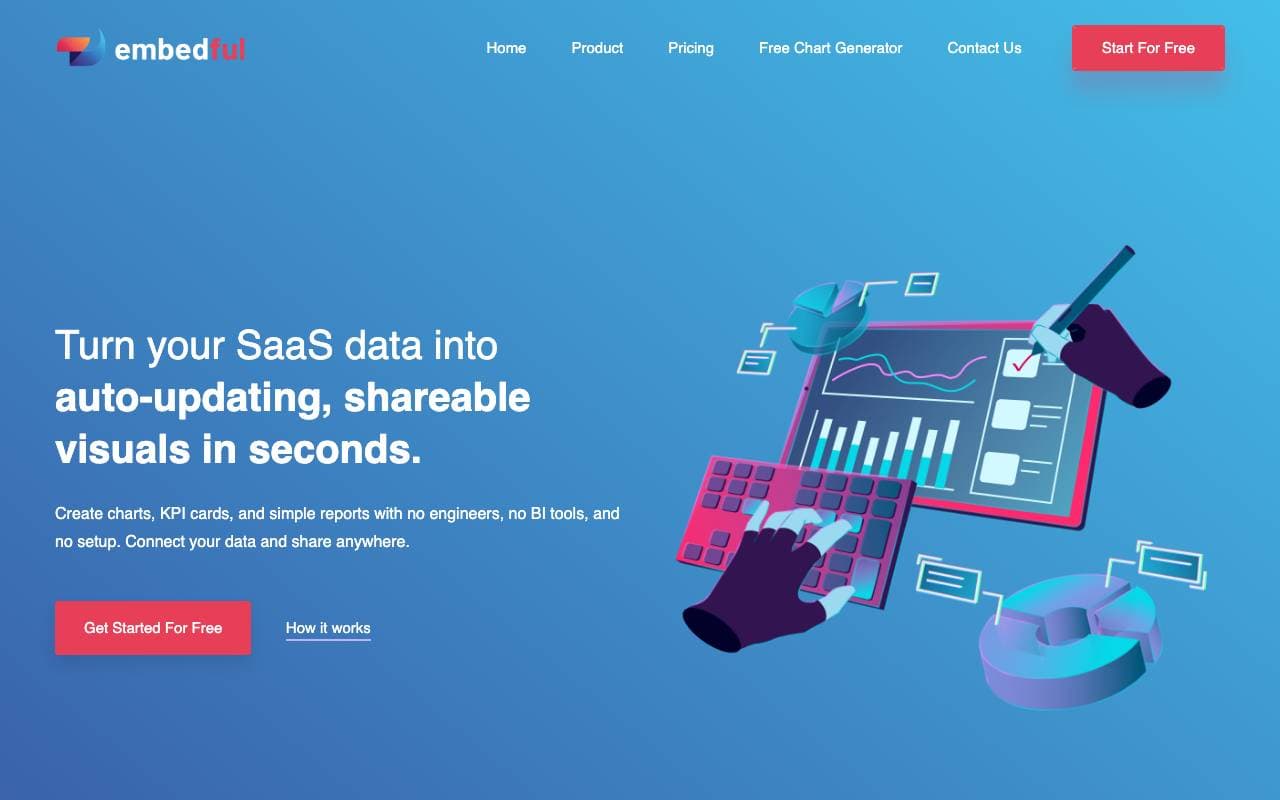

Embedful
Automação de Tarefas
Gráficos e painéis atualizados automaticamente a partir dos dados do seu SaaS, sem código necessário


Monday AI
Automação de Tarefas
Automação impulsionada por IA integrada ao monday.com para fluxos de trabalho de equipe mais inteligentes

Thunderbit
Automação de Tarefas
Ferramenta de raspagem web de IA que extrai dados estruturados de qualquer site em dois cliques - sem código necessário.


Grok Automation
Automação de Tarefas
Automação em lote para geração de imagens e vídeos de Grok.com com prompts enfileirados e downloads automáticos.
Trending now


Reducto AI
Plataformas de Desenvolvimento de Agentes Inteligentes de IA
API de inteligência de documentos que parseia, divide, reconhece texto e extrai dados estruturados de PDFs complexos, slides e planilhas.


Biology AI
Educação de Inteligência Artificial
Ajuda Precisa nos Deveres de Casa com Explicações Completas
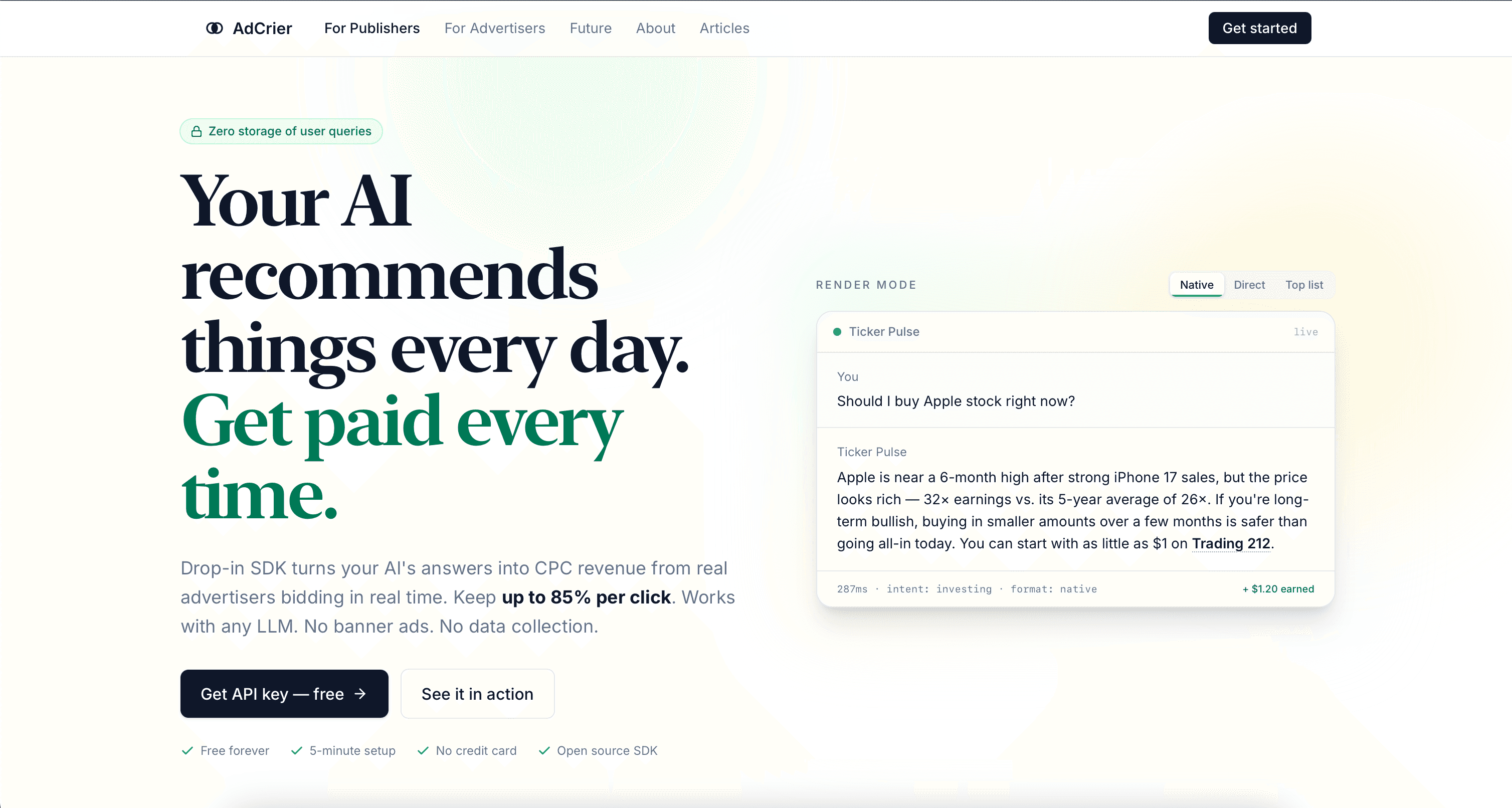

AdCrier
Marketing & Publicidade
Respostas patrocinadas, pagamento por clique.
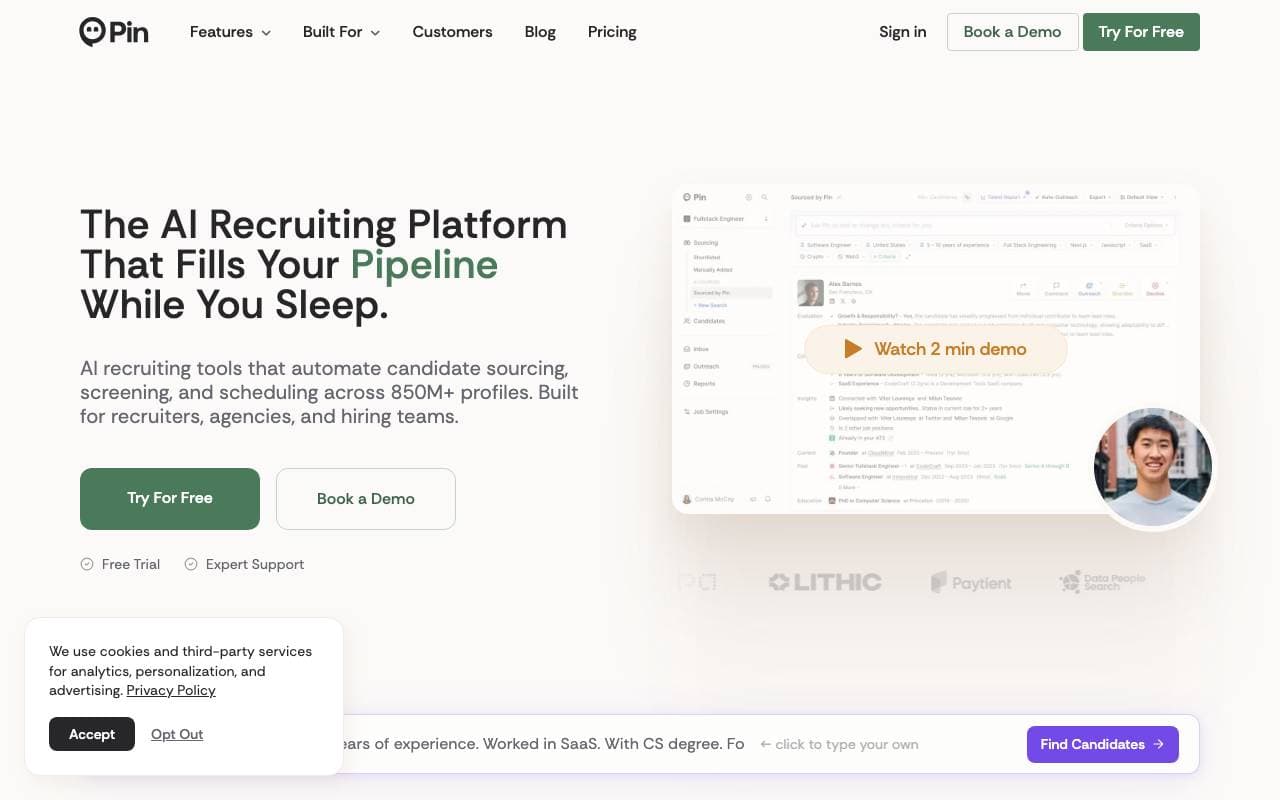

Pin AI
Automação de fluxo de trabalho
Recrutor de IA agêntico que automatiza busca, triagem e divulgação para acelerar contratações.